The full, horrifying scope of what happened to the estimated tens of thousands of Soviet women captured by Nazi forces during Operation Barbarossa is only now being fully understood, as survivor testimonies and declassified military records paint a picture of systematic execution, sexual slavery, and state-sanctioned brutality that defies comprehension.
When Hitler launched Operation Barbarossa in June 1941, the German High Command was profoundly shocked to discover that the Red Army had integrated over 800,000 women into its ranks. This was an unprecedented anomaly in modern warfare. For many German soldiers and officers, the knowledge that they were fighting against women was considered a disgusting perversion of the natural order.
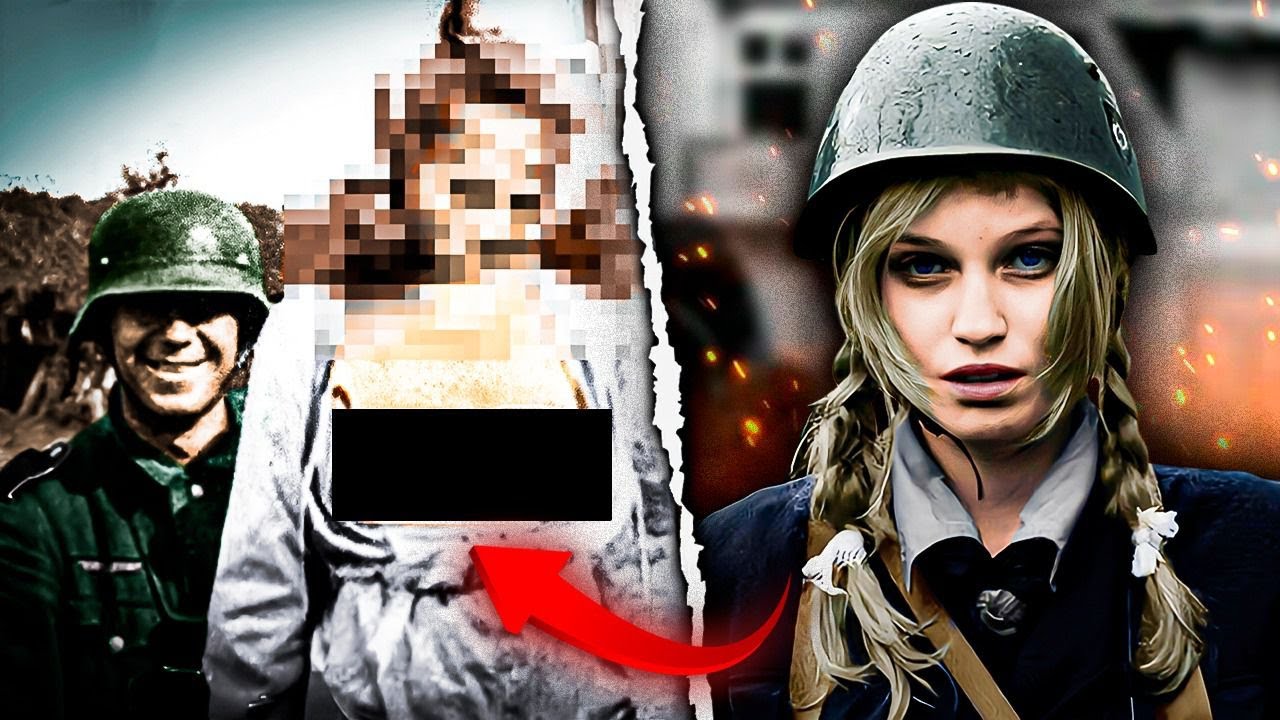 For others, it enticed their most basic and sadistic fantasies, leading to a campaign of terror against female combatants that was codified in official military doctrine.
The Nazi regime, through Heinrich Himmler himself, issued an illegal order in 1941 mandating the immediate execution of captured Soviet commissars and suspicious civilian political functionaries. More than 80% of frontline German divisions on the Eastern Front carried out this criminal directive, shooting an estimated 4,000 to 10,000 commissars. But the cruelty did not stop there.
Himmler also specifically ordered that female combatants in the Soviet Army were to be shot on sight rather than captured and brought to camps. While some units chose to ignore this specific command, few women survived to reach prisoner of war camps in Germany or Poland.
The Nazi regime claimed it was under no obligation for the humane care of Red Army prisoners because the Soviet Union had not ratified the 1929 Geneva Convention on prisoners of war. Technically, both nations were bound only by general international law, yet even under that law, prisoners were to be protected. This legal loophole was exploited to justify unimaginable atrocities.
The story of Tatiana Nikolayevna Baramzinova serves as perhaps the most harrowing example of both the bravery of Soviet women and the incredible cruelty exerted by Nazi soldiers specifically on enemy women. Born in a small Siberian town in 1919, Baramzinova dreamed of becoming a military pilot but instead studied to become a teacher. When the Nazis invaded, she immediately entered a six-month nursing course and then graduated with honors from a sharp-shooting course, leading to her acceptance into the central women’s sniper training school in June 1943.
Deployed to the Western Front in April 1944, she quickly proved her marksmanship, tallying 16 kills with a sniper rifle. Later in 1944, she was transferred to Belarus as part of Operation Bagration. Having begun to experience sight issues, her superiors assigned her telephone operator duties far from the front line.
However, she managed to convince her commander to let her take part in a special operation on July 4th, citing her sniper and medical training.
Baramzinova’s unit hid in a village named Pekka to ambush a retreating German column. When the Red Army artillery ambushed the column, the Nazi troops fought non-stop and managed to hold the village for several hours. Soviet soldiers too badly wounded to retreat were placed in a dugout, where Baramzinova chose to stay with them, placing herself in mortal danger despite having every opportunity to crawl into a safe grainfield.
When German soldiers approached the dugout, she defended it for as long as she could despite being heavily outnumbered. She opened fire with a machine gun, killing the first three attackers. When more approached, she continued firing until she ran out of ammunition and grenades.
Left defenseless, two German soldiers entered the dugout from behind and threw grenades down, injuring her.
The Germans were so enraged that they first opened fire against the injured soldiers lying around the dugout, killing them without mercy. They left Baramzinova for last, dragging her out by her hair before brutally torturing her with endless cruelty. The soldiers stabbed her and mutilated her with bayonets while she loudly swore that they would pay for their crimes.
She was brutally beaten with the butts of German rifles until she was barely alive. One German then shot her in the head with an anti-tank rifle intended to pierce several inches of steel. She was killed at point-blank range, her head and body practically unrecognizable when her battalion found her the next morning.
For those Soviet women who did survive to reach concentration camps, the horror was only beginning. At Auschwitz, Soviet prisoners of war were the first to be tattooed with numbers because they frequently attempted to escape. The largest mass escape attempt occurred at Auschwitz-Birkenau on November 6th, 1942, when several dozen made a run for it.
 Many were caught immediately and shot.
The Nazis also established brothels in some concentration and labor camps, and the German Army ran roughly 500 brothels for soldiers in which Soviet women were forced to do sexual work. According to German racial laws of 1938, it was illegal for German Aryans to have sexual relations with Jewish, Romani, or Black people, but rules were less strict when it came to 𝒔𝒆𝒙 with Russian women. This gave concentration camp guards a sense of absolute impunity to do whatever they wanted to female Soviet prisoners.
At Auschwitz, a block called Canada became infamous for sexual slavery and brutality. Soviet women were considered particularly beautiful by German soldiers, so many ended up in this disgusting building. The name came from the prisoners’ hopes, as Canada was seen as a fantasy destination rich in everything.
Inside the Canada block, women had access to food, basic goods, and frequent showers, and were allowed to grow their hair. In exchange, they had to do whatever the guards asked.
The commandant in charge of the SS at Canada ordered a running water system built to allow these women to bathe so they would be more presentable to the ravenous mob of officers. Shower time was a tempting moment for those devils in uniform. Whenever they saw these helpless women trying to clean their bodies, they stepped in to assault them.
Many of these women, although they did not experience the daily physical punishment and starvation suffered by others, lived through a daily hell of constant aggression.
To make matters worse, many of them, after suffering the voracious sexual appetites of their captors, were forced to write postcards explaining how well they were treated inside Auschwitz to dispel rumors that it was a torture and extermination camp. It was not uncommon for SS officers to arrive drunk at night and handpick a few of the younger Soviet girls to be transferred to Canada. Many reports describe the same girls crying inconsolably upon returning to their barracks.
Others did not return and were kept at Canada indefinitely.
The survival rate inside Canada may have been higher than in any other block at Auschwitz, but the price was too high. Several female ex-prisoners have since testified that they would have preferred to die before having to go through the hell that was lived inside Canada. The pattern of behavior of the SS men toward the women of Auschwitz fits the behavior of many soldiers toward enemy women, seeing them as an indefensible instrument for perpetrating unspeakable revenge.
Women Soviet partisans faced equally horrific fates. In October 1941, an 18-year-old high school student from Moscow named Zoya Kosmodemyanskaya volunteered for a partisan unit. On November 27th, she received an assignment to burn the village of Petrishchevo where a German Cavalry Regiment was stationed.
After being caught trying to burn a fourth house, she was stripped, beaten, interrogated, and savagely tortured with 200 lashes. Her body was burned in several places, but she refused to give any information.
The following morning she was marched to the center of the village with a board around her neck bearing the inscription “house burner.” At the Central Square she was hanged and left for everyone to see. Kosmodemyanskaya was the first woman to become Hero of the Soviet Union during the war.
 The youngest woman to become a Hero of the Soviet Union was Zinaida Portnova. In 1942, at the age of 16, Portnova joined the Belarusian resistance movement, becoming a member of the local underground organization named Young Avengers. In 1943, she became employed as a kitchen aid in Obol and poisoned the food meant for the Nazi Garrison stationed there.
When interrogated by a Gestapo officer, she took his pistol off the table and shot and killed him. After being recaptured, Portnova was tortured and later executed. She was not 18 at the time.
The story of Anna Yegorova, a daring pilot, exemplifies the dark fate that awaited fallen pilots. Yegorova was just a teenager when she learned the government was recruiting young people to learn how to fly airplanes. By the summer of 1941, she had her pilot’s license and became a flying instructor.
When the Nazis invaded, she refused to be sent to the rear and eventually joined the 130th air liaison Squadron, an all-male unit headed to the front lines.
On August 20th, 1944, Yegorova, now squadron commander, was leading 15 Sturmovik planes in formation when German anti-aircraft guns targeted her lead plane. The plane exploded, and she was blown out of it, losing consciousness. When she came to, she was falling through the air.
Her parachute had burned and opened only partially. She hit the ground hard and opened her eyes to see a soldier in the gray-green uniform of the Nazi army standing over her, his boot on her chest.
Yegorova was sent to a prisoner of war camp called Stalag 3C, filled with male Allied prisoners. She was placed in a concrete cell with iron bars. The Germans didn’t torture her; they were just going to let her die slowly and painfully of her wounds.
A skilled Soviet surgeon named Georgy Fyodorovich Sinyakov demanded to treat her and saved her life. When the camp was liberated in January 1945, Yegorova was placed in a prison with German prisoners of war because all Soviet prisoners of war were considered traitors for having been caught.
The commandant kept her up all night accusing her of being a German spy. On the 11th day of this interrogation, Yegorova gathered what little strength she had, ran up the stairs to the commandant’s quarters, and cried, “When are you going to stop tormenting me? 𝓀𝒾𝓁𝓁 me if you like but I won’t let you torment me anymore.”
She was eventually freed from false accusations, but when she returned home, she learned that her mother had held a memorial service for her, having been told her daughter was killed in action.
In 1965, Yegorova was honored with the Hero of the Soviet Union gold medal. The honor had been granted to her posthumously in 1944, but when it was discovered that she had survived the crash and had been taken prisoner, it was revoked. Her Communist Party license was also revoked because prisoners of war were considered traitors to the regime.
Real heroes were supposed to be killed in action or tortured to death, but not survive the death camps and come back to the Soviet Union.
 Olga Benario Prestes, a double agent in Brazil, was killed in a Nazi euthanasia center soon after she turned 34. The daughter of Jewish parents, Olga was 15 when she first joined the Communist Youth Organization in Munich. In 1934, she was assigned as a bodyguard to Luis Carlos Prestes and aided his return to Brazil.
When Prestes staged a coup against President Vargas, it failed, and the couple went into hiding. When found, Vargas ordered Prestes be shot on site, but Olga, who was two or three months pregnant, stepped in front of him.
Since Getulio Vargas was on good terms with Adolf Hitler, he sent Olga back to Germany as a present to Hitler. Already pregnant, she spent a few months in prison and gave birth to her daughter there. Soon after giving birth, Olga was sent to Ravensbrück concentration camp.
In February 1942, her name was called out for transfer to another concentration camp, which was a cover for sending women to the euthanasia center in Bernburg where they were murdered. Ten days later, she was gassed to death.
The Soviet Union was a pioneering nation in terms of gender equality, best exemplified by the creation of an all-female bomber regiment known as the 588th regiment, nicknamed the “Night Witches” by the Germans. Between 1942 and the end of World War II, these women flew over 23,000 sorties and dropped over 3,000 tons of bombs on enemy forces. Their attack technique involved idling the engine near the target and gliding to the bomb release point with only wind noise left to reveal their presence.
German soldiers thought the approaching idling planes sounded like broomsticks and hence named the pilots “Night Witches.”
Due to the weight of the bombs and the low altitude of flight, the pilots did not carry parachutes until 1944, making earlier missions incredibly risky. Being a Soviet war pilot was one of the most dangerous roles a woman could have. Apart from the risk of being shot down, the Germans had a reputation for shooting all the pilots they captured.
Moreover, if a pilot was captured and later released, she would be considered a traitor in the Soviet Union just for letting herself get caught.
Soviet women showed throughout World War II an astounding bravery which made them fierce enemies to the Nazis. They were feared and hated in equal measure, and for this reason they received a harsh punishment when they came into the hands of the Germans. Despite this, Soviet women were appreciated for their beauty, so they were constantly subject to sexual assault, especially in the Nazi concentration camps.
Others were simply shot on sight, killed in awful ways, or tortured to death.
Most Soviet women who managed to escape from the Nazis demanded to go back to the front line to fight immediately, even when they were undergoing tremendous pain from their wounds. Their stories should serve as a reminder of the stakes that these women assumed when going undercover into enemy territory. Some of them came back on the field even when they had managed to escape once.
These women gave their lives for the greater good of a peaceful Europe and a world free of fascism. Their heroic and incredible stories serve as a reminder that our world today is what it is thanks to them and to the hundreds of anonymous heroines whose names and stories did not survive the test of time.