The legend of Lewis “Chesty” Puller looms so large over the Marine Corps that his name is practically synonymous with the institution itself. A warrior who earned five Navy Crosses across campaigns in Nicaragua, the Pacific, and Korea, he became the most decorated Marine in American history, a figure whose aggressive tactics and refusal to yield were studied and recited long after his final battle. Yet the full arc of the Puller story is not solely written in battlefield triumphs; it is also etched into the quieter, heavier lives of the two children who carried his name far from the front lines. Chesty Puller married Virginia Montague Evans in 1937.
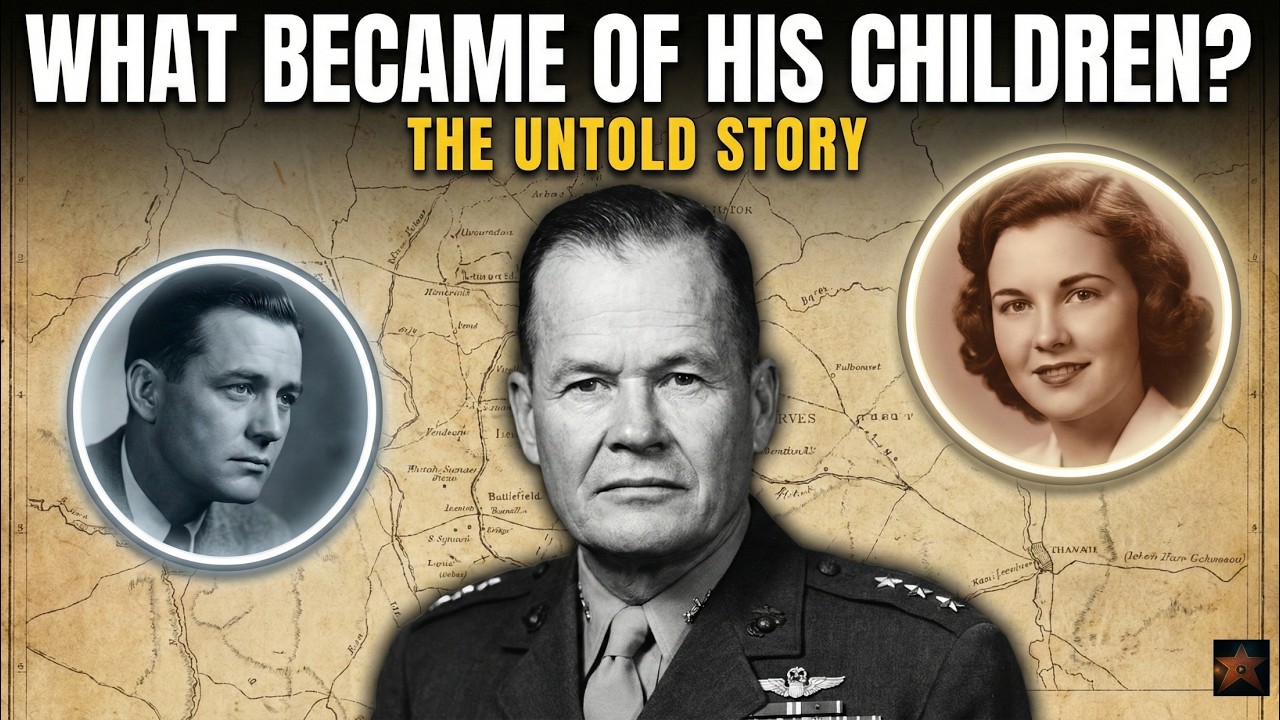
She was a quiet schoolteacher whose reserved temperament stood in stark contrast to the ferocious intensity of her husband. While Puller spent decades at war, his wife anchored the home front. Their first child, Virginia McCandlish Puller, was born in Shanghai in 1940, where Chesty served with the 4th Marines. Five years later, at Camp Lejeune, North Carolina, the couple welcomed twins: a daughter, Martha Lee, and a son, Lewis Burwell Puller Jr.
The family’s life was defined by military relocation and the long, silent absences of a father whose true work always seemed to wait overseas. The children bounced between China, Hawaii, San Diego, and New Orleans, always returning to the rural stability of Virginia. Their mother provided the emotional foundation, enforcing discipline with routine and offering the warmth her husband could not. To the world, Chesty was a symbol of invincibility; to his children, he was a distant, often haunted presence whose silence spoke of the horrors he had witnessed.
Virginia, the eldest daughter, grew into the role of the quiet witness to a legend. She learned to navigate the shifting moods and unspoken trauma her father brought home, shouldering the emotional weight of expectation as the oldest child. She rarely sought the spotlight, choosing instead to marry another Marine combat officer and build a life of steadfast, unglamorous service. Her legacy lay in the constancy she maintained, the dignity she preserved, and the understanding that the burden of a warrior’s legacy is often carried by those standing closest, just beyond the battlefield.
The second and most defining chapter of the Puller legacy belongs to the son, Lewis Jr. Born in 1945, he entered the world carrying not just the family name, but the immense expectation tied to it. In 1967, he deployed to Vietnam as a lieutenant, determined to prove himself worthy of the legend that preceded him. Less than a year later, in the Quang Nam province, a booby trap detonated under his command group.
The explosion killed several Marines and left Lewis Jr. catastrophically wounded; he lost both legs, much of his left hand, and nearly his life. He was just 22 years old. Survival was only the beginning of a far more harrowing conflict.
Lewis Jr. returned home to years of surgeries, painful rehabilitation, and deep emotional devastation. The guilt over the men lost beside him and the feeling that he had betrayed his father’s legacy consumed him. Alcohol became a refuge, and his relationships strained under the pressure of extreme trauma.
When Chesty Puller died in 1971, Lewis inherited not just the medals but the unresolved burden of being the son of a mythic hero. Yet Lewis Jr. eventually found a path back. He turned his profound suffering into advocacy for veterans’ rights at a time when Vietnam veterans were often ignored.
In 1991, he published “Fortunate Son,” a raw and unflinching memoir detailing his physical and psychological struggles. The book won the Pulitzer Prize, revealing the devastating cost of service and completing the Puller narrative in a way his father never could. The victories, however, remained fragile. The ghosts of Vietnam and decades of strain proved overwhelming.
In 1994, at the age of 48, Lewis Burwell Puller Jr. took his own life. The loss shook the military community, forcing a national conversation about the unseen wounds carried by service members. His legacy, though marked by tragedy, fundamentally changed how America understood the price of valor.
Together, the quiet devotion of the daughter and the painful testimony of the son reveal the true consequence of a legendary life: that the myth of a soldier is built not only on what he does in war, but on what his family carries long after the guns fall silent.