Wounded in both legs and watching his comrades fall around him, Lieutenant Charles Barnum survived the Battle of the Little Bighorn when nearly 300 men of the Seventh Cavalry did not. Days after the fighting ended, on July 4, 1876, he wrote a letter to his parents from a camp along the Yellowstone River, offering a firsthand account of a disaster that history has long debated. Barnum was among the few surviving officers of the regiment. His letter described the events leading up to the battle, the chaos of the fight itself, and the decisions made by commanders that he believed contributed to the slaughter.
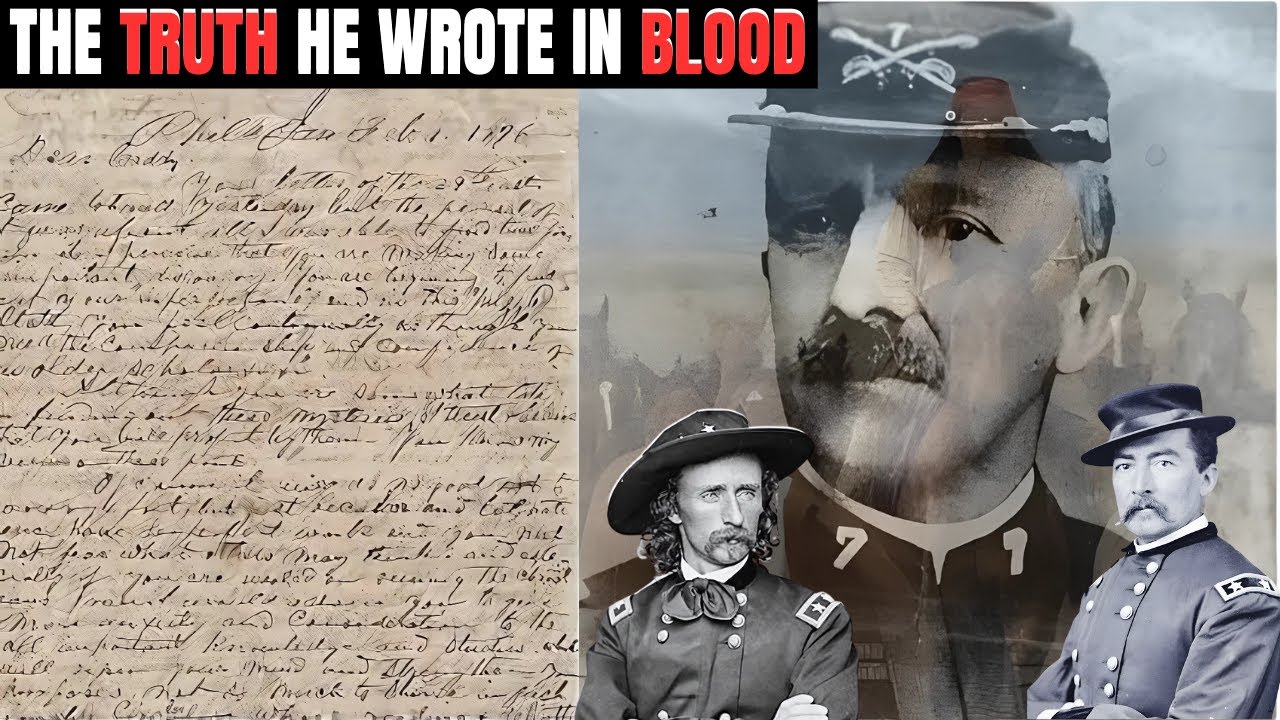
It remains a rare personal record of one of the most famous military defeats in American history. On June 22, General George Armstrong Custer led the regiment of about 605 men, accompanied by 36 scouts, guides, and interpreters, toward the trail discovered by Major Marcus Reno. The column pushed forward for miles each day in pursuit of their adversaries. Along the Rosebud River, the soldiers found evidence of a sun dance circle and a fresh scalp hanging on a stick.
Barnum noted these grim signs as warnings of what lay ahead. He was ordered to check a creek for tracks, then returned to camp only to march another eight miles before stopping near an abandoned village that was roughly two days old. The abandoned village confirmed that the force they were chasing was massive. Custer consulted six Crow scouts who knew the region well, and they confirmed the trail led toward the Little Horn River.
Barnum, along with six Crows, five Rees, and one frontiersman, pushed through the night, riding for nearly 36 sleepless hours to reach a hill overlooking the valley. At 2:30 a. m. , Barnum’s party arrived at the hill and hid in the brush until dawn.
When the sun rose, they saw smoke rising from a vast Native American camp in the distance. Scouts estimated that between 2,000 and 3,000 ponies were grazing across the plains. Barnum dispatched a message to Custer, who received it at 8:00 a. m.
As Custer’s column advanced, two Sioux warriors spotted the soldiers. Barnum, with interpreter Charlie Reynolds and two Crow scouts, attempted to intercept them but failed. The element of surprise was lost. By 2:30 p.
m. , Major Reno led three companies, A, G, and M, directly into the village. Barnum joined Company A, dismounting to fight on foot, but the soldiers were quickly surrounded and driven back. They fled through timber to higher ground, pursued relentlessly.
In the chaos, Lieutenants McIntosh and DeRudio went missing, and Lieutenant Hodgson was killed. By the time Reno regrouped, more than a third of his command was gone. Colonel Benteen soon arrived with three companies along with the pack train, bringing the total to about 300 men. Gunfire could be heard from Custer’s distant position, but Reno’s battered forces did not advance further.
They established a defensive position on the bluffs, which offered some safety for horses and wounded soldiers, but it also trapped them under nearly constant fire. That night, they endured waves of attacks. Barnum wrote that the young soldiers were hardened into grim veterans in only hours. More than 40 wounded men lay in a makeshift hospital, shielded by mules and horses.
The lack of water became unbearable. Soldiers risked their lives making runs to the river under heavy fire. Many were killed or maimed in the attempt. The stench of death spread, and morale cracked under the heat, thirst, and swarms of flies.
Still, they held their ground. By June 26, the firing slowed as the Native American encampment began to move. At dawn, Barnum’s men realized why the warriors had dispersed: General Terry was approaching with reinforcements. By mid-morning, Terry arrived with infantry and cavalry, joined by Crow scouts who had escaped.
The truth soon became clear. Custer and his entire command had been annihilated. The ground was littered with nearly 300 dead, many of the bodies stripped and mutilated. Sixteen officers were killed, including Custer, his brothers, and trusted lieutenants.
Barnum himself had been lightly wounded in both legs during the fighting. For families back home, the losses were devastating. Mrs. Custer lost her husband and two brothers-in-law, while Mrs.
Calhoun lost her husband, three brothers, and a nephew. Barnum closed his letter with grim reflection. Half the officers were dead, and the regiment was shattered. He now commanded the remnants of Company A, barely elevated yet forced into leadership.
He recalled General Sheridan’s warning against dividing forces, a warning that had been ignored at fatal cost. Facing an enemy he estimated at 4,000 strong, Barnum acknowledged the scale of what they had faced. He reassured his parents of his safety and signed off as their loving son. Barnum’s letter presents a battle that was more than just Custer’s last stand.
It was a series of warnings unheeded, courage tested under impossible conditions, and decisions that sealed the fate of hundreds. Where one letter survived, an entire command was silenced. Historians have long debated whether the defeat was inevitable or the result of human error.
Barnum’s account, written in the immediate aftermath, suggests that the disaster was not preordained but shaped by choices made in the field.