On Saturday, 17 April 2021, the heavy oak doors of St George’s Chapel at Windsor Castle opened for a royal funeral unlike any Britain had seen. Strict pandemic laws limited the gathering inside the chapel to just 30 mourners. Decades of royal protocol collapsed under that restricted number. Old comrades-in-arms, personal secretaries, devoted servants, and Philip’s German relatives were all cut from the guest list. Prince Harry walked behind the coffin amid a deep gulf of scandal, while Queen Elizabeth II prepared to sit utterly alone in black mourning clothes.
Yet there was one woman walking among the immediate royal family whose presence silenced the critics: Penelope Knatchbull, Countess Mountbatten of Burma. For more than 30 years, Penny Knatchbull had been Prince Philip’s closest friend outside his marriage. She rode beside him in his carriage on early morning tours through the Sandringham woods. She organised his private papers, managed his personal projects, and held an open invitation to visit him at Wood Farm after his retirement from public life. Tabloid newspapers whispered about an illicit affair. Court conservatives watched their growing bond with suspicion and doubt. But when the Duke drew his last breath at the age of 99, Penelope was no outsider. She was a cornerstone of the royal household, personally welcomed by the Queen.
To understand how Penelope Eastwood entered the Windsors’ inner circle, one must look at the tragic history of the Mountbatten family. Penny was not born into the aristocracy. Her father, Reginald Eastwood, was a butcher and businessman who founded the famous Angus Steak House restaurant chain. He began with a single shop, then expanded forcefully across London, building a commercial enterprise that generated considerable private wealth. He sent his daughter to study in Switzerland, then to the London School of Economics, ensuring she gained both social refinement and a sharp practical mind. Penny grew up with an analytical brain, an athletic build, and a complete absence of upper-class affectation.
In October 1979, she married Norton Knatchbull, Lord Romsey. Norton came from royal aristocratic stock. His grandfather was Louis Mountbatten, the first Earl Mountbatten of Burma, the great naval commander and former Viceroy of India who engineered the royal love story between the Greek Philip and Princess Elizabeth in the late 1930s. Prince Charles, then Prince of Wales, served as Norton’s best man at the wedding at Romsey Abbey. Prince Philip was Norton’s godfather, mentor, and legal guardian.
The wedding, however, took place under the bloody shadow of massacre. Just two months earlier, on 27 August 1979, an IRA remote-controlled bomb exploded under Mountbatten’s wooden fishing boat, Shadow V, off the coast of Mullaghmore in County Sligo, Ireland. Mountbatten was killed instantly. The blast also tore through his family, killing Norton’s 14-year-old younger brother Nicholas, and their 83-year-old grandmother, the Dowager Lady Brabourne. A local boat boy named Paul Maxwell, aged 15, was also killed. Norton’s mother Patricia and his father miraculously survived the explosion after undergoing hours of emergency surgery.
Penny did not enter a family enjoying the comfortable privileges of high rank. She entered a household shattered by murder, trauma, and suffocating grief. Instead of withdrawing or succumbing to shock, the 26-year-old bride took charge immediately. She became the operational pillar of Broadlands, the historic Mountbatten family estate spanning 5,000 acres in Hampshire. Broadlands was not merely a private country house. It was a living museum filled with state gifts, private historical archives, and extensive agricultural holdings. It was also the home where Princess Elizabeth and Prince Philip had spent their honeymoon in 1947, and where Charles and Diana would spend the first days of their marriage two years later.
Penny took responsibility for the estate accounts, sorted the chaotic piles of paperwork left in the wake of the terrorist attack, and restored order to the estate offices. She supported her shocked husband, who was struggling under the double burden of sudden succession and the violent loss of his brother and grandfather. Prince Philip watched the young bride closely. Mountbatten had been the only real father Philip ever knew. When Philip’s own father, Prince Andrew of Greece, abandoned his family and drifted between Monte Carlo hotels, and his mother, Princess Alice, was committed to a sanatorium, it was Uncle Dickie Mountbatten who took charge of the young prince. Mountbatten sheltered him, directed his naval education, funded his living expenses, and advised him through the difficult early years of his marriage to the future Queen.
For Philip, Mountbatten’s murder was a deeply personal blow. Watching over Norton and his capable new wife was not mere social courtesy. It was a sacred blood debt. In the early years of the marriage, Philip’s interactions with Penny were marked by family gatherings, commemorative anniversaries, and formal Mountbatten Trust meetings. He admired her calm, her direct manner of speech, and the quiet efficiency with which she managed Broadlands. She never flattered the royals. She never bowed with nervous hesitation, and she never indulged in self-pity about the dark shadows hanging over the family estate.
Charles also leaned heavily on the couple. Broadlands became Charles’s private sanctuary away from London’s suffocating scrutiny. He wandered the grounds with Norton and spent hours talking with Penny, finding in her a sensible, realistic listener who understood the complex psychology of royal duty without being overwhelmed by it. But while Charles treated Penny as a supportive peer, Philip saw in her a resilience similar to his own. Both had experienced sudden upheaval in their early lives. Both had learned to navigate ancient institutions from an outsider’s perspective, and both possessed a strong practical streak that favoured hard work over empty conversation.
For more than a decade, Penny remained on the fringes of the immediate royal family circle. A trusted relative by marriage, a familiar face at Sandringham shooting weekends, and a devoted guardian of the Mountbatten legacy. But the bond that transformed her from a respected family relation into Philip’s closest personal friend was not forged in Mountbatten history. It was forged in an unspeakable private catastrophe that nearly ended her life at Broadlands.
In 1991, the Knatchbull household was struck by another devastating blow. Their five-year-old daughter, Leonora, the youngest of their three children, was diagnosed with kidney cancer. What followed was 14 gruelling months of hospital visits, intensive treatments, and desperate medical consultations across Europe. Throughout that ordeal, Penny and Norton fought to save their child while shielding their two older children, Nicholas and Alexandra, from the relentless intrusion of the British tabloid press. Prince Charles and Princess Diana offered private support, arranging private travel and inviting Leonora aboard their holiday yacht in the Mediterranean during a brief period of recovery.
In October 1991, Leonora died. She was buried on the grounds of Broadlands near the quiet banks of the River Test. This loss broke Norton Knatchbull. He fell into a chronic, paralysing depression, unable to face the daily administrative demands of the estate or the unbearable silence of the family home. He withdrew into himself, spending hours in dark rooms, emotionally crippled by the recurring curse that seemed to haunt his family name. Penny was left alone. She had to manage a multi-million-pound rural enterprise, care for her two grieving older children, look after a shattered husband, and swallow the bitterness of burying her youngest child. Visitors to Broadlands that winter described the estate as frozen in grief, with Penny bearing the logistical and emotional burden entirely on her own.
During this collapse, Prince Philip made a quiet, decisive intervention. Philip was known throughout the Commonwealth for his sharp tongue, his hatred of public sentimentality, and his contempt for self-pity. Yet beneath his naval discipline was a man who understood personal devastation better than most. He had lost his favourite sister, Cecile, along with her husband and two children, in a plane crash in 1937 when he was just 16. He had walked behind their coffins in Nazi-occupied Darmstadt. He had seen his family driven into exile, his father disowned, and his uncle murdered on a fishing boat. He knew that words of comfort were useless to a mother who had just buried her child. Platitudes, sympathy cards, and religious condolences could not fill the terrifying void left by the death of a five-year-old daughter.
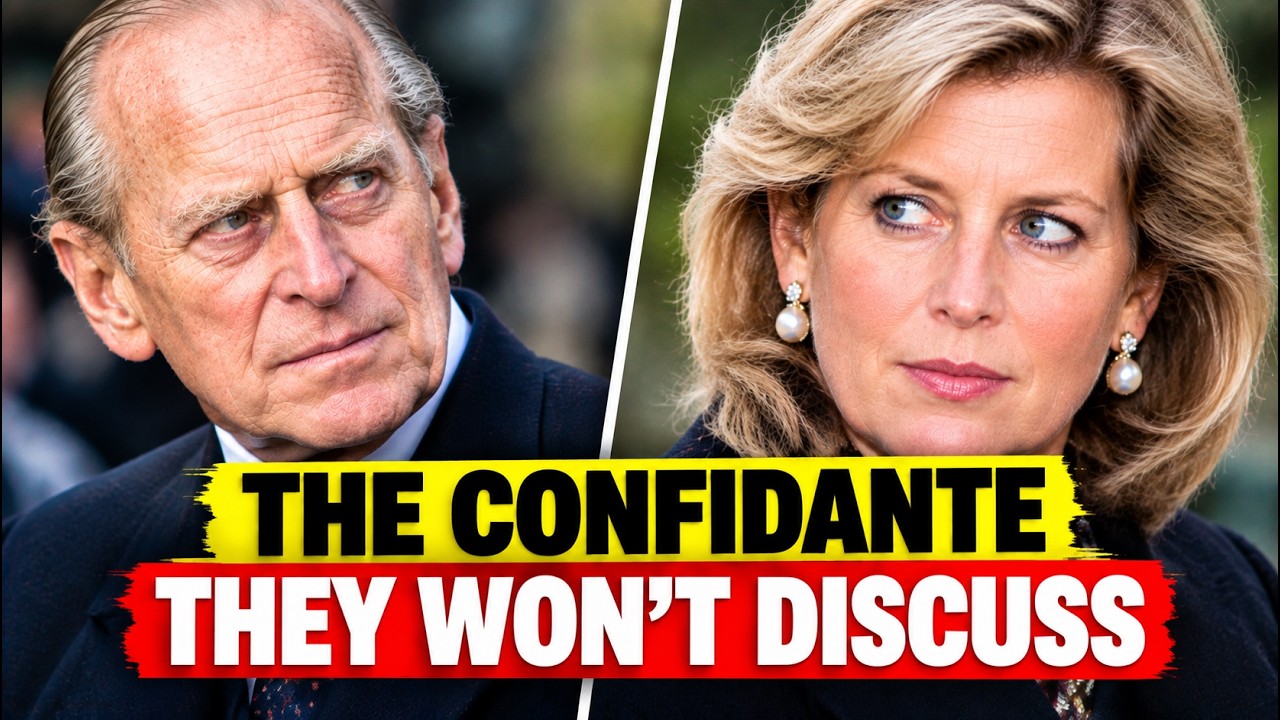
In early spring 1994, Philip invited Penny to the Sandringham estate in Norfolk. He did not invite her for formal tea in the drawing room, nor did he arrange a quiet garden tour. Instead, he took her to the stables, led her to a four-wheeled carriage, and placed the thick leather reins of a team of horses directly into her hands. Carriage driving was Philip’s personal obsession. When severe arthritis forced him to give up polo in his fifties, he turned to competitive carriage driving, writing the official rulebook for the sport internationally. It was a gruelling discipline requiring intense concentration, upper-body strength, quick reflexes, and a deep understanding of equine psychology. One mistake at a turn could overturn a half-ton wooden carriage, throwing the driver and horses into ditches or stone walls.
Philip pushed Penny relentlessly to her limits. He made her learn the mechanics of four-wheeled carriages, harness maintenance, and the management of four-horse teams on rough country tracks. In the biting Norfolk coastal winds, he did not treat her as a grieving mother in need of gentleness. He treated her as a student who must bear responsibility. He demanded absolute focus. If a horse drifted, he shouted a firm command. If she hesitated at an obstacle, he ordered her to drive through it. That discipline saved her. Penny later admitted to close friends that the physical terror and mental focus required to control four unruly horses in the woods gave her a reason to wake up and leave the empty rooms of Broadlands. She could not think about her dead daughter while wrestling 2,400 pounds of horseflesh at a sharp turn.
In Philip, she found someone who refused to handle her tragedy with excessive caution. He gave her back her purpose in life, and in doing so laid the foundation for a partnership that would withstand three decades of palace whispers, family crises, and public scrutiny. The carriage-driving tracks on the Sandringham estate provided a perfect arena for a sport that demanded total physical submission. Sandringham spans 20,000 acres of wetlands, dense pine forests, and windswept marshes near The Wash in west Norfolk. The estate roads are not paved for tourist buses. They are rough gravel tracks, sandy trails, and muddy causeways cutting through cold coastal air. Prince Philip knew every yard of this terrain. He had mapped the estate himself from the seat of his specially designed carriages, learning how wet soil interacted with steel wheels after a night of autumn frost.
When Penelope Knatchbull climbed into the passenger seat beside the Duke of Edinburgh that cold spring of 1994, she was entering a world that tolerated no error. Competitive carriage driving is often misunderstood by the public as a leisurely rural activity. In reality, it is one of the most physically dangerous equestrian sports recognised by the International Equestrian Federation. The four horses pulling the carriage are selected to be identical in endurance, weight, and stride length. Together, these horses generate tremendous momentum. The carriage itself weighs between 700 and 1,200 pounds, with no engine, no protective cage, and no power steering. Control is achieved entirely through two thin leather straps in the driver’s left hand, supported by a light touch of the whip in the right hand, and vocal commands shouted above the noise of 16 iron hooves.
Philip took up the sport in 1973 after chronic wrist injuries and severe arthritis forced him to retire from competitive polo at age 51. Rather than settling for golf or fishing, Philip immersed himself in this brutal discipline. He bought European horse carriages, dismantled them in the royal workshops at Windsor, and studied their suspension systems. He gathered engineers, blacksmiths, and wheelwrights, redesigning balance plates and using modern steel alloys to make the vehicles lighter, faster, and less prone to tipping on sharp turns. He represented Great Britain in six world championships and three European championships, winning team gold at the 1980 World Championship at Windsor. He was not seeking an aristocratic hobby. He was practising a form of sporting aggression that kept his mind razor-sharp.
He applied that same intensity when training Penny Knatchbull. Initially, Penny worked as his assistant on the back of the carriage. In carriage driving, the assistant, often called the “groom,” is not a passive rider. The groom stands on a small metal platform fixed behind the driver’s seat, holding two padded handles. During the marathon phase of competition, when the carriage races at 15 miles per hour through water obstacles, mud pits, and sharp wooden mazes, the groom must throw their entire body weight from side to side to maintain the stability of the centre of gravity. If a carriage groom is slow to move at a sharp turn, the carriage overturns, trapping horses and riders under hundreds of pounds of wood and iron. Standing on that rear platform, Penny was soaked by freezing water obstacles, splattered with mud from horse hooves, and bruised by the violent vibration of the suspension system. Philip never apologised for the roughness of the course. If her grip slipped, he scolded her. If she leaned the wrong way on a sloping incline, he stopped the team abruptly and made her repeat the manoeuvre until her arms ached and her palms blistered inside her wet leather gloves.
The physical exhaustion was intentional. Philip knew that trauma traps the mind in a vicious circle of unanswerable questions. By forcing Penny into a sporting routine that demanded absolute moment-by-moment vigilance, he was breaking that circle. She could not mourn Leonora while calculating the approach angle to a wooden bridge. She could not think about her crumbling marriage while balancing on a steel footplate above an icy ditch. Within 12 months, Philip moved her from the groom’s platform to the driver’s seat. He handed her the four-in-hand reins. Driving four horses simultaneously, two in front and two behind, requires tremendous forearm strength and an intuitive understanding of animal temperament. The driver must feel the precise tension in each horse’s mouth through the leather lines, keeping the leaders straight and preventing the wheelers from overtaking them.
Penny showed exceptional natural talent for the sport. She possessed the long-limbed build, the calm pulse, and the quiet authority that horses respond to. Under Philip’s constant direction, she learned to navigate complex obstacle courses, balance the carriage through deep sand, and adjust the team’s rhythm across the 20-kilometre endurance phase without straining the animals’ lungs. Soon the Duke began entering her in national competitions under her own name. At the Royal Windsor Horse Show, an annual gathering on the private grounds of Windsor Castle that Philip had helped manage for decades, Penny became a regular competitor in national driving classes. Philip watched from the ropes, stopwatch in hand, criticising her lines through the obstacles and inspecting the saddlery with the eye of a Royal Navy officer conducting a deck inspection.
Their shared sporting discipline created an unexpected social routine. Carriage driving required constant maintenance. When competitions ended, the work continued in the stables and repair sheds. Philip and Penny spent long afternoons in the royal stables at Sandringham and Windsor, massaging stiff leather harnesses with bone oil, inspecting wheel bearings, and discussing veterinary reports on team injuries. To estate workers, stable officials, and gamekeepers, their relationship was practical, professional, and strikingly free of formality. Philip was known for his intense impatience with displays of royal reverence. He despised courtiers who agreed with him merely because he was married to the Queen. He hated small talk, forced laughter, and nervous flattery. Penny never flattered him. If Philip offered an illogical assessment of a horse’s endurance, Penny told him he was wrong. If he directed unfair criticism at her timing over an obstacle, she answered back, pointing to the slippery mud on the course that had affected the horse’s footing.
Philip thrived on that resistance. He found in Penny someone who treated him as a skilled sporting partner, not as an untouchable Prince Consort. Their carriage conversations naturally expanded beyond horses to other subjects. As they drove through the quiet lanes of West Newton and Flitcham, Philip found in Penny an intellectual partner who could match him. Philip had spent his adult life as a voracious reader of military history, naval strategy, environmental conservation, evolutionary biology, and theology. He possessed an extensive private library of thousands of heavily annotated volumes. Penny, with her London School of Economics degree, had the intellectual training to engage him on those subjects without falling into vague generalities. They discussed modern British agricultural policy, the economic management of private estates, and the historical precedents governing royal institutions.
For Penny, Broadlands had become a complex burden. With Norton Knatchbull sinking into chronic depression and withdrawing from estate affairs, the administrative responsibility for managing 5,000 acres of Hampshire land, residential leases, and commercial fishing on the River Test fell entirely on Penny. The Mountbatten family trustees were demanding. The historic properties required constant capital investment, and the tax burdens were staggering. Philip became her primary business adviser. The Duke had managed the Queen’s private estates, Sandringham and Balmoral, for more than 40 years. He had modernised their farming techniques, introduced commercial forestry, balanced estate budgets, and eliminated the wasteful practices inherited from Victorian management. When Penny faced disputes with tenants, structural failures in historic brickwork, or tax liabilities concerning the Mountbatten archives, Philip would sit with her at Broadlands or Wood Farm, reviewing maps, records, and architectural surveys. He gave her the blunt, unemotional advice she needed to prevent the Mountbatten legacy from collapsing under debt and neglect.
Yet the visibility of their relationship began to attract attention. In the insular world of the British countryside, high-society news travels fast. By the late 1990s, local landowners, hunt masters, and estate workers noticed that whenever Prince Philip was staying in Norfolk outside the official royal shooting weeks, Lady Romsey’s car was parked near the stables. They saw the Duke of Edinburgh, then in his late seventies, driving his open Land Rover down the back lanes of Wolferton with the elegant blonde Lady Romsey beside him. They saw them sharing packed sandwiches from metal tins at the edge of the marshes, laughing together while waiting for the horse teams to drink water and be wiped down. To outside eyes, the relationship carried all the hallmarks of an aristocratic romance. Penny was attractive, tall, and 32 years younger than Philip. Her husband was absent, living a reclusive life inside the closed wings of Broadlands. Philip was married to a Queen permanently constrained by her red boxes, weekly sessions with prime ministers, and official international tours.
The social circle surrounding the court began to whisper. Old courtiers, raised on the strict social etiquette of the mid-20th century, wondered why the Duke of Edinburgh was devoting so much of his private time and personal energy to the wife of his godson. People exchanged whispers at dinner tables in Gloucestershire and Wiltshire. Questions were raised about whether this new companion was crossing the invisible boundaries that protect the royal family from scandal. The palace press office began monitoring the chatter. Fleet Street correspondents, sensing that a big story might be developing on the private tracks of Norfolk, began sending photographers to the gates of Sandringham and the showgrounds at Windsor.

What the gossip and the tabloids failed to understand was that the British royal family does not operate like any ordinary family. The Windsors had survived decades of wars, abdication, and marriage breakdowns by adhering to an unwritten code of personal service and loyalty. Behind the stone facades of Buckingham Palace, the most important figure in Prince Philip’s life, Queen Elizabeth II, watched this growing friendship not with anger or suspicion, but with a deep practical understanding that would soon confound the entire British press. Fleet Street editors had spent decades searching for cracks in the royal marriage, and by the late 1990s, they believed they had found one. The British press had already feasted on the collapse of three royal marriages. The bitter public divorce between Prince Charles and Princess Diana, the separation of the Duke and Duchess of York, and the quiet dissolution of Princess Anne’s marriage to Mark Phillips had turned the royal family’s private life into daily tabloid serials.
Royal correspondents were trained to hunt for private grievances, suppressed relationships, and family fractures. In that scandal-saturated atmosphere, the intense public presence of Penelope Romsey emerged as a beacon. The tabloids began tracking her movements with meticulous precision. Whenever the Duke of Edinburgh attended the Royal Windsor Horse Show, cameras bypassed distinguished foreign dignitaries and royal relatives to find Penny sitting in the royal box or standing beside Philip’s carriage. Reporters counted the hours they spent together, documented their joint appearances on palace driveways, and noted that Penny was often seen in Philip’s company during Sandringham shooting weekends while the Queen was occupied with official duties in London. Gossip columns gave her a biting nickname: “Also, Penny.” The name came directly from palace staff who noticed a pattern in Philip’s planning of his social activities. Whenever the Duke drew up a guest list for a private lunch, a carriage-racing dinner, or a Sandringham weekend, his handwritten notes always concluded with the same instruction: “Also, Penny.”
For tabloid editors hungry for another royal betrayal story, the conclusion seemed obvious. Philip was an ageing royal prince who had long fuelled silent rumours with his previous friendships with society ladies. Penny was a beautiful, educated woman three decades his junior, and her husband was emotionally withdrawn. The story wrote itself. But the tabloids hit an impenetrable wall: the explicit, public endorsement of Queen Elizabeth II. Those who assumed the Queen felt threatened or insulted by Penny completely misunderstood the nature of Her Majesty’s marriage. Elizabeth married Philip in November 1947. Their partnership was forged through the harsh post-war years, the sudden death of King George VI, and seven decades of extraordinary public pressure. Elizabeth loved Philip deeply, but she also knew him completely. Philip was a restless, energetic man with an intellectual curiosity that palace life rarely satisfied. He was an organiser, an engineer, a reader of complex history, and an athlete who needed constant physical movement to discharge his nervous energy.
The Queen, by contrast, lived under the strict discipline of the British constitution. Every day of her adult life, except Christmas Day, large leather boxes arrived at her desk, filled with government papers, parliamentary bills, and foreign intelligence reports. She held weekly audiences with the Prime Minister, performed endless ceremonial handshakes, conducted investitures and foreign tours, and bore the administrative burdens of governing a modern constitutional monarchy. She simply did not have the physical capacity or the time to spend five hours in a cold horse carriage bouncing over muddy Norfolk fields. Nor did she share Philip’s deep passion for reading agricultural blueprints, studying carriage suspension systems, or discussing historical texts late into the night. The Queen recognised that Philip needed an outlet, and she recognised that he had found in Penny a companion who met his needs without making personal demands on his royal position.
Instead of trying to diminish Penny’s presence, the Queen did the exact opposite. She absorbed Penny directly into her personal sanctuary. At the Royal Windsor Horse Show, where tabloid photographers gathered with long lenses hoping to capture awkward glances between the Queen and her husband’s companion, Elizabeth made her position unmistakably clear. She invited Penny to sit directly beside her in the royal box. Photographs showed the Queen and Lady Romsey leaning toward each other, laughing openly, sharing blankets against the spring chill, and watching Philip compete from the same wooden barrier. The Queen went further. During the annual holidays at Balmoral Castle in Scotland, where entry is guarded with military precision and invitations to outsiders are restricted to the closest circle, Penny became a permanent house guest. Courtiers noted with astonishment that the Queen frequently chose Penny to ride in the passenger seat of her green Land Rover on trips to Crathie Kirk. In the evenings, after formal dinner services had concluded and senior courtiers had retired, Penny was one of the very few non-royal guests invited into the private sitting rooms to watch television and complete jigsaw puzzles with the Queen and the Duke.
By publicly declaring Penny a trusted friend of her own, Queen Elizabeth delivered a masterclass in royal statecraft. She deprived Fleet Street of the scandal it craved. If the Queen was openly spending her private weekends laughing and travelling with Penny, how could anyone claim Penny was an illicit mistress tearing apart the royal marriage? The gossip was neutralised not through hostile press denials, but through direct visual evidence of complete family unity. The friendship faced an even sterner personal test in 2010 when disaster struck Penny’s household again. After more than 30 years of marriage, Norton Knatchbull made a sudden and devastating decision. He left Penny, abandoned Broadlands, and moved to the Caribbean island of the Bahamas to begin a public relationship with an English designer named Eugenie Nuttall.
For the Knatchbull family, this betrayal was both a public and private earthquake. Broadlands was a vast 5,000-acre estate with dozens of tenants, agricultural operations, historical archives, and millions of pounds of operating debt. Norton’s departure left the institution entirely without a formal head. Had Penny surrendered to anger, self-pity, or humiliation, the estate could have faced administrative collapse or forced liquidation. Instead, Penny held her ground. She did not seek a public divorce or wage a bitter media campaign. With quiet determination, she filled the void left by her husband. She took direct control of the entire Mountbatten estate, managing farm leases, overseeing commercial renovations, and directing the family foundations. She protected the inheritance of her only surviving son, Nicholas, and maintained Broadlands as a fully functioning private sanctuary.
Prince Philip and Queen Elizabeth watched her handle the public humiliation with great admiration. Philip despised weakness of character more than anything else. In Norton’s abandonment of his family duties, Philip saw an unforgivable failure of responsibility. But in Penny’s quiet, disciplined refusal to surrender, Philip saw the same stoic resilience he had practised his entire life. The royal family rallied around her with unambiguous force. When Norton returned to England a few years later, ill and seeking to reclaim his place at Broadlands, Penny received him on practical terms, housing him in a converted barn on the estate while retaining full control of the financial affairs and family operations. She acted not out of sentimental romance, but out of duty to the Mountbatten legacy.
The Queen and Prince Philip rewarded this loyalty by drawing the circle even closer. In 2017, following the death of Norton’s mother, Patricia, Countess Mountbatten of Burma, Norton inherited the historic earldom originally created for Louis Mountbatten. Penny became Countess Mountbatten of Burma, the same title held by Philip’s beloved uncle. She was no longer merely a friend who shared his carriage-driving hobby. She had become the official guardian of the Mountbatten name. Around this time, Philip’s public life was drawing to a close. In August 2017, at the age of 96, the Duke of Edinburgh carried out his final solo official engagement in the forecourt of Buckingham Palace, taking the salute from the Royal Marines in heavy rain. He had completed 22,219 solo engagements and delivered nearly 5,000 speeches over six decades of service. His work for the British state was finished. He packed his bags, left London, and retreated to the quietest, most remote corner of the royal world: Wood Farm at Sandringham.
With the Duke’s complete retirement, the court around him emptied. Private secretaries, equerries, and household assistants who had spent decades managing his royal diary were reassigned or retired. Philip was left alone with his books, his watercolours, and his thoughts. In this final, reclusive chapter of Philip’s long life, Penny’s true role emerged. While the rest of the world moved on, regarding Philip as a living historical monument who had slipped from view, Penny remained at his side. She travelled to Norfolk not for public shows or royal occasions, but to sit by the fireplace in a modest red-brick farmhouse and help an ageing prince navigate the quiet final years of his century-long journey.
Wood Farm sits in seclusion at the western end of the Sandringham estate, hidden behind dense belts of pine trees and windbreaks near the village of Wolferton. It is not a palace. It has none of the towering stone facades, gilded cornices, or sweeping ceremonial driveways of Windsor Castle or Buckingham Palace. It is a modest five-bedroom red-brick farmhouse, originally built as an estate property and later used to host royal guests during winter shooting parties. For Prince Philip, who had spent 70 years enduring the suffocating protocol of court life, Wood Farm represented something invaluable: escape from the institution itself. When the Duke of Edinburgh formally retired from public life in August 2017, he did not stay in London. He moved directly to Wood Farm. The house was stripped of formal royal pomp. He brought no liveried servants, no private secretaries to manage 15-minute appointment schedules, and no armed police inside the living quarters. A small, loyal domestic staff handled daily meals, while a police patrol guarded the surrounding woods.
Philip occupied himself with watercolour painting, reading dense historical biographies, sitting by the open fire, and watching the grey North Sea clouds crawl over the Norfolk marshes. Yet retirement carried its own harsh burdens. At 96, one’s world inevitably shrinks. Old naval comrades were gone. Lifelong friends had passed away. Contemporaries from the royal family who shared the post-war era had departed. And as his mobility declined and his eyesight began to fail, there was a danger that Wood Farm’s isolation would become total isolation. During those quiet final years, Penny Knatchbull became his indispensable link to the living world. Her visits to Norfolk followed a regular, unannounced rhythm. She drove from Broadlands in Hampshire, a journey of more than three hours through central and eastern England, leaving behind the administrative pressures of her 5,000-acre estate. She did not arrive as an aristocrat seeking royal favour. She arrived as a trusted companion who knew how to handle Philip’s temper, his fierce pride, and his deep hatred of being treated as a fragile antique.
Inside Wood Farm, their days were surrounded by papers. Prince Philip had assembled an extraordinary personal archive spanning nearly a century. He possessed private correspondence with European monarchs, prime ministers, scientists, and military leaders. He had private diaries, architectural sketches, sporting records, and detailed notes on environmental conservation dating back to the 1950s. Penny helped him sort through these stacks of documents. She possessed the administrative training from the London School of Economics to distinguish what was historically vital from what was mere domestic clutter. Together they catalogued his papers, organised his vast personal book collection, and sorted through decades of correspondence relating to the Mountbatten family trustees. Philip had always felt a deep personal responsibility for preserving the Mountbatten archive. The violent death of his uncle, Louis Mountbatten, had left hundreds of historical files in a state of legal ambiguity. Penny was now the legal guardian of that legacy at Broadlands. In the quiet living room of Wood Farm, the ageing prince and the countess spent long afternoons reviewing those historical files, ensuring that the letters, memoirs, and photographs documenting the Mountbatten family’s influence on the British Crown were properly preserved for future historians.
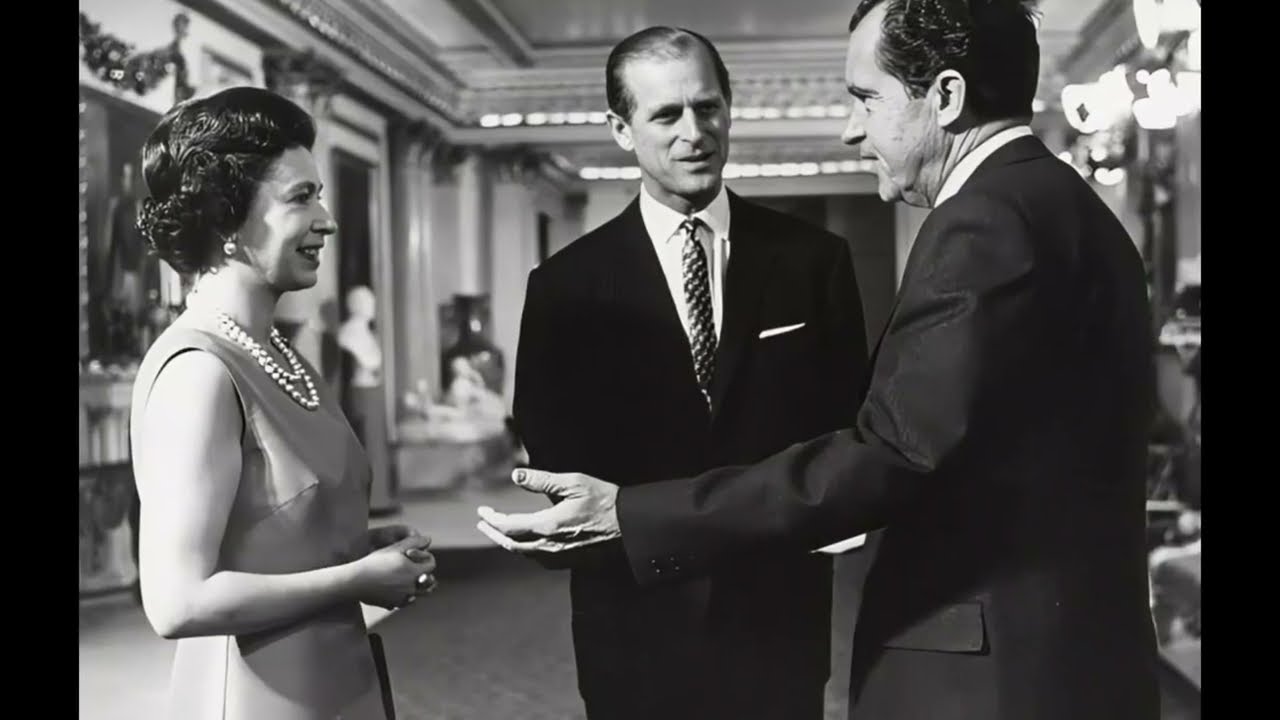
Their dialogue was direct and unvarnished. Philip hated the fawning sycophancy that ageing often brings. As he grew frailer, courtiers and even family members spoke to him with excessive caution, afraid of disturbing him or provoking his famous temper. Penny never walked on eggshells with him. She spoke to him with the same robust frankness she had used 20 years earlier in the horse carriage at Sandringham. If a draft letter was too harsh in tone, she told him to soften it. If he refused to take recommended rest, she urged him to be sensible. When the Duke grew frustrated with his physical limitations, she listened without offering condescending sympathy. She understood that a proud naval officer who had commanded warships in World War II did not want pity. He wanted practical, intelligent conversation. She also brought him news from the outside world that palace filters often concealed. Philip had always been fascinated by British agriculture, land management, and rural economies. Penny supplied him with frank updates from the agricultural front lines at Broadlands: the real price of wheat, tenant disputes, the cost of updating farm machinery, and the impact of national economic policies on rural workers. She relayed reports from the competitive carriage-driving circuit, describing how new competitors were tackling the hazards at Windsor and Lowther.
Most importantly, Penny served as a discreet confidante during a period of severe institutional turmoil. Between 2017 and 2020, the royal family endured unprecedented internal crises. Prince Andrew’s disastrous television interview regarding his relationship with Jeffrey Epstein in November 2019 led to his sudden removal from public duties. Just two months later, in January 2020, the Duke and Duchess of Sussex announced their intention to step back from royal duties and move to North America, an event known as “Megxit.” Philip felt deep distress over these developments. He had spent his entire adult life sacrificing his personal identity to build and protect the institution of the Crown. It was deeply painful to watch his family unravel amid public feuds, media spectacles, and commercial disputes in his final years. He did not confide these family grievances publicly. He did not discuss them with journalists. He discussed them with Penny. She understood the pressures of family scandal from her own experience. She had survived the public humiliation of her husband’s departure, the weight of public scrutiny, and the legal battles necessary to maintain a great estate. She knew how to keep a secret with steely determination. Throughout those turbulent months, when the press was desperate for any leak from inside the royal family, not one word of Philip’s private thoughts reached the newspapers. Penny maintained an impenetrable silence.
In this high-stakes environment of the British court, where private conversations often find their way into memoirs and anonymous briefings, this discretion was extremely rare. In early 2020, this quiet routine at Wood Farm was violently disrupted by the arrival of the COVID-19 pandemic. With the British government announcing national lockdowns to protect the elderly, medical advisers concluded that an isolated farmhouse in Norfolk was no longer a safe base for a 98-year-old prince with complex health requirements. Philip could not be adequately protected without an intensive medical cordon. In March 2020, Philip was moved from his beloved Wood Farm to Windsor Castle, joining Queen Elizabeth inside a strictly managed quarantine unit that palace staff nicknamed “HMS Bubble.” A small, devoted team of staff, chefs, assistants, cleaners, and security officers agreed to complete isolation from their families to protect the Queen and her husband from viral infection. This move saved Philip’s life during the first waves of the virus, but it effectively ended his quiet domestic routine at Wood Farm. Visitors were strictly forbidden. Even immediate royal family members, children and grandchildren alike, could only speak to the Duke by phone or video call.
Penny was suddenly cut off from the man she had visited and supported for years. From Broadlands, she followed the news like the rest of the country, knowing that Philip was confined to the private apartments at the top of Windsor Castle, his mobility declining, his century of life approaching its inevitable end. She sent letters through the palace postal network, maintaining contact through written notes that were sterilised before reaching the Duke’s rooms. Philip continued to ask about Broadlands, about the horses, about the progress of estate projects, clinging to those familiar details as his strength faded. In February 2021, Philip’s health deteriorated sharply. He was admitted to King Edward VII’s Hospital in central London, then transferred to St Bartholomew’s Hospital for surgery on a pre-existing heart condition. The nation braced for the end. Yet Philip was determined to die in his own bed, not in an anonymous medical ward. In mid-March, against the advice of some medical staff, the Duke was discharged from hospital and returned to Windsor Castle.
During those final weeks in April 2021, Prince Philip lay quietly in his private rooms overlooking the East Terrace of Windsor Castle. Queen Elizabeth was at his side whenever her duties allowed, holding his hand as his breathing slowed. On the morning of Friday, 9 April 2021, Prince Philip, Duke of Edinburgh, passed away peacefully at the age of 99, just two months short of his 100th birthday. The announcement was affixed to the black iron gates of Buckingham Palace at noon. Across the United Kingdom, flags were lowered to half-mast. Westminster Abbey tolled its great bell 99 times, and royal gun salutes echoed from the Tower of London to Edinburgh Castle. At Broadlands, Penny Knatchbull received the news in private. The mentor who had pulled her from the pit of deep grief in 1994, the man who taught her to drive horses through the cold Norfolk mud, and the prince who had trusted her with his thoughts and historical papers was gone.
Now she faced one final, gruelling public challenge. With the British government’s emergency pandemic laws limiting funerals to a small gathering of 30 people, the royal household was forced to make impossible choices. The public expected only blood royals to attend. Yet as the nation prepared for the final farewell at Windsor, an extraordinary message arrived from the Lord Chamberlain’s office addressed personally to the Countess Mountbatten of Burma. When the Lord Chamberlain’s office finalised the ceremonial arrangements for Operation Forth Bridge, the United Kingdom was bound by the legal restrictions of the health protection regulations. Under the emergency measures in force that spring of 2021, public attendance at funerals was limited to 30 individuals. For an ordinary family, such restrictions were painful. For the royal family of the United Kingdom, they created an unprecedented constitutional and personal dilemma.
Prince Philip’s funeral had been planned, reviewed, and archived over 25 years. The original schedule called for a service with 800 guests at St George’s Chapel. This included European monarchs, Commonwealth prime ministers, British government ministers, Royal Navy admirals, Duke of Edinburgh Award programme leaders, and personal representatives of more than 800 charities Philip had patronised throughout his life. Within 48 hours, 770 seats had to be cancelled. The cuts reached the royal family itself. Prime Minister Boris Johnson announced he would give up his seat to allow another family member to attend. The spouses of the Queen’s cousins, including the Duchess of Gloucester and the Duchess of Kent, were excluded. Philip’s personal servants, his private equerries who had served him through his final months at Wood Farm, and his closest military aides were barred from entering the chapel. Every invitation carried enormous diplomatic and familial weight.
On Thursday, 15 April, Buckingham Palace released the final list of 30 attendees to the international press. The list was limited to immediate descendants and their spouses: the Queen, her four children, her eight grandchildren, Princess Margaret’s children, and three of Philip’s German relatives representing the Baden, Hesse, and Hohenlohe-Langenburg families, who had quarantined at Ascot to attend. However, at the bottom of the official state list, occupying seat number 30, was a single non-royal name: Penelope Knatchbull, Countess Mountbatten of Burma. A state of alert swept through newsrooms across London. Fleet Street editors, who had spent decades chronicling the royal family, understood that the Queen held absolute, unaccountable authority over that list. Not one name could have appeared without her personal approval. By placing Penny on that list ahead of senior courtiers, distinguished military officers, and second cousins, Queen Elizabeth II delivered a public message that no tabloid article could undermine. It was an explicit recognition that Penelope was not merely a social acquaintance or sporting companion. She had been an essential, stabilising presence in Philip’s life, and she belonged in the inner circle at the end.
On Saturday, 17 April 2021, the funeral took place before a global television audience. At 2:45 pm, the Duke’s coffin was carried from the state entrance of Windsor Castle and placed on the modified Land Rover Defender TD5 130 hearse that Philip had helped design over 16 years. The coffin was draped with his personal standard, adorned with his naval cap, his sword, and a wreath of white flowers chosen by the Queen. Walking behind the carriage in the courtyard was the nine-member funeral procession led by Prince Charles and Princess Anne, followed by Princes William and Harry and Peter Phillips. Penny did not walk in the military procession with the royal princes. She arrived quietly at the Galilee Porch of St George’s Chapel accompanied by the Duchess of Cambridge, the Countess of Wessex, and Princesses Beatrice and Eugenie. She wore a tailored black coat, a wide-brimmed black hat, and a black face mask. Her face was calm, her eyes steady, her posture upright.
Inside the quire, the scene was moving and sorrowful. Complying with national distancing rules, mourners were separated by family units. Queen Elizabeth II sat utterly alone in the second seat on the south side of the chapel, head bowed beneath her black hat, looking small against the vast carved stalls of the Knights of the Garter. A few steps away, Penny Knatchbull took her place among the silent worshippers. As the choir chanted the Russian Kontakion for the departed and the Dean of Windsor read the committal, Penny watched the coffin descend into the royal vault beneath the chapel floor. The man who had pulled her from the darkness of Broadlands, who had forced her to regain her balance when her daughter died, and who had spent decades sharing his thoughts and historical files at Wood Farm, was buried. In that 30-person ceremony, Penny’s quiet presence was the final chapter of an extraordinary 30-year partnership. She had never betrayed anyone’s trust. She had never spoken to a tabloid reporter, and she had never sought to elevate her status above the royal family. She had stood beside Philip through his sporting peak, through the family storms of the 1990s, and through his lonely fading retirement days.
When the funeral ended and mourners left the chapel, royal watchers waited to see whether Penelope would fade from the royal circle. Without Philip, many assumed her relationship with the monarchy would quietly end. With her husband Norton living privately at Broadlands and the Crown moving into its next era, her presence at court was no longer structurally required. The exact opposite happened. Queen Elizabeth II did not sever the relationship. She consolidated it. In the 15 months following Philip’s death, the Queen’s own mobility declined rapidly. Largely confined to Windsor Castle, the Queen found herself dealing with the frailty of old age, accompanied by the grief of losing the partner who had stood beside her for 73 years. During that final, lonely period, Penny Knatchbull became a regular visitor to Windsor Castle. She did not come to discuss affairs of state or constitutional problems. She came to share memories of Philip. She brought news of the estate’s carriage horses, which the Duke had left to his granddaughter, Lady Louise Windsor, under Penny’s sporting supervision. She sat with the Queen in her private rooms, turning over old photographs of Sandringham tracks and recalling Philip’s dry jokes and stubborn habits.
In May 2022, just four months before Queen Elizabeth’s death, the public saw the final visible confirmation of their bond. At the Royal Windsor Horse Show, the Queen made a rare, high-profile public appearance. She had been forced to cancel many official engagements due to acute mobility problems, but she refused to miss the horse show that had defined her husband’s life. When the Queen arrived at the arena, she walked slowly with a walking stick toward the royal box. Photographers found her not surrounded by her private secretaries or government ministers. Seated directly beside her inside the royal box was Penelope Knatchbull, Countess Mountbatten of Burma. The photographs from that evening showed the two women leaning toward each other, smiling warmly, and pointing at the carriage teams making their way across the arena sand. It was an image of mutual affection born from shared loss and decades of silent understanding. When Queen Elizabeth II passed away at Balmoral on 8 September 2022, Penelope Knatchbull was present once more among the mourners at Westminster Abbey and St George’s Chapel, paying her final respects to the sovereign who had welcomed her without reservation.
In the history of the British royal family, few figures have occupied a position like Penelope Knatchbull’s. She was an outsider who married into one of the United Kingdom’s most prominent families, only to watch that family shattered by terrorism, cancer, and personal separation. Her life was invaded under the glare of national media scrutiny, haunted by rumours of royal infidelity, and surrounded by the hidden intrigues of court politics. Yet she never retaliated. She never published memoirs. She never authorised a biography, and she never gave an interview to clear her name. She understood that the royal family does not endure through public explanations. It endures through discipline, discretion, and duty. She gave Prince Philip the intellectual freedom, the physical challenge, and the honest companionship he needed to cope with the demands of royal life. She gave Queen Elizabeth the reassurance that her restless husband had a loyal friend when the burdens of state kept her away.
Penelope Knatchbull remains at Broadlands today, managing the great Mountbatten estate, preserving the family archive, and maintaining her silence. In a modern world where loyalties are often traded for public fame and private secrets are sold to the highest bidder, her life stands as a testament to an older, quieter covenant: that true loyalty requires no stage, no audience, and no explanation, only the resolve to stand beside those you respect until the very end.