Louis B. Mayer leaned close to the 17-year-old girl on the Hollywood sound stage and whispered that she was going to be a star. What he did not tell her was that the pills he was giving her would eventually destroy her. Judy Garland spent nearly 30 years making the world laugh and cry with her extraordinary voice.
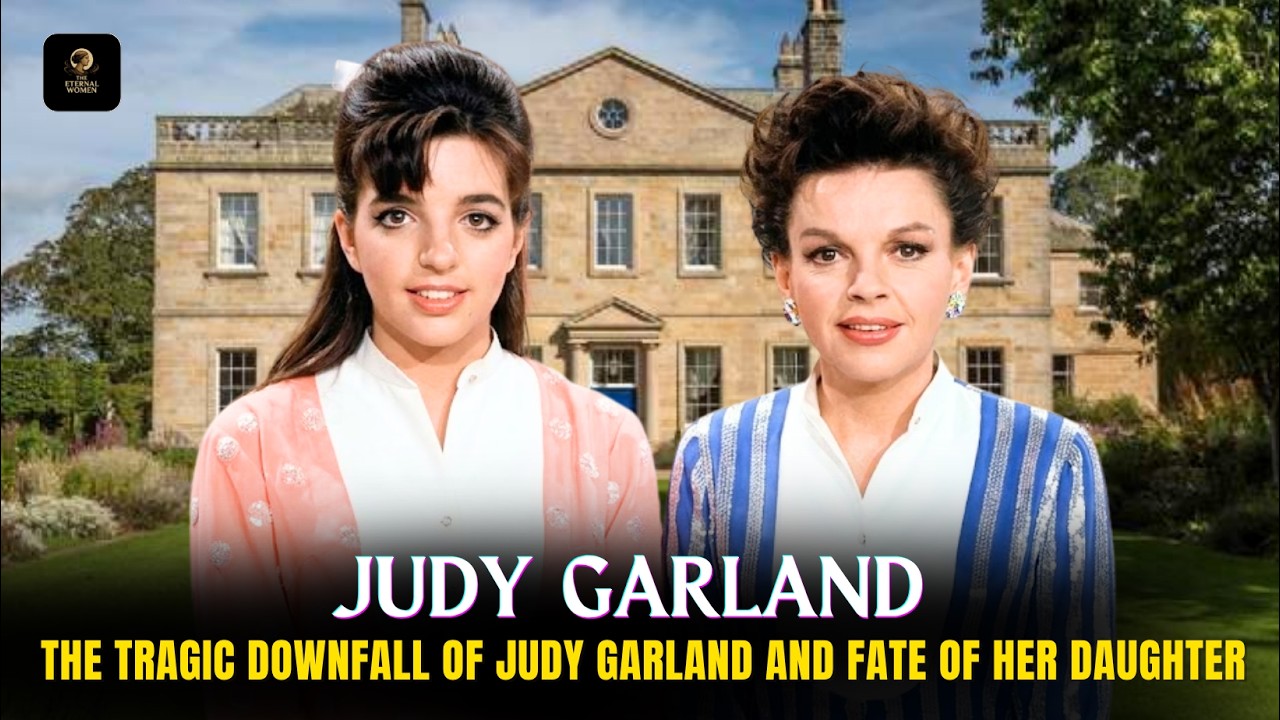
Behind the costumes and the applause, she was being consumed by the same industry that celebrated her. She was born Frances Ethel Gumm on June 10, 1922, in Grand Rapids, Minnesota, the youngest of three daughters of Frank and Ethel Gumm. Both parents had chased show business dreams that never materialized, and they saw their youngest child as their chance at success. From age five, Frances was performing professionally.
By age 10, she was appearing in films and radio programs. That same year, her mother began giving her amphetamines to keep her energized during long performances and barbiturates to help her sleep afterward. The family changed their surname to Garland in the early 1930s, inspired by the Hoagy Carmichael song “Judy. ” The young performer became Judy Garland, a name that would soon be known around the world.
In 1934, when Judy was 12, she was invited to audition for executives at MGM, the most powerful film studio in Hollywood. Louis B. Mayer heard her sing and offered her a contract on the spot, without a screen test. What no one understood at the time was that the contract gave MGM complete control over her life.
She had entered what many would later describe as a kind of indentured servitude. When filming began on The Wizard of Oz in 1938, Judy was 16 years old. The production was grueling, with hot sets, long hours, and enormous pressure, as the film was one of the most expensive ever made at that time. According to Judy’s own account, documented in a partial autobiography discovered after her death, Mayer began sexually harassing her during the filming.
She described him using pretexts to touch her inappropriately and making it clear that sexual compliance was expected if she wanted to continue her career. The Wizard of Oz was released in August 1939 to enormous success. At 17, Judy Garland became a global star overnight. “Over the Rainbow” became her signature song and her eternal identity.
But success brought no protection from exploitation. The studio controlled every aspect of her existence: what films she made, what she wore, who she was seen with, and her body. She worked 14 to 18-hour days, often on multiple films simultaneously. The studio provided her with pills from multiple doctors who did not coordinate her care.
Amphetamines kept her energized and suppressed her appetite. Barbiturates helped her sleep after the stimulants. No one monitored her health. The studio also controlled her diet obsessively.
According to accounts from people who worked with her, handlers would take away her normal meals and replace them with chicken soup and black coffee, telling her she was fat and needed to lose weight. The combination of starvation, amphetamine use, and barbiturate use was chemically destructive. Her body and mind were breaking down, but the studio only cared that she continued making profitable films. By the mid-1940s, the pressure had become unbearable.
In 1944, while filming Meet Me in St. Louis under director Vincente Minnelli, Judy began to fall apart. She was experiencing what would be called a nervous breakdown. Minnelli seemed to genuinely care about her as a human being, unlike the other men in her life.
They married on June 15, 1945. The marriage produced daughter Liza Minnelli in 1946, but postpartum depression set in and Judy struggled again. In 1947, Judy suffered a serious mental health crisis while filming The Pirate. According to accounts from her daughter Lorna Luft, Judy attempted suicide by slashing her wrists.
Her mother taped up the cuts and sent her back to finish the film. By 1949, Judy was supposed to film Annie Get Your Gun opposite Fred Astaire, but she could not. She was hospitalized for her mental health crisis. In exasperation, MGM fired her publicly and humiliatingly, citing tardiness, drunkenness, being overweight, and instability.
No mention was made of the pills the studio had given her, the sexual harassment she endured, the grueling schedule, or the starvation diet. The narrative was that Judy was the problem. The firing was devastating. For nearly 15 years, Judy had defined herself through her work at MGM.
Now she was cast out and considered damaged goods. During this period, she was living in financial precarity and attempted suicide multiple times. In 1952, Judy married producer Sid Luft, who saw in her a chance for a comeback. She had signed with Warner Brothers in 1950 and appeared in several films, including Summer Stock with Gene Kelly.
In 1954, Judy was cast in A Star Is Born, a musical drama about an actress struggling with fame and addiction. The role was deeply autobiographical. Critics were ecstatic, and she was nominated for an Academy Award for Best Actress. The success could not undo the damage.
Judy was still struggling with substance abuse and mental health issues. In 1963, CBS offered Judy a weekly variety show, The Judy Garland Show. She threw herself into the project, performing live every week. To manage the schedule, she continued taking pills and drinking.
The show aired from September 1963 to April 1964. It was sometimes brilliant and sometimes chaotic. Judy missed performances and her behavior was erratic. After one season, CBS canceled the show due to inconsistent ratings.
Throughout her life, Judy was married five times. Her first marriage to bandleader David Rose lasted three years. When she became pregnant, MGM pressured her to have an abortion, which was traumatic for her. Her marriage to Vincente Minnelli ended in divorce in 1952.
Her marriage to Sid Luft produced two children, Lorna and Joey, but ended in a bitter divorce in 1965. A fourth marriage to actor Mark Herron lasted only months. Her fifth marriage to Mickey Deans occurred in June 1969, just weeks before her death. Judy told people she was finally happy and loved, but there was no time to enjoy it.
From age 10 onward, Judy was dependent on pills. She took amphetamines and barbiturates and drank alcohol to self-medicate her depression and anxiety. The combination of these substances is chemically dangerous and potentially fatal. She understood her addiction with remarkable clarity.
But admitting it publicly would have confirmed the industry’s narrative that she was unstable. Mental health treatment was heavily stigmatized and often ineffective. Judy’s voice was not technically perfect, but it had an extraordinary quality. It made people cry.
It bypassed the intellect and spoke directly to the heart. When she sang, audiences heard pain, joy, and the complexity of human experience. In 1961, she performed at Carnegie Hall in New York. The concert was a triumph.
The album Judy at Carnegie Hall won the Grammy Award for Album of the Year, making Judy the first female artist to win that award. But the joy was short-lived. In 1968, she began a five-week run at Talk of the Town in London. The shows sold out, but some reviews were harsh.
One critic wrote that Judy looked like a walking casualty. In 1969, Judy moved to London, trying to escape from America and the industry that had destroyed her. She was living in Chelsea and taking whatever work she could find. On June 22, 1969, Judy Garland was found dead in her apartment in Chelsea, London.
She was 47 years old. The official cause of death was listed as an accidental overdose of barbiturates. An empty bottle of sleeping pills was found near her bed. Whether the overdose was truly accidental or intentional remains unclear.
She had seemed in good spirits the night before she died, according to a friend, but she had made multiple suicide attempts throughout her life. Her daughter Liza, who had just won an Academy Award for Cabaret, paid for her mother’s funeral. James Mason delivered the eulogy. The funeral was held in New York and attended by various celebrities.
Judy’s legacy remains. The Wizard of Oz is still watched by millions every year, and “Over the Rainbow” is still considered one of the greatest songs ever sung. Her films are studied by cinema scholars. Her story has become a cautionary tale about the human cost of fame, the dangers of child labor in entertainment, and the importance of mental health support and substance abuse treatment.
In the decades since her death, laws have been changed to better protect child performers. The studio system collapsed. Understanding of mental illness and addiction has improved. Both the tragedy and the triumph of Judy Garland are real.
She was victimized, exploited, and destroyed by systems that did not care about her well-being. But she also created great art and gave performances that moved people to cheers. Despite everything, she continued to perform. She continued to create.
Her voice still sings to audiences across the decades, and “Over the Rainbow” still moves listeners to tears.