Everyone knows the Colt Peacemaker as the gun that won the West. But that is only half the story, and it is the half that Hollywood told. Long before movie legends cemented its legacy, a handful of other firearms were doing the real work of taming frontier towns, guarding stagecoaches, and settling disputes when the law was days away.
From lever-action rifles that outclassed six-shooters in real battles to pocket pistols favored by gamblers and lawmen alike, the true arsenal of the Old West was far more diverse and interesting than the myth suggests. The real history of the frontier was shaped by practicality, economics, and reliability, not just by a single iconic revolver.
Here are the guns that actually ruled the Old West.
The Winchester '73: The Real Equalizer
If the Colt was the flashy icon of Western lore, the Winchester Model 1873 was the practical backbone of frontier life. Historians who study the logistics of that era tend to point not to a sidearm, but to a rifle. The lever-action design earned its famous nickname, "The Gun That Won the West," from the people who actually relied on it, not from any studio or advertising campaign.
To understand why the Winchester 73 dominated, you have to imagine how remote American territories were in the late 19th century. A cattle rancher in Texas or a gold prospector in Montana might need a three-day ride to reach the nearest well-stocked store. In that kind of isolation, owning simple, standardized equipment was not a luxury. It was a necessity.
Settlers could not afford to carry different types of ammunition for various weapons. They needed one reliable system that worked every time. In 1873, Oliver Winchester and his chief engineer, Nelson King, released a lever-action rifle with a solid iron and later steel frame that could hold 15 rounds in its tubular magazine. Compared to a single-shot rifle or a six-shot revolver that required frequent reloading, the Winchester offered a significantly higher rate of fire. A skilled user could empty a full magazine in under ten seconds.
But speed was not the rifle's only advantage. The real innovation was the new cartridge it was chambered for, the .44-40, which combined a 200-grain lead bullet with 40 grains of black powder. It quickly proved effective and dependable. Its success was so great that Colt began offering its own revolvers, later marketed as the "Frontier Six Shooter," also chambered for the .44-40, entering production in the late 1870s.
This overlap solved a major logistical problem. For the first time, a traveler, lawman, or farmer could carry a single type of ammunition that worked in both the rifle on his saddle and the revolver on his hip. Surviving records from frontier trading posts, including old Fort Bent and stores in Dodge City, show that orders for .44-40 far exceeded most other calibers during the late 1870s and 1880s.
Production figures tell a similar story. While Colt sold just over 150,000 Army revolvers to civilians during the era often remembered as the golden age of the West, Winchester factories were far more productive. From 1873 until the end of the model's production run, the company manufactured nearly 720,000 rifles and carbines of the 1873 model. This gun was everywhere, from Wells Fargo offices and land offices to the saddles of working cowboys from the Mexican border to the Canadian line.
Newspaper archives confirm this. The Bismarck Tribune in Dakota Territory regularly featured the Winchester 73 in advertisements and local reports during the late 1870s, describing its use in protecting livestock and farms. Firearms historian R.L. Wilson documented that famous frontier figures, including Buffalo Bill Cody and Texas Ranger Captain John Coffee Hays, relied heavily on the Model 73. Cody himself reportedly praised the rifle in written correspondence with the Winchester company, describing it as indispensable for hunting and work in frontier regions.
The Colt may be the gun one reaches for in a close-quarters moment of tension. But the Winchester 73 was what people carried when they needed to be ready for anything the open country might bring. It helped feed families, define borders, and build communities. Long before Hollywood stepped in, the people who actually lived and worked in the American West knew which gun they trusted most. It was not the six-shooter on the hip, but the 15-shot lever-action rifle in their hands.
The Double-Barrel Shotgun: The Daily Survival Tool
While history books tend to romanticize the long-range rifle or the quick-draw revolver, the real workhorse of frontier life hung quietly above the fireplace in nearly every sod house, cabin, and farmstead from Missouri to California. It was not flashy, and it was not glamorous, but it was remarkably effective. It was the double-barrel shotgun.
If the Winchester helped win the West, the shotgun helped people hold on to it day after day. To understand why the shotgun became a daily staple, it helps to look beyond gunfight legends and focus on the practical facts of survival. Most settlers heading west were not fighters. They were farmers, blacksmiths, and families trying to build a life from scratch. For them, a firearm was primarily a tool.
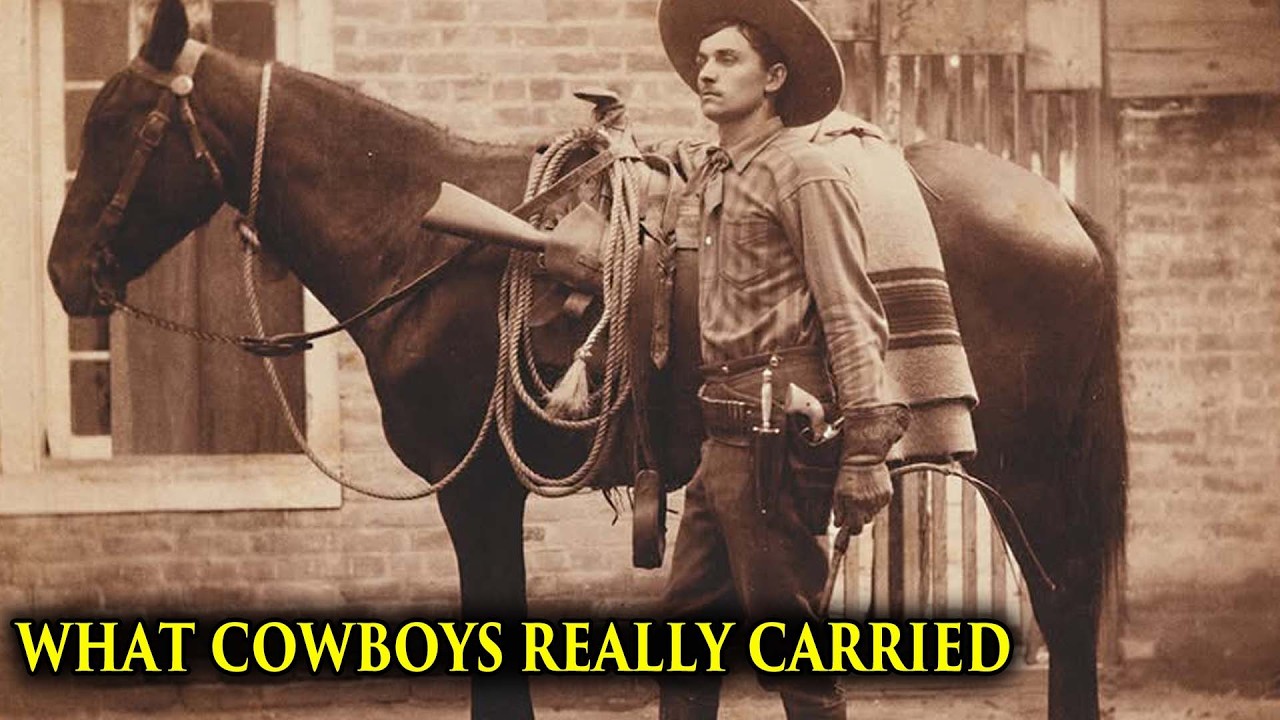
A Colt revolver was expensive and required real training to use accurately, even at short range. A precision rifle required skill and a steady hand. In contrast, a 12-gauge shotgun was easy to use, simple to operate, and dependable at close range. Whether loaded with birdshot for hunting prairie chickens or with larger buckshot for home defense, the double-barrel offered remarkable versatility. Its two barrels gave the user two independent shots, and at close range, its wide spread pattern made it highly effective, even for someone with little shooting experience.
The real advantage of the shotgun, however, was economic. A Colt Peacemaker or a Winchester rifle could cost a worker a full month's wages. In comparison, supply store records from the 1870s and 1880s show that a reliable British or Belgian commercial shotgun, or an American-made model from companies like Remington or Parker Brothers, could be ordered through a mail-order catalog for five to ten dollars. For the price of one revolver, a settler could buy a shotgun, a hundred shells, extra ammunition, and powder, with money left over for spring planting supplies.
Because of this affordability, shotguns far outnumbered other firearm types across frontier regions. While Colt Single Action Army production during that era is estimated at a few hundred thousand, historians note that far greater quantities of sturdy, inexpensive shotguns were sold and shipped west. Shotguns were not limited to homesteaders and farmers. They were also standard equipment for private security companies and law enforcement.
Wells Fargo, one of the major transport companies of the era, realized that revolvers alone were not enough to protect valuable shipments. The company equipped its messengers with 12-gauge shotguns with shortened barrels, often known as stagecoach guns. These guards rode alongside stagecoach drivers, watching dangerous routes like the Deadwood stage road. This practice is widely credited as the origin of the phrase still used today, "riding shotgun."
Historical records from frontier towns like Tombstone, Arizona, and Wichita, Kansas, show that when local lawmen needed to handle a serious confrontation, they often reached for a shotgun instead of a revolver. It is documented that Wyatt Earp carried a Parker Brothers 10-gauge double-barrel shotgun while pursuing the men involved in the ambush of his brothers. Doc Holliday is also recorded as carrying a sawed-off shotgun under his coat during the events at the O.K. Corral, with accounts suggesting it played a role in the rapid escalation of the confrontation.
The double-barrel shotgun never achieved the sleek reputation of the Colt or the rapid-fire fame of the Winchester. It was a practical tool for working people. But in an environment where a missed shot could mean real hardship, the shotgun proved to be one of the most reliable pieces of equipment on the frontier, protecting homes, guarding valuable cargo, and providing food for families heading west.
The Smith & Wesson Schofield: The Tactical Breakthrough
To understand what truly determined the outcome of frontier confrontations, you have to look past bullet caliber and focus on reload speed. This brings us to a revolver that outperformed the single-action Colt in several key areas: the Smith & Wesson Model 3 Schofield.
To someone glancing at an old photograph, one revolver may look similar to another. But for those whose safety depended on their equipment working quickly under pressure, the engineering differences between the Colt and the Schofield meant a great deal. The Colt Peacemaker used a solid-frame design with a small loading gate on its side. Reloading meant pulling the hammer to half-cock, opening the gate, pushing each empty cartridge case out one by one with an ejector rod, then feeding six new cartridges individually. It was a process that required time and focus.
The Schofield addressed this shortcoming with a top-break design. Pulling a latch near the rear sight allowed the barrel and cylinder to swing downward, and a spring-loaded star extractor ejected all six empty cases in one motion. A shooter could empty the cylinder in under a second and reload all six chambers at once. U.S. Army Ordnance Department trials in the mid-1870s found that soldiers could reload the Smith & Wesson top-break design in roughly half the time it took to load a single-action Colt. In situations where speed matters, that difference is a significant tactical advantage.
Recognizing this, the U.S. Army purchased about 8,000 Schofield revolvers between 1875 and 1877, distributing many to the 4th and 9th Cavalry regiments serving across the frontier. Cavalry units especially valued the design, as reloading a Colt with one hand while mounted on a horse was far more difficult than using the Schofield's simpler ejection system, which could be operated quickly against a leg or saddle.
Because of this practical advantage, the Schofield became a sought-after weapon among both lawmen and outlaws. While popular films often show Wyatt Earp carrying a long-barreled Colt during the O.K. Corral confrontation, some historical accounts and territorial archives suggest he may have received a Smith & Wesson Model 3 from Tombstone residents, and that it may have been the revolver he actually carried that day. This detail remains debated among historians.
The Schofield was also popular among outlaws. Documents indicate that Jesse James owned a pair of Smith & Wesson Schofield revolvers, which were reportedly among his possessions at the time of his death in 1882. His brother Frank James is also associated with the top-break design, which was valued for its reload speed.
Despite its mechanical advantages, the Schofield faced logistical complications that limited its widespread adoption compared to the Colt. It used a .45 caliber cartridge that was slightly shorter than the standard Colt .45 round. While the shorter Schofield cartridge could be fired from a Colt revolver, the longer Colt cartridge would not fit in the Schofield's cylinder. This discrepancy created real problems for supply officers and frontier traders. If a supply shipment containing standard Colt .45 ammunition arrived at a location equipped with Schofields, those revolvers became useless until the proper ammunition arrived.
Even with this drawback, Smith & Wesson produced more than 50,000 units of the Model 3 during the frontier expansion period, and the revolver earned a strong reputation among its users. While the Colt Peacemaker became the more famous choice in popular culture, many who lived and worked in places like Dodge City, Deadwood, and Tombstone relied on the Schofield's speed and reliability as a real practical advantage.

The Remington 1875: The Outlaw's Silent Companion
At a time when the Colt Peacemaker dominated headlines and the Smith & Wesson Schofield secured military contracts, another revolver was quietly building a strong reputation in the toughest parts of the frontier. This was the Remington Model 1875 single-action revolver, a gun many experienced frontier users considered more durable than anything Colt offered.
If the Colt appealed to the romantic image of the cowboy, the Remington appealed to professionals who prioritized durability above all else. To understand the Remington's loyal following, it is worth looking at its design. Colt revolvers of that era used a solid frame, but the area below the barrel, around the cylinder pin and ejector rod, was relatively exposed. If the revolver fell in mud or was handled roughly in harsh conditions, dirt and debris could seep into the mechanism and cause it to jam.
Remington engineers addressed this with a distinctive design choice: a fully shrouded frame. A solid triangular piece of metal, first iron and later steel, extended from the base of the frame along the barrel, completely enclosing the ejector rod housing. This design served two purposes. First, it protected the cylinder pin from dust, sand, and powder residue. Second, it added significant structural strength to the entire firearm. The frame could withstand heavy use and rough handling, whether dropped on rocky ground, jostled on horseback, or used as an improvised tool when necessary, without bending or breaking. It was built to take a beating and keep working.
Remington introduced the Model 1875 to compete directly with the Colt Peacemaker, offering it in calibers including .44 Remington, .44-40 Winchester, and .45 Colt. Between 1875 and 1889, the company's factory in Ilion, New York, produced approximately 25,000 to 30,000 revolvers of this model. That is far fewer than Colt's production. Remington never received a major U.S. military contract, and its late entry into the market limited its commercial reach compared to Colt's head start. However, the revolver found a dedicated niche following.
Historical records show the Remington 1875 appearing in the hands of some notable figures associated with frontier crime. Frank James, the older brother of Jesse James, is often cited as one of the most prominent users of the Remington design. He had experience with the company's percussion revolvers during his time as a Confederate guerrilla fighter under William Quantrill, and he reportedly favored their reputation for reliability. Accounts suggest he later carried a pair of Remington 1875 revolvers in .44-40, including during the famous James-Younger Gang robbery attempt in 1876 in Northfield, Minnesota. Frank James reportedly considered his Remingtons smoother and less prone to malfunction than the Colts many of his contemporaries carried.
The Remington 1875 also found buyers outside the United States. The Mexican government purchased about 1,000 of these revolvers in the early 1880s to help arm the rural police force known as the Rurales, who patrolled Mexico's harsh, sandy border terrain. It was an environment where the fully enclosed mechanism offered a real practical advantage over more exposed designs.
The Remington 1875 never benefited from the marketing that helped make the Colt Peacemaker a cultural icon, and it never gained a memorable nickname. But for people working on remote frontiers where help could be days away, and where equipment failure had real consequences, the Remington earned a reputation as a rugged, reliable tool. It is a reminder that in the actual Old West, reliability often mattered more than reputation.
The Springfield Model 1873 "Trapdoor": The Military Standard
When people think about what shaped the American frontier, they often imagine cattle drives or lone lawmen. But much of the actual territorial expansion during this period was carried out by U.S. Army infantry and cavalry units. The rifle most associated with this effort is one Hollywood rarely highlights: the Springfield Model 1873, widely known as the "Trapdoor Springfield."
To understand how central the Trapdoor was to military operations, it helps to look past civilian firearms and consider the Army's specific priorities. While civilians valued repeating rifles like the Winchester for their rate of fire, the Army Ordnance Department took a different approach. Instead of prioritizing speed, the Army wanted a weapon known for mechanical simplicity, dependability, and long-range accuracy. That is exactly what they found in the Trapdoor.
Designed by Erskine S. Allin at the Springfield Armory in Massachusetts, the rifle earned its nickname from a breech-loading mechanism that featured a hinged block resembling a small trapdoor. To load it, a soldier would lift the block, insert a single cartridge, close the door, cock the hammer, and fire. It was a single-shot design, but it fired a powerful .45-70 Government cartridge, which combined a 405-grain lead bullet with 70 grains of black powder. Compared to a revolver or lever-action rifle, which lost accuracy and effectiveness after about 100 yards, the Trapdoor Springfield could accurately hit targets at distances up to half a mile, a significant advantage in open terrain.
The Army's commitment to this design is evident in the numbers. Between 1873 and the early 1890s, the U.S. government manufactured hundreds of thousands of Trapdoor Springfield rifles and carbines in various versions, making it the standard weapon for infantry and cavalry throughout the era known as the Indian Wars. This rifle served as the Army's primary weapon in major military engagements of the period, including the Red River War, the Great Sioux War, and the Nez Perce War.
Archaeological work at sites like the Little Bighorn battlefield has extensively documented how the Trapdoor was used in these conflicts. Although popular accounts often focus on the repeating rifles used by Native American fighters, historical and archaeological evidence shows that the U.S. 7th Cavalry was equipped primarily with the shorter carbine version of the Trapdoor Springfield.
The rifle was built to withstand long field use in the harshest conditions, from Montana winters to Arizona summers, with minimal maintenance. Military periodicals of the era, including the Army and Navy Journal, documented frequent field reports from officers who valued the Trapdoor's long-range capability, which allowed troops to respond to threats before they closed to short engagement distances.

Later, as these rifles left military service, large numbers entered the civilian surplus market. Farmers, miners, and hunters bought these surplus rifles for a fraction of the cost of a Winchester and used them to protect property and hunt game. The Colt Peacemaker may have been suitable for close personal use, but the Springfield Model 1873 played a crucial role in establishing military posts and expanding federal presence across vast stretches of western territory during that period. It was not designed for elegance. It was built to meet the continuous, large-scale demands of westward expansion.
Sharps Rifles and the Buffalo: Reshaping the Frontier
To understand how radically the American West changed within a single decade, it is worth looking beyond military campaigns and considering the impact of commercial hunting. The Western landscape was not only reshaped by treaties and wagon trains. It was also transformed by an industry. At the heart of that industry was a group of large single-shot rifles known as buffalo guns, the most famous being the Sharps Model 1874.
The Sharps was a meticulously designed firearm that used a falling-block action built to handle far greater pressure than the revolvers or lever-action rifles of the time. To load it, the shooter lowered a lever that dropped a solid block inside the gun's body, exposing the chamber. A single large cartridge, noticeably bigger than standard rifle or revolver rounds, was inserted. The block was closed, and the rifle's sensitive trigger was cocked before firing.
These rifles were chambered for unusually powerful rounds, including the .45-120 and the famous Sharps cartridge, which combined a 473-grain lead bullet with 90 grains of black powder. This combination gave the rifle enough power and range to be effective against massive animals like bison from several hundred yards away.
The scale of the bison hunting industry during this period was enormous. In the early 1870s, the Great Plains were home to an estimated 10 to 15 million American bison. By the mid-1880s, that number had collapsed to just a few hundred animals. This dramatic ecological loss was driven largely by commercial hide hunters using Sharps rifles. It also destroyed the food source and way of life for many native Plains peoples.
Commercial records from frontier hubs like Dodge City, Kansas, illustrate the scale of this trade. Between 1872 and 1874 alone, over one million buffalo hides were reported shipped east via the railroads serving the region. Professional hunters, often called "runners," would position themselves at a distance from a herd and could drop dozens of animals in a single session before the herd realized what was happening. This practice was made possible by the rifle's long range and its relatively quiet report at distance.
Newspapers of the era, including the Dodge City Times, regularly advertised Sharps rifles and published news of hunter activities. One of the most widely recounted historical stories about these rifles' capabilities comes from the Second Battle of Adobe Walls in June 1874. A group of about 28 hunters and traders, including a young Billy Dixon, found themselves under siege by a large force estimated at 700 to 1,200 Comanche, Cheyenne, and Kiowa fighters. On the third day of the standoff, a group of warriors gathered on a distant ridge, believing they were out of effective rifle range. Dixon used a borrowed .50-90 Sharps rifle and fired a shot that traveled approximately 1,538 yards, just under a mile, and struck one of the riders. It was an event that later became famous as one of the most renowned long-distance shots of the era. Historical accounts differ on the exact outcome of the shot itself, and Dixon later described it as a lucky hit rather than a calculated one. Following this, the remaining warriors withdrew from the area.
The Colt Peacemaker was suitable for close personal use, but the Sharps rifle played a far larger role in reshaping the region, contributing to the near-total elimination of the bison herds, disrupting the Plains ecosystem, and influencing the broader shift toward cattle ranching and railroad expansion in the following decades. Its story reflects a difficult chapter of Western history, one shaped by long-range firepower as much as by the human and environmental costs that accompanied it.
Hardware Stores, Budgets, and Black Powder
To truly understand the American West, it helps to set aside cinematic gunfights and look instead at account ledgers. The real frontier was not defined by showmanship. It was shaped by economics, availability, and practical logistics. What a person carried was not determined by what looked impressive in a holster. It was determined by what they could actually afford at the local store and what ammunition was in stock when they arrived.
Wage records and historical accounts from the late 1870s paint a clear picture. The popular image of a wealthy cowboy carrying a matching pair of silver-plated Colts does not hold up against the financial reality of the time. Most people living in the West operated on very limited budgets. A cowboy, farmer, or railroad worker earned about a dollar a day, which generally translated to between 25 and 40 dollars a month. From that modest income, they had to cover food, clothing, and equipment when their employer did not provide it.
Store prices of the time reflected this reality. A new single-action Colt revolver typically cost between 17 and 20 dollars, with a few more dollars added for a box of 50 cartridges. For the average worker, buying a Colt could mean spending a significant portion of a full month's income on a single item. Because of these financial facts, mass-produced, more affordable firearms were far more common across the frontier than the models now associated with Western legend.
Mail-order catalogs from companies like Montgomery Ward and Sears, Roebuck in the 1880s reflect this reality. Instead of being exclusively filled with premium Colts or Winchesters, their pages featured a wide range of economical options. A settler could buy a surplus Civil War-era percussion rifle for a few dollars, or a small pocket pistol from companies like Forehand & Wadsworth or Iver Johnson for under two dollars. For many, these cheap firearms were sufficient for daily needs like hunting small game or basic property protection.
The second practical challenge often overlooked in popular portrayals of the era is the gradual transition from loose black powder to metallic cartridges. During the 1870s and 1880s, modern centerfire ammunition was not regularly available everywhere. In remote parts of Arizona or Idaho territories, a local trader's stock was unpredictable. Metallic cartridges were heavy to ship, prone to moisture damage, and more expensive than other options. If a store ran out of .45 Colt or .44-40 ammunition, a repeating rifle or advanced revolver became temporarily useless.
This is part of the reason why older firearms, which relied on loose black powder, lead balls, and percussion caps instead of ready-made cartridges, remained in use into the late 1880s. A frontiersman could buy powder and lead cheaply, cast his own bullets using a simple mold, and keep his weapon functional without relying on manufactured ammunition.
The real Old West was not defined by abundance or fancy equipment. It was shaped by scarcity, limited budgets, and the necessity of using resources carefully. The firearms that were truly common on the frontier were those that fit a working family's income, relied on easily accessible components, and could be maintained with simple tools. In practical terms, survival depended less on brand reputation than on what was available and affordable.
The real Old West was not won by a single iconic revolver. It was shaped by rifles, revolvers, and hunting guns that rarely get their due. Each one earned its place through pure practicality, not Hollywood glamour. The people who lived and worked in the American West knew which guns they could trust, and it was rarely the ones the movies made famous.