In February of 1842, Charles Dickens stepped off a train in Lowell, Massachusetts. He toured three factories, watched workers in clean dresses file past, and left less than twelve hours later, convinced he had witnessed proof that industry and decency could share the same roof. He wrote as much in his book *American Notes*, and factory owners quoted him for decades.
What Dickens did not see was the settlement less than a quarter mile away, where Irish canal workers lived in wooden shacks and mud shelters, separated from the rest of the city by a canal the corporations had built. He did not see the women sent home coughing blood after years of breathing cotton dust in weaving rooms where windows were sealed year-round to protect the threads. He did not stay long enough to learn that the entire system ran on a supply chain stretching from the plantations of Mississippi to the spinning floors of Massachusetts. Enslaved hands picked the cotton. Mill girls wove it into cloth. One Lowell company even manufactured cheap fabric and shipped it back south to clothe the enslaved people who had picked it in the first place.
Lowell was not just a factory town. It was a demonstration, a stage set designed to prove that American industry could treat its workers with dignity and still deliver fourteen percent annual returns to investors in Boston. For a few years, visitors like Dickens believed it. Then the women who lived inside the system started writing down what was really happening.
America did not invent its textile industry. It stole one. Before Francis Cabot Lowell ever set foot in a British cotton mill, Samuel Slater had already smuggled spinning technology out of England and built a small operation in Rhode Island in 1790. The machines worked, but Slater had not managed to bring over the power loom. Without it, American mills could spin thread but could not weave finished cloth. The final, most profitable step still belonged to Britain.
That was the gap Francis Cabot Lowell set out to close. He came from a family established in Boston long enough to take its position for granted. He graduated from Harvard at eighteen and built a fortune in the import trade by his early thirties. He understood the economics of cloth better than almost any merchant in New England, and he could see how much money left the country every year to pay for fabric that could theoretically be manufactured at home.
The missing ingredient was the loom. Britain knew what it had. The export of power loom designs was a criminal offense, enforced with searches, seizures, and the threat of prison. Skilled textile workers were banned from emigrating. Factory compounds were built with high walls, iron spikes, and broken glass lining the perimeter.
Lowell found a way past all of it. He sailed for Edinburgh in 1810 with his wife, telling people the trip was for his health. Over two years, he moved between Scotland and northern England, using his standing as a prominent American importer to request access to cotton mills. The factory owners who opened their doors saw a courteous, wealthy customer. They did not know that Lowell possessed a near photographic memory.
He asked few questions and carried no paper. He simply walked the floors and watched the machines operate, committing gears, shafts, shuttle mechanisms, and thread pathways to memory. When the War of 1812 forced his departure, British naval officers intercepted his ship and searched the family's luggage twice. They recovered nothing. Every mechanical detail existed only in Lowell's memory.
In Boston, he sought out Paul Moody, a master mechanic from Newburyport. Working from Lowell's verbal descriptions, Moody spent roughly a year building a functioning power loom. He did not merely copy the British machines. He solved mechanical inefficiencies the British had tolerated for decades, producing something faster and more reliable than anything operating in Lancashire.
In 1813, Lowell raised $400,000 from family and associates to form the Boston Manufacturing Company. A typical New England textile mill at the time was capitalized at roughly one-tenth of that amount. The following year, the company opened a factory on the Charles River in Waltham, the first integrated textile mill in the country. Raw cotton went in at one end, finished cloth came out at the other. It was profitable within its first year.
Lowell was already looking past Waltham. He wanted a planned industrial city powered by a river capable of driving dozens of factories simultaneously. He found the site at Pawtucket Falls on the Merrimack River, where the water dropped thirty-two feet in under a mile. Francis Cabot Lowell died in 1817 at age forty-two. He never saw a single building rise along the Merrimack. His partners built the city anyway and named it after him.
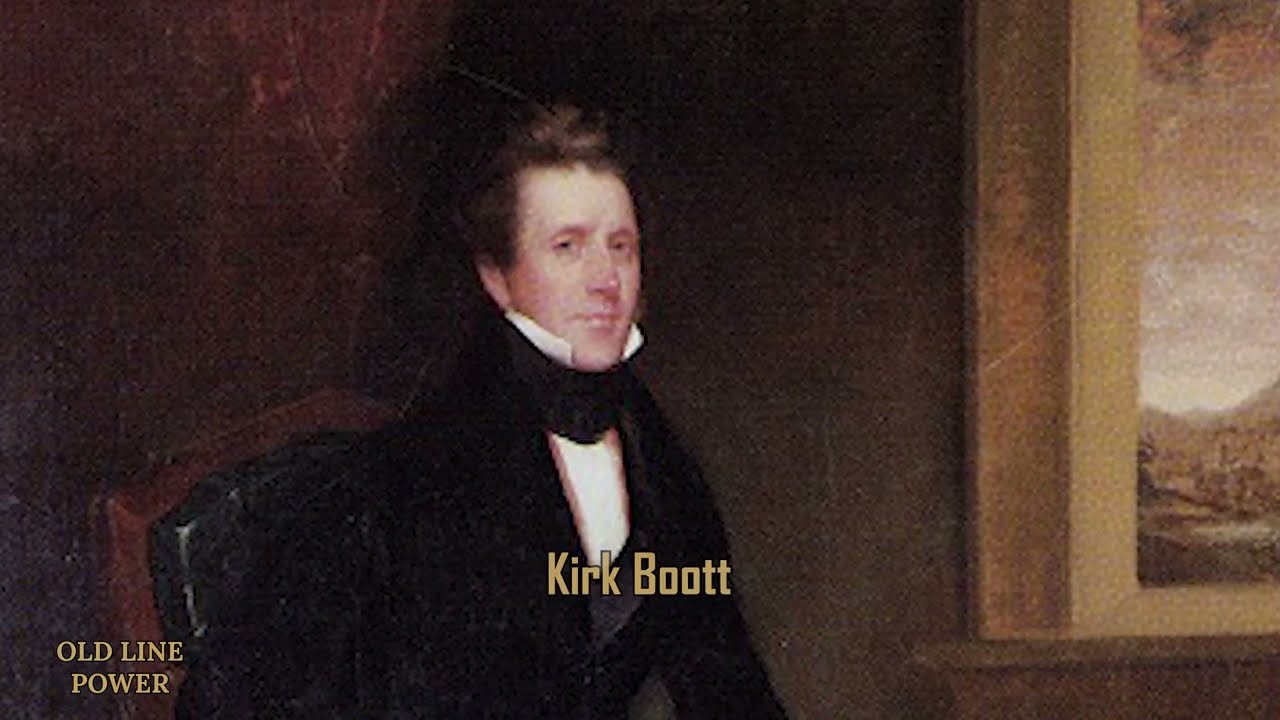
The man they sent to build the city had served as a British officer in the war against Napoleon. Kirk Boott was hired by the Boston Associates in 1822 and given authority over virtually everything: mill construction, canal engineering, road layout, worker housing, even the denomination of the first church. He chose Episcopalian and did not invite discussion.
Construction started with the water. Workers carved more than six miles of canals from Pawtucket Falls through a series of gates and locks to the water wheels and turbines that would drive every spindle in the city. The men who dug them were almost entirely Irish, recruited from Boston. The work was brutal and the pay was low. No housing was provided for them. When the job was done, the expectation was that they would go back to Boston.
They stayed. As more construction demanded more labor, more Irish arrived. They settled across the Western Canal in a makeshift area the locals called the Paddy Camps. The community grew its own shops, churches, and social structures. But it remained on the other side of the water from the city its residents had dug into existence.
Boot did not build Lowell for them. He built it for young women. In the 1820s, American men had options. They could farm or head west. Factory work held no appeal, and the wages required to change their minds would have destroyed the returns the Boston investors expected. Women had almost none of those options. Domestic service, teaching at poor pay, sewing. That was close to the full list.
A factory job in Lowell paying real wages in cash offered something that barely existed for unmarried women in rural New England: economic independence, or at least a version of it. The corporations sent agents into the farming towns of Vermont, New Hampshire, Maine, and western Massachusetts carrying broadsides that advertised positions for women between fifteen and thirty-five. Good wages, safe lodging, lending libraries, and evening lectures by men like Ralph Waldo Emerson and John Quincy Adams.
The pitch was aimed as much at fathers and brothers as at the women themselves. This would not be like the English factories. The corporations would house the workers in supervised boarding houses managed by older women, usually widows hired by the company. Clean buildings, shared bedrooms, six to a room, three hot meals a day.
By 1836, the city that had been farmland fourteen years earlier employed nearly 7,000 workers, eighty to ninety percent of them women, almost all native-born. Their average age was about twenty-four, though some were as young as ten. Most signed on for a year. The typical stay lasted around four.
The noise came first. Hundreds of looms running at once inside a single room produced a sound so total that two women standing shoulder to shoulder could not hear each other speak. Workers learned to read lips. The roar started before dawn and held until the evening bell, hour after hour, at a volume that left some of them partially deaf within their first year.
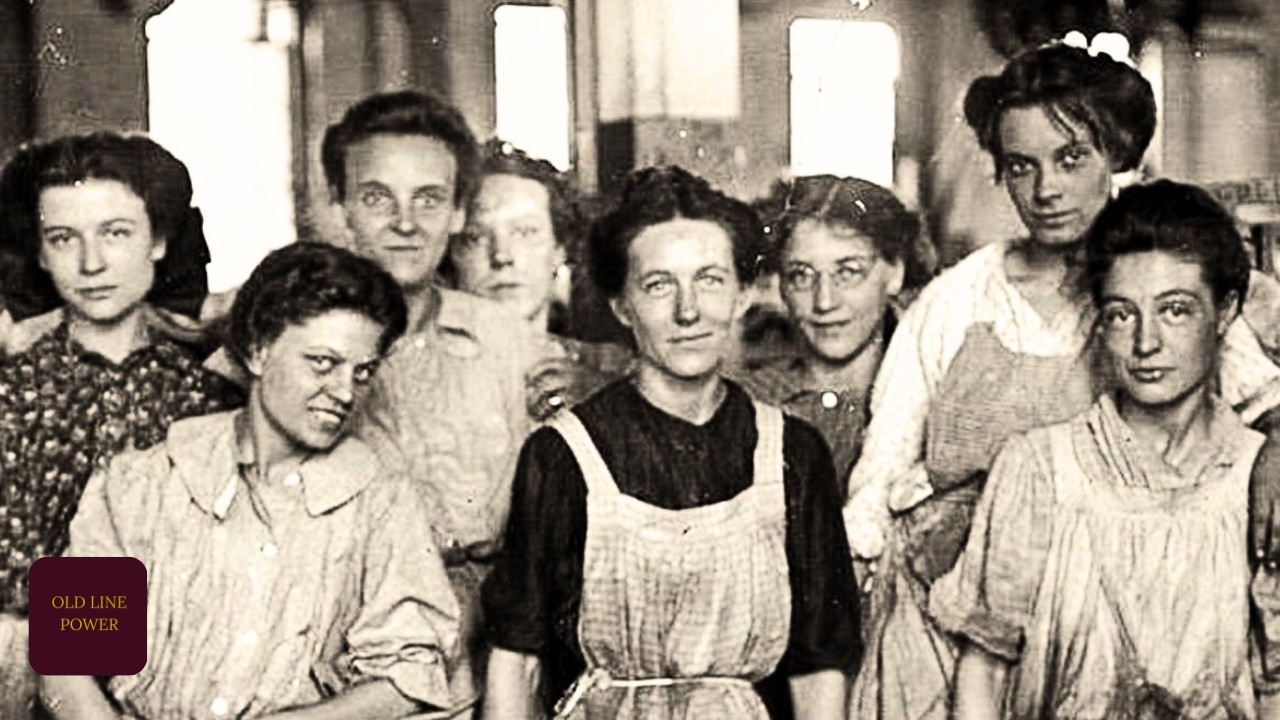
Then came the air. Cotton fiber sheds particles when it moves through a carding machine at speed. The dust was so fine it hung in the room like a white fog. It coated every surface. It settled into hair, clothing, and skin. And it entered the lungs with every breath, all day, six days a week, month after month.
The medical term would not arrive for decades. Byssinosis. Workers in other countries eventually called it brown lung. The first symptom was a tightness in the chest, usually worst on Monday mornings after a day and a half away from the dust. As exposure continued, the coughing deepened. Some women began spitting blood.
In the 1840s, the reformer Orestes Brownson wrote that the average working life of a girl who came to Lowell from the farms of Vermont or New Hampshire was roughly three years. What he meant, and what his readers understood, was that many went home to die. The mortality records in Lowell looked acceptable for a simple reason. The women left town before their bodies gave out.
Why were the rooms not ventilated? Because the thread would not survive it. Cotton thread is fragile when dry. A cross breeze could snap dozens of threads at once, destroying a full run of cloth. So the windows stayed shut year-round. In warmer months, managers pumped steam through pipes along the floor to raise the humidity further. Not for the workers. For the fabric.
On a summer afternoon, the temperature on the production floor could reach 115 degrees. In winter, the combination of sealed windows, body heat, and steam still pushed it into the nineties. You started at 5:00 in the morning. You stopped at 7:00 in the evening, six days a week. Seventy-three hours. Two breaks of thirty minutes, one for breakfast and one for dinner, were all the time away from the machines you got.
A bell governed everything. It rang at 4:30 to wake you. It rang at 5:00 to put you at your position. It rang at 7:00 to release you. Between those bells, you stood on a wooden floor that shook from the turbines underneath it, tending equipment that could take your hand off if your focus slipped for a moment.
And the equipment kept demanding more. In the early 1830s, a worker typically ran one or two looms. By the mid-1840s, four, while wages were being cut at the same time. The women called it the speed-up. It became one of the things that eventually pushed them to act.
The injuries do not need elaboration. Power looms used heavy wooden shuttles that crossed the frame at considerable speed. When one flew loose, it could shatter bones, knock out teeth, or destroy an eye. Spinning machinery grabbed hair, fingers, and loose fabric without warning. No guard protected any machine in any Lowell mill during this period. No system compensated a worker who was hurt.
The workforce was designed to rotate. Young women would arrive, work for a few years, and leave. If the conditions damaged them, they would be gone before the damage became a problem. Fresh arrivals from the farms would fill the positions. The system did not need to keep anyone healthy. It only needed a supply of replacements.
Every woman who left a Lowell mill received a document. It was small, easy to overlook, and it controlled her future completely. The corporations called it an honorable discharge. Without one, a woman could not be hired at any other mill in the city. Every company in Lowell honored every other company's blacklist.
A worker who quit without permission, complained too publicly, or violated any of the behavioral codes the corporation imposed would be denied her discharge paper. She was not fired in the usual sense. She was locked out. Not from one employer, but from the entire system.
The boarding houses operated under rules the recruitment broadsides never mentioned in detail. Residents were required to be in their rooms by 10:00 at night. Church attendance was mandatory. Male visitors were prohibited. Extended absences from town required advance permission from the corporation.
Every boarding house was managed by an older woman, almost always a widow on the company payroll, whose job was not only to cook and keep the house running but to observe. She reported to the corporation. If a worker's behavior raised concerns, the matron could escalate the matter. The consequence was rarely dramatic. It was simply the quiet withdrawal of the discharge paper when the time came to leave.
The women who lived under this system understood its logic quickly. The rules did not exist to protect them. The rules existed to make them manageable. A workforce that could be denied future employment for stepping out of line did not need to be physically restrained. It policed itself.
There is a word that keeps appearing in the historical literature on Lowell: paternalism. The investors used it themselves. They said the system was fatherly, that they were looking after these young women the way a responsible parent would. A father in rural New England in the 1830s had near absolute authority over his unmarried daughters. What the Lowell corporations built was not a replacement for that authority. It was a transfer of it.
The paycheck was the final lever. Wages were not paid weekly in most cases. They were held and dispersed on the corporation's schedule, sometimes monthly. A woman who left before her contract was up forfeited unpaid wages. Combined with the blacklist, this created a situation where walking away meant losing both the money she had earned and the ability to earn more anywhere in Lowell.
The women stood at their looms in Massachusetts. The people who picked what they were weaving stood in fields in Mississippi, South Carolina, and Alabama. They never saw each other. The system made sure of that.
Every bolt of cloth that came out of a Lowell mill began as raw cotton. Raw cotton in the 1830s and 1840s came overwhelmingly from the American South. And the American South grew its cotton with enslaved labor. This was not something historians uncovered later. It was visible to everyone involved, commented on in newspapers, debated in public, and defended by the men whose fortunes depended on it continuing.
Between 1840 and 1860, the amount of cotton consumed by American textile mills more than tripled. The bales arrived at Lowell by rail and by ship from ports in Charleston, Savannah, Mobile, and New Orleans. Lowell could not function without southern cotton. Southern cotton could not be produced at scale without enslaved labor.

The loom and the lash were connected by a supply line that ran the length of the eastern seaboard, and the profits flowed in both directions. Some of those profits funded efforts to keep the arrangement intact. Investors in Lowell's textile corporations contributed to pro-slavery political causes and worked to suppress abolitionist activity in the city. Their reasoning was not ideological. It was commercial. Anything that threatened the supply of cheap cotton threatened their dividends, which between 1846 and 1850 averaged roughly fourteen percent annually.
Lowell was not a city without moral awareness. Abolitionists organized openly there. Frederick Douglass was invited into private homes to speak against slavery. Anti-slavery societies held meetings. And one of the most striking contradictions in the city walked through the doors of the Lowell Manufacturing Company every morning.
Royal Southwick arrived at the Lowell Company in 1829 as a supervisor of carding and spinning, a devout Quaker from a family with deep abolitionist commitments. He helped establish the city's anti-slavery societies and hosted speakers, including Douglass, at his home. By every available measure, Southwick was a man of genuine conviction on the question of human bondage.
He was also the man overseeing production at the company that manufactured a product known in the trade as negro cloth. The Lowell Manufacturing Company produced a coarse, heavy fabric designed to be sold to plantation owners for the purpose of clothing enslaved workers. The material was cheap to make, uncomfortable to wear, and tore easily. It was not a sideline. The company earned strong profits from the product.
In the 1930s, the Works Progress Administration conducted interviews with formerly enslaved people across the South. In thirty-nine of those interviews, the subjects described the fabric they had been given to wear. They called it Lowell cloth.
Senator Charles Sumner of Massachusetts found the phrase for the relationship between the northern textile industry and the southern plantation system. He called it an unholy union between the lords of the lash and the lords of the loom.
A mill girl in Lowell earned roughly two dollars a week after room and board. Nathan Appleton, the man who owned the largest share of the company she worked for, sat in the United States Congress voting for the tariff laws that guaranteed his mills would face no foreign competition.
The Boston Associates were not simply textile investors. By 1845, this network of roughly thirty interrelated families controlled thirty-one textile companies spread across Massachusetts, New Hampshire, and southern Maine. Together, those operations produced one-fifth of all cotton and wool textiles manufactured in the United States.
The profits from that output built a second empire. Railroads came first. The Boston and Lowell Railroad, operational by 1835, connected the mills to the port of Boston. The Associates invested in its construction because many of them were both the railroad's shareholders and the factory owners who stood to gain from cheaper freight.
Banking followed the same logic. The Suffolk Bank in Boston became one of the most powerful financial institutions in New England. Its directors overlapped substantially with the families running the textile operations. Capital from the mills flowed into the bank. The bank extended credit to new ventures launched by the same circle.
Then came the institutions that would define Boston for the next two centuries. Massachusetts General Hospital received significant funding from Associates families. Harvard College benefited from endowments built on textile wealth. The Lowell Institute provided free public lectures in Boston funded by a trust rooted in manufacturing income.
Nathan Appleton served multiple terms in the Massachusetts State Legislature before winning a seat in the United States House of Representatives. In Congress, he became one of the most vocal advocates for protective tariffs on imported textiles. The logic was transparent. Higher tariffs on British cloth meant less competition for American manufacturers, which meant wider margins for the men writing the legislation.
The network extended well beyond one man. Associates families placed members in state legislatures, in Congress, and on the boards of every significant civic institution in eastern Massachusetts. Senator Daniel Webster received financial backing from the same circles and advocated for their interests in Washington.
The world those families constructed still stands. The hospitals still operate. The university still bears the weight of their endowments. The railroads they financed became the infrastructure of the regional economy. And the cultural identity of Boston rests in part on a foundation that began as two dollars a week taken from young women who stood at their looms for seventy-three hours out of every seven days breathing air that was quietly destroying their lungs.
In October of 1836, the corporations announced another round of wage cuts and withdrew a subsidy they had been paying toward boarding house costs. The combined reduction came to at least a dollar a week. Some women wanted to walk out. Others hesitated. Walking out meant forfeiting wages and likely losing the ability to work anywhere in the city again.
The women in the upper rooms of the Tremont Mills left first. When enough of them had gone, the mill shut down. In a lower room, the younger workers stood asking each other whether they should follow. Nobody moved.
Harriet Hanson, ten years old when she started at the Tremont and now eleven, had been listening to the arguments for days. She lost patience. "I do not care what you do," she said. "I am going to turn out whether anyone else does or not." She walked out. The others followed.
Between 1,200 and 1,500 women marched through the streets that day. No flags, no music. They sang. Among the words was a line that has echoed through American labor history ever since. "I will not be a slave."
It was not the first time. In 1834, a fifteen percent wage cut had sent around 800 women into the streets. That action collapsed within days. The 1836 turnout was bigger but ended the same way. The corporations held firm. The cuts stood.
But something had shifted. The women had stopped the mills. Briefly, chaotically, without a plan, they had demonstrated that a workforce everyone assumed was temporary and obedient could refuse.
In 1840, a group of workers launched a monthly magazine called *The Lowell Offering*. Poetry, fiction, essays about what it meant to leave a farm and enter a world of machinery and bells. The whole thing written by women who operated looms for a living. Lucy Larcom, who had started as a doffer at eleven, became one of its sharpest voices. So did Harriet Hanson, the girl from the Tremont walkout, who contributed essays on abolition and women's rights between shifts.
The *Offering* lasted five years. Some workers turned against it, arguing the editors went too easy on the owners. But while it ran, it proved something the corporations had not counted on. The women were not just producing cloth. They were producing ideas.
The second form of refusal was political, and it was Sarah Bagley who gave it structure. In December of 1844, Bagley helped found the Lowell Female Labor Reform Association, the first union of working women in the country. The target was the ten-hour day. The method was petition. Two thousand signatures in 1845. Over four thousand the next year.
Women with no right to vote, no political standing, collecting names and placing them in front of legislators who had never been confronted by an organized female workforce demanding anything. The association did not stop at petitions. Factory tracts went out, describing mill conditions in plain language. Members testified before a state legislative committee, among the first times female industrial workers had spoken in such a setting.
The ten-hour day did not pass, not yet. But the women had built something that outlasted any single vote. Petition networks, political strategy, a model for collective action that the American labor movement would use for the next century.
Harriet Hanson Robinson, the eleven-year-old who had marched out of the Tremont, spent the rest of her life in that current. She married an abolitionist editor, fought for women's suffrage alongside Lucy Stone and Julia Ward Howe, and in 1898, at seventy-three, published *Loom and Spindle*. Larcom left the mills after a decade, studied, taught, and became one of the more widely read poets of her generation. Both women traced the start of everything back to Lowell.
By 1850, the system Francis Cabot Lowell had envisioned was already a failed experiment. Nobody used those words at the time. The mills were still running. The profits were still flowing. But the workforce that had defined the city for a generation, the young Yankee women from the farms of New England, was disappearing.
A new generation of managers had taken charge through the 1840s, men for whom the founding ideals about educated workers and moral responsibility carried no weight. Output was what mattered. The speed-ups continued. The wages dropped. Women who had once come to Lowell voluntarily began leaving for teaching positions, domestic work, or simply for lives the mills could no longer compete with.
The owners needed bodies. And in 1845, an entire country began to starve. The potato famine sent hundreds of thousands of Irish across the Atlantic in the space of a few years. Massachusetts absorbed enormous numbers of them. Many ended up in Lowell, not because the city recruited them the way it had recruited the Yankee girls, but because they were desperate and the mills were hiring.
These were not single women looking for a taste of independence. They were families, mothers with children, people who had watched their neighbors die and who would accept any wage under any conditions because the alternative was starvation. The corporations understood exactly what this meant. A labor force that would not organize, would not petition, would not publish pamphlets about conditions.
The rotating workforce the founders had designed, the one that was supposed to prevent a permanent underclass from forming, had been replaced by exactly that underclass. The supervised boarding houses gave way to crowded tenements. The lending libraries and the lectures disappeared. Because when your workforce has no alternatives, the performance of care becomes unnecessary.
Then the war shut off the supply. When fighting between north and south cut the flow of southern raw material in the early 1860s, nine Lowell mills closed. Thousands lost their jobs. The chain connecting Massachusetts to the plantation economy snapped.
After the fighting ended and the supply resumed, the mills reopened with yet another workforce. French Canadians crossed the border in large numbers. Then came Poles, Greeks, Portuguese, Armenians. Each wave arrived more desperate than the one before. Each accepted conditions the previous group had started to resist.
The cycle the Yankee mill girls had lived through first, recruited with promises, squeezed until they pushed back, then replaced, repeated itself across decades and nationalities. The system did not fail. The system worked exactly as it was built to work. It consumed one group of people and moved to the next.
By the 1890s, American textile manufacturing had migrated south. Cheaper labor, fewer unions, lower heating costs, proximity to the fields where the raw material grew. The mills in Lowell declined. Some closed outright. Others ground forward into the twentieth century on aging equipment and shrinking margins.
Harriet Hanson Robinson returned near the end of the century. She was in her seventies. The woman who had walked out of the Tremont at eleven, who had written for the *Offering* and spent decades demanding the vote, went back to see what remained. The workers she found were immigrants from countries she had never visited, and they carried something she had not seen in the old days. An underfed, prematurely old look about them. A tired hopelessness. She did not recognize the city. The city did not recognize her.
The Boot Mills complex in Lowell still stands. The National Park Service restored part of the mill to its early twentieth century appearance and filled it with operating looms. When you walk in, the machines are running. The noise hits you the way it must have hit them. A park ranger will tell you that the demonstration runs only a handful of the machines that once filled the space. Even so, most visitors do not stay long.
The canals still run, but they power a hydroelectric plant now, not water wheels. The boarding houses are gone. The brick mill buildings remain, repurposed as apartments and offices and university space. Lowell is a living city, not a ruin.
Nothing about this story was inevitable. Francis Cabot Lowell did not have to steal the power loom. Nothing compelled the women to write a magazine or organize a union or walk out of the mills singing that they would not be slaves. At every point, someone made a choice. The men chose profit. The women chose each other.
Harriet Hanson Robinson lived to eighty-six. By the time she died in 1911, women in several states had won the right to vote. A labor movement she had helped ignite as a child was becoming a national force. She entered the Tremont at ten and walked out at eleven. Between the walkout and the memoir, between the factory floor and the suffrage platform, she traced the entire arc of what the Lowell experiment produced. Not cloth. Not profit. A generation of women who discovered inside a machine designed to use them up that they had the power to refuse.
The looms in the Boot Mills Museum are still running. The women are gone. What they started is not.