The Battle of the Little Bighorn, often remembered as Custer’s Last Stand, is one of the most studied engagements in American history. While much of the narrative has focused on the U.S. 7th Cavalry, the accounts of the Sioux warriors who fought and won that day offer a crucial perspective. Their testimonies reveal a chaotic, brutal, and deeply personal conflict that reshaped the nation.
The Sioux, a powerful alliance of tribes including the Lakota, Dakota, and Nakota, were defending their ancestral lands against American expansion. On June 25, 1876, their village along the Little Bighorn River was vast, stretching over two and a half miles. The camp was organized into seven distinct groups, each with its own leader, including the Hunkpapa under Sitting Bull, the Oglala under Crazy Horse, and the Miniconjou under Fast Bull.
The attack came as a complete surprise. A large force led by Major Reno struck the upper end of the village at around 11 a.m. Shortly after, another large force under Custer attacked the lower end. The warriors, initially caught off guard, quickly organized a defense. Women and children fled northward, and when Custer saw this large group, he mistakenly believed it was the main Indian force retreating and ordered an immediate pursuit.
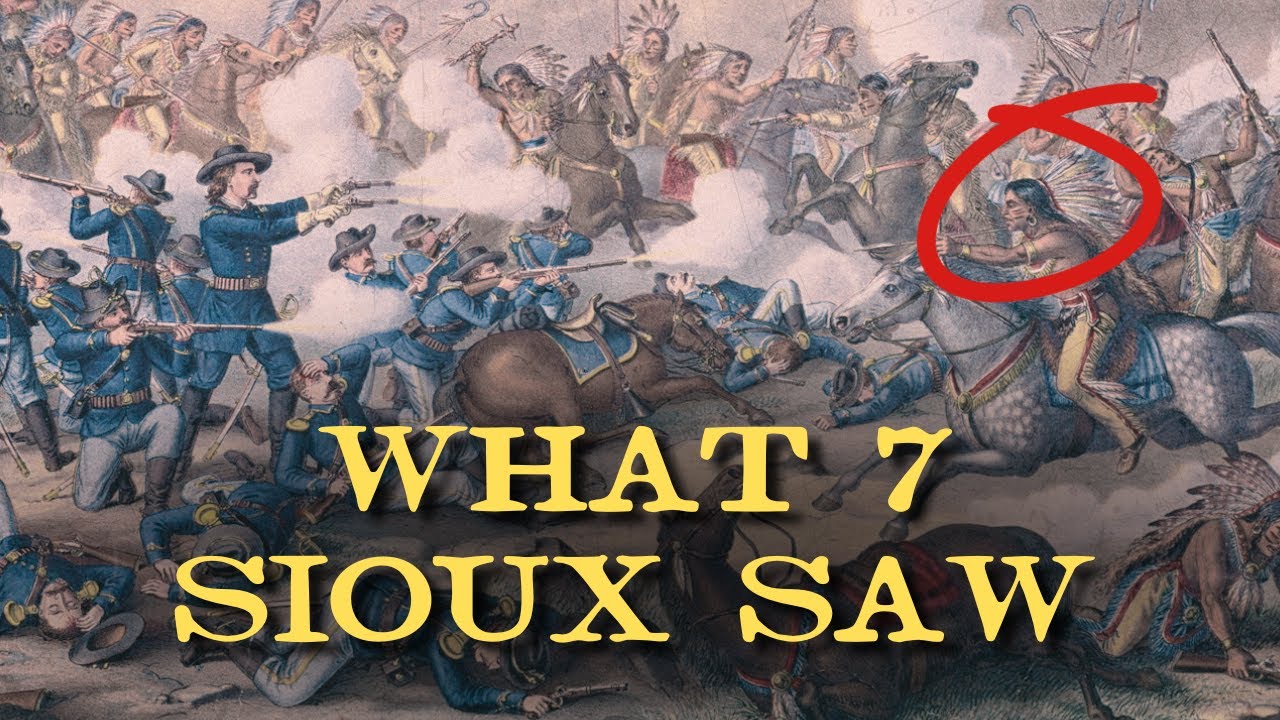
This miscalculation proved fatal. The warriors split their forces, with one group intercepting Custer between him and the non-combatants, while another circled behind him. He was quickly overwhelmed. The fighting was chaotic, with dense smoke and dust making it impossible to distinguish friend from foe. Horses were frantic with fear, and in the confusion, some warriors accidentally shot each other. One witness, Horned Horse, described the scene by interlacing his fingers, saying, "Just like that. Indians and white man."
Crazy Horse, one of the most revered Lakota leaders, played a pivotal role. His account, relayed through Horned Horse, describes the tactical brilliance and overwhelming force that led to Custer’s defeat. He was known to ride unarmed into the fiercest parts of battle, praying to the Great Spirit for victory if his cause was just. The warriors’ charge was so effective that Custer and his men were quickly surrounded and annihilated.
Crow King, a leader of the Hunkpapa Sioux, provided a detailed account of the battle’s progression. He noted that the first attack hit the Hunkpapa camp, with the soldiers opening fire from about 400 yards away. The Indians initially retreated slowly to give the women and children time to escape. Once enough warriors had gathered, they turned and drove the soldiers back toward a hill. Then, a second group of soldiers, presumed to be Custer’s command, arrived and began firing from nearly a mile away.
Crow King described how the warriors, now fully prepared, charged the second group. "We turned to meet this second group. Most of our warriors gathered in front of them, and we rushed our horses toward them. At the same time, warriors went out on both sides of the group and circled around them until they were surrounded." When the soldiers realized they were trapped, they dismounted and tried to hold their ground. "We pushed them toward our main camp and killed them all. They kept their formation and fought like brave warriors to the last man."
He also clarified that Custer was not known to the warriors during the fight. "No warrior knew Custer during the fight. We did not know him, either alive or dead." After the battle, the chiefs ordered a search for the "Long Hair" leader among the dead, but no such man was found. Custer had cut his hair short before the march. Crow King expressed great admiration for the courage of Custer and his men, stating that the fight convinced the Indians that the white men were superior and that continuing to fight them would lead to their destruction.

Gall, also known as Pizi, was a prominent Hunkpapa leader whose personal tragedy fueled his ferocity. During Reno’s initial attack, his two wives and three children were killed. "When Reno made his first attack at the upper end, he killed my two wives and my three children, which made my heart bad. Then I fought with a hatchet." This loss transformed his grief into a relentless drive to defeat the 7th Cavalry.
Gall’s account describes the initial sighting of the soldiers crossing the divide in the early morning. When Reno attacked the upper end so quickly, the Indians had no choice but to fight. Gall and Sitting Bull were at the point of Reno’s attack. The women and children were hurried down the river to where the Cheyenne were camped. The Sioux fought Reno’s forces, driving them back into the woods. Once Reno was defeated and forced to retreat across the river, all the Indian forces turned on Custer and fought until he was destroyed.
Gall noted that the soldiers fought desperately and never surrendered. "They fought hard in a line along the ridge. As the men fell, the horses were gathered and led toward the women and old men who were collecting them." He also described how the warriors focused their fire on the soldiers holding the horses. Once the horse holders were killed, the warriors used blankets and loud shouts to stampede the horses, making escape impossible for the soldiers.
Rain in the Face, a Hunkpapa warrior, offered a personal and visceral account. He was at a feast in a young men’s lodge when the attack came. "While I was eating my meat, we heard the war cry. We all rushed outside and saw a warrior riding at full speed from the lower end of the camp, giving warning as he came. Then we heard the guns of the soldiers, which sounded different from the guns our people use in battle."

He described the chaos of the initial charge, noting the presence of a young woman, Tashina Mani, or "Moving Robe," who inspired the warriors. "Look, there is a young woman among us," he shouted. "Let no young man hide behind her dress." He also recounted the fierce fighting, where warriors used bows, arrows, and war clubs. He admitted that the battle was so intense that they barely recognized their closest friends. "Everything happened so fast. After the battle, we young men were chasing horses all over the prairie, while the old men and women were looting the bodies."
Red Horse, a member of the war council, provided a highly detailed tactical account. He described the village layout and the initial attack. He noted a specific officer on a horse with four white feet who was considered the bravest man the Sioux had ever fought. "I am not sure if this was General Custer, but many of the Sioux men I talked to believe so. I saw this officer many times during the fight, but I never saw his body."
Red Horse described the soldiers’ final stand. "The soldiers, Custer’s battalion, whom the Sioux killed, made five brave stands. At one point, the Sioux rushed directly into the middle of the soldiers, scattering them and engaging in hand-to-hand combat." He also noted that the soldiers panicked, with many throwing down their weapons and raising their hands, begging for mercy. However, the Sioux took no prisoners and killed them all. He estimated that the Sioux suffered 136 killed and 160 wounded.
Flying Hawk, an Oglala Lakota warrior, provided a vivid account of the pursuit and the final annihilation. He described how the soldiers were pushed along the ridges until they reached Custer’s position. "We continued to chase them all until they reached Custer’s position. There were only a few of them left by that time." He described how Crazy Horse gave him his horse to hold while he crawled through a ravine to shoot at the soldiers. "He was shooting them as fast as he could load his gun. They were falling off their horses as fast as he was shooting."
Black Elk, who was only 13 years old at the time, offered a unique perspective on the events leading up to the battle and the spiritual context of the fight. He described the Sun Dance, a sacred ceremony led by Sitting Bull, which was held to purify the people and give them strength. He also recounted his first taste of combat against a wagon train, where he learned the circling tactics of the warriors. His account grounds the battle within the deep spiritual and cultural beliefs of the Lakota people.
Iron Hawk, a young Hunkpapa warrior of 14, gave a harrowing account of the close-quarters fighting. He described the initial panic and his rush to prepare for battle. He recounted killing a soldier with his bow and arrow, striking him with his heavy bow until he was dead. "I was angry because I was thinking of the women and little children running away, scared and out of breath. These white wasichus wanted a fight and they came for it. So, we gave it to them."
The testimonies of these seven Sioux witnesses collectively correct and enrich the historical record. They reveal that Custer’s command was not simply wiped out, but was tactically outmaneuvered and overwhelmed by a large, well-organized force. The accounts also highlight the personal tragedies and profound courage on both sides. The battle was not a simple massacre, but a desperate and violent clash where the warriors fought to protect their families and their way of life, and the soldiers fought with a bravery that earned the respect of their adversaries.