The man rode into the small Missouri town wearing a necklace strung with human scalps. The reins of his horse were braided with the same grisly trophies. Union soldiers who saw him coming did not reach for their weapons.
They ran. Because everyone in Missouri in 1864 understood a chilling truth: surrendering to this man was a fate far worse than dying in battle. His own men called him a friend.
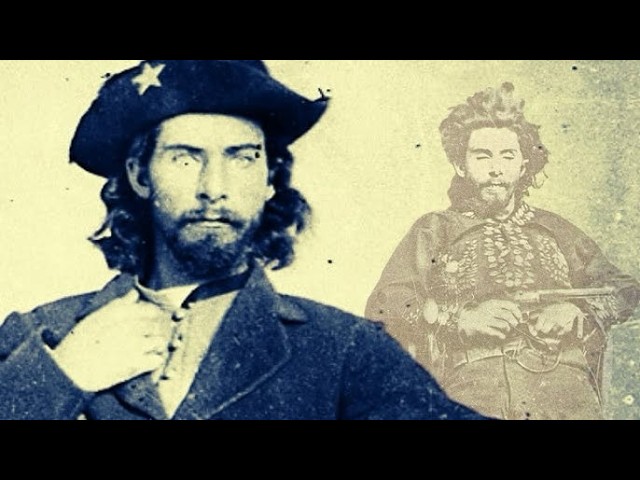 His enemies called him something else entirely. The devil does not need an army. He only needs this one man.
By the end of the Civil War, history would remember generals who commanded a hundred thousand troops as mere footnotes compared to him. Robert E. Lee is remembered for his strategy.
Ulysses S. Grant is remembered for his resolve. But there was one name that Union soldiers whispered in the dark, praying it would never reach their camp.
Not because of the number of men he led. He led almost none to speak of. It was because of what he did to the men who fell into his grasp.
This is the story of the most terrifying man of the American Civil War. A man his own government feared so deeply that it eventually tried to distance itself from him. A man whose atrocities did not end with his death, because what he built survived him for decades.
His name was William T. Anderson. History remembers him by a nickname that still makes historians hesitate before saying it aloud.
Bloody Bill. Before the scalps. Before the massacre that carved his name into American memory forever.
Before all of that, William Anderson was just a boy from Missouri, born in a state that was about to become the bloodiest spot in the nation, years before the first shot of the war was ever fired. Missouri in the 1850s was not waiting for the war to begin. It was already fighting one.
The border with Kansas had turned into a killing ground over a single question. Would Kansas enter the Union as a pro-slavery state or a free one.
Pro-slavery raiders, known as Border Ruffians, crossed into Kansas to terrorize free-state settlers. Free-state gunmen, known as Jayhawkers, crossed back into Missouri to do the same in return. This was not politics.
It was arson, ambushes, and murder happening years before the siege of Fort Sumter in towns most Americans had never heard of. Historians call it Bleeding Kansas. The people who lived it called it home.
William Anderson grew up breathing that violence like air. His father ran a trading post. The family was not wealthy, not political, and not looking for a fight.
But in Bleeding Kansas, the fight eventually found everyone.
In 1862, the fight found the Anderson family directly. A Kansas militia leader, a man with a personal grudge list against the family, was responsible for the death of William’s father. Some accounts say it was over stolen horses.
Some say it was personal. What matters is what happened next. William Anderson did not go to the authorities.
There were no authorities to trust. Instead, he picked up a weapon. And he joined the rebels.
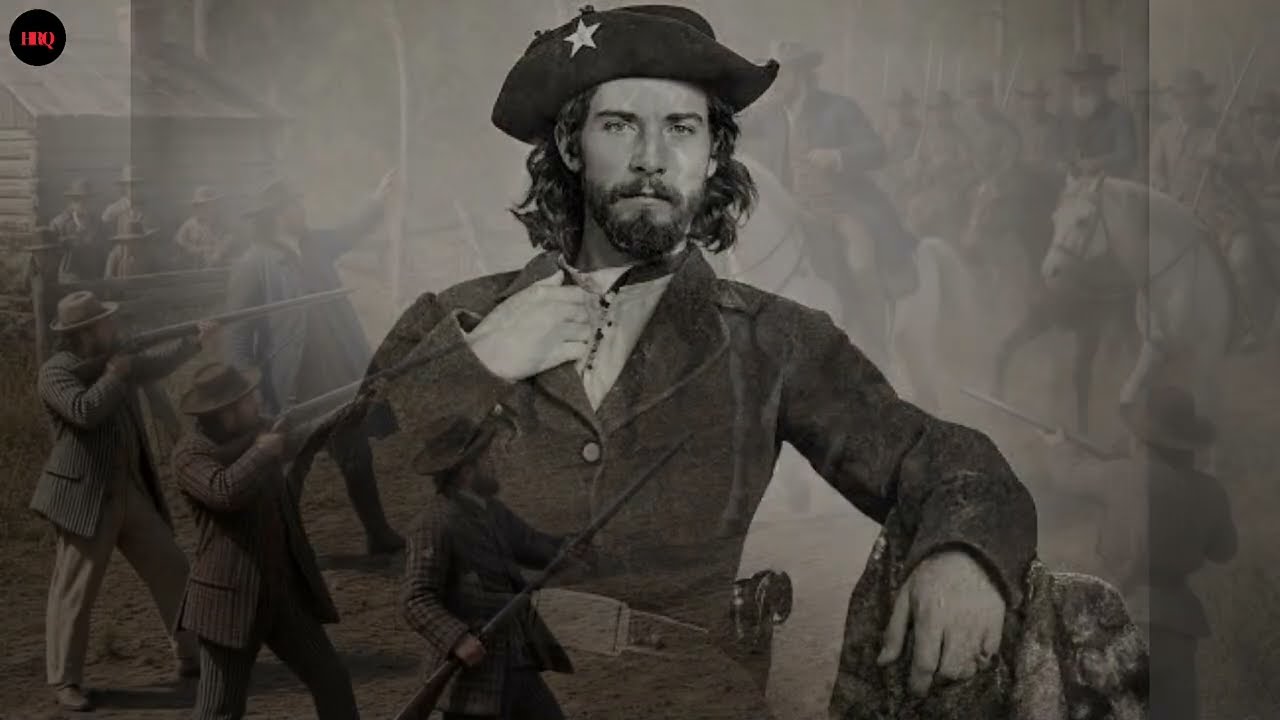 Not the Confederate army. Not exactly. The resistance fighters in Missouri operated outside the normal military command structure, moving in small bands, striking fast, and disappearing into the countryside before Union patrols could respond.
They called themselves bushwhackers. To the Union soldiers stationed in Missouri, that single word was enough to keep a man awake at night.
Anderson joined the most notorious of these bands, led by a former schoolteacher named William Quantrill. Quantrill’s name already struck terror across the state. But even among Quantrill’s raiders, men who had crossed every line separating soldiers from something far darker, William Anderson was different.
And it did not take long for the men riding beside him to notice. Here is what made Anderson different from every other guerrilla fighter in that war. Most men who 𝓀𝒾𝓁𝓁 in combat carry that weight with them afterward.
It changes something in them, whether they show it or not. Anderson showed nothing. Soldiers who fought beside him described him as a man who could laugh with his men around a campfire one hour, and execute a line of unarmed prisoners the next, with the same expression on his face the entire time.
His men began calling him Bloody Bill sometime in 1863. The name was not an exaggeration for effect. It was a warning.
The event that cemented his reputation came in August of that year. In a raid still taught in Missouri history classes with a content warning, Quantrill led nearly 400 fighters into Lawrence, Kansas, a town that had become a symbol of the free-state movement. Anderson rode with him.
What happened over the next few hours would be remembered as one of the bloodiest civilian massacres of the entire war. Between 150 and 200 men and boys were killed. Many were dragged from their homes in front of their families.
Anderson was not just present. Survivors later described him as one of the most active killers that day, moving from house to house with a list. A list.
Because this was not chaos. It was systematic.
After Lawrence, something changed in Anderson. And the men who rode with him began to notice. He started wearing trophies.
A rope, sometimes described as a cord, knotted with scalps he had taken from soldiers he killed. His horse’s bridle was decorated the same way. This was not hidden.
It was not something he tried to justify. He wanted everyone to see it. He wanted the sight of him riding toward you to be the last thing you ever perceived, before you stopped fearing anything else forever.
By 1864, Union commanders in Missouri were no longer fighting a conventional war. They were trying to survive an enemy who had stopped following any rules either side had agreed upon.
Then came Centralia. September 27, 1864. The small Missouri town of Centralia was quiet on the railroad line when Anderson stormed in with about 80 of his men.
 They looted the town, then turned their attention to the stagecoach and the train that arrived shortly afterward. On that train were 25 Union soldiers, unarmed and on leave, heading home. Not to a battlefield, but to their families.
Anderson ordered them to line up. He asked if there were any officers among them. One man stepped forward, Sergeant Thomas Goodman, thinking rank might mean something.
That rank saved his life because Anderson wanted him for prisoner exchange. But it meant nothing for the other twenty-four men standing beside him. What happened next was documented by multiple witnesses, and it is the reason Centralia is remembered as one of the darkest single incidents of the entire Civil War.
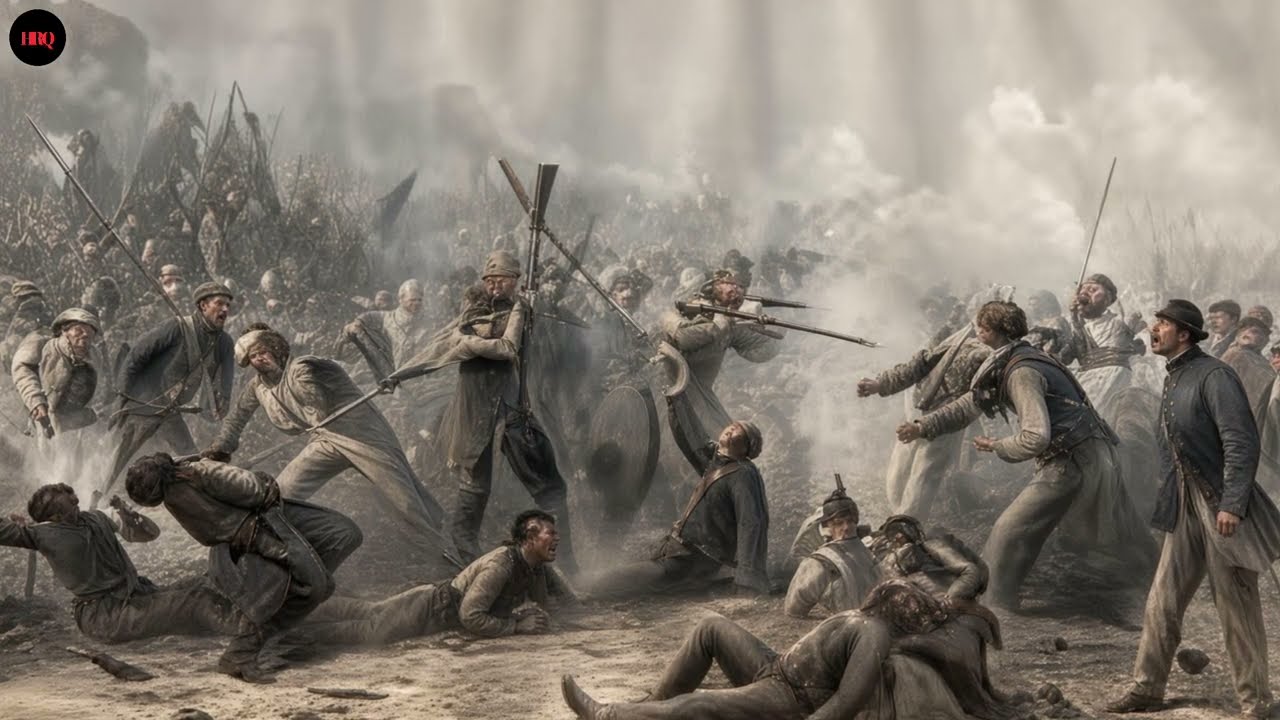
The unarmed soldiers were shot down where they stood. Some accounts describe additional mutilation of the bodies afterward, details so disturbing that even their Confederate comrades who heard about it were horrified. This was not a battle.
There was no engagement, no exchange of fire, no soldiers defending themselves. It was an execution of unarmed men who believed until the very last moment that they were simply on their way home. But Centralia was not over.
A Union militia force of about 150 men, hearing of the attack, rode out to confront Anderson’s gang, confident in their numerical superiority. What they did not know was that Anderson was not running. He was waiting for them.
He lured the militia into a tight ambush. And in the chaos of close-quarters guerrilla fighting, a style of combat Union soldiers had not trained for, the militia was annihilated. Nearly 123 men were killed.
Witnesses later described scenes of mutilation so brutal that federal officers investigating afterward struggled to document what they found. It was not recorded as a battle the way history usually remembers battles. It was recorded as a massacre with a death toll higher than the attacking force itself.
After Centralia, Bloody Bill Anderson was no longer just a terrifying guerrilla leader. He had become something like a legend, the name a Union officer would whisper to remind his men why discipline mattered, why surrender was not an option, and why giving up to this particular man was a decision that ended badly every single time. But here is the part of the story that is not often told.
The fear Anderson cultivated did not come from the size of his army. It came from what people knew about him when he got you alone. A soldier could face artillery and calculate his odds of survival.
A soldier facing Bloody Bill Anderson knew something worse. He knew that the rules he had trained under, the rules of war that separated soldiers from savagery, simply did not apply anymore.
The Confederate leadership had a complicated relationship with Anderson. His brutality was, strangely, useful. It terrorized Union supply lines and militia forces across Missouri without requiring a single regular battalion.
But it also became a liability and a source of trouble. Reports of his tactics reached Confederate command, and some officers were concerned about being associated with a man whose methods went far beyond what even the brutality of war typically allowed. Anderson was no longer fighting for the Confederacy in any conventional sense at that point.
He was fighting because the war had given him a place where his personal desires seemed to, for a time, align with what the moment required. But that alignment did not last.
On October 26, 1864, about a month after Centralia, Union forces managed to corner Anderson near Albany, Missouri. Accounts differ on the details of the confrontation, but the outcome is the same. Anderson, in what witnesses described as a reckless charge bordering on suicide against Union lines, was shot and killed.
 He was 24 years old. What the Union soldiers did next tells you everything about how deeply his reputation had sunk into their minds. They photographed his body, not out of respect, but out of a need for proof.
Soldiers in Missouri had heard so many stories, sightings, and unconfirmed rumors that many refused to believe Bloody Bill Anderson could be killed by an ordinary bullet. The photograph was circulated specifically to prove that the man who had terrorized their state was, in fact, mortal. And they did not stop there.
Anderson’s head was severed and displayed publicly. A decision that shocked even the most hardened Union soldiers, but it perfectly illustrates the sheer scale of terror this man had generated across the state during his short and violent career.
24 years old. Read that again. In less than three years of guerrilla warfare, William Anderson built a reputation so horrific that Union command considered his death an event requiring irrefutable physical evidence.
Yet some contemporaries wondered whether the stories woven around him had exceeded the man himself. And here is where the story stops being about one man and starts being about the legacy he left behind. Because Bloody Bill Anderson did not just terrorize Missouri.
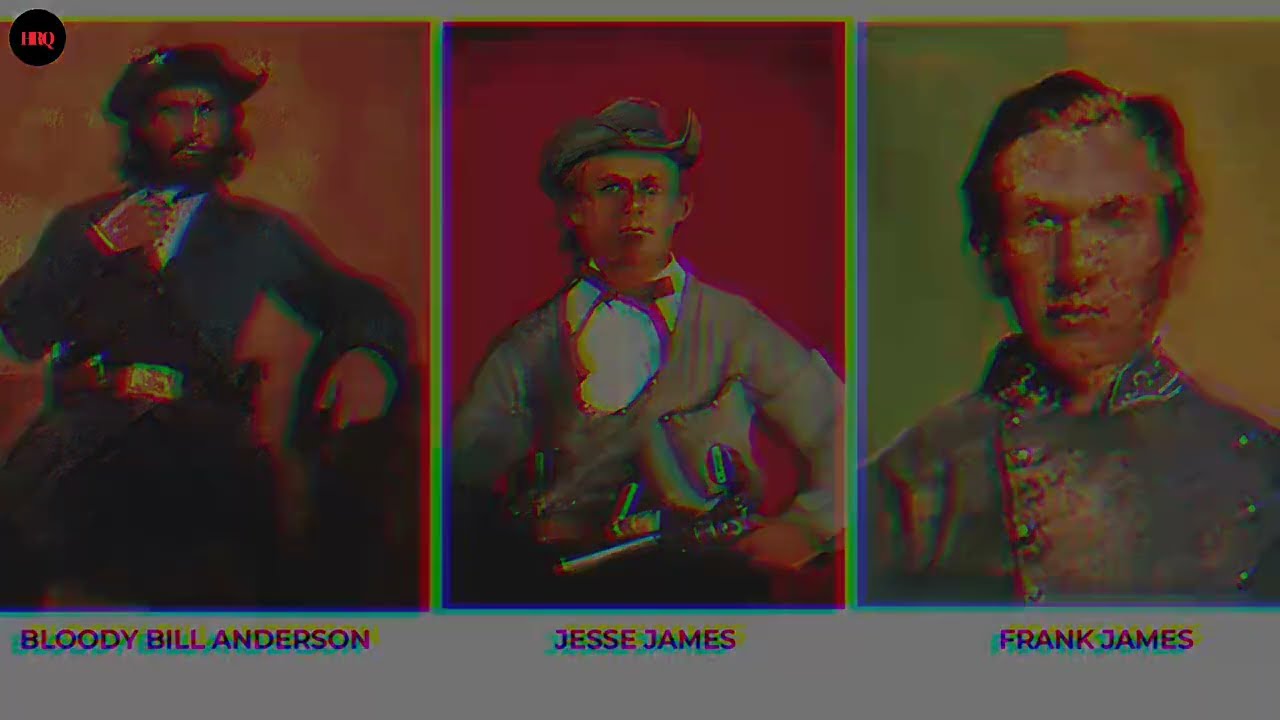
He trained the next generation of American violence. And most people watching this have heard their names without ever connecting them to him. Riding in Anderson’s band during those final brutal months were two teenagers who would later become the most famous outlaws in American history.
Jesse James, and Frank James. Historians widely agree that the tactics these two men later used to rob banks and trains across the Midwest, the speed, the ruthlessness, the willingness to shoot first in situations most criminals would avoid, were formed directly under Anderson’s command.
The Jesse James legend that Hollywood spent the next century glamorizing did not emerge from nowhere. It emerged from a teenager who learned how to 𝓀𝒾𝓁𝓁 without hesitation while riding beside the most feared man in the state. This is the part of this story that should truly unsettle you.
Bloody Bill Anderson died at 24. His war lasted less than 3 years. Yet the violence he taught, the psychological warfare he mastered, the idea that fear itself could be a weapon more effective than numbers, lived on after him for decades, rooted in men who went on to shape one of the most enduring outlaw legends in American history.
Missouri today does not advertise this history. There is no grand monument to Bloody Bill Anderson, no museum built around Centralia the way museums were built around Gettysburg or Antietam. It is a part of Civil War history that America has largely quietly moved past, perhaps because it does not fit the narrative most people prefer, of generals and strategy and the clean lines of formal battles.
Anderson’s war did not look like that. It looked like ambushes, mutilations, and terror used deliberately as a tactic. Which is uncomfortable precisely because it worked.
So when people ask who was truly the most terrifying man of the Civil War, the answer is usually not the general with the largest army or the sharpest strategic mind. Fear does not scale with numbers. It scales with what people believe you are capable of doing to them personally.
Face to face, with no place to run. William Anderson understood that better than anyone who lived through that war, and he built an entire reputation, and ultimately an entire legacy that outlived him, on that very understanding. He would ride into towns wearing the evidence of what he had already done, so that everyone who saw him coming knew exactly what was going to happen to them.
And for a brief and brutal moment in American history, that was enough to make grown soldiers, armed men trained for war, turn and flee at the mere mention of his name. 24 years old, and 3 years of war. A legacy that trained the men who went on to rob their way into American folklore.
If that is not the definition of terror, it is hard to know what is.