At the end of World War II, Germany’s most senior military leaders faced a range of fates. The men who held the rank of field marshal had been the elite of the Nazi military machine, trusted by Adolf Hitler to execute his vision of conquest. With Germany’s defeat in 1945, their power and prestige ended abruptly. Some were arrested, some faced trial, and others died before they could be held accountable.
Walther von Brauchitsch served as commander-in-chief of the German Army from 1938 to 1941. His early career was marked by strategic success during the Blitzkrieg campaigns in Poland, France, and the Low Countries. However, his authority was undermined by Hitler’s increasing interference in military matters. His health deteriorated, and he suffered a heart attack in November 1941. After the failure of Operation Typhoon, the attack on Moscow, Hitler dismissed him in December 1941. Von Brauchitsch spent the rest of the war in forced retirement at his estate.
In August 1945, British forces arrested him on charges of war crimes. He was held in custody for three years awaiting trial. On October 18, 1948, just as he was set to face prosecution, he died of pneumonia. His death before trial meant he never had to answer for his actions in court.
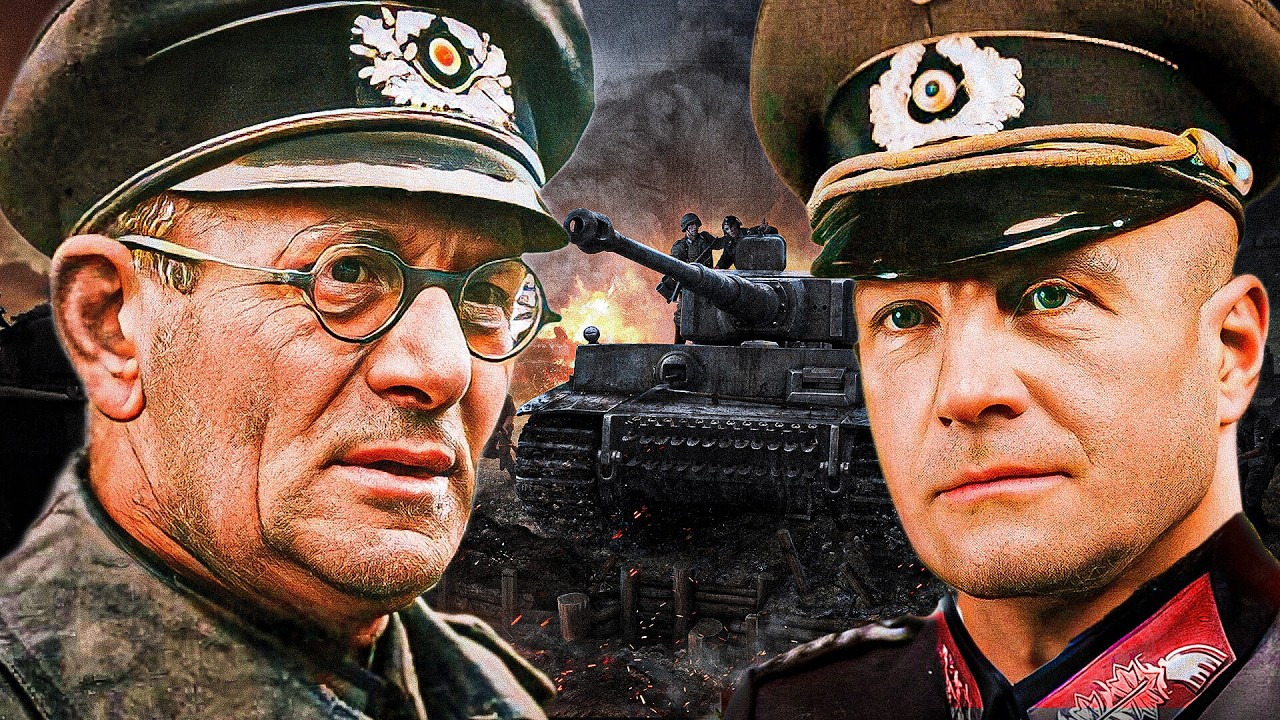
Maximilian von Weichs commanded the Second Army during major campaigns, including the invasions of France, Yugoslavia, and the Soviet Union. In 1944, he was appointed commander of German forces in the Balkans, where his responsibilities included suppressing partisan resistance. His tenure there was marked by brutal anti-partisan operations and widespread atrocities against civilians. He retired from military service on March 25, 1945, and was arrested by American troops in May.
Von Weichs was scheduled to participate in the US Army’s Hostages Trial, facing charges related to the suppression of partisans in the Balkans. However, he was removed from the proceedings before being judged or sentenced. The official reason given was medical. He died on September 27, 1954, in Bonn, West Germany, at the age of 72.
Georg von Küchler joined the German Army in 1900 and specialized in artillery. During World War II, he commanded the 18th Army and later Army Group North. His role in the invasion of the Soviet Union was significant, but his harsh military policies and involvement in war crimes eventually caught up with him. He was promoted to field marshal in 1942 but was relieved of command by Hitler in early 1944 after failing to halt Soviet counter-offensives.

After the war, von Küchler was arrested by the American Army. In the High Command Trial, he stood accused of war crimes and crimes against humanity committed in the Soviet Union. The trial revealed his involvement in atrocities, including the murder of mentally disabled individuals in occupied territories. He was found guilty and sentenced to 20 years in prison. His sentence was later reduced to 12 years, and he was released in February 1953. He died on May 5, 1968.
Wilhelm von Leeb began his service in the Bavarian Army and distinguished himself during World War I. He commanded Army Group C during the invasion of France in 1940 and was promoted to field marshal in 1941. During Operation Barbarossa, he led Army Group North with the mission to capture Leningrad. His forces cooperated closely with the SS Einsatzgruppen, which carried out mass executions, particularly targeting the Jewish population. Von Leeb also transmitted the Barbarossa Decree, which authorized the killing of Soviet political commissars and harsh treatment of prisoners of war.
In January 1942, von Leeb requested that Hitler either grant him autonomy or relieve him of command. Hitler chose to relieve him. At the High Command Trial, von Leeb’s defense portrayed him as a humane soldier who had not personally issued criminal orders. He was convicted of transmitting the Barbarossa Decree but received only a three-year sentence, which was effectively time served. He returned to his estate in Bavaria and died of a heart attack in 1956.

Ewald von Kleist came from a military family and was recognized for his leadership during the early Blitzkrieg campaigns. He commanded the First Panzer Group during the invasion of France in 1940 and later led the First Panzer Army during Operation Barbarossa. His forces took part in some of the largest tank battles in history, including the encirclements at Uman and Kiev. In 1942, he was appointed commander of Army Group A during the offensive into the Caucasus. The campaign faltered due to overextended resources and Soviet resistance, and Hitler dismissed him in March 1944.
Following the failed assassination attempt on Hitler in July 1944, von Kleist was arrested due to his cousin’s involvement in the conspiracy. He avoided trial and was released. After the war, he was captured by Allied forces and handed over to Yugoslavia, where he was sentenced to 15 years in prison for war crimes. He was later extradited to the Soviet Union, where he was sentenced to 25 years in a correctional labor camp. He died of heart failure on November 13, 1954, at Vladimir Central Prison.
Wilhelm List remained in the reduced Reichswehr after World War I and helped modernize Germany’s military under the limits of the Treaty of Versailles. He played a key role in the invasion of Poland in 1939 and was promoted to field marshal in 1940. In 1941, he led German forces during the Balkan campaign, commanding Army Group A in the invasions of Yugoslavia and Greece. The region saw brutal repression, mass executions, and harsh reprisals against partisans and civilians. While the extent of List’s personal involvement is debated, his position as commanding officer linked him to the war crimes committed by forces under his command.
In 1942, during Case Blue, the German summer offensive on the Eastern Front, List’s forces faced logistical challenges and strong Soviet resistance. When the operation faltered, Hitler dismissed him. List was later arrested by Allied forces and tried in the Hostages Trial. He was sentenced to life imprisonment in 1948 but was released in 1953 due to ill health. He lived for another 19 years and died on August 17, 1971, at the age of 91.