In the fall of 1886, a train carrying more than 300 captured Chiricahua Apache prisoners was moving east through Missouri at about 25 miles per hour. The prisoners—men, women, and elders—were being taken to a military prison in Florida following Geronimo’s surrender the previous month. Many of them would die of tuberculosis in the humid Florida heat within a few years. Among them was a man whose name was recorded in later documents as “Massai.
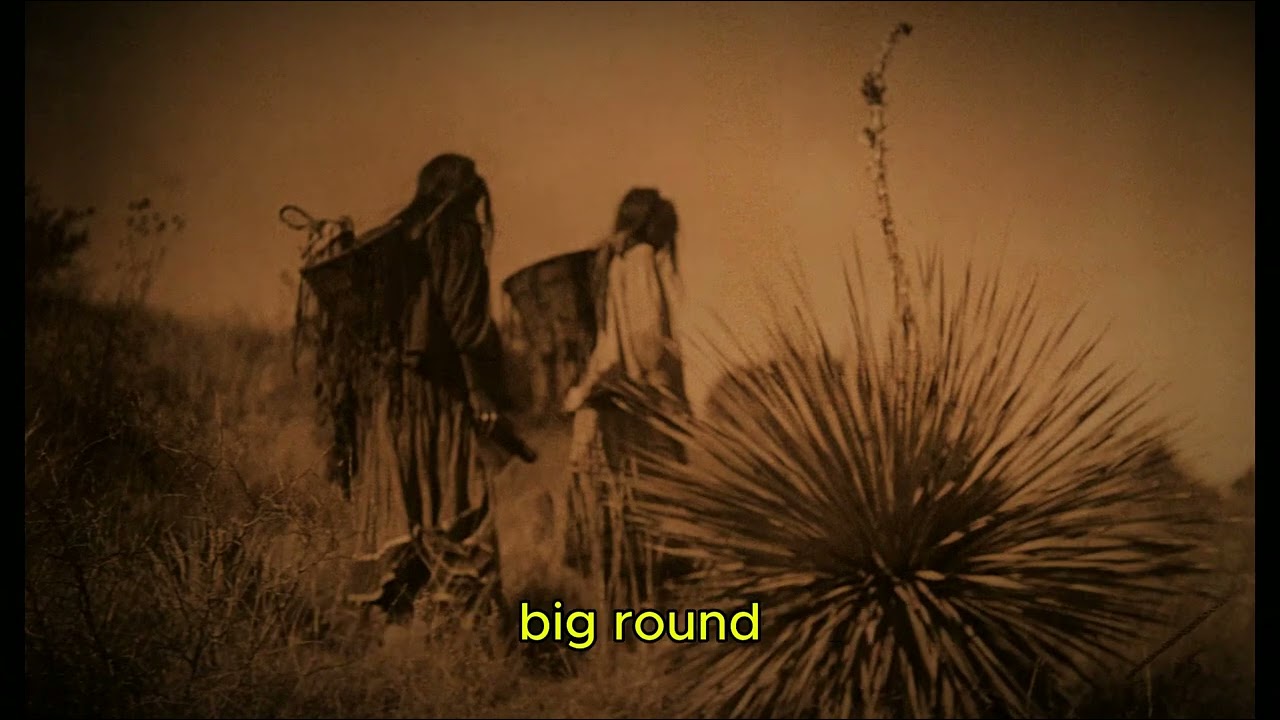
” He was around 40 years old and had been born in the Mogollon Mountains. He had never traveled more than a few hundred miles from his homeland. Now he was in Missouri, in a cold he had never known, born as he was in the deserts of southern New Mexico. Massai waited for the guards to change shifts.
He waited until the train slowed at a curve. Then, in the darkness, without a coat, canteen, rifle, or even proper shoes, he jumped from the moving train and rolled into the tall grass beside the tracks. He lay there while the train disappeared eastward into the night. Behind him, more than 300 of his people were heading to a prison camp.
Ahead of him lay more than a thousand miles of country he had never seen, farmland, rivers, and small towns full of people who would shoot an Apache on sight. And somewhere beyond the horizon was the desert where he had grown up. According to surviving accounts, he walked for about three months. Some sources say longer.
He did not stop until he reached the land of his birth. The army spent years trying to find him and never succeeded. He covered roughly 1,200 miles alone, unarmed, in winter, through unfamiliar territory, and reached home alive. The Apache were not a single people.
They were bands, families, and tribal groups spread across what is now Arizona, New Mexico, west Texas, southern Colorado, and deep into northern Mexico. The Chiricahua, Mescalero, Jicarilla, Warm Springs, and White Mountain groups spoke related but distinct languages and lived in different territories with different ways of doing things. What they shared was this: they lived in a land that could kill an unprepared person within a day and a half. Summer temperatures reached 115 degrees in the low deserts.
Water was so scarce that a person might walk two days between reliable sources. Winters in the high country were cold enough to freeze a canteen solid overnight. For nearly 40 years, from the mid-1840s until Geronimo’s surrender in September 1886, they held out against the largest military force in North America. Sometimes the odds were 50 to 1, sometimes 100 to 1.
They were worn down and eventually exhausted, but they were never truly defeated in battle. There is a temptation to explain this record by invoking mysticism and claiming the Apache had a special sixth sense. That was the story soldiers told themselves, and it is still repeated. But the truth is more interesting and more useful.
What the Apache possessed was a specific, learnable, teachable body of knowledge about navigating their world. It was passed down from generation to generation, written partly in their language and partly embodied in their tools. The following are ten documented survival techniques used by the Apache, each recorded in the testimony of men who fought them, lived among them, or later interviewed survivors. The first technique concerns water, because everything else begins with water.
If lost in the Sonoran or Chihuahuan desert with no water, one of the most reliable things to do is stop, sit, and watch the sky. About an hour before sunrise, and again in the final hour before dark, certain birds fly toward water. Mourning doves are the classic example, along with small quail that live in the lowlands. These birds do not travel far to drink, two or three miles at most.
They fly low and straight, and their flight path, if readable, points to water. The Apache turned this observation into a system. Crows did not count, as they range for miles looking for food. Hawks did not count.
But doves, quail, wild pigeons, and certain sparrows were considered water birds. According to ethnographic accounts gathered in the 20th century by researchers who spoke with elderly Chiricahua who had lived the last years of their free life, a skilled tracker could stand on a hill at dusk, watch the flight paths of half a dozen doves, and locate a spring he had never seen from miles away. There was a second signal: bees. Honey bees, which had spread across the Southwest since the Spanish brought them in the 17th century, need water within about two miles of their hive.
They also fly in straight lines when heading home. If a bee is seen at midday flying purposefully in one direction, and another bee follows the same path a few minutes later, that direction leads either to a hive or to the water the bees drink from. There was a third signal that surprises many people: wild burros. Descendants of animals lost or released by the Spanish two centuries earlier, burros multiplied in the desert and became part of the ecosystem.
Unlike most large mammals, burros walk to water at specific times, sometimes over long distances, and they wear a trail as they do so. Following a burro trail toward a slope will almost always lead to a tank, spring, or water hole. Birds in the sky, bees at midday, and burro trails on the ground were three overlapping signals, each confirming or correcting the others. This was not magic but pattern recognition, learned from childhood and refined over a lifetime.
The second technique concerns plants. It is the most misunderstood of all. Films and survival manuals from the 1950s love the scene of someone slicing open a cactus and drinking the water inside. In most cases, this is wrong.
Most cacti store not water but a bitter alkaline sap that can make a person sick and cause serious digestive damage. If dehydration is already advanced, drinking cactus sap could kill faster than the dehydration itself. The Apache knew this. What they used was more specific and cautious.
The barrel cactus, large, round, and ribbed, sometimes taller than a person, contains a starchy, moist pulp inside. It is not exactly water but something closer to a very wet, slightly bitter melon. The person does not drink it as if from a canteen; he cuts pieces of the pulp, chews them, swallows the moisture, and spits out the fiber. In a real emergency, this might give a person one day, perhaps two, of survival.
The Apache treated it as a last resort, because harvesting barrel cactus takes time, leaves tracks, and provides less water than most people imagine. More useful was prickly pear. Its flat green pads, called nopales, contain plenty of usable moisture, and its fruit, called tuna, is close to 85 percent water when ripe. The Apache had a specific method.
They burned or scraped the spines off the pads, then split them and ate the pulp raw, or wrapped them in green leaves and roasted them under coals. They picked the fruit with a tool made of two sticks, then rolled it in sand to remove the tiny hair-like spines called glochids, which could lodge in the tongue and cause days of pain if eaten directly from the plant. That one detail, rolling the fruit in sand, was the difference between a good meal and a night of suffering. There was also yucca.
The waxy white flowers of some species, blooming in late spring, are edible raw and taste somewhat like artichoke. Their green fruit roasted over a fire is sweet and starchy. The roots contain a soapy compound called saponin that lathers in water and was used as shampoo and laundry soap. The fibers of the leaves could be twisted into cord strong enough to bind a knife handle or secure shelter parts.
One plant provided food, drink, soap, and rope. Creosote leaves were boiled into a tea for coughs and stomach complaints. Mesquite would later prove essential. Jojoba seeds contain an oil so similar to the skin’s natural oil that modern cosmetic companies still use it.
Cholla cactus, dangerous to touch, is nutritious once its spines are carefully burned off its joints and the joints are roasted. To walk through the desert with an Apache who knew this land was not to walk through a wasteland. It was to walk through a market, dry and demanding, but a market nonetheless. The third technique is the mescal pit.
Mescal, in the Apache sense, refers to the heart of the agave plant, a tall thorny rosette that grows in the high desert and can live for decades before finally flowering and dying. At its base, hidden under the leaves, is a dense cabbage-like head, sometimes the size of a basketball, full of starches and sugars. Mescal hearts cannot be eaten raw; they contain compounds that irritate the mouth, throat, and intestines. Cooked properly, the heart becomes sweet, sticky, and rich in calories, combining molasses and dried dates with a smoky, caramelized exterior that can be stored for months, sometimes more than a year, without spoiling.
To make mescal, the Apache dug real pits, circular holes in the ground three or four feet deep, lined with river stones. They burned a fire in the pit for hours until the stones glowed, then removed the coals, laid wet grass over the hot stones, placed the prepared mescal hearts on the grass, covered them with more grass, and sealed everything with hides and a foot of packed earth. The pit was left closed for two days, sometimes three. The stones held the heat, and the moisture from the grass steamed the hearts slowly, breaking down starches into sugars and driving off the bitter compounds.
When the pit was opened, the result was food that could feed a group for a full week. Pounded flat, dried in the sun, and cut into strips, it became portable, calorie-dense food that did not rot in a saddlebag even in the hottest summer months. An Apache warrior on a long journey could carry a few strips of dried mescal, a small bag of ground mesquite, and a piece of dried meat, and travel for a week on rations weighing less than three pounds. The American soldier of that era needed supply wagons, water barrels, hardtack, salt pork, coffee, and feed for his horse.
That arithmetic difference, three pounds of concentrated food versus a supply train of ten wagons, is a major reason the cavalry could almost never catch up with those they pursued. Evidence of Apache mescal pits still dots the high deserts of Arizona and New Mexico, found by archaeologists as blackened circles of fire-cracked stones, sometimes 10 or 15 feet in diameter, half buried. In some places, pits are clustered together, meaning families returned to the same spot year after year to harvest and cook. The mescal pit was more than a cooking method; it was a lesson in patience.
Everything in the Apache way of life rewarded patience. The desert was not to be raced, fought, or outlasted through sheer willpower. One worked with it and accepted its pace, building a fire, leaving for two days, and returning to find a feast that would have been impossible to obtain any other way. The fourth technique is mesquite, a tree so common in the Southwest that most modern travelers pass it without a glance.
The mesquite tree grows low and twisted across all the dry country from central Texas to southern California. In late summer, it produces long brown pods, sometimes eight or nine inches in length, hanging in clusters from its branches. Most people today regard these pods as a nuisance that clogs pools and rots in yards. For the Apache, they were a staple food, not an emergency supply.
The trick was timing. The pods had to be found dry on the branch, brown, brittle, and easy to break. Too green, they were sour and hard to digest. Left too long, beetles would get to them first.
In good years, families gathered sacks of mesquite pods over about three weeks in late summer. The pods were then spread on flat rocks or stretched hides and pounded with a stone pestle or wooden club for hours at a time until they became a coarse flour, then a fine meal, sweet and slightly crisp, tasting like a mix of brown sugar and roasted nuts. Mesquite flour is remarkable. It stores well and resists insects.
It is high in protein and fiber, low in fat, and packed with slow-absorption calories. Modern nutritionists who study pre-industrial diets speak of it with wonder, because it seems designed on paper rather than something that grows by accident on a thorny tree next to a dry creek. The Apache mixed mesquite flour with water for a light gruel, shaped it into cakes cooked on hot stones, or mixed it with dried meat for trail food. While on the move, a warrior could take a handful of dry mesquite flour directly from his bag and gain enough energy for the next miles.
It was an ancient version of the modern energy bar, without the packaging. The broader point is that what appears scarce in one culture is often abundance in another. To American settlers crossing Apache territory in the 1860s and 1870s, the land seemed barren, with no food or drink, a wasteland to be crossed quickly before it swallowed them. To the Apache, the same land was full.
Every watercourse had a name. Every plant had a use. Every hill was known for what lay behind it. When the army passed through, they saw a landscape of famine and hurried on with their dry biscuits.
When the Apache moved through the same land, they were literally walking through a storehouse of food. The fifth technique is fire. An Apache who grew up in this land could start a fire from raw wood in two minutes, reliably. This is not a beginner’s skill, but it was a routine for someone who had done it a thousand times.
It is documented both by the Apache themselves and by frontier settlers who watched them do it across the territory. The tools were simple. A fire board, usually made from a dry yucca stalk split flat. A spindle of harder wood, preferably a dry sotol or agave stalk, pencil-thick and about a foot and a half long.
A small notch cut into the edge of the fire board where the spindle rests. A small amount of tinder, most commonly the dry inner bark of juniper, shredded fine and rubbed between the palms until it is like wool. Then came the spinning. The right hand gripped the top of the spindle, the left the bottom, working down the shaft with steady pressure.
Spin down, reset, spin down, reset. Heat built up at the point where spindle met board. First brown dust formed, then darker brown, then black. Then, if done correctly, the black dust glowed and became an ember.
That ember was the goal, not the flame itself. The flame came a minute later when the ember was placed in the tinder bundle and blown gently upon. What made the technique distinctive were a few touches that made all the difference. Materials were chosen with enormous care.
Not just any yucca stalk would do. It had to come from a plant that had died standing and been dried by the dry wind for at least a year, hard enough not to crumble, soft enough to grind. Not just any sotol, not just any tinder. Every element of the kit was tested and matched to the others, like a violinist matching strings and bow.
In the high country winters of the Mogollon Rim, the ability to start a fire in wet or freezing conditions was a matter of life and death. Traditional Apache men carried a small pouch of tinder wrapped in greased hide, kept dry against the skin. In the middle of a mountain snowstorm, that was the difference between waking up the next day or not. There is also a detail most survival books miss: fire-making was a social skill.
A young man’s ability to start a fire quickly, cleanly, and without wasted motion was watched, evaluated, and remembered. It was a measure of whether he had paid attention and could be relied upon. The fire-starting kit was, in a way, his resume. The sixth technique is tracking, and its counterpart, counter-tracking.
A skilled Apache scout could read a set of tracks and tell not only the kind of animal or person that left them, but their size, weight, fatigue level, speed, whether they carried a load, whether they were injured, and roughly when they passed, from the angle of a compressed pebble, the way a broken branch still oozed sap, or a light dusting of dirt on the shaded side of a rock. There are testimonies from men who worked with them of Apache scouts following a single rider’s trail for miles across bare rock in country where no white scout could see anything. This was not, contrary to much romantic writing, a spiritual gift. It was thousands of hours of training beginning in childhood, when older relatives pointed to the ground and asked, “What happened here?
What passed through? In which direction? How long ago? ” A wrong answer meant being shown the error and trying again the next day, and the next.
By the time an Apache man reached his twenties, he had effectively earned a doctorate in a very specific subject: the land itself. Counter-tracking was the other side of the same coin. If you know how others read your trail, you know how to leave a lesser one. Dozens of specific techniques are documented in the testimonies of Apache scouts and frontier settlers who fought with or against them: walking on rocks instead of soft ground whenever possible; choosing the shaded side of a wash where dew and shifting sands obscure tracks; walking in one’s own footprints on return so a tracker cannot tell the number of people or their direction; brushing out tracks with a sagebrush branch at the edge of a rocky area to make the trail simply appear to stop.
The most famous counter-tracking story, perhaps exaggerated in retelling, involves the Warm Springs Apache under Victorio in the late 1870s. According to testimonies from the time, a group of riders would scatter in a rocky area, each taking a different direction, then regroup at a meeting point many miles away after taking impossible-to-follow routes. The pursuing cavalry would find a set of tracks that suddenly became many, then vanished entirely. One cavalry officer’s published memoir describes the frustration of arriving at a place where riders had clearly been, the smell of horses and warm ash in the air, only to find the tracks disappeared the moment they crossed a patch of desert no larger than a room.
The Apache were not invisible, and they had no magic. What they had was a set of practical techniques so precise and so carefully taught that their results seemed magical to someone outside the tradition. Misunderstanding this skill as supernatural is a major reason American audiences, then and now, struggled to understand what actually happened in these wars. The army was not fighting ghosts; it was fighting a school.
A school without walls, books, or diplomas, but as rigorous as any ever created. Everyone who grew up in that school either graduated or did not survive. The seventh technique is running, not sprinting and not jogging for sport, but running as a mode of travel over long distances at a pace that would exhaust most modern marathon runners. By many accounts from the men who fought them, the Apache were among the best endurance runners in the world.
Estimates from the period vary and some are likely exaggerated, but even the most conservative accounts describe Apache warriors covering 50 to 70 miles on foot in a single day across rugged desert terrain, with little food and water, arriving fit enough to fight. This was not something anyone could do. It was a specialty developed by certain warriors of certain groups, especially Chiricahua and Mescalero. Training began young.
Runners went out in the morning before the sun rose, holding in their mouths, according to some accounts, a mouthful of water they were expected to spit out unswallowed at the end of the run. The purpose was to train them to breathe through the nose while running, keeping the mouth closed to control fluid loss. Their stride was different from a modern runner’s, efficient, low, almost gliding, with the foot landing under the center of gravity rather than reaching forward. They wore knee-high moccasins with rawhide soles, hand-stitched and repaired every few days, soft enough to feel the ground, tough enough for rocks, light enough to be nearly unnoticeable.
They rested by walking, not stopping. They ate while moving, chewing strips of dried mescal or mesquite blossoms along the way. They drank sparingly from small bags slung under the arm, sipping rather than gulping. The hardest part for modern people to believe is that when it was time to fight, they arrived not exhausted but focused, calm, and ready.
There are cavalry accounts from the 1870s of pursuing a raiding party for two days, finally catching up in a rocky canyon, only to find the Apache waiting there after covering on foot the same distance the cavalry had covered on horseback, arriving hours earlier. The records are consistent enough across numerous independent sources that most modern historians accept it as fact. Long-distance running was not confined to warfare. In peacetime, it was how messages traveled between groups.
News of births, deaths, meetings, or threats moved across country the size of some European states without telegraph, horses, or roads. A young runner might be sent to cover many miles to deliver a message, arrive, sleep four or five hours, then run back. This was normal and expected, part of what it meant to be a man in the Apache understanding of the world. The eighth technique is the wickiup, the Apache shelter.
It was a dome of bent poles covered with brush, sometimes hides or blankets, typically about eight or nine feet in diameter at the base and six or seven feet tall in the center. Small, low, and tight, it did not resemble the tall skin lodges of the Plains peoples that Hollywood often confuses with all Native dwellings. The wickiup had one great advantage that mattered in Apache country: it could be built in a few hours from materials on site by two people working together. When leaving, there was no need to take it.
One simply walked away, and the desert reclaimed it. A wickiup abandoned for six months looked to outsiders like a natural pile of brush. Materials were whatever the surroundings offered: long flexible saplings, often cottonwood or willow if water was nearby, or ocotillo stalks if not. They were planted in a rough circle, bent inward, and tied together at the top with yucca fiber to form a dome.
Over that frame went a covering of grasses, brush, sometimes juniper branches, or hides in winter. A small opening was left at the top for smoke, and a low entrance on the side, often facing east toward sunrise. Inside, the wickiup was cool in summer and warm in winter. Its dome shape shed rain and deflected wind.
A small fire in the middle kept it comfortable on cold nights. The floor was often spread with grass or hides. A single family lived in one, and larger families might have two or three arranged in a small cluster. John Bourke, an army officer who served under General Crook and wrote extensively about the Apache in the 1880s, described passing what looked like a dense pile of brush and only realizing later that he had walked within a few steps of several wickiups without seeing them.
That was deliberate design. Apache camps were built to be invisible from a distance and often from very close range. The wickiups blended with surrounding brush, cooking fires were small and screened, and trails to and from camp were varied so no single clear path developed. When a group moved on, it left almost nothing behind.
Compare that to cavalry camps of that era: tents lined up in neat rows, white canvas visible from distant hilltops for miles, fires large enough to be seen at night from even farther, horses tied and easily heard, latrine areas polluting the ground and smellable a quarter mile downwind. The soldiers made themselves easy to find and slow to move. The Apache made themselves hard to find and easy to move. In a land where the ability to move first and disappear second decided most battles before they began, that difference was decisive.
The wickiup was not just shelter. It was the physical expression of a philosophy: take what you need, leave what you do not, and travel light. Do not fall in love with things. Everything you own must be carried, and everything you carry must be defended.
The ninth technique is communication. Consider the problem: a group of 30 or 40 people scattered across mountainous country perhaps 50 miles wide. Some hunt, some gather, some watch trails. They need to warn each other quickly about approaching danger.
No phones, no telegraphs, no horses fast enough for the terrain. What they had was smoke in the sky. Apache smoke signals were not the casual campfire smoke of old cartoons. They were a specific, disciplined technique.
A small strong fire was lit, then covered with wet grass or damp branches to produce thick white smoke. A blanket, hide, or folded cloth was held over the fire and lifted at intervals, releasing puffs of smoke in patterns visible from 10, 20, or sometimes more miles away, depending on the height of the sending point and clarity of air. These patterns were not a full language but something closer to a code understood between people who knew one another in advance. One continuous column of smoke meant warning.
Two spaced columns might mean one thing, three another. Some rhythms, according to accounts from the period, indicated the number of approaching enemies, the direction they came from, whether they were cavalry or civilians, and where the group should assemble. To send effectively, one needed high ground, a mountain edge, a hill, or a point where smoke could rise above nearby ridges and be seen from a distance. The Apache effectively maintained a network of these signal points across their territory, known to the people who used them and invisible to outsiders.
A message could travel from one end of a large mountain range to the other within minutes, faster than a horse. There were other forms of long-distance communication as well: signal fires at night, reflected sunlight off a polished piece of mica, long before the army’s official heliograph program in the late 1880s, and a deliberate dust cloud raised by a rider circling in a wide loop on a hilltop, visible for miles as a slow-moving stain in the sky. What all these techniques shared was that they used the land itself, the hills, clear air, and long sightlines of the high desert environment, as the medium. To someone who did not know the code, these signals were invisible.
To someone who did, they were an ongoing conversation across vast territory. Some historians have said the Apache built, over generations, something like a wireless network covering the Southwest long before radio existed. It was slower, simpler, and limited to short messages, but it was real and effective in the mountains they knew well. The tenth technique is medicine.
There was no doctor in the Apache band in the modern sense, but there were people, often older women and sometimes men, who possessed plant knowledge. What they knew, if written down in a file, would fill a small library. Willow bark, boiled into a bitter tea, reduced fever and eased pain. Its active ingredient is salicin, which German chemists at Bayer later isolated and marketed as aspirin in the 1890s.
Apache healers had been using it for at least a thousand years before Bayer entered the picture. Creosote bush, whose leaves release a pungent smell after rain known to anyone who has been in the Southwest after a summer thunderstorm, was made into tea for coughs, chest congestion, and stomach problems, and used as a poultice for bruises and rashes. Modern pharmacology has confirmed that creosote contains several compounds with genuine antimicrobial and anti-inflammatory properties. Prickly pear pads, split and applied to wounds or burns, cooled the skin and, according to some accounts, accelerated healing.
Modern studies have shown the moist interior of these pads has actual wound-care properties. The Apache did not have those studies; they had two thousand years of observing what worked. Yucca root, boiled, was used for arthritis and joint pain. Osha root, brought from the high country, was used for sore throats and cold symptoms.
Juniper berries, chewed slowly, soothed an upset stomach. The list goes on. Dozens of plants, each with a specific use, a specific preparation, and knowledge of when to gather and in what amount to give. This was pharmaceutical science held in memory and refined across generations.
There is a story worth telling because it adds useful nuance. Army surgeons stationed in the Arizona and New Mexico territories in the 1870s and 1880s sometimes learned traditional remedies from Apache scouts they worked with. According to surviving records, some of those observations made their way into notebooks and later into military medical literature. Some of those recorded plants are still known today to contain genuine medicinal compounds.
The knowledge did not entirely disappear; it passed from hand to hand. The Apache were not primitive. The word “primitive” was used to describe them for a long time, and it is one of the worst pieces of misinformation in American writing about the West. They were adapted, precisely fitted to a region that would not have supported anyone without that adaptation.
There is a difference between people who lived poorly in a rich country and people who lived well in a poor one. The Apache did the second, and the record of how they did it is one of the most remarkable achievements in the long history of human survival. This brings us back to Massai, the prisoner who jumped from the train in Missouri and began walking, according to surviving accounts, for nearly three months across country he had never seen and weather he had never known until he reached his homeland. He had no horse, no rifle at first, and no map.
What he had, built over a lifetime of attention to the environment around him, was everything from the ten techniques described above and perhaps hundreds more never written down. He watched birds in a country where the birds were different from those he grew up with, but the principle was the same. He read the land. He walked when the moonlight was enough and rested when it was not.
He avoided leaving tracks on soft soil whenever possible. He crossed rivers at bends where currents carried his scent away from any dog sent after him. He ate what he could find and what he could kill quietly. According to some accounts, he took what he needed from remote farms and left before anyone knew he was there.
He crossed Arkansas, crossed Indian Territory, crossed the plains of west Texas, entered New Mexico, and somewhere in early the following year, in the land where he was born, he stopped walking. The army spent years searching for him. They organized patrols, offered rewards, and sent trackers, some of them Apache, to try to bring him in. They never succeeded.
According to various sources, Massai spent the next 20 years or so as a lone rider, moving in and out of the mountains of northern Mexico and the mountain regions of the Southwest, sometimes seen by ranchers and prospectors, sometimes blamed for raids he may not have carried out. Most accounts agree he died after the turn of the century, although no one has determined exactly when or how. What is known for certain is that he walked home, and that the land that allowed him to do so was the same land the U. S.
Army spent nearly 40 years trying to control and mostly failing to conquer. The soldiers who chased him said in their reports and memoirs that the desert had protected him. That is the kind of thing men say when they cannot explain what happened to them. But the desert did not protect him.
He knew the desert. That is a very different thing. Part of that knowledge still remains with us. Not much, but a little, preserved by descendants of those who lived through it, by researchers, and by a scattered community of desert dwellers who have taken the time to learn what the plants, birds, and terrain can tell us.
Most of that knowledge is lost. That is the harshest truth. When the Apache wars ended and Geronimo boarded the train east in September 1886, on the same kind of train Massai would jump from a few weeks later, much of the knowledge of how to move through that country left with the last generation raised in it. Not all of it, but much.
What remains are records and accounts, sometimes hesitant, sometimes admiring, sometimes hostile, from men who fought the Apache and had to try to understand how anyone could endure so long, so skillfully, and with so little. What those accounts describe, stripped of myth, is not magic, mysticism, or luck. It is knowledge earned painfully generation after generation in a school that nobody built and nobody closed until the land itself was taken. Ten tricks, ten techniques, ten ways to turn what looks like nothing into something, if one knows how to look deeply enough.
If that knowledge could carry a man 1,200 miles back to his homeland across country he had never seen, perhaps it is worth learning what can still be recovered from it. Not to pretend to be someone else, but because knowledge paid for with so much time and effort deserves to be remembered.