The original pilot of *Gilligan’s Island* was filmed in 1963, well before the series premiered, and it featured a cast and tone noticeably different from what audiences would eventually love. CBS rejected the footage and demanded significant changes before broadcast. The pilot did not surface again until 1992, nearly three decades later. Fans who had grown up watching reruns suddenly discovered that the show they thought they knew had a hidden origin, one that was familiar in some ways yet unmistakably different from the version that became a television classic.
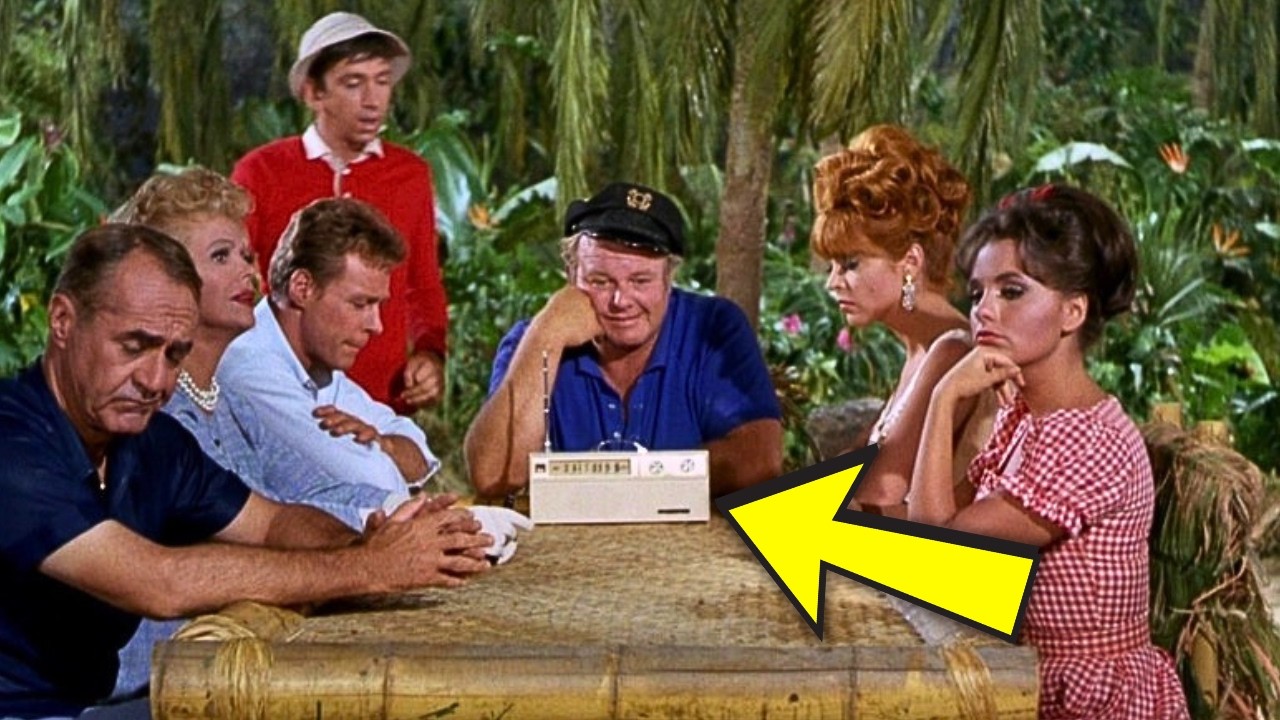
Behind that seemingly simple premise lay a production history far stranger than anything that aired on screen, filled with hidden jokes, cast tensions, and decisions that quietly shaped television history. One of the show’s most famous details was a deliberate industry jab. The SS Minnow, the boat that strands the castaways, was named in honor of Newton Minow, the chairman of the Federal Communications Commission, who in 1961 declared American television a “vast wasteland. ” Creator Sherwood Schwartz, unimpressed, ensured that the vessel responsible for ruining everything would carry Minow’s name forever.
The show also faced an unexpectedly abrupt end. After reportedly being greenlit for a fourth season, CBS reversed course without warning, canceling the series to make room for a new show backed by influential executives. The decision came so late that there was no time to craft a proper finale, leaving the castaways stranded with no rescue and no resolution. That unfinished ending became a running joke in pop culture for years and drove fans and producers to return to the story through movies, cartoons, and reunion specials, all trying to give the characters the ending they never got.
The theme song, now inseparable from the show, was itself a solution to a production problem. With the original pilot rejected and no straightforward way to introduce seven characters, the song was written to do the work of a first episode, explaining exactly how these seven people ended up stranded on a deserted island. The tune also created a lasting controversy. In its original version, the lyrics named the skipper, Gilligan, the millionaire, his wife, and the movie star, then lumped the professor and Mary Ann together as simply “the rest.
” Dawn Wells and Russell Johnson were unhappy, and audiences complained until the lyrics were updated to include both characters by name. History weighed on the production in ways nobody planned for. While filming the original pilot on November 22, 1963, news broke that President John F. Kennedy had been shot in Dallas.
Filming was suspended as the nation went into mourning, and in some early pilot footage, a flag can be spotted flying at half-staff in the background, a quiet and unintentional reminder of exactly when that footage was captured. Tina Louise, who played Ginger, had signed on expecting a fully developed dramatic role with real depth. Instead, she found her character being shaped for broad comedy, and tensions over the direction of the role nearly drove her to walk away before the show found its footing. She ultimately stayed, but she later spoke openly about her complicated relationship with the show, and her decision not to return for the reunion movies made more sense in light of that long-running friction.
The pilot also underwent major casting changes. The original Ginger was played by Kit Smythe before Tina Louise was brought in to redefine the role. More significantly, Mary Ann did not exist in the pilot at all. Her spot was occupied by a character named Bunny, a secretary whose role did not land as producers had hoped.
Bunny was erased entirely, and Dawn Wells was cast as Mary Ann, creating the balance that helped the ensemble click. That shift also created one of television’s most enduring debates, the Ginger versus Mary Ann question, which would never have existed if Bunny had simply been recast rather than replaced. Critics were initially unimpressed when the show launched in 1964. Many reviewers dismissed the premise of seven strangers stranded on an island as too lightweight and too absurd to sustain a full series, and some predicted it would be gone before the season was out.
Viewers disagreed. Ratings were strong from the start, and the show ran for three seasons, reaching even larger audiences in reruns than it had during its original broadcast run. The tropical island itself was an elaborate illusion. Almost everything seen on screen was filmed on a purpose-built lagoon on a studio lot in Los Angeles, about as far from a deserted island as it is possible to get while still being in California.
The set was designed to give the production complete control over weather, lighting, and logistics. Early plans to film on real California beaches fell apart because of the coastal fog, which killed the light and made it impossible to maintain visual consistency. The studio lagoon offered something no real beach could, complete control over the environment. But the studio location introduced its own problems.
The lagoon sat in close proximity to a busy freeway, and the steady roar of passing traffic had a habit of drifting onto the set at exactly the wrong moments. During peak traffic hours, recording dialogue outdoors became almost impossible, and scenes would be paused mid-shoot while the sound team waited for a gap in the noise. The water in the lagoon could reach uncomfortably cold temperatures, and the role of Gilligan required regular immersion. Bob Denver’s practical solution was to wear a wet suit beneath his famous white sailor hat and red shirt, a hidden layer that never made it on screen.
The lagoon was also a shared studio asset. Other productions needing water or shoreline could book time on the same set, and with the right adjustments, the tropical island could be transformed into almost anything. Among the more striking examples was its occasional use as a backdrop for *Gunsmoke*, one of television’s most iconic westerns. Two shows with nothing in common visually or thematically were filming in the same physical space, sometimes within days of each other.
During the production run, Dawn Wells brought a personal 8-mm camera to the set and quietly documented daily life on the lagoon. At the time, it was simply a personal project. Years later, that footage emerged as a rare and valuable window into a side of the production that would otherwise have been completely lost. The scale of production also reflected the era’s relentless demand for content.
At its peak, the show produced 36 episodes in a single season, a volume that would be considered extraordinary today. That large episode count gave the series a natural advantage in syndication, keeping it on air longer and introducing the castaways to entirely new generations of viewers. When the show was released on DVD, bonus features finally made the unaired pilot available in a format anyone could watch at home, along with interviews, production context, and footage that had spent years in studio archives. Lost content stopped being lost, and a more complete picture of the series became accessible.
Rejected footage also found a second life. Producers identified material from the shelved pilot that could be quietly folded into the broadcast series without attracting attention. Scattered throughout the episodes are fragments of a version of the show that was never supposed to exist, including glimpses of a different cast member and a slightly different tone. The lagoon itself met an unceremonious end.
After serving as the backdrop for three seasons of castaways, multiple TV movies, and years of cultural memory, it was filled in and paved over, converted into a parking lot. There is no marker and no preserved corner of the original set. The castaways were finally rescued in a 1978 TV movie that brought back most of the original cast and gave audiences the ending the series had never been allowed to deliver. The rescue carried a genuine emotional charge for fans who had grown up watching reruns, closing something that had been left unfinished for years.
A follow-up film took the franchise in an unexpected direction, with the castaways returning to convert their former prison into a tropical resort. Reactions were mixed, with some appreciating the effort to take the story somewhere new and others finding the concept too far removed from what had made the show work. The franchise also embraced unlikely crossovers. The Harlem Globetrotters appeared in one of the later TV movies, bringing their signature brand of comic showmanship into a setting that had no logical reason to contain them.
The pairing reflected a willingness to reach for unusual ideas as the franchise moved further from its original format. Tina Louise chose not to return for the TV movies, and the character of Ginger was recast with Judith Baldwin taking on the role. It was an inherently difficult position, since audiences came to the films with a fixed image of how the character looked and moved, and any deviation registered as a change. The franchise found a new life in animation beginning in the mid-1970s, introducing the premise to a generation of younger viewers.
The animated format amplified the show’s absurdity while stripping away the logistical constraints of live production, and multiple animated series kept the island generating stories for nearly two decades. The show that critics dismissed as too lightweight to matter outlasted most of the programming that surrounded it. Three seasons on air became decades of cultural presence through syndication, reunion films, animated spin-offs, and rediscovered footage that kept pulling new audiences back to the island.
Very few shows canceled without a proper ending have managed to generate that kind of sustained afterlife.