The surrender at Appomattox Court House on April 9, 1865, is often remembered as the moment the Civil War effectively ended. But the story behind that single day is more complex than a simple capitulation. It was the culmination of desperate retreats, personal anguish, and a final, failed gamble by General Robert E. Lee.
By April 1865, the Confederacy was collapsing. The fall of Richmond on April 3rd had signaled the beginning of the end, forcing Lee’s Army of Northern Virginia to retreat westward in a desperate attempt to escape the advancing Union forces under General Ulysses S. Grant.
Lee’s men were in dire condition. They were ragged, starving, and suffering from plummeting morale after a brutal winter. Soldiers who had once marched with pride now moved forward with hollow eyes and empty stomachs.
Despite the grim reality, Lee resisted calls from his own officers to consider surrender. General James Longstreet warned him that further resistance was futile, but Lee clung to the belief that continued resistance was a matter of honor and necessity.
On April 7th, Grant sent a note urging Lee to recognize the hopelessness of the situation. Grant wrote that he regarded it as his duty to shift from himself the responsibility of any further effusion of blood. Lee remained resolute, insisting he needed to know Grant’s terms before contemplating any surrender.
As Union forces closed in, Lee’s closest aides confronted him with growing urgency. Longstreet told him plainly that the beginning of the end was at hand, urging him to consider surrender for the sake of his soldiers. Still, Lee pressed on, believing that surrender would mean abandoning the principles of states’ rights and Southern independence.
On the morning of April 9th, Lee ordered a last-ditch attack against Union positions at Appomattox Station. The decision proved catastrophic. Union cavalry under General Philip Sheridan swiftly cut off Lee’s retreat and seized vital supplies, capturing thousands of Confederate soldiers in the process.
Cornered and outnumbered, Lee faced an agonizing choice: continue fighting against overwhelming odds or negotiate terms for surrender. The weight of the decision bore heavily upon him as he contemplated the fate of his men and the future of the South.
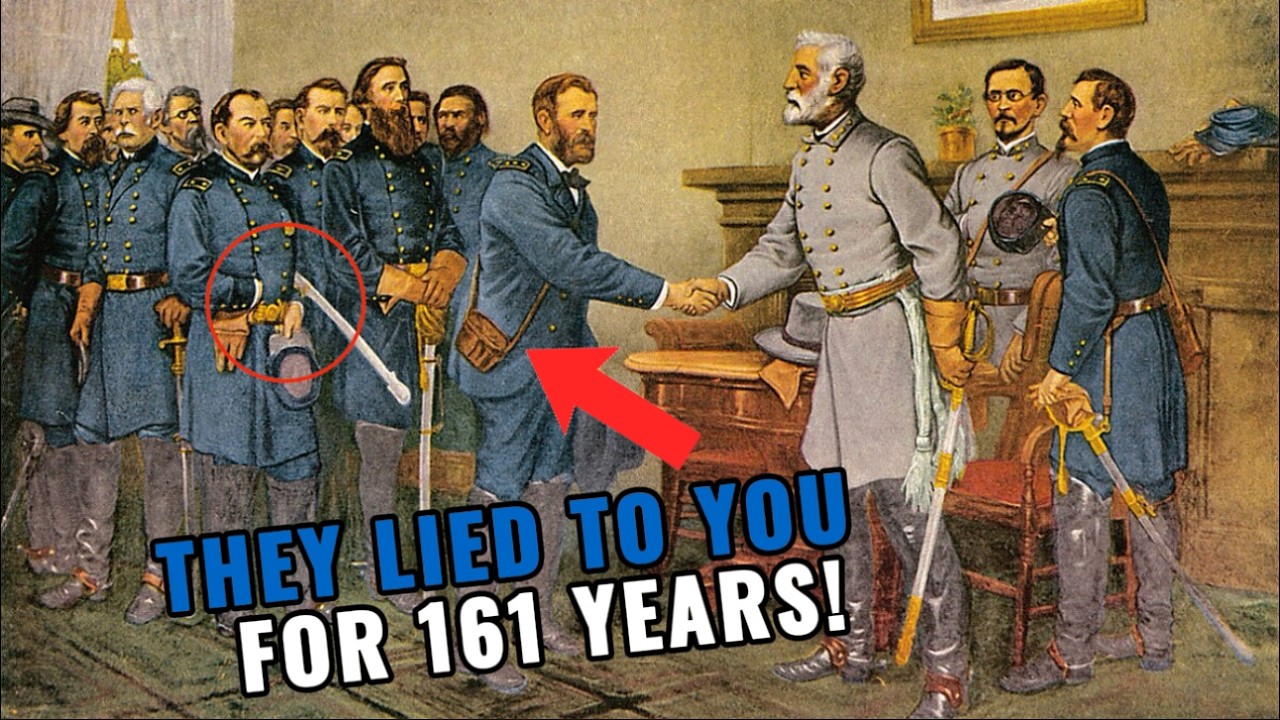
The historic meeting between Grant and Lee took place at the home of Wilmer McLean in Appomattox Courthouse. The contrast between the two generals was striking. Grant wore a mud-stained uniform, while Lee was resplendent in his Confederate gray attire, adorned with a finely crafted sword.
Grant began the meeting by recalling their previous encounter during the Mexican-American War, setting a tone of mutual respect despite their adversarial roles. The two men had crossed paths before as young officers, and now they stood on opposite sides of one of history’s bloodiest conflicts.

As they discussed surrender terms, Grant demonstrated unexpected leniency. He allowed Confederate officers to keep their side arms and horses, a gesture that reflected his understanding that healing would require compassion rather than humiliation. He recognized that many Confederate soldiers were simply trying to return home after years of fighting.
As Lee prepared to leave McLean’s house after signing the terms, he paused on the porch and gazed into the distance where his army lay defeated. It was a poignant moment, a leader grappling with loss and responsibility for his men’s futures. Union officers stood respectfully as Lee rode away to deliver the news.
The emotional weight of the surrender extended beyond military defeat. Soldiers from both sides cheered and wept upon hearing the news, an acknowledgment of the shared sacrifice and suffering throughout four brutal years of conflict.
Lee’s departure marked not just a physical exit, but an emotional one as well. He left behind not only his command, but also a way of life that had defined him for so long. Many felt a profound sense of loss, not just for their cause, but for their leader who had inspired them through countless battles.
In the days that followed, emotion swept across both North and South. For many Southerners, there was despair mixed with relief. Relief that hostilities had ceased, but despair over what lay ahead for a nation now faced with rebuilding itself.

In Washington, President Abraham Lincoln viewed the moment as an opportunity for healing rather than retribution. He famously stated that with malice toward none should guide their actions toward those who had fought against them. However, some factions in Congress sought harsh penalties for former Confederates, reflecting differing views on how best to reunite a fractured nation.
What history often overlooks is how deeply personal this surrender was for both generals. For Lee, it represented not just military defeat, but personal failure. A man who had dedicated his life to defending what he believed was right now found himself powerless against overwhelming odds.
Lee’s pride played a significant role throughout the process. He struggled with accepting defeat when so many around him urged him to lay down arms earlier. His reluctance stemmed from an ingrained sense of honor tied closely with Southern identity during wartime.
Grant, by contrast, approached the moment with pragmatism shaped by years spent fighting alongside men who had suffered immensely. He understood firsthand what continued conflict meant for both sides.
The meeting at McLean’s house became symbolic, not only marking an end, but also serving as an emblematic representation of how two adversaries could come together under dire circumstances despite their deep ideological differences.
In later reflections, Grant noted how strikingly different they appeared physically. One dressed sharply while the other wore clothes stained from travel. Yet both shared a mutual respect forged through countless battles over four grueling years filled with bloodshed.
As the dust settled on that fateful day, the echoes of gunfire faded into silence. But the ramifications of Lee’s surrender would resonate for generations. It was not just a military defeat, it was a profound moment of reckoning for a nation grappling with its identity.
The surrender at Appomattox was more than an end. It was the beginning of a long and arduous journey toward reconciliation, a journey fraught with challenges, hopes, and dreams for a united nation.