Eunice Kennedy Shriver dedicated her life to changing how the world treats people with intellectual disabilities, founding the Special Olympics and reshaping a global conversation. Alongside her husband, Sargent Shriver, the first director of the Peace Corps, she built a family branch defined by public service. Their five children—Bobby, Maria, Timothy, Mark, and Anthony—grew up in the shadow of political dynasty, assassinations, and immense expectation. Each chose a different path, transforming pressure into lasting global impact.
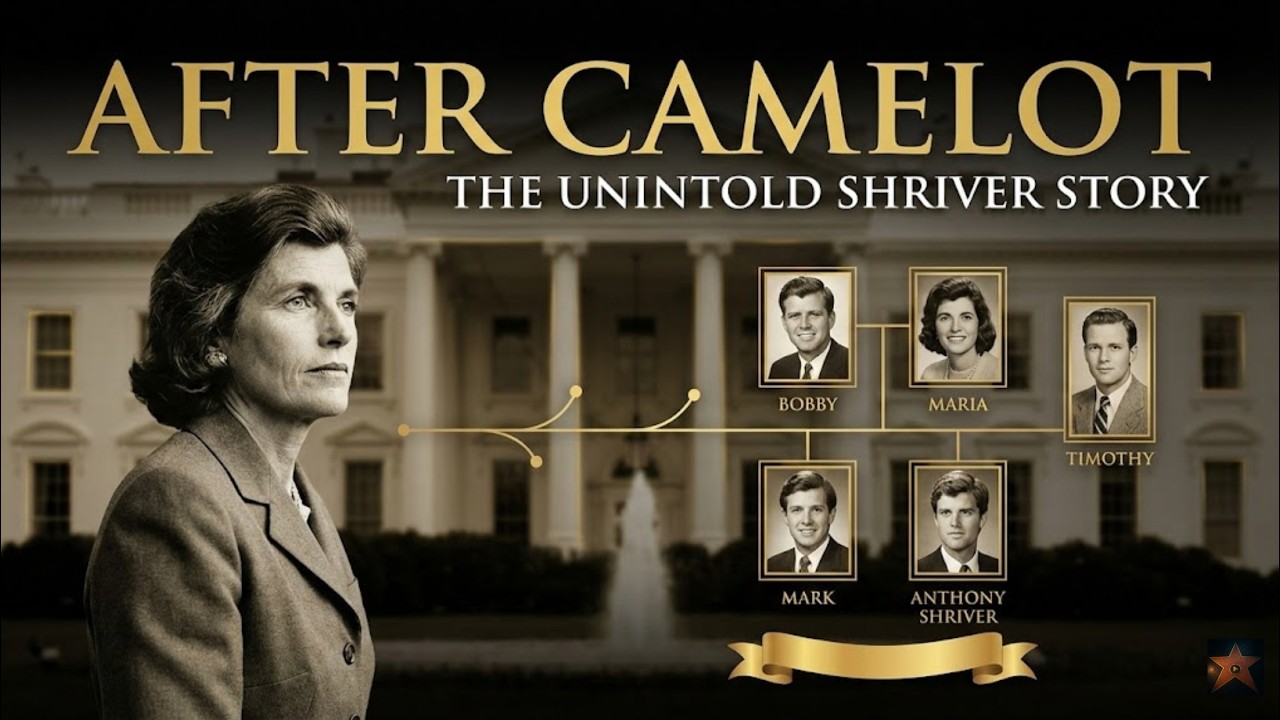
This article explores how each of the Shriver children navigated their family legacy, the public triumphs, the private scandals, and the humanitarian institutions they built. CONTENT:
The five children of Eunice Kennedy Shriver and Sargent Shriver grew up inside one of America’s most powerful political dynasties, yet each ultimately carved out a distinct path defined less by elected office than by humanitarian enterprise. Raised in the shadow of presidential assassinations and surrounded by the relentless expectations of the Kennedy name, Bobby, Maria, Timothy, Mark, and Anthony Shriver each responded to that pressure in different ways—some through entrepreneurial activism, others through journalism, nonprofit leadership, or the direct stewardship of their mother’s defining cause. Robert Sargent Shriver III, known as Bobby, was the eldest, born April 28, 1954, during the early years of his father’s work founding the Peace Corps.
He grew up amid the political energy of the Kennedy White House and went on to graduate from Yale University and Yale Law School, placing him squarely within the American elite. Rather than pursuing a traditional political career, Bobby became an innovator at the intersection of business and social good. He served briefly in public office in Santa Monica, California, but his most significant contribution came in 2006 when he co-founded Product Red with Bono, the lead singer of U2. The initiative encouraged corporations to sell branded products with a portion of profits directed to the Global Fund to fight AIDS, tuberculosis, and malaria.
Bobby’s approach demonstrated how market forces could drive social change, effectively modernizing the family’s service mandate for the 21st century. Maria Owings Shriver, the only daughter, was born November 6, 1955, and forged a successful career as a journalist before politics entered her life through marriage. She worked for CBS News and later NBC News, establishing professional credibility independent of the family name. In 1986, she married Arnold Schwarzenegger, a union that blended Kennedy political royalty with Hollywood celebrity.
When Schwarzenegger ran for governor of California in 2003, Maria ended her journalism career to avoid an ethical conflict, fulfilling the family’s expectation of public service. The marriage later collapsed publicly in 2011 following revelations of her husband’s extramarital affairs and a child born outside the marriage. The divorce drew intense media attention, echoing earlier Kennedy family scandals. Maria subsequently channeled her experience into advocacy for women’s empowerment and Alzheimer’s research, the latter reflecting her mother’s health struggles, and continued to write and speak publicly about her family and personal journey.
Timothy Perry Shriver, born August 29, 1959, became the keeper of his mother’s most personal mission. He grew up watching Eunice build the Special Olympics and understood that the organization represented the family’s unique non-political core. After graduating from Yale University, he earned graduate degrees from Catholic University and Harvard, focusing on education and social justice. Timothy later took over leadership as chairman of the Special Olympics global movement, expanding its reach far beyond competitive sports to include education, health, and dignity for people with intellectual disabilities.
His work ensured that his mother’s vision remained the family’s most unifying and uncontroversial achievement, and under his stewardship the organization continued to grow across the globe. Mark Kennedy Shriver, born February 17, 1964, was the fourth child and the one who initially followed the most traditional political path. After attending the College of the Holy Cross, he served for eight years in the Maryland House of Delegates and gained a reputation as a thoughtful legislator committed to social reform, in many ways mirroring his father’s political ideals. He eventually stepped away from elected office, reflecting a broader generational shift among the Kennedy family toward impact outside the electoral battlefield.
Mark transitioned to major nonprofit roles, serving as an executive for Save the Children and later as president of the Save the Children Action Network. There, he applied his political knowledge of lobbying, budget management, and policy advocacy to work on child poverty and education, demonstrating that the family mandate could be fulfilled from outside government. Anthony Paul Kennedy Shriver, known as Tony, was the youngest, born July 20, 1965. He grew up deeply connected to the Special Olympics world, attending Georgetown University and witnessing his mother’s work firsthand.
Recognizing that athletic competition did not fully address the social isolation experienced by people with intellectual disabilities, Tony founded Best Buddies International in 1989. The organization focused on one-to-one friendships, integrated employment, and leadership development, and it grew into a global movement operating programs in dozens of countries. Tony became the charismatic public face of the organization, dedicating his professional life to expanding the family’s commitment to inclusion and dignity for marginalized people. Taken together, the five Shriver children turned the weight of the Kennedy name into a network of global institutions addressing health, disability, education, and child welfare.
Their lives spanned journalism, politics, business, and philanthropy, but the common thread was resilience in the face of immense public expectation and personal trauma. By professionalizing the family’s mission, they created lasting organizations that continue to define the Shriver legacy. Their story also mirrors the broader Kennedy saga, in which heirs to a famous name have had to confront tragedy while searching for their own place in the modern world.