The Gettysburg Film Festival officially kicked off at the Adams County Historical Society with a ribbon-cutting event for a new exhibit, and one of the speakers had a deeply personal connection to the material on display. Gary Adelman told the crowd that the gallery, named for Reverend Dobbin, highlights the people who lived in the region during the American Revolution. He noted that Reverend Dobbin arrived in 1773, but joked that his own ancestor had beaten him there, having reached the area in 1738. Adelman also emphasized that the exhibit is free to the public whenever the museum is open.
The festival brought together filmmakers, history enthusiasts, and living historians from across the country. Early arrivals at the kickoff expressed excitement about the turnout, with one attendee noting that the museum had always been a special place for those interested in the past. History was a lifelong passion for many of those involved. One speaker recalled growing up near Valley Forge, where Sunday visits and walks with his parents sparked a love for the subject from a young age.
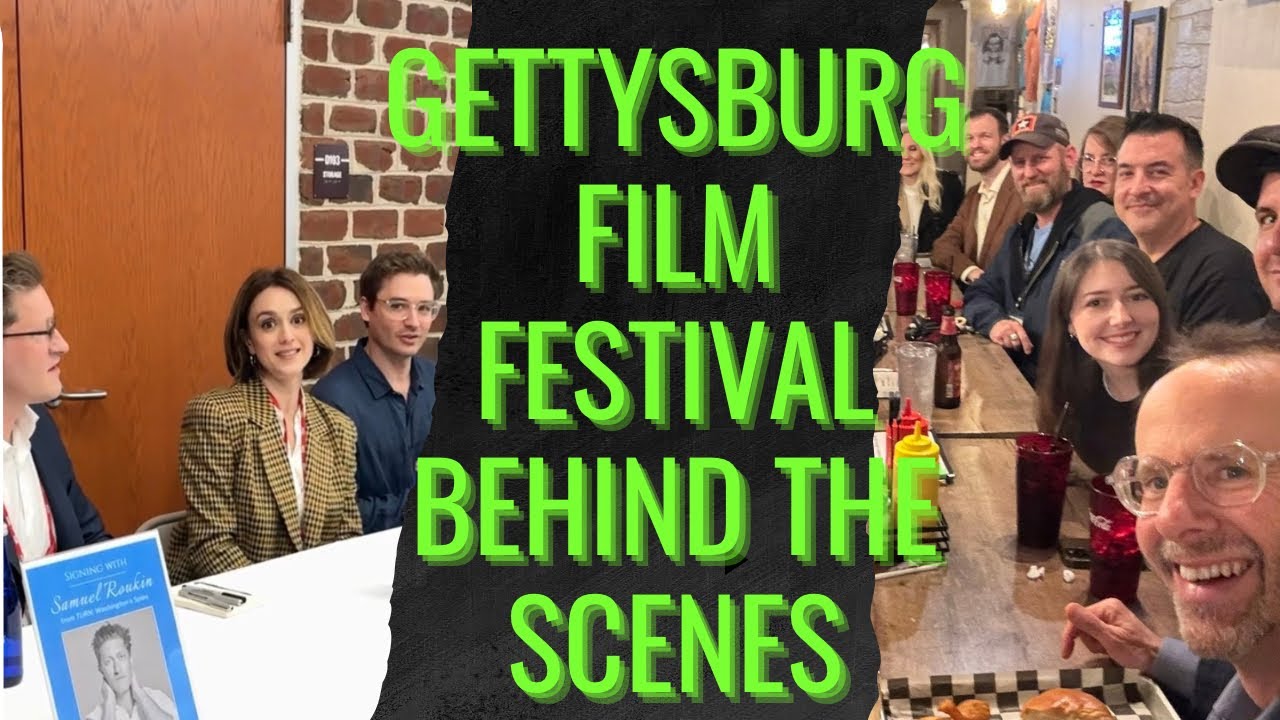
A major panel discussion at the festival focused on intelligence and espionage during the American Revolution. The conversation turned to Captain John Simcoe, the British officer made famous by the television series *TURN: Washington’s Spies*. Actor Samuel Roukin, who portrayed Simcoe, was present and described his character at the start of the conflict as a disciplined officer from a strictly structured military background. He explained that Simcoe took command of the Queen’s Rangers, a unit that lacked organization and discipline at first but became formidable under his leadership.
Roukin addressed the morally complex actions carried out by his character during the war, directly referencing the brutal tactics Simcoe used. He raised the question of how the “optics of war” factor into our understanding of history, pointing out that we cannot know exactly what happened in the heat of battle or what decisions were made under extreme pressure. He noted that while Simcoe remains a controversial figure, he is historically remembered for his post-war achievements, having founded Upper Canada and serving as its first Lieutenant Governor, where he abolished slavery. Roukin admitted that playing the role was quite a journey.
Another creator at the festival was Charlie, who runs the YouTube channel History with Waffles. The nickname came from his time in the U. S. Navy, where he served 22 years before retiring as a chief petty officer.
His channel focuses on telling the stories of the common soldier, covering primarily the Civil War but also Revolutionary War events. The festival closed with a panel featuring Ken Burns and Jeffrey Lord, which overshadowed the entire event for many in attendance. After the festival concluded, Charlie went straight to Antietam National Battlefield to shoot new footage from Bloody Lane, telling the story of the 14th Connecticut regiment, whose monument stands on the high ground nearby. He described it as a sad story but an important one, similar to many Civil War narratives.
He also planned to produce another segment about a Connecticut unit at Burnside’s Bridge and one about Little Round Top and the controversy surrounding the charge there. Charlie shared that the festival produced a large amount of footage, which will take time to edit and release. He thanked his collaborators at the festival, including Walk with History, Tom McMillan, Mike from Six Question Lens, Revolutionary War living historian Ken Gavin, and the Adams County Historical Society, which provided media access.
He also thanked Samuel Roukin for sitting down for an interview, saying it had been a great trip and he could not wait to publish the videos.