A lavish ceremony in Florence in December 1565 saw Joanna of Austria marry Francesco de’ Medici, heir to one of Italy’s most powerful dynasties. But behind the glittering wedding and the triumphal arches, a cold and lonely marriage was beginning, one that would become shadowed by scandal, illness, and a series of deaths that haunted the Medici court for years. Joanna was born into the very heart of European power. Her father, Ferdinand I, was Holy Roman Emperor, and her uncle was Charles V, ruler of the Spanish Empire.
Her birth on January 24, 1547, in Prague, however, came at a terrible price. Her mother, Anna of Bohemia and Hungary, was already frail, and just three days after giving birth, she died from complications. Left without a mother and largely ignored by a father consumed by the turmoil of the Protestant Reformation, Joanna was raised by nuns in Innsbruck, Austria, where her upbringing blended devout piety with rigorous scholarship. Even from childhood, Joanna was destined for a political union.
In 1537, Cosimo I de’ Medici had become the Duke of Florence, and as the long Italian Wars ended in 1559, he was eager to secure powerful alliances. After years of negotiations, a match was arranged between Joanna and Cosimo’s eldest son and heir, Francesco. The marriage gained further momentum after Joanna’s brother, Maximilian II, became Holy Roman Emperor in 1564 and sought to push his own influence into Italy. The wedding in December 1565 was one of the most spectacular of the century.
Ambassadors, aristocrats, and envoys from across Europe flooded into Florence for the event. The city was festooned with artwork, and citizens were asked to wear their most colorful clothing as Joanna passed beneath twelve towering arches on her way to the Basilica di San Lorenzo. There, on December 18, 1565, the 18-year-old archduchess met her 24-year-old groom, Francesco. Florence rejoiced with festivals in her honor.
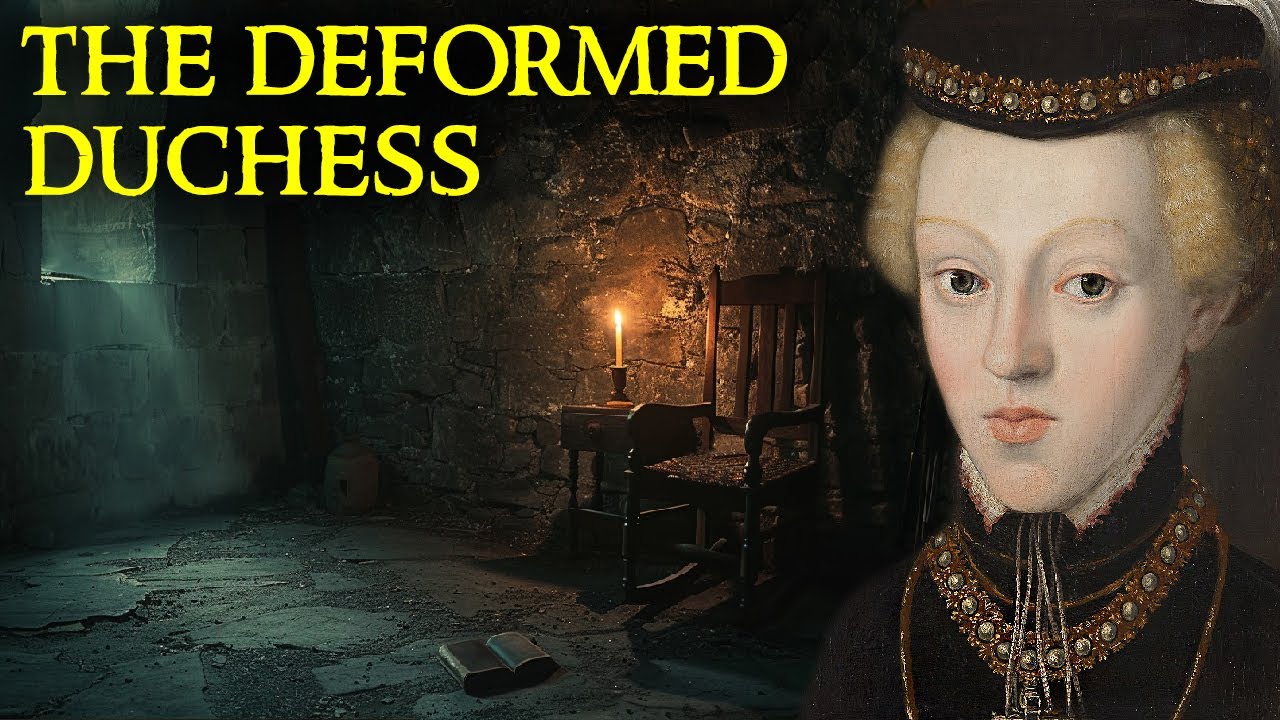
Beneath the surface, however, the marriage was joyless from the very beginning. Francesco was cold and found his new wife unattractive. Joanna had suffered from a severe scoliosis since childhood, a crippling spinal deformity that worsened over time, causing her great pain and giving her an unnatural posture. Her frail health had been a concern even during the marriage negotiations, but the dynastic politics of the age demanded she produce heirs.
Joanna endured repeated pregnancies, each more punishing than the last. Doctors and courtiers noted the toll they took on her body. In total, she gave birth to eight children, but tragedy followed. A son named Romolo died two weeks after his birth in 1568.
Two daughters, Isabella and Lucrezia, died in infancy. Another daughter, Anna, made it to her teenage years but passed away in 1584. The one standout success was Marie de’ Medici, born on April 26, 1575, who would go on to marry King Henry IV of France and become the mother of King Louis XIII, making Joanna the ancestor of French kings down to the Revolution. Francesco was notoriously unfaithful, but unlike most princes of his age, who hid their mistresses, he made no effort to conceal his affair.
His mistress was Bianca Cappello, a Venetian noblewoman who came to the Florentine court in 1563 after marrying a clerk named Pietro Bonaventuri. Their relationship with Francesco reportedly began in the late 1560s. In 1572, Bianca’s husband was killed in the streets of Florence, an incident that may have been orchestrated by Bianca and Francesco. When Cosimo I died in April 1574, Francesco became Grand Duke of Tuscany, with Joanna as Grand Duchess.
But this rise in status only worsened her humiliation. Francesco installed his mistress in lavish apartments within a palace just steps from the ducal household. He and Bianca paraded their affection openly before Florence and before Joanna herself, a public disgrace for the proud Grand Duchess. Francesco still lacked a legitimate male heir, a matter of desperation for him.
Bianca bore him a son, Don Antonio, in 1576, but Francesco refused to recognize the boy as his heir. Then, against all odds, Joanna gave birth to a long-awaited son, Prince Philip, in 1577. For a moment, Joanna’s position seemed secure and Bianca’s ambitions seemed crushed. The relief was short-lived.
On April 10, 1578, Joanna fell down a stone staircase in the Medici residence, the Palazzo Vecchio. She was pregnant with her eighth child. The sudden shock brought on premature labor, and the infant did not survive. Joanna herself lingered for a day before dying on April 11 from a ruptured womb.
She was just 31 years old. Whispers of foul play followed her death. With Francesco’s open devotion to Bianca Cappello, few believed Joanna’s fall was simply an accident. Some claimed she was pushed, while others suspected poison.
The truth may have been more tragic than sinister, as Joanna’s worsening scoliosis had long weakened her balance and could well have caused the fatal fall. Public outrage grew when, only months after Joanna’s death, Francesco secretly married Bianca. In 1579, he brazenly declared her the new Grand Duchess of Tuscany. For many, the sequence of events seemed far too convenient: Bianca’s husband dead, Joanna gone, and the mistress now enthroned.
Their triumph, however, was short-lived. In March 1582, Joanna’s only surviving son, young Prince Philip, died suddenly at age four, extinguishing Francesco’s legitimate line. Then, in October 1587, Francesco fell violently ill and died on October 19. Bianca died the very next day.
Their double death shocked Europe, and their cause remains a mystery to this day. Some wondered if they were poisoned, possibly by Francesco’s brother Ferdinando, who succeeded as Grand Duke. Others thought malaria might have claimed them both.
No one could say for certain, marking a grim close to a haunting cycle of deaths that had shadowed the Medici court for more than two decades.