A US federal grand jury returned a superseding indictment in January 2023 against two sons of Joaquín “El Chapo” Guzmán, Joaquín Guzmán López and Ovidio Guzmán López, along with other alleged associates of the Sinaloa Cartel faction known as Los Chapitos. The indictment charged drug trafficking, murder conspiracy, kidnapping, and torture. Among its most disturbing elements were specific allegations about how the faction treated captives at private ranch facilities in Sinaloa state. Federal prosecutors alleged that the violence was not random or improvised but a deliberate system designed to protect one of the most profitable criminal enterprises in history.
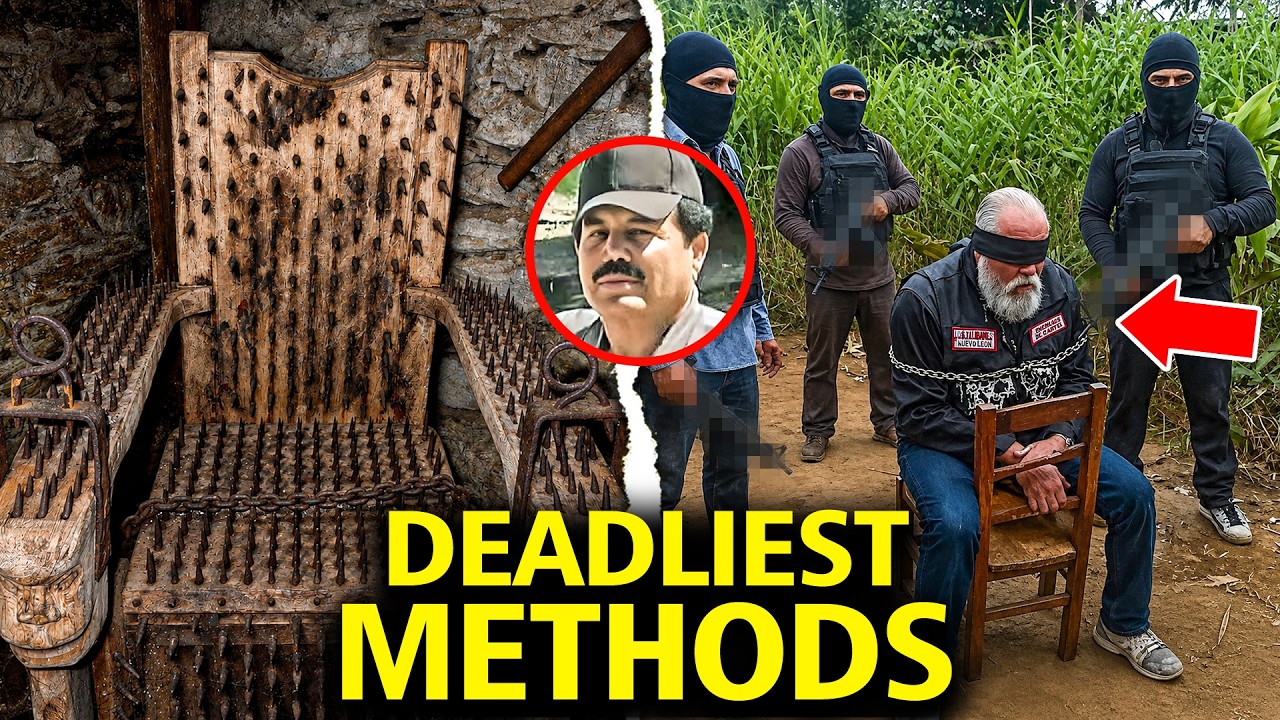
The allegations describe six documented methods of coercion, each reportedly serving a different operational purpose within the organization’s structure. The Sinaloa Cartel’s roots go back to the mountainous Golden Triangle region of northwestern Mexico, where the states of Sinaloa, Durango, and Chihuahua meet. Miguel Ángel Félix Gallardo built the modern Mexican drug trade infrastructure there before his arrest in 1989. El Chapo Guzmán emerged as the dominant figure in the decade that followed, and by the mid-2000s the DEA described the Sinaloa Cartel as the most powerful drug trafficking organization in the Western Hemisphere.
El Chapo was arrested, escaped prison, was recaptured, and escaped again before his final extradition to the United States in January 2017. He was convicted in Brooklyn in 2019 and sentenced to life plus 30 years. His removal created a succession crisis, and his sons consolidated power as Los Chapitos. Federal prosecutors later argued this faction was significantly more willing to deploy violence internally than previous Sinaloa leadership.
The first method documented in federal materials is physical and chemical coercion during interrogation. According to the indictment, captives were subjected to sustained physical abuse with common tools and had chemical irritants applied directly to them. The stated purpose was information extraction, particularly identifying which cartel members had been talking to law enforcement. The alleged occasion for this method was almost always suspected disloyalty or suspected cooperation with rivals.
Named individuals in federal indictment materials allegedly faced this treatment, including José Antonio Muñoz Parra, Mario Nungaray Bobadilla, and Giovanni Hurtado Vicente. All three are described in connection with internal cartel disputes, where the faction believed they had cooperated with rivals or authorities. According to the indictment, they were detained, subjected to interrogation, and subsequently killed. Prosecutors presented these cases as a documented pattern rather than isolated incidents.
The second method is electrical torture. Federal materials document accounts in which electrical devices were allegedly used on captives at Los Chapitos-controlled facilities. Electrical methods differ from raw physical violence in that the pain is intense but precise, applied, stopped, and reapplied in a controlled sequence. The psychological dimension compounds the physical one, keeping captives in sustained anticipatory terror.
Individuals subjected to these methods were in at least some cases subsequently killed after interrogation concluded. The third method is simulated drowning, which forces water over a restrained captive’s face and airways, triggering the body’s involuntary suffocation response. Unlike physical beating or electrical methods, simulated drowning leaves no visible marks and operates entirely in the psychological dimension. Investigators note such psychological methods are typically deployed alongside physical ones because the combination breaks both the body’s endurance and the mind’s ability to construct a strategy for what to reveal.
The fourth method is the most separating allegation in the filing. Federal documents allege that captives held by Los Chapitos operatives were forcibly administered fentanyl to test the potency of drug batches before distribution. Fentanyl is estimated to be roughly 100 times more potent than morphine by weight, and the DEA has documented that as little as 2 milligrams can be lethal in a person without opioid tolerance. According to the indictment, captives’ bodies were used as measurement instruments in the drug supply chain before product was shipped across the US-Mexico border.
An unnamed female captive is referenced in federal materials specifically in connection with this allegation. Prosecutors cited her case as direct evidence of the operational link between the torture practices and the cartel’s drug production infrastructure, placing the violence inside the trafficking operation rather than alongside it. The fifth method involves the use of exotic animals, specifically tigers and other large predators, kept at cartel ranches and allegedly used in connection with violence against captives. Federal materials and investigative reporting reference large predatory animals at secured rural compounds.
Maintaining these animals requires resources, staffing, and institutional impunity. Prosecutors cited the animal allegations as part of a broader pattern showing that Los Chapitos controlled its territory with enough certainty to operate facilities without meaningful law enforcement interference. The sixth method is postmortem mutilation and the deliberate public display of victims, designed not for the person it was done to but for everyone else. Human rights organizations operating in Mexico have recorded cases in Sinaloa and surrounding states in which bodies were left in public locations, clearly intended to communicate a message.
The case of Hugo Hernández became one of the most widely cited examples. Investigators assessed that the extreme public violence was deliberately staged to reach the widest possible audience. Public displays of this kind were also used to send territorial messages to rival factions, warn municipal officials and law enforcement against cooperating with federal investigators, and deter journalists from covering cartel activities. Journalists have documented the behavioral changes that follow these acts, including drops in tips to law enforcement and the withdrawal of witnesses who had previously agreed to cooperate.
An unnamed Mexican law enforcement officer is also referenced in federal materials in connection with interrogation by Los Chapitos operatives. His case demonstrated that the alleged practices were not confined to rival cartel members or suspected informants but extended to law enforcement personnel as well. Prosecutors argued this breadth reflected the full scope of the threat the organization was willing to deploy. The private ranches where these activities allegedly took place are the infrastructure that made everything else possible.
Remote properties offered the cartel time and silence. Individuals could be held for days or weeks with no external awareness, sessions could proceed without concern about who might hear, and evidence removal could be managed on the cartel’s timeline. The psychological effect of isolation itself was a method. Federal investigators described the properties not merely as locations where crimes occurred but as maintained, staffed operational infrastructure built specifically to make the alleged crimes possible.
The timeline of when these alleged practices intensified matters. Following El Chapo’s extradition in January 2017 and his subsequent trial and conviction, Los Chapitos moved to consolidate operational control against a backdrop of intensifying conflict with the Jalisco New Generation Cartel, known by its Spanish initials as the CJNG. The combination of internal succession pressure and external territorial threat created conditions in which internal coercion served the faction’s interests directly. Witness accounts in the indictment describe increased use of coercive interrogation during this period.
Physical and chemical methods were allegedly the first response, electrical methods followed when initial sessions did not produce satisfactory results, and simulated drowning was a third escalation. The fentanyl operation expanded during the same period, and the DEA documented a dramatic increase in fentanyl seizures at the US-Mexico border attributable to Sinaloa Cartel supply. Federal prosecutors presented this convergence as evidence of a coherent organizational response to specific pressures rather than random escalating violence. The framing of violence as deliberate organizational strategy was the core of their leadership accountability argument.
The ability to operate these facilities required institutional corruption. Federal prosecutors and investigative journalists have documented allegations of cartel payments to municipal police, state law enforcement personnel, and local officials in Sinaloa and surrounding states. The Mexican government’s own statistics show that less than 2% of crimes committed in Mexico result in a conviction. Journalists and human rights researchers have documented years of impunity in Sinaloa state.
That impunity is not simply a failure of institutional capacity. It is, in significant part, a manufactured condition produced by cartel money and threats over decades. Federal allegations describe it as the operating environment in which Los Chapitos allegedly conducted its activities, a controlled environment where institutional protection was purchased and maintained as deliberately as the ranch facilities themselves. One of the reasons the full scope of these allegations took years to build into a federal indictment is the difficulty victims and witnesses face in coming forward.
Witnesses who cooperate with federal investigators typically do so under conditions of anonymity that are difficult to maintain across a prosecution that may take years. In multiple cartel-related cases, witnesses have been killed after their identities became known. Human rights organizations working inside Mexico operate under the same constraints. Federal prosecutors assembled accounts from multiple cooperating witnesses, cross-referenced their testimony against physical evidence, geographic and communication data, and reporting from law enforcement partners in Mexico.
The task was to establish that the incidents reflected a pattern of authorized conduct directed from within the Los Chapitos leadership structure, because that organizational connection supports charges against leadership figures rather than only the individuals who physically carried out the alleged acts. The indictment is a formal accusation and not a finding of guilt. Every individual named faces a legal presumption of innocence. It is also worth noting that viral videos and social media accounts of cartel violence frequently exaggerate, fabricate, or present decontextualized footage.
The most sensationalized versions of these stories often diverge most significantly from what federal indictments and credible reporting actually describe. Cartel mythology built on exaggeration serves the cartels’ interests as directly as the original acts of violence did. The allegations described in federal materials are disturbing enough on their own terms. The central argument is that violence was systematically engineered, with individuals allegedly selected based on suspected conduct, held at facilities designed for this purpose, subjected to methods chosen for their specific utility, and then either released into enforced silence or killed to prevent disclosure.
The victims at the center of these allegations were real people whose families have lived with incomplete information about what happened to them and why. Human rights organizations have documented the particular quality of grief that follows cartel violence, including the inability to access truth through official channels and the danger of asking questions publicly. The violence did not end when it happened to its immediate victims. Its effects continued in communities that modified their behavior in response to public acts of intimidation.
The documented allegations assembled across years of investigative work, corroborated across multiple independent witness accounts, and connected to specific victims deserve serious examination. The Sinaloa Cartel’s story is far from over. Federal prosecution continues, territorial conflicts in Mexico evolve, and the fentanyl crisis continues to cost American lives.
None of that changes what the documented evidence says about what allegedly happened at those ranches, and none of it diminishes the obligation to say it clearly, accurately, and to make sure the victims at the center of it are not forgotten.