On the evening of June 29, 1986, a security guard on the top level of the Johns Hopkins Hospital parking garage in Baltimore caught a smell that stopped him cold. It was not exhaust or hot concrete—it was death. He walked toward a blue 1977 Toyota Corolla parked alone in a remote corner of the roof deck. Reddish fluid was dripping from under the trunk onto the pavement.
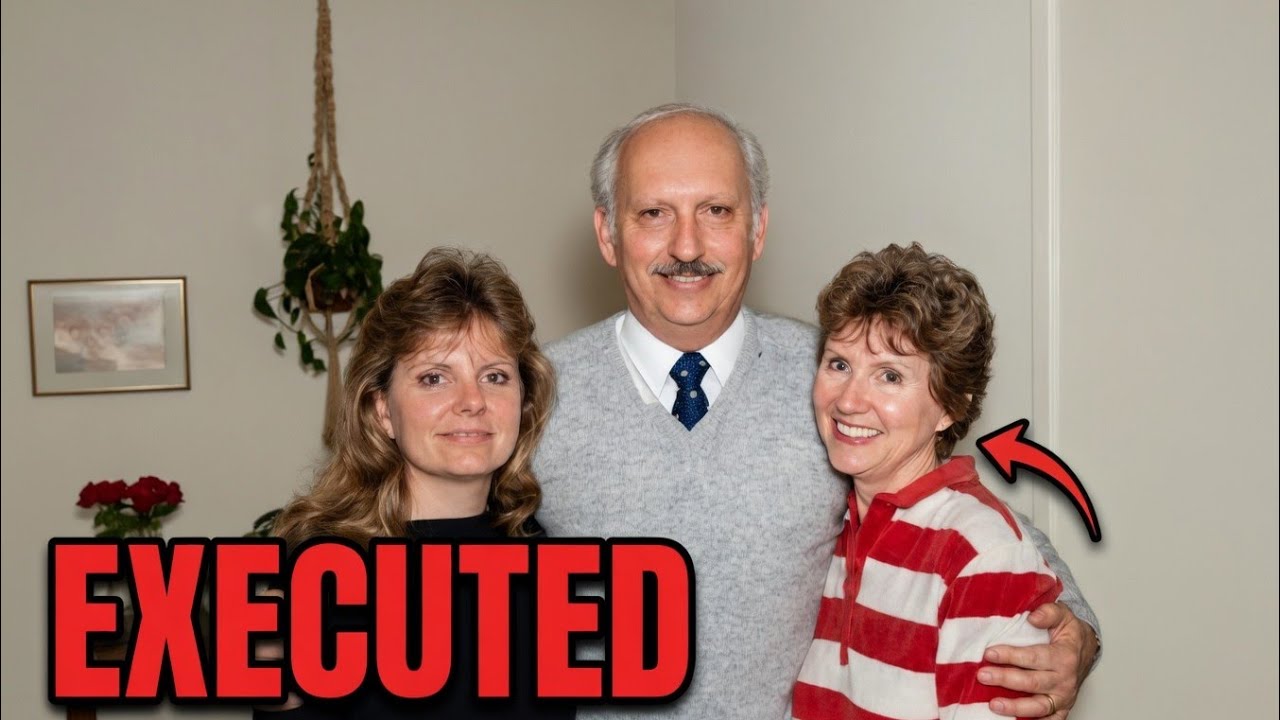
Police arrived with a crowbar. Inside was Margaret Yietman, 46, wrapped in an Afghan from her own sofa, shot once in the back of the head, and left for about five days in the Maryland heat. Margaret was not a gangster’s girlfriend in the usual sense. She was a federal employee, a divorced mother of two, a woman friends called Muffy.
She had worked tracing guns used in crimes, and later handled security clearances for the Office of Naval Research, part of the Defense Department world. She took aerobics classes. She went to church. She wrote long letters to her sister.
The man she loved was Arthur Kunz, 52, a wiry, sharp Long Island bomb expert who had built a career defusing explosives for law enforcement. To Margaret, he was safety. To detectives after her murder, he became the prime suspect. The case never proved in court that the mob ordered Margaret’s death, but virtually every road in the investigation leads back to that possibility.
Arthur Kunz was not just cheating on his wife. According to later reporting and police information relayed to the family, his wife Angie was the niece—said to be the favorite niece—of Philip “Rusty” Rastelli, the boss of the Bonanno crime family. At the same time, federal prosecutors were trying to crush the New York Mafia. Kunz sat in the middle of two worlds that should never have touched: he worked for the government, was tied by marriage to the Bonannos, and was stringing along a woman who believed she was about to marry him.
Margaret grew up hard in Washington, a few blocks from the U. S. Capitol. Her father drank too much.
Her mother worked in a drugstore. As the oldest child, Margaret became a second parent to her younger sister and brother. School was difficult—she later realized she had dyslexia—but she kept going. Night classes, work during the day, more school at night.
For over a decade, she worked toward a psychology degree at Northern Virginia Community College. She was persistent, loyal, and hopeful to a fault, the kind of person a manipulator looks for. Then came Arty Kunz, and on paper he looked impressive. In 1968, while serving as a Long Island officer, he reportedly detached a grenade wired into a politician’s dashboard and carried it away for safe detonation.
In 1970, he was photographed with Governor Nelson Rockefeller holding a bomb blanket he was credited with helping develop. In 1976, after the car bombing that killed former Chilean diplomat Orlando Letelier in Washington, Kunz testified before Congress that bomb-making ingredients were too easy to buy. That was his public image: competent, brave, technical, a man who walked toward danger while other people ran from it. Margaret told her sister she was dating the bomb expert for the United States.
Their affair began around 1980 while both worked in the federal orbit. It lasted about five years and was never stable. Margaret’s own letters describe hills and valleys. Kunz told her he was separated from his wife, Angie, on Long Island, and said he stayed married because she was dying of cancer.
That was a lie, or at best a grotesque distortion. He kept Margaret hidden, made personal calls from work, disappeared for days, and refused to let their worlds touch. Margaret understood enough to know something was wrong. In one letter, she admitted, “I never know what is the truth.
” But she stayed. By the early 1970s, Philip “Rusty” Rastelli had emerged as boss of the Bonanno family, one of New York’s five Mafia families. He spent much of his reign in and out of prison, but prison did not mean weakness. In organized crime, power often traveled through visitors, messages, and loyal captains.
By 1985, prosecutors said the enterprise around Teamsters Local 814 and the moving industry was worth $250 million a year. This was not street-corner money; it was institutional money, government contract money, union money, money hidden inside paperwork. The scheme worked like this: control the union, since Local 814 represented workers in moving and storage. Then squeeze the companies, with prosecutors saying movers paid because they wanted strikes avoided, rules relaxed, and non-union shortcuts ignored.
Once the Bonanno side gained control in 1974, the prosecutor said it could put its claws into a company and, for a price, take them out. Employers allegedly made out paychecks to fictitious workers so cash could be diverted into a slush fund. At Christmas, envelopes were opened, money was counted into stacks, and shares went to union officials and organized crime figures. There was also bid rigging.
On June 10, 1985, a federal indictment laid out how moving companies colluded on public contracts. One example was the 1979 move of the FBI office from East 69th Street to 26 Federal Plaza. The bid came in at $142,000, and authorities said it was padded by $5,000 through collusive bidding. Taxpayers were paying for a mob tax hidden inside a government contract.
One company owner paid $2,000 a month from February through June 1980 to stay in the rigged system. Another arrangement in 1976 allegedly involved $10,000 a year so the Bonanno side could buy out the Genovese interest in Local 814 and collect the illegal stream for itself. The same family tied to those schemes was under immense pressure in 1985 and 1986. On December 16, 1985, Gambino boss Paul Castellano was shot dead outside Sparks Steak House in Manhattan.
New York was on edge. Giuliani’s prosecutors were making cases. Informants were talking. Rusty Rastelli was indicted in the Local 814 matter and convicted on October 15, 1986.
Then, on November 19, 1986, leaders of the Mafia’s ruling council were convicted in New York. Law enforcement pressure was rising, and a federal bomb expert was married into the Bonanno family, with a mistress in Virginia who thought she was about to become his wife. One month before Margaret died, Kunz remarried Angie in Las Vegas on May 31, 1986. Margaret apparently had no idea.
That decision changed everything. Once Kunz remarried Angie, Margaret was no longer just a secret; she was a live liability, a woman who called, a woman who expected marriage, a woman who knew enough to become dangerous. According to a coworker, Kunz had begun refusing her calls at work and said Margaret had been harassing him and his wife by telephone. Around the same time, Angie moved to Washington from Long Island.
Margaret had also told friends her car brakes had been tampered with, and a mechanic warned her this was not normal wear. During the week of June 24, 1986, Margaret went to an aerobics class after work, returned home to 7414 East Moreland Road in Annandale, left her leotards, and went out again. She was never seen alive after that. Investigators later believed she was likely killed inside her apartment.
There was no forced entry, which means she let the killer in or at least did not fear whoever came through that door. She was wrapped in the Afghan usually kept on her couch, suggesting the body was moved from the apartment to the car after the shooting, suggesting time, privacy, and a certain icy competence. Then the evidence started piling up around Kunz. He owned a .
22 caliber gun, the same caliber investigators associated with the fatal shot. Eyeglasses found beneath Margaret’s body were identical to the kind he wore. He showed up with fresh scratches on his arm and a soft cast, then gave different explanations. He knew the Johns Hopkins garage because Margaret’s daughter had been treated there the year before, and family said he specifically mentioned avoiding the remote rooftop where the car was later found.
Missing from Margaret’s apartment were journals from her coffee table and photographs of her with Kunz. An empty frame still hung on the dining room wall. Somebody did not just kill her; somebody removed the story of the relationship. Police clearly knew about the Bonanno connection early.
In the homicide file, later reviewed by reporters, there was a Mafia family tree with Rusty Rastelli highlighted. Family members said police told them Angie was the niece of the Bonanno boss. Former detective Gerald Goldstein said he believed he had enough evidence to arrest Kunz, yet no arrest came. No jury heard the case.
No neat explanation was ever given for why the prosecution did not move. If this were only a jealous lover case, that inertia is hard to explain. If it touched mob politics, federal sensitivities, or an informant relationship, the silence makes more sense. Former undercover FBI agent Joseph Pistone, known to history as Donnie Brasco, was asked about the scenario.
He had not heard of Kunz specifically, but his reaction was blunt. Both the mob and law enforcement, he said, would have known if an ATF officer was married to Rastelli’s niece. In his view, that would have put Kunz in the hot seat. Pistone also said of Rastelli, “Rastelli was someone you didn’t cross.
” Mob families do not need to murder every inconvenience; often, reputation does the work for them. But when reputation is not enough, violence is how the rules are restated. Kunz denied everything. When confronted years later, he said Margaret was only a companion and that he had no reason to kill her.
Asked whether a mob hit was possible, his answer was chilling in its vagueness: “Anything is possible. ” That is not a confession, but it is not outrage either. He also offered an ugly deflection, suggesting Margaret had a promiscuous life. Friends and family rejected that completely.
To them, she was not juggling men; she was waiting on one man who kept feeding her just enough hope to keep her attached. The forensic trail should have helped. Instead, it turned into another nightmare. There was blood and skin under Margaret’s fingernails, suggesting she fought.
But the testing in 1986 was weak. Later, the actual fingernail clippings disappeared after being sent to a Maryland State Police lab in 2000. A hair recovered from the crime scene was sent to the FBI in 2002, then effectively vanished too. In 2003, testing of semen found on Margaret’s skirt did not match Kunz.
That did not clear him; it only proved the case was messier than one clean theory. Maybe another man was involved, maybe the sample was from another time, maybe the killer was not alone. Every time the case approached clarity, evidence either degraded, disappeared, or opened a second door. The most disciplined reading is that Margaret was killed by someone she knew, or someone vouched for by someone she knew.
Her body was handled with enough control to suggest planning. The car was wiped clean. The body was moved across state lines from northern Virginia to Baltimore, complicating jurisdiction. The relationship evidence in her apartment was partially removed.
Those are all behaviors consistent with a calculated cleanup. Could one experienced law enforcement officer do that alone? Yes. Could organized crime–adjacent help make it cleaner?
Also yes. Could the motive have been personal, domestic, or mob-related? Probably all three at once. Rusty Rastelli died on June 24, 1991, aged 73, after being released from federal prison because he was dying of liver cancer.
He had been serving a 12-year sentence for labor racketeering. The Bonanno family moved on, eventually producing the ultimate irony when boss Joseph Massino became the first New York Mafia boss to cooperate with the government. Kunz left ATF, went back to Long Island, and worked as a carpenter. Margaret never got justice.
Her daughter grew older without her. Her grandsons never met her. Her sister and best friend kept carrying the case long after institutions let it go.