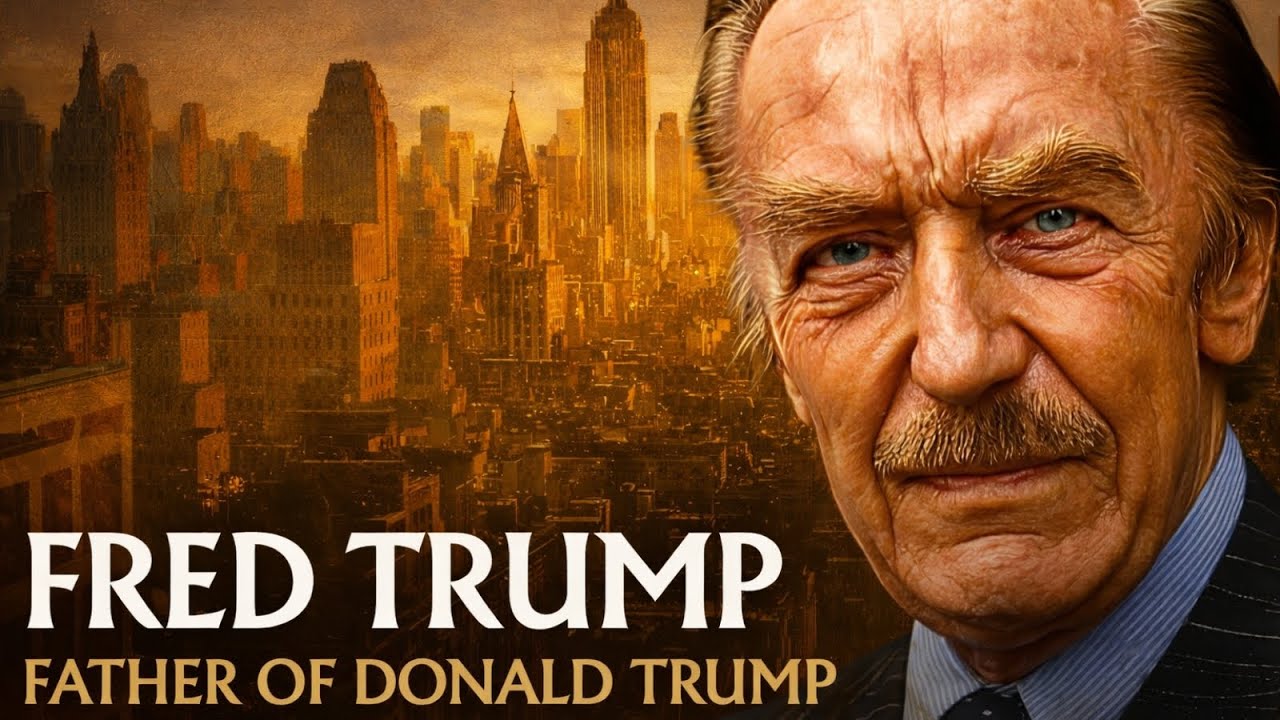
Fred Trump, the New York real estate magnate who built the family fortune that launched his son Donald’s career, died of pneumonia on June 25, 1999, in Long Island Medical Center. He was 93. Within hours of his death, his children began reviewing his will and the vast property portfolio that was to be divided among them. In the weeks that followed, arguments erupted after it became clear that the children of Fred’s eldest son, Freddy Jr.
, had been written out of the will. A year later, Freddy’s two children, Fred Trump III and Mary Trump, took their aunt and two uncles—Maryanne Trump, Robert Trump, and Donald Trump—to court. They asserted that their grandfather’s will had been changed under undue influence. So began the dispute over the late man’s estate, a saga that cast renewed attention on the Trump dynasty and the business empire he founded.
Fred Trump was born Frederick Christ Trump on October 11, 1905, in the Bronx, New York City. His father, Frederick Trump, was a German immigrant from the Bavaria region who had left Germany in 1885 at the age of 16. Frederick originally settled in Manhattan, but moved out west in 1891, living for a time in Seattle before relocating to British Columbia during the Klondike Gold Rush. Rather than prospecting, he made most of his money providing hospitality and selling essentials to gold seekers—a lucrative service trade that became the Trump family’s first source of wealth.
Frederick returned to Germany in 1901 and married Elizabeth Christ the following year. The couple considered living in Germany, but after Bavarian officials determined that Frederick had left in 1885 to avoid compulsory military service and began creating legal difficulties, they returned to New York. Fred was born there in 1905, two years after his father had re-established the family in America. Fred’s early life was comparatively comfortable for the time.
Around 1907, the family moved to a new housing development in the South Bronx, where each household had its own bathroom and ice box—a level of middle-class comfort most immigrant families did not enjoy. Frederick worked briefly as a barber, then used his gold rush savings to acquire property in Queens. The completion of the Queensboro Bridge in 1909 triggered a wave of new residents, and the Trumps moved to the area, where Frederick became a small-time landlord. The outbreak of the First World War and American entry into it in 1917 brought anti-German sentiment to New York, and the Trumps kept a low profile.
Frederick died on May 30, 1918, from a severe respiratory condition, likely the 1918 influenza pandemic, though later reports have been contradictory. The family was not left destitute. Elizabeth Trump and her children continued developing their properties in Queens, and young Fred, as he was known, later graduated from Richmond Hill High School in 1923, ending his formal education. In the postwar era, inflation diluted the wealth Frederick had left behind.
It became clear that Fred would direct the family’s fledgling property business. His brother John pursued higher education, eventually becoming an engineer and inventor. Fred acquired a job as a construction worker, learning the industry from the ground up as a laborer and a carpenter. By 1925, he had built three small homes in Queens, and by 1926, he had completed 19 houses.
He constructed modest, functional homes for upwardly mobile middle-class families and took pride in that work. Access to capital was difficult for a young builder barely out of his teens. Fred often had to sell one house before using the profits to finance the next. This approach gradually expanded until he was managing several projects at once.
By the end of the 1920s, he was doing well, but the Wall Street crash of October 1929 brought the Great Depression, and construction activity ground to a halt. Fred survived the early Depression years by diversifying into the grocery sector, building one of the first modern supermarkets in Queens, where customers selected items from shelves themselves rather than asking clerks behind a counter. His heart was not in it, but it was enough to carry him through. Two developments in 1934 changed his fortunes.
The first was President Franklin D. Roosevelt’s New Deal, and specifically the passage of the National Housing Act, which created the Federal Housing Administration to fund new mortgages and construction. The second was Fred’s acquisition of the mortgage book of the Jay Larenrauss Corporation of Brooklyn, which had gone bankrupt that January. He obtained numerous properties at deeply reduced prices.
Combining these two opportunities, Fred began building modest houses on a large scale, and by 1936, he had hundreds of workers employed and was dealing in hundreds of housing units. Fred also became a family man during this period. He met Maryanne MacLeod, an immigrant from Scotland who had arrived in New York in 1930, at a party. After a brief courtship, they married on January 11, 1936.
Their first child, Maryanne, was born 15 months later. Four more children followed: Fred Jr. in 1938, Elizabeth in 1942, Donald in 1946, and Robert in 1948. The family lived in Jamaica, Queens, moving to larger homes over time.
Fred was a strict, authoritarian parent who physically disciplined the children and kept a close eye on them. He was a teetotaler, a Lutheran, and a conservative character whose focus was on work and family control. By the late 1930s, a newspaper profile referred to him as “the Henry Ford of the affordable New York housing market. ”
The Second World War disrupted the construction sector, and fears about German families in America resurfaced.
Fred responded by claiming his parents had actually been Swedish. The war also gave him an enormous opportunity. The Federal Housing Administration repurposed funding to finance apartments for military and defense personnel. Fred moved into building apartments for the military, primarily in Norfolk, Virginia, near the largest naval base in the world.
The government allowed builders to retain ownership of these properties after the war, and Fred built around 25,500 apartments in Norfolk alone. Fred also gave back. He and Mary made large donations to the Jamaica Hospital Medical Center in Queens, where several of their children, including Donald, were born. He contributed to institutions like United Cerebral Palsy, donating a large building complex in New Jersey.
He supported Jewish causes, purchasing Israel bonds, and backed several Jewish American politicians in New York, including Mayor Ed Koch. Trump himself was not strongly affiliated with either major political party. After the war, the federal government redirected its wartime financing toward building affordable homes for returning veterans. Fred refocused on New York, developing apartments at Bensonhurst and Brighton Beach in Brooklyn.
He worked seven days a week, and sourcing materials like bathtubs, radiators, and copper became a major headache. Buyers still arrived in large numbers when new developments opened, as they did at Bath Beach in early 1947. The FHA continued to back many of his projects, financing not just apartments but the stores and amenities around them. One account of the Trump family concluded: “Without the Federal Housing Administration, Fred Trump would have been running a supermarket.
” Fred was careful to cultivate ties with the FHA’s New York director, Thomas Grace, dining regularly at his restaurant. By the late 1950s, Fred was immensely wealthy, earning millions in annual rental income from the thousands of units he owned in Queens, Brooklyn, and Norfolk. Fred’s success was built on a simple logic. As America’s middle class expanded, upwardly mobile families wanted better housing than the tenements many had lived in prior to the First World War.
With Manhattan property values soaring, Fred capitalized by building cheap but comparatively comfortable apartment blocks in Queens and Brooklyn. He found a winning formula and repeated it consistently for decades. Fred was also a controversial figure. By the 1940s and 1950s, he had gained a reputation as a difficult landlord who tried to maximize profits.
Folk singer Woody Guthrie, later a major influence on Bob Dylan, lived in Fred’s Beach Haven complex in Brooklyn in the early 1950s and wrote a song called “Old Man Trump. ” Guthrie also raised the issue of racial segregation within Trump’s complexes. Some have argued that Fred’s policies toward his African-American tenants over many years tended to be discriminatory. While much of the segregation was tied to the practice of redlining, which was widespread in America at the time, the criticism has persisted.
One project that did not work out as planned was the redevelopment of Steeplechase Park in Coney Island. Fred acquired the property for $2. 3 million in the mid-1960s and planned to build 30-story apartment towers. The project stalled due to zoning and planning problems.
Fred leased parts back out and eventually sold the property to the government for $4 million, and later won more than a million after suing the city. He made several million on the project without ever building anything. By the late 1960s, Fred was preparing to hand over his business, then known as the Trump Organization, to his children. In an era when New York business was dominated by men, it was assumed that one or more of his sons would take over.
Maryanne had become a lawyer and would later rise to become a federal judge. Elizabeth went to work as an assistant at Chase Manhattan Bank. Freddy, the eldest son and namesake, was initially expected to play a leading role in the business and served as a vice president in the mid-1960s. However, the relationship between father and son deteriorated, and Freddy left to pursue his ambition of becoming an airline pilot.
According to Freddy’s daughter Mary, the fractious family dynamic contributed to Freddy’s descent into alcoholism in the years that followed. With Freddy out of the picture, Fred began preparing his second eldest son, Donald, to take over. Donald was employed by the Trump Organization from 1968, the same year he received a reprieve from military service in Vietnam due to a diagnosis of bone spurs. In 1971, Fred promoted Donald to president of the company.
Fred remained in control of large parts of his property empire until his death, but Donald became the acting manager. Fred reportedly tried to instill a ruthless attitude in Donald, telling him he needed to be a “killer” and advising him on how to put rivals on the back foot. Several studies have suggested that Donald inherited his father’s attitudes toward tenants and management. By the early 1970s, the Trump Organization faced legal disputes with the Department of Justice over alleged racial discrimination in letting practices.
In the mid-1970s, tenants in the old wartime complexes in Virginia sued the Trumps over dilapidated conditions and rodent problems. Fred was briefly arrested again in 1976. Despite sharing many instincts with his father, Donald steered the company in a different direction in the late 1970s, breaking into the Manhattan property market. Fred had deliberately avoided Manhattan, where prices were vastly higher and much of the market was dominated by skyscrapers.
Donald, by contrast, sought attention and wanted to become a figure that New York society talked about. In 1979, he acquired a site at the intersection of Fifth Avenue and 56th Street and began work on Trump Tower. When the 58-story building was completed in 1983, its apartments sold out rapidly, helped by a booming early-1980s economy and Donald’s publicity efforts. As Donald was rising, Freddy’s alcoholism worsened, worsened further by the perception that he had been marginalized by Donald’s ascent.
His attempts to become a pilot with Trans World Airlines were scuppered by his drinking. He returned to working with the family business, where he served as a handyman and day-to-day operative running some of the company’s properties, a humiliating contrast to Donald’s trajectory. His marriage collapsed, and he drank more heavily. He died of an alcohol-induced heart attack in 1981 at the age of 42, leaving behind two children, Fred Trump III and Mary Trump.
Donald later said that his lifelong rejection of alcohol was partly because of his father’s teetotalism and partly because of the impact it had on his older brother. Freddy’s children have argued that their father’s alcohol abuse was to some degree the result of how he was marginalized and derided within the family. Trump Tower’s success brought Fred around to his son’s abilities, and he began loosening the purse strings for Donald to expand further. It is difficult to disentangle the financial details because Donald was now the president and figurehead of the Trump Organization, even though Fred retained control over most of the property empire he had built.
There were clearly millions of dollars being loaned to Donald by Fred, at the same time that Donald was borrowing enormous sums to expand quickly in Manhattan. One early project illustrates the pattern. Donald’s first Manhattan project, a full redevelopment of the Commodore Hotel next to Grand Central Terminal, was funded with a $70 million loan, half of which was guaranteed by Fred. If Donald had defaulted, Fred would have owed the bank $35 million.
The Commodore reopened as the Grand Hyatt Hotel in 1980 and the loan was repaid. A legal document from 1985 indicated that Donald owed Fred $14 million at that time. Donald’s finances began to deteriorate badly in the late 1980s and early 1990s, particularly after he entered the casino business in Atlantic City. He had invested hundreds of millions of dollars in these ventures, funded largely through loans, on the expectation that the boom of the early 1980s would continue.
Instead, a recession hit the Western world in the early 1990s. Casinos do poorly in recessions, and Donald’s decision to purchase multiple casinos meant he was effectively competing with himself. By 1990, he was falling behind on interest payments. Fred stepped in.
He sent his lawyer, Howard Snyder, to the Trump Castle Casino, where Snyder bought 670 gray chips worth $5,000 each, totaling $3. 35 million, and then left. A similar move the following day added $150,000, bringing the total to $3. 5 million.
This effectively gave Donald $3. 5 million to meet his loan payments without Fred ever having to pay tax on a gift. The Casino Control Commission was not convinced and fined Donald $65,000. While Donald’s finances were collapsing, Fred’s health was deteriorating.
He was in his mid-80s when the casino chip purchases took place. In October 1991, he was diagnosed with a mild form of dementia, which worsened over time. When Donald married Marla Maples at the Plaza Hotel on December 20, 1993, Fred served as best man but had to be reminded why he was there. In the years that followed, Fred would often forget who his family members were.
Fred was hospitalized in 1999 and died of pneumonia on June 25. His funeral was held in Manhattan, and he was buried in a family plot in Middle Village, Queens. Fred never intended for Donald to inherit everything. He made provisions for each of his children and for extended family members, including Freddy’s two children, to receive shares of the estate.
Several family members accused Donald of trying, as early as 1990, to change the arrangement to become the majority beneficiary. Fred refused, and in 1991 he made Maryanne and Robert co-executors of his will. When Fred died eight years later, the will was still broadly along the lines he had intended. Tens of millions of dollars in property assets were passed to the next generation, though some have alleged the estate was drastically undervalued in the 1980s and 1990s to avoid inheritance tax.
Properties were often sold years later at anywhere between 10 and 20 times their listed value, providing a crucial financial lifeline to Donald as he dug himself out of the troubles of the 1990s. A separate dispute arose around an alleged codicil to the will that curtailed the shares of Freddy’s children, Fred III and Mary, who were the only grandchildren named as direct inheritors. The legal battle questioned whether Fred, given his advanced age and dementia, could have added such an addition. A partial settlement was eventually reached, but both grandchildren have insisted they were essentially disinherited by Donald, who they claim exploited their grandfather’s poor cognitive state toward the end of his life.
Fred Trump was a conservative, unflashy man who avoided the limelight. He was well known in New York business circles, and thousands of tenants in Queens, Brooklyn, and Norfolk knew him as their landlord, though they had almost no direct contact with him. In recent decades, interest in Fred has grown, fueled by memoirs from family members and new reporting, particularly after Donald’s first presidential campaign in 2016. It was then that Fred’s arrest during a Ku Klux Klan rally in 1927 first surfaced, though he was never prosecuted and there is no evidence he was a member of the organization.
Fred Trump was the man who built the dynasty. His own father had immigrated from Germany and made money during the Klondike Gold Rush, and that seed capital helped the family enter construction in New York. Fred rose to the challenge after his father’s sudden death in 1918, learning the trade from the ground up and building a property empire through hard work and extensive government support. Where Fred built through unflashy, reliable projects, Donald was determined to make a name for himself in Manhattan and Atlantic City.
Whatever one thinks of the family’s rise, there is no denying that Fred was the founder and patriarch of the Trump Empire, and without him, none of his offspring would hold the positions of high office they do today.