In May 1801, a leather-bound farm ledger at Monticello recorded a birth. The month was noted. The day was not. The child was Harriet Hemings, born into slavery on the estate of Thomas Jefferson, the third President of the United States and the author of the words “all men are created equal.
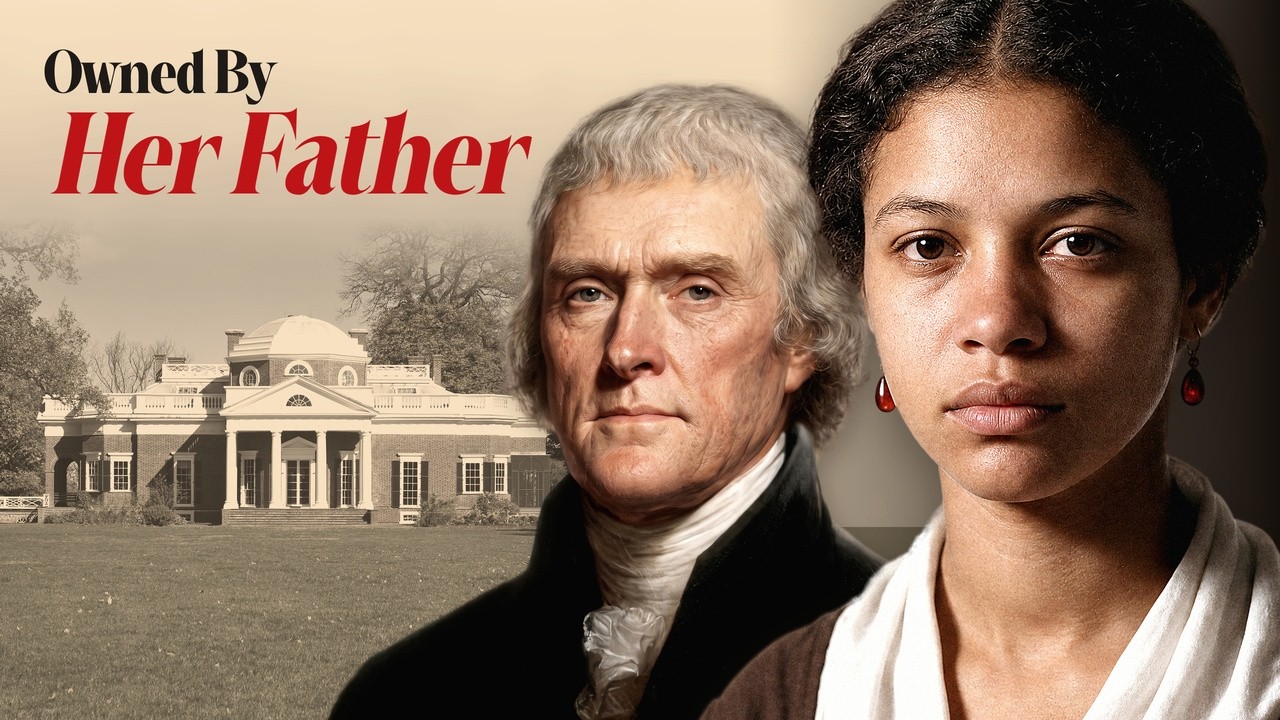
” Under Virginia law, he was also her owner. Twenty-one years later, she would walk down that mountain with fifty dollars in her hand—and no one would ever find her again. In the spring of 1822, Edmund Bacon, the overseer at Monticello, walked down the carriage road with a young woman he had watched grow up. He counted fifty dollars into her hand.
He had already paid her travel fare. Bacon never saw her again. Forty years later, he admitted in print that he had no idea what became of her. No one did.
The young woman was Harriet Hemings, the daughter of Thomas Jefferson. That is the striking fact at the center of a story that has haunted historians for two centuries: a father who never once called her his daughter, a freedom purchased at the cost of family and identity, and a woman who disappeared so completely that two hundred years of research have not found her. The only thing Thomas Jefferson ever wrote about Harriet Hemings was a single line in his farm book. Four words in his own hand.
They are not the words one might expect. The story most people know is that Jefferson quietly did the right thing—that he freed his daughter and sent her off with money for the road. The fuller account is more complicated. He never formally freed her at all.
Instead, he wrote something else, something that made her a fugitive from the law for the rest of her life. Harriet Hemings was born in the first year of her father’s presidency. While Jefferson was in the new and unfinished city of Washington, a child was born two hundred miles south at his home. She was born his property.
Under Virginia law, a child inherited the status of the mother, and the mother was enslaved. Nothing else mattered—not who the father was, not what he had written twenty-five years earlier in Philadelphia. Given her ancestry, Harriet Hemings was almost entirely of European descent. Monticello’s research states this plainly: seven of her eight great-great-grandparents were European.
The single trace of African ancestry, three generations back, determined everything about her life. The country was told of her existence when she was fourteen months old. In September 1802, journalist James Thomson Callender published an article in the Richmond Recorder alleging that the President of the United States kept an enslaved woman as his concubine and had children with her. Callender was a bitter man carrying a grudge; he had once written propaganda for Jefferson and felt he had not been properly rewarded.
The accusation spread through newspapers up and down the coast and even became a satirical song. It dogged Jefferson for the rest of his life and haunted his descendants long after. Jefferson never responded. Not once in the remaining twenty-four years of his life, neither publicly nor in any surviving letter.
At the mountaintop home, nothing changed. The children continued their errands. Their mother kept sweeping his rooms. For nine years, Harriet Hemings’ existence was recorded only in silence.
Her name did not appear in her father’s papers until 1810, when Jefferson listed the people he owned by age and wrote her name. She was born in May, with no day specified. What little is known of the children’s childhood comes from Harriet’s younger brother Madison Hemings. Born in 1805, Madison sat down with a newspaper editor in 1873 at age sixty-eight, living in southern Ohio, and described the house where he grew up.
His account is the only narrative from inside that family. “We were the only children of by a slave woman who were allowed to stay about the house,” Madison recalled of himself, his brothers, and Harriet, “and only required to do such light work as going on errands. ” Their mother was always nearby. “It was her duty, all her life, to take care of his chamber and wardrobe, look after us children and do such light work as sewing,” Madison remembered.
Then Madison wrote something that has never lost its weight: “We were freed from the dreadful curse of slavery all our lives, and were as happy a lot as any. ” As happy as any—not wholly happy, but to the extent possible. It took a carpenter in Ohio, seventy years later, to find the precise words for life at that mountain. These children did not survive slavery.
They survived the dread of perpetual slavery. A date was coming, they had been told. In the meantime, that knowledge was the only difference between their lives and those of anyone else on Mulberry Row. Madison was equally precise about the man at the center of the household.
“He was not in the habit of showing partiality or fatherly affection to us children,” he said. The same account notes, without complaint, that Jefferson was affectionate with his white grandchildren—fourteen of them. Those grandchildren ran through the same rooms. Some were the same age as the Hemings children.
Some, later in life, would insist that nothing of the sort had ever happened in that house. The reason these children were spared perpetual slavery had nothing to do with kindness or with Virginia. It was decided in Paris twelve years before Harriet was born, by a sixteen-year-old girl who found herself, briefly, on free soil. Sally Hemings crossed the Atlantic in the summer of 1787, though she was not meant to be the one to go.
Jefferson, then the American minister to France, had asked for his youngest daughter Maria to be sent to him, along with a mature woman who had survived smallpox. What arrived in London instead were two children: Maria, aged eight, and Sally Hemings, aged fourteen. Abigail Adams received them and wrote to Jefferson with her characteristic sharpness. Of the enslaved girl, she said only that she seemed fond of the child and showed good nature.
That is the earliest surviving description of Sally Hemings—nine words in another woman’s letter about someone else’s servant. In Paris, something changed that had nothing to do with anyone’s intentions. France did not recognize slavery on its soil. Any enslaved person who arrived in Paris and petitioned the courts could be declared free.
Sally’s older brother James was already there, training as a French chef and being paid wages. She was inoculated against smallpox by one of the most famous physicians in Europe. She was fitted with clothes appropriate for a lady’s maid in Parisian society. She was occasionally paid twelve livres a month.
For roughly two years, a girl born as property in Virginia lived in a city where the law did not apply that word to her. According to her son, she had begun to understand the French language well. When Jefferson was called back to America in 1789, he booked passage and asked that Sally Hemings’ quarters be suitable for those of his daughters. According to her son, she refused to go.
Everything known about what happened next comes from Madison Hemings, writing eighty-four years later, recounting what his mother told him. There is no letter, no contract, no witness. Only one man’s memory of one woman’s account. “To induce her to do so, he promised her extraordinary privileges, and made a solemn pledge that her children should be freed at the age of twenty-one years,” Madison wrote.
Sally was sixteen. She was pregnant. She stood in the one place on earth where the man before her had no legal authority over her body—and she used that moment to negotiate the only terms she would ever be in a position to set. She did not ask for her own freedom.
She asked for the freedom of her children. Then she boarded the ship. She returned to Virginia. She stepped back onto the wharf into a country where she was once again property that could be listed in an inventory.
For the next thirty-six years, she held Thomas Jefferson to a promise that existed only in the memory of the two people who made it. It worked. This is the part that still astonishes historians. Beverly Hemings left Monticello as a free man in his early twenties.
Harriet Hemings left at twenty-one. Madison and Eston were freed by Jefferson’s will. Of the roughly four hundred people Jefferson enslaved in his lifetime, only one family came out of that experience intact. But the wording of the promise matters, because the wording is the heart of the tragedy.
The pledge was that her children would be freed at twenty-one. Not that they would be free. Not that they would be born free or raised free or educated free. Their childhoods were not part of the deal.
Their childhoods were the collateral. Harriet Hemings grew up living a countdown. She would have known the number the way children know the days until Christmas. Twenty-one.
There is a low stone building at Monticello below the main house that visitors pass without stopping. Today, guides call it the textile workshop. In 1815, it was called the Little Factory, and Harriet Hemings worked in it. She was fourteen.
That was the age at Monticello when childhood ended for the Hemings children. “They were put to some mechanical trade at the age of fourteen,” Madison wrote of his siblings. Harriet learned spinning and weaving in a small factory on the home farm. Beverly went to the joinery and learned cabinetmaking under his uncle John Hemings.
Madison learned the same trade. Eston after him. A craft was portable. A carpenter could walk into any town in America and find work.
Harriet was put to the spinning wheel. Spinning and weaving were not portable trades. They were the labor force of the plantation economy itself, producing cloth for people who had no money to buy it. A girl at a spinning wheel produced something the farm consumed, within its borders, and that skill would not travel anywhere else.
This was not cruelty. It was the standard arrangement for enslaved girls her age at Monticello. A daughter of the President of the United States was treated according to the prevailing rule. We know she was there because her father wrote it down.
On page 172 of the farm book, in his precise hand, in a list of workers assigned to the textile workshop, there is a name: Harriet. No surname, because she had no surname in that book. No note beside it. Just a name in a column of names in a record of production, in the handwriting of the man who wrote that all men are created equal.
We do not know whether Harriet Hemings could read. No record proves it either way. What we have is her brother describing how he learned. “I learned to read by inducing the white children to teach me the letters and other things,” Madison wrote.
“I have learned to read and write. ” The white children—his own nephews and nieces in the same house—had tutors. He extracted the alphabet the way a child wheedles candy. Thomas Jefferson founded the University of Virginia, designed its curriculum and buildings, advocated for public education in a state that had almost none, and sent reading lists to young men who wrote to him from other states asking what to study.
His son learned his letters by asking the other children in the yard. Whether his daughter learned at all is unrecorded because no one thought to record it. For seven years, Harriet Hemings helped clothe the enslaved community of Monticello. She was, in the most literal sense available, clothing the system she was waiting to leave.
She did this from age fourteen to twenty-one. Seven years is not a fleeting moment. It is enough time to become skilled at something, to form opinions about the other women in the room, to prefer a particular window, to find a way of tying her hair for work. And all through those seven years, the countdown continued.
She had to watch her older brother reach the number first. Beverly turned twenty-one in 1819 and did not leave. He stayed two more years, playing the fiddle at parties hosted by his white nieces upstairs. Whatever the promise from Paris was worth, it was not a document anyone could wave.
It depended entirely on the continued goodwill of a man in his late seventies who was quietly going bankrupt. Bacon, the overseer, said something about her later that historians have turned over repeatedly for what it reveals unintentionally. “As soon as she was old enough, she was always employed in the cotton factory,” he said. “She never did any hard work.
” He meant it kindly. He was defending the reputation of his employer. In the midst of that defense, he tells us the entire shape of Harriet Hemings’ youth in eighteen words: she was in that room from the time she was old enough to stand at the wheel, and she stayed there until the day she left. In the final weeks of 1821 or the first weeks of 1822, Beverly Hemings walked down the mountain and did not return.
No scene was recorded. There is only an absence in the papers and a sentence written by his brother half a century later: Beverly left Monticello and went to Washington as a white man. No one was sent after him. No advertisement was placed in the Richmond papers.
No reward was offered to a slave catcher. A twenty-three-year-old carpenter, legally the property of a former President of the United States, left an estate drowning in debt—and the estate seems not to have noticed. That silence was not an accident. It was policy.
We know it was policy because of who told us: Ellen Wayles Randolph Coolidge, Jefferson’s granddaughter. In October 1858, more than thirty years after his death, she sat down at Edge Hill and wrote a long letter to her husband in Boston. Her purpose was to defend her grandfather’s reputation. The rumors about the Hemings children had haunted the family for decades.
In the middle of trying to prove her grandfather’s innocence, she wrote: “It was his principle, I know from my own knowledge, to allow such of his slaves as were sufficiently white to pass for white, to withdraw quietly from the farm. It was called running away, but they were never reclaimed. I remember four cases of this kind, three young men and a girl, who went away and no effort was made to recapture them. Their whereabouts was perfectly well known, but they were left unmolested.
”
Their whereabouts was perfectly well known. She wrote this as a kind of defense, meaning “see how humane he was. ” What she actually wrote was an operating manual for a system, and she was in a position to know it because she had grown up inside it. It was called running away.
That phrase carries an entire system within it—a euphemism built into the center of the practice, written by a woman who watched it work and understood, without ever saying so, that the chosen word served a specific function. The term mattered for two reasons. Manumitting slaves in Virginia was not a private act. It produced an official document, filed in the county court, bearing the person’s name and the name of the signatory—a document anyone could go and read.
For a former president already accused in the press of having children with an enslaved woman, a deed of manumission naming Sally Hemings’ daughter would have been proof. There was a second problem, worse. Since 1806, Virginia law required any person freed from slavery to leave the state within a year or risk being re-enslaved. Legal emancipation would have imposed a deadline and a forced separation from everyone she had ever known.
Freedom on paper meant exile in practice. So instead, the door was left open. Nothing was signed. Nothing was recorded except one word in a private ledger.
The person left, the family agreed not to pursue, and the arrangement cost the estate nothing and exposed it to no risk. All the risk of the process transferred to the person walking down the road. It is worth noting how rare this was. In fifty years of farm records, Thomas Jefferson recorded only three runaways.
One was Jimmy, the son of Critta Hemings, who left in 1804 and was also not pursued. The other two were Beverly and Harriet in 1822. Everyone else who left that mountain left because they were sold or because they died. The sales were coming.
Jefferson was drowning in debt. By the early 1820s, his debts reached about one hundred thousand dollars, and no arithmetic allowed his estate to survive his death. Seven years after Harriet walked to the carriage road, in the winter of 1829, the people of Monticello were sold at public auction. Israel Jefferson, born on that mountain on Christmas morning, had served at Jefferson’s table for twenty years.
He described what happened in the same Ohio newspaper Madison used the same year: “We were all sold at public auction, by order of Jefferson Randolph, his grandson and executor. We were all sold. ” Families that had lived on that mountaintop for three generations were broken apart in a single winter morning and sent in different directions. Most were never heard from again by anyone who loved them.
The Hemings children were not there. The deal their mother made in Paris in 1789 got them off that mountain before the bill came due. That is the only reason her story is about a woman who disappeared rather than a woman who was sold. Beverly Hemings took his risk in the winter.
He had a trade, he could pass, he went to Washington. Four months later, it was his sister’s turn. Harriet Hemings had just turned twenty-one. She had never done any work that could support her off that mountain.
Edmund Bacon had been chief overseer at Monticello since 1806. He had known Harriet Hemings since she was five. In 1822, he walked her to the carriage road, paid for her ticket with Thomas Jefferson’s money on his instructions, and put fifty dollars in her hand. Forty years later, retired on a farm in Kentucky, Bacon told the story to a visiting clergyman named Hamilton Pierson, who wrote it down in a book.
Here is what Bacon said, in full, in the order he said it: “He freed one girl several years before his death, and there was much talk about it. She was nearly white as anybody, and very beautiful. People said he freed her because she was his daughter. She was not his daughter.
She was his daughter. I know that. I saw him come out of her mother’s room many a morning when I was going up to Monticello very early. When she was almost grown, by Mr.
Jefferson’s directions, I paid her stage fare to Philadelphia and gave her fifty dollars. I never saw her since, and don’t know what became of her. ”
The blank in that passage is part of the original text. Pierson printed the book after deleting the man’s name.
There is one problem with Bacon’s denial that historians noticed immediately, and it is not a matter of opinion. Bacon became overseer at Monticello in 1806. Harriet Hemings was born in May 1801. Whatever mornings he remembered, he was remembering them at least five years after the fact he claimed they explained.
Annette Gordon-Reed, whose work on the Hemings family won the Pulitzer Prize, dismantled that passage line by line. It contains three separate claims performing three separate functions, and only the third was ever seriously in doubt. He freed one girl; fifty dollars and a stage ticket; she was not his daughter. Note which two of those three claims the man was in a position to know directly.
There is another discrepancy in the records that deserves mention rather than dismissal. Bacon said the stage was bound for Philadelphia. Madison Hemings said his sister went to Washington City to join their brother. Both men were there.
Only one was family. It is possible Bacon paid for the ticket he was told to buy, and the ticket was not for the destination where she was going. Imagine the scene, then, as far as the evidence allows. A young woman of twenty-one at the foot of a mountain in spring.
A public stage on the road below Charlottesville. An overseer counting out fifty dollars—a real sum, equivalent to several months’ wages for a laborer, and also the entire inheritance a President of the United States allotted to his daughter. No trunk we know of, no letter of introduction, no papers. That last part is the crux.
Because she was not free. Not that morning, not that year, not in any way a court would have recognized. No deed of manumission for Harriet Hemings was recorded in 1822 or at any later time. Jefferson’s will, written four years later, freed five people.
Every one of them was a man: Burwell Colbert, Joe Fossett, John Hemings, Madison Hemings, Eston Hemings. Three of them were her relatives. Her name is not in the document. Nor is her mother’s.
What Jefferson did instead was open the farm book and add an entry. The precise words are preserved for the end, but understanding the entry matters because it haunted her for the rest of her life. In the eyes of Virginia law, Harriet Hemings did not become a free woman in 1822. She became a fugitive.
She remained, technically, a fugitive until the ratification of the Thirteenth Amendment in 1865—forty-three years later, by which time she was likely dead. It did not stop there. Under the same law that made her enslaved at birth, every child she bore inherited her status. So every quiet evening in her Washington home, every baptism, every school fee, every ordinary domestic thing she built over forty years, she built over that foundation.
One confession, or old knowledge on a crowded street, or someone who had visited Monticello—fifty dollars was cheaper than a piece of paper. Behind her, on the mountain, her mother was forty-nine years old. Sally Hemings had lost both of her older children within months of each other. She had only two sons left.
She lived thirteen more years in a rented house in Charlottesville and died there in 1835. No one recorded where she was buried. Through all those thirteen years, no letter has survived in either direction. Washington City in 1822 was a town of about thirteen thousand people, built on an over-ambitious grid with cows in the streets and a Capitol still being repaired after the British attacks.
For a woman in Harriet Hemings’ position, it was also the best place in America to stop existing. It was full of strangers. It emptied and filled with every session of Congress. No one was from there.
A light-skinned young woman with good manners, a Virginia accent, and no visible past could arrive by stage and simply be a young woman who arrived by stage. Her brother was already there. It is almost certain she went to him first. Then she did the thing that kept her hidden for two hundred years.
She stopped being Harriet Hemings. We should be careful with the word “passing,” because it sounds like a performance, and it was not. It was closer to an amputation. To pass permanently in 1822, a person had to give up every connection that might contradict her story.
No visits home. No mother at the wedding. No brothers at the baptisms. No mention of any childhood.
No name of any county. No answer to the simplest question a new neighbor asks—”Where are your people from? “—that could be verified. And this had to hold for a lifetime, not a season.
Fifty years. Through a marriage, through raising children who asked questions, through grandchildren, through every illness and funeral and family crisis where the ordinary human instinct is to ask for someone. Monticello’s oral history project, which has spent decades tracing descendants of the people enslaved there, states the outcome without embellishment: three of Sally Hemings’ children permanently merged into the white world. Beverly and Harriet both married and had children whose descendants are unknown today.
Unknown today. That is a research finding, and it is also a monument. Compare that to what happened to the two brothers who stayed. Madison Hemings lived openly as a man of color.
Eston moved his family to Wisconsin, changed his surname to Jefferson, and crossed the line. His descendants did not learn of their African American ancestry until the 1970s. The Getting Word project has spent years documenting what the concealment cost families across generations. Separation.
Pressure. The hidden, constant fear. Harriet paid the price in full. And she paid it alone, without the one thing the Eston family had: another person in the house who knew the truth.
For a while, letters came. We know this only because of one number. In 1873, in Waverly, Ohio, a sixty-eight-year-old carpenter named Madison Hemings sat down before the editor of a small local newspaper and told his family’s story aloud, on the record, by name. He knew exactly what he was doing.
He had spent his life refusing to disappear. Now he would write down the names. The article appeared in the Pike County Republican on March 13. Nine months later, in the same newspaper, another man formerly enslaved at Monticello, Israel Jefferson, published his own account and confirmed the four names: Beverly, Harriet, Madison, Eston.
Here is what Madison Hemings said about his sister—the only account that exists of her adult life from anyone at all: “Harriet married a white man of good standing in Washington City, whose name I could give, but will not for prudential reasons. She raised a family of children, and, as far as I know, were never suspected of being tainted with African blood in the community where she lived or lives. I have not heard from her for ten years, and do not know whether she is alive or dead. She thought it to her interest, on going to Washington, to assume the role of a white woman, and by her dress and conduct, I am not aware that her identity as Harriet Hemings of Monticello has ever been discovered.
”
Read it slowly, because every clause is almost an open wound. Whose name I could give, but will not. He knew. Fifty-one years after she left, her brother still knew who she had married.
And he protected her in writing, in the same moment he destroyed his own privacy, to tell the truth about their father. Where she lived or lives—he does not know which tense to use about his own sister. Then comes the sentence that ends everything: “I have not heard from her for ten years and do not know whether she is alive or dead. ”
Ten years.
So the letters did come, for a while. Throughout the 1820s, ’30s, ’40s, ’50s, a thin, carefully managed thread ran from a woman with a family in Washington to a carpenter in Ohio. Both of them knew what a single careless letter could cost. Then, around 1863, the thread broke.
Their mother had been dead for twenty-eight years by the time the letters stopped. She never saw her daughter again after that spring morning on the carriage road. She could not. That was the arrangement.
That was what the Paris deal had actually bought: a mother wins her daughter’s freedom, and the price is the daughter herself. Two hundred years later, people are still looking for her. In the 1940s, a researcher named Pearl Graham combed the records she could find to try to identify the woman Harriet Hemings became. In our own century, historian Catherine Kerrison spent years on the same trail for her book Jefferson’s Daughters.
Marriage records. Census returns. Church lists. Every woman named Harriet in Washington, D.
C. , in the decades after 1822. Nothing ever resolved. No grave.
No headstone. No death notice. No married name anyone can prove. The most searched-for missing person in Monticello’s history is a spinner from the textile workshop.
And she is still missing. Which means she succeeded. That is the strange, cold consolation at the center of this story. Every failed search is a quiet confirmation that Harriet Hemings did exactly what she set out to do.
She wanted her children to be free and unremarkable. They were. And so no one can find them either. Somewhere in America now, there are people descended from Thomas Jefferson who know nothing about it—because a twenty-one-year-old woman decided in 1822 that they never would.
At least her mother was found. In 2017, archaeologists working in the South Wing at Monticello opened a small room underground, about fourteen by thirteen feet, a few steps from Thomas Jefferson’s bedroom. Through most of the twentieth century it had been used as a men’s restroom. As far as the evidence indicates, it is the room where Sally Hemings lived.
In June 2018, it was opened to the public, designed from the words her son published in 1873, with a replica of a period dress instead of a woman for whom no image exists. Two centuries later, Sally Hemings got a room with her name on it. Her daughter has nothing. No room.
No picture. No grave. No surname. Only the workshop where she stood, which still exists, and which almost no one stops at.
The deal her mother made was kept in the end. All four children got out. But look at what the four had to become: one faded into Washington; one faded so completely that we do not even have a final trace of her; one changed his name and his race in Wisconsin. Madison alone stayed as he was.
And Madison is the reason we can say any of this at all. Now, the record. It began with a book. May 1801, a leather-bound farm ledger at Monticello.
A birth recorded by month, without the day. The book is called the Farm Book, kept by Thomas Jefferson for fifty years. Inside it is a list he titled “A Record of Negroes by their Ages. ” On page 130, under the line for Sally Hemings, in his own hand, is the complete official record of what became of his daughter, Harriet.
Sally—run away. 22. Four words. That is all.
Not freed. Not emancipated. Not released. Not manumitted.
Not given her liberty. And anywhere in fifty years of one of the most documented private lives in early America, in 19,000 surviving letters, the word “daughter” never appears. Only “run away. ” The word a man uses for property that has removed itself.
Directly above her, for her brother, the same hand wrote: Beverly—run away—22. He wrote them at the same sitting. He must have used the same pen. A few pages later, in the workshop lists, there is the only other trace of her he ever left.
One name in a column of names. A fourteen-year-old girl at a spinning wheel. That is Harriet Hemings’ entire written life in the archive of the man who wrote the Declaration of Independence. She was born in May.
No one recorded the day. She died somewhere. No one recorded that either.