On July 8, 1545, Don Carlos was born into the Spanish Habsburg dynasty. His mother, Maria Manuela of Portugal, died just four days later from puerperal sepsis. She was 17 years old. Philip, then Prince of Asturias, was 18 and a widower before he had fully become a father.
The genetic circumstances of Don Carlos’s birth were extreme. His parents were doubly first cousins. His inbreeding coefficient was 0.211, more than three times the level of a child born to first cousins. Instead of the normal eight great-grandparents, Don Carlos had just four ancestral couples. The Habsburg and Aviz bloodlines had been braided together for generations through deliberate dynastic policy.
Venetian ambassadors who passed through Madrid left detailed physical descriptions of the young prince. In 1557, Federico Badoaro called him small and weak for his age. By 1563, Paolo Tiepolo recorded one shoulder higher than the other, one leg shorter, a slight hunch, and a speech impediment. Giovanni Soranzo added violent rages and impulsiveness in 1565. The speech defect was not a lisp but a rotacism combined with a lambdacism, meaning he could not cleanly pronounce L or R.
From 1561, Carlos was sent to study at Alcalá de Henares with two other boys close to his age. Don Juan of Austria, Philip’s illegitimate half-brother, was athletic and magnetic. Alessandro Farnese was disciplined and scholarly. Carlos was the legitimate heir, but he was outshone by both of them every single day. The resentment he developed toward Don Juan would return violently in the winter of 1567 and 1568.
His tutor, Onorato Juan, described Carlos as capable of affection and genuine curiosity but unable to hold attention for long. Documented cruelty stories include whipping servants, ordering a bootmaker to eat his own ill-fitting boots, and drawing a dagger on Cardinal Espinosa. More grotesque anecdotes, such as blinding horses, appear only in propaganda sources and are treated as unreliable.
On Easter Sunday, April 19, 1562, Carlos fell down a narrow stone staircase in the dark at Alcalá de Henares. He was chasing a young woman of the household. He struck his head on a closed door at the bottom of the stairs. By early May, he was feverish, intermittently blind, swollen, and drifting in and out of consciousness.
Philip II rode from Madrid and stayed at the bedside. The medical team that assembled was extraordinary. Dionisio Daza Chacón, the royal surgeon, left the most complete eyewitness account. Andreas Vesalius, the most accomplished anatomist of the Renaissance, argued for aggressive trepanation but was overruled by court physicians. A Morisco bonesetter from Valencia was also summoned. The greatest anatomist of the era, a royal surgeon, and a folk healer gathered around the same bed.
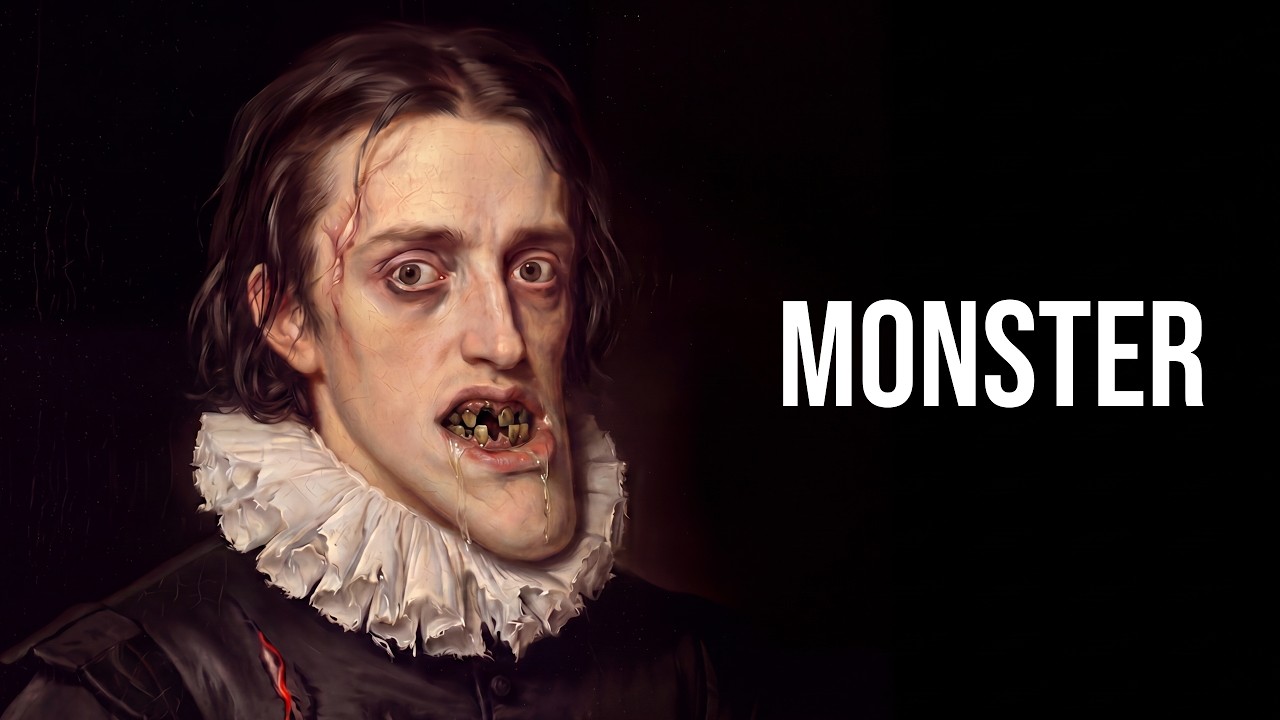
When the doctors ran out of options, someone turned to the dead. The desiccated body of Fray Diego de Alcalá, a Franciscan lay brother who had died in 1463, was placed in Don Carlos’s bed. Carlos began to recover. Philip II personally pushed for the canonization of Fray Diego for the next quarter century. Pope Sixtus V canonized him on July 2, 1588, the only canonization of his entire pontificate.
The fall probably worsened problems that already existed. Venetian dispatches from years before the accident already described Carlos as physically stunted and psychologically off. After 1562, the violence and rages came more frequently. The fall did not create Don Carlos’s problems. It sharpened them.
For five years after the fall, Philip watched his son get worse and did very little about it. He received dispatches. He heard reports about the violence and the outbursts. He consulted advisers who told him what he already knew. He deliberated for the better part of three years while his son became progressively more dangerous.
In August 1567, the Duke of Alba was dispatched to crush the Dutch revolt. Don Carlos had personally lobbied for that command. Philip refused him. Carlos had staked whatever remained of his self-image on getting that appointment. Losing it broke something in him that had been bending for years.
By late 1567, Carlos was assembling a flight plan to leave Spain without permission. There is no surviving evidence that he planned to join the rebel cause. That connection was invented later by Dutch propaganda. In mid-December, Carlos tried to raise roughly 150,000 ducats from Spanish grandees and bankers.
Around Christmas Eve 1567, Carlos went to confession with the Dominican Fray Diego de Chaves. Chaves refused absolution. Carlos had confessed wanting to kill a man. When pressed, he identified that man as Philip II, his own father. Carlos then visited other friars and asked whether a person could take communion while hating another man with the intent to kill him. They agreed with Chaves.
After the arrest, a memorandum in Don Carlos’s own handwriting was found in his rooms. It was a list of people categorized as “must die” and “must live.” The must die column reportedly included the Duke of Alba, Cardinal Espinosa, and Rui Gómez de Silva.

The final betrayal came from family. Carlos asked Don Juan of Austria to help secure galleys for his escape. Don Juan stalled. Around January 17, 1568, he left Madrid for the Escorial and told Philip everything in person.
That same night, the king moved. After 11:00 on Sunday night, January 18, 1568, Philip II entered his son’s bedchamber at the Alcázar of Madrid. He was wearing armor under his robes and a helmet. With him came Rui Gómez de Silva, the Duke of Feria, Luis Quijada de Ávila, and Antonio de Toledo.
Carlos had rigged a bell and pulley alarm system over his bed. Under the bed, there was a loaded arquebus, two swords, and daggers. The men entered quietly, seized the weapons first, confiscated his papers, and brought carpenters in that same night to nail the window shut from outside. By morning, the heir to the Spanish throne was a prisoner in his own rooms.
The royal chronicler records an exchange. Carlos asked, “Does your majesty wish to kill me?” Philip answered, “I do not wish to kill you, but to correct you.” Carlos then reportedly begged Philip to kill him and tried to throw himself into the fire. The provenance of this exchange is flagged as second-hand.
For the next six months, Don Carlos lived in expanded apartments on the upper floor of the Alcázar. Six gentlemen guards rotated under Rui Gómez. Mass was said daily. No outside visitors were allowed. Philip II never entered the room again after the night of the arrest.
The guards kept daily logs that survive at Simancas. What the logs describe is a man methodically destroying himself. In one attested week of May 1568, Carlos consumed over 10 liters of iced water per day. He slept on a bed layered with ice. He swallowed a diamond ring and pearls. He walked barefoot for hours on cold stone floors. He lay naked on the bare floor through the winter nights. He alternated between hunger strikes lasting days and gorging himself until he vomited.
On July 6, 1568, the final binge came: a partridge pie and four gallons of iced water in a single sitting. Within days, the fatal illness had begun. By July 17, the fever was high and constant. Dysentery set in. Don Carlos died in the early hours of July 24, 1568. He was 23 years old.

Philip ordered an autopsy, which was unusual for the period and almost certainly calculated to get ahead of poisoning rumors. The autopsy described findings consistent with severe dysentery and general debility. No indicators of poison were found. The mainstream modern view is septic shock from bowel perforation on a gut that had been starved and frozen and then overloaded with cold water and rich food. One historian calls it suicide by degrees.
Carlos was first buried at the convent of Santo Domingo el Real in Madrid. In 1573, Philip had the body moved to El Escorial, where it remains in the Panteón de los Infantes.
The morning after the arrest, Philip launched a diplomatic paper flood. He wrote to Pope Pius V, explicitly stating that the case was not a matter of heresy and not an Inquisition proceeding. He refused to specify charges. There was no trial, no formal accusation, no Inquisition process.
William of Orange’s apology, drafted in December 1580 and printed in 1581, charged Philip with murdering Don Carlos, poisoning Elizabeth of Valois, committing incest with his sister, and murdering Floris de Montmorency, Baron Montigny. That last charge was true. Montigny had been imprisoned and secretly garroted in October 1570 on Philip’s written order. Having one verified murder on the list gave the fabricated charges a credibility they would not otherwise have earned.
Antonio Pérez, Philip’s disgraced former secretary, opened a second front a decade later. His Relación added insider detail from someone who had worked inside the royal chancery. He never claimed to have witnessed any murder. He used implication, not accusation.
The Inquisition connection, which Verdi cemented in the public mind with his Grand Inquisitor scene, is explicitly false. Philip’s own letter to Pius V says so in plain language. The Suprema has no file on Don Carlos. The confusion arose because Cardinal Espinosa held two positions simultaneously: Inquisitor General and President of the Council of Castile. Later writers collapsed those two roles into one.
The literary afterlife stacked invention on top of invention. William of Orange in 1581 supplied the murder accusation. César Vichard de Saint-Réal in 1672 wrote a novella that invented the love affair with Elizabeth and cast Philip as the jealous husband. Thomas Otway brought it to the English stage in 1676. Schiller added the Marquis of Posa, a character who never existed, in 1787. Verdi staged his opera in 1867, and the music made the lies permanent.
The Fontainebleau meeting where Carlos and Elizabeth fall in love never happened. No surviving letter between them contains anything suggesting romantic feeling. Henry Kamen puts it flatly: there is not a shred of evidence to support the romantic fictions.
Philip lost the information war he started. A single Calvinist pamphlet buried his entire diplomatic offensive in a season. The careful king lost to the reckless pamphleteer because caution carried far enough becomes its own kind of recklessness.
Don Carlos lies in El Escorial in the Panteón de los Infantes, a few corridors from his father. The opera plays on. And the inbreeding coefficient that produced Don Carlos was not a warning the Habsburgs heeded. They kept the bloodline closed for another five generations until Charles II, with his coefficient of 0.254, could not produce an heir, could barely speak, and ended the dynasty in 1700 with a jaw that did not close.