In the winter of 1676, Mary Rowlandson was living among her Wampanoag captors in western Massachusetts. She had been taken from her home in Lancaster on February 10, and her captivity had already lasted more than two months. Her youngest daughter had died in her arms from a gunshot wound suffered during the attack. Her son and older daughter were also held by the Indians, though she rarely saw them.
Rowlandson’s account of these events, published in 1682, became one of the first bestsellers in America. Her story took place during the broader conflict known as King Philip’s War. King Philip was the English name for Metacom, a leader she encountered several times during her captivity.
As the final weeks of her ordeal began, Rowlandson and her captors prepared to move toward the bay towns. She had little to eat, surviving on crumbs from a cake given to her daughter on the day they were captured. She kept the crumbs in her pocket until they became dry and hard, like pieces of flint. She later wrote that this small, spoiled food gave her strength when she was near fainting.
During the march, the Indians killed a deer that carried a fawn inside it. They gave Rowlandson a piece of the unborn animal. It was so tender that the bones could be eaten with the meat, and she found it delicious. That night, rain fell, but the Indians quickly built a bark shelter where she slept dry. Many of the Indians spent the night in the rain, and she noted that God often treated her with more mercy than her captors.
The next morning, the Indians took the deer’s blood and boiled it in the stomach. Rowlandson could not eat any of it, though the Indians ate it eagerly. She was given other kindnesses, though she was scolded for dipping her water vessel into the kettle, a practice they considered unclean.
During the fifteenth remove, Rowlandson received no food to support her. She was given a load to carry and walked with hopes of returning home. They reached the Baquaug River again and camped nearby for several days. She traded small gifts, such as tobacco and salt, for food. Hunger made her eat greedily, and she often burned her mouth on hot food, yet she never felt satisfied. She reflected on the scripture, “Ye eat, but ye have not enough,” and saw the misery that sin had brought upon her.
The sixteenth remove began with a crossing of the Baquaug River. The water reached her knees, and the current was fast and cold. She was so weak that she staggered as she walked. The Indians laughed at her, but she found comfort in the promise, “When thou passest through the waters, I will be with thee.” After resting to put on her stockings and shoes, she continued on.
Soon, an Indian arrived with news that she must go to Wachuset to meet her master. A message had come from the council about ransoming captives, and another message would follow within fourteen days. Her heart, which had been heavy, became light. She felt she could run. They traveled only a mile that night and stayed for two days. During that time, a group of about thirty Indians on horseback approached. Rowlandson’s heart leaped at first, thinking they were Englishmen, for they wore English clothes with hats, white neckties, and sashes. But when they came closer, she saw the difference between the faces of Christians and the appearance of the heathen, and her spirits sank again.
The seventeenth remove was more comfortable because of her hopes. She was given a load to carry and walked with joy, but her strength soon failed. At night, they reached an Indian town. She entered a wigwam where an Indian was boiling horse legs. She asked for some broth, and he gave her a spoonful of samp, telling her to take what she wanted from the kettle. She mixed it with hot water and drank it, regaining some strength. He also gave her a piece of small intestine, which she roasted on the coals. She felt revived, comparing herself to Jonathan, whose eyes were enlightened after tasting a little honey.
The eighteenth remove was a hard day. While walking, Rowlandson saw an Englishman stripped and lying dead on the ground, but she did not know who he was. They reached another Indian town where four English children were held captive, including her sister. She went to see her sister, who was well given her condition. Rowlandson wished to stay with her, but her sister’s captors would not allow it.
In another wigwam, she found two English children. An Indian woman was boiling horse legs and gave Rowlandson a small piece. She ate it quickly, but a child could not chew it. The meat was tough and full of sinews. Rowlandson took the piece from the child and ate it herself, finding it delicious. She recalled the words of Job, “Things which my soul refused to touch are as my sorrowful meat.” She returned to her mistress’s wigwam and was told she had brought shame to her master by begging. If she did it again, they threatened to knock her on the head. She replied that knocking her on the head was better than letting her starve.
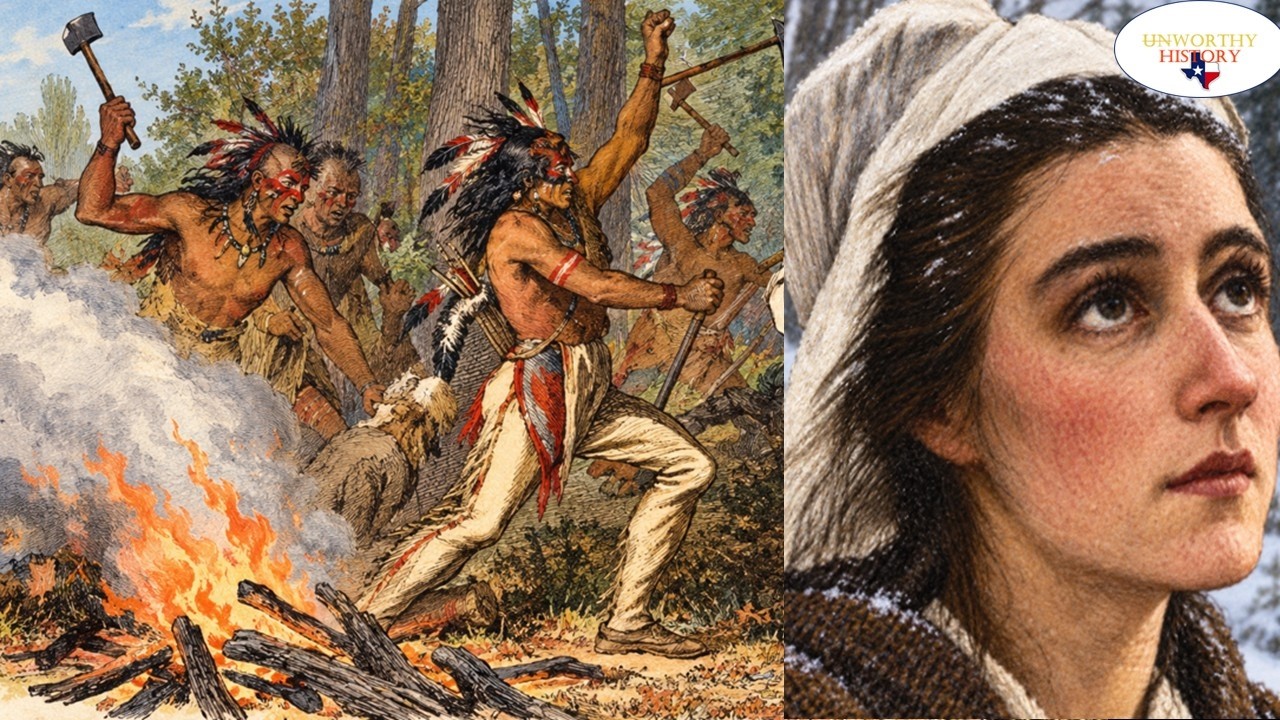
The nineteenth remove was bitter. They said they would travel to Wachuset that day, but the journey took three days without rest. They crossed a great swamp, with mud and water up to their knees. Rowlandson’s patience nearly gave out. As she walked, King Philip himself took her by the hand and said, “Two weeks more and you shall be mistress again.” She asked if he spoke truly. He said yes, and that she would soon return to her master, who had been gone three weeks.
When they finally reached Wachuset, her master was there. He asked when she had last washed. She told him it had been a month. He brought her water himself, ordered her to wash, and gave her a mirror to see herself. He asked his wife to feed her. She gave Rowlandson a dish of beans and meat and a small piece of peanut cake. Rowlandson recovered her strength through this kindness.
Her master had three wives. One was an old wife, with whom he had stayed for three weeks. Another was Wettimore, a harsh and proud woman whom Rowlandson served for a long period. Wettimore spent much of her day adorning herself, powdering her hair, painting her face, and wearing necklaces, jewels, and bracelets. The third wife was young and had two children.
While Rowlandson was recovering at the old wife’s wigwam, a servant of Wettimore came to take her away. Rowlandson burst into tears. The old wife comforted her, saying she could come to her for food and sleep in her wigwam. That night, the old woman spread a mat for her and covered her with a good rug. It was the first such kindness Rowlandson had received. She understood that Wettimore feared losing her service and ransom if she allowed Rowlandson to serve the old wife instead.
An Indian asked Rowlandson to knit three pairs of stockings, rewarding her with a hat and a silk handkerchief. Another asked her to make a shirt and gave her an apron. Then Tom and Peter arrived with a second message from the council concerning captives. Though they were Indians, Rowlandson shook their hands and wept. She asked about her husband and friends. They said all were well but sorrowful. They brought her two pieces of biscuit and a pound of tobacco. She distributed the tobacco quickly. When it was gone, an Indian demanded a pipeful. She told him it was all gone. He began to rage and threaten her. She said she would give him some when her husband came. He cursed her husband and said he would smash his head if he came. Yet the same men said that if a hundred unarmed men came, they would not hurt them. Rowlandson did not dare send word to her husband, fearing what might happen.
When her master returned, the leaders gathered to consult about captives. They called Rowlandson and asked how much her husband would pay for her ransom. She was in a great dilemma. If she named a low sum, it might be ignored. If she named a high sum, she did not know where the money would come from. She risked saying twenty pounds, though she asked them to accept less. They did not listen and sent word to Boston that she would be ransomed for twenty pounds.
One of the “praying Indians” wrote their message. Another praying Indian told Rowlandson he had a brother who refused to eat horse meat. His conscience was tender, though wide as hell when it came to destroying poor Christians. He read the scripture about the siege of Samaria, where a donkey’s head sold for eighty pieces of silver. He explained that in times of famine, it became lawful to eat what was not lawful at other times. After that, he said he would eat horse meat with any of them.
Another praying Indian, after doing all the harm he could, betrayed his father to the English to save his own life. Another fought at the battles of Sudbury and was later hanged for his deeds. Another was so cruel that he wore a necklace made of Christians’ fingers. Another, before going to fight at Sudbury, took part in a powwow ritual. A man knelt on a deer skin, surrounded by a circle of others who also knelt. They struck the ground with their hands and sticks, murmuring with their mouths. A man with a gun stood nearby. The one on the deer skin gave a speech, and all showed their approval. They did this many times. Then they called for the man with the gun to leave the circle. He did, but they called him back. He seemed hesitant. They called more earnestly, and he returned. They all sang. Then they gave him two guns, one in each hand, and he began again on the deer skin. At the end of each sentence, they all agreed with murmurs and struck the ground. They ordered him out of the circle again, and he went a short distance. They called him back, but he stood swaying, unsure whether to stand or fall. They called with great earnestness, one by one. After a while, he staggered back in, arms outstretched, a gun in each hand. As soon as he entered, they all sang and rejoiced. He gave another speech on the deer skin, and they all agreed with joy. Then they left for the battles of Sudbury.
Rowlandson believed they went without any doubt of success. They returned home with great victory, claiming they had killed two captains and nearly a hundred men. They brought one Englishman who confirmed the report. They had committed atrocities at Sudbury. Yet they returned without the joy and triumph they usually showed, like dogs with their tails between their legs. Rowlandson could not see that it was because they lost many men, for they said they lost only five or six. When they went, they acted as if the devil told them they would win. When they returned, they acted as if the devil told them they would be defeated. Whether that was so, she could not say, but the days proved it. They began to fall quickly and continued throughout that summer until their utter ruin.
They returned on a Saturday, and the powwow who had knelt on the deer skin came back black as the devil. When her master returned, he ordered Rowlandson to make a shirt for his child from a Dutch pillowcase trimmed with lace. An Indian came and invited her to his wigwam that night, promising pork and nuts. While she ate, another Indian told her that this man was a good friend to her, but he had killed two Englishmen at Sudbury, and their clothes lay behind her. She looked and saw clothes stained with blood and full of bullet holes. Yet the Lord did not allow this wretch to harm her. On the contrary, he comforted her many times. Five or six times, he and his wife fed her weak body. Another woman gave her a piece of fresh pork with some salt and lent her a pan to fry it. Rowlandson remembered how sweet and delicious that bite tasted, and she still remembered it to that day.
The twentieth remove began because the Indians usually left after committing any harm, for fear of being discovered. They traveled three or four miles and built a large wigwam that could hold a hundred Indians, preparing for a great day of dancing. They said among themselves that the governor would be so angry about the loss at Sudbury that he would not send anyone for the captives. This made Rowlandson sad and trembling.

Her sister, who was not far away, asked her master to allow her to visit Rowlandson. He agreed and said he would go with her. But she was ready before him and went ahead, covering a mile or two. He caught up and forced her back in the rain. Rowlandson did not see her sister again until they met in Charlestown. That Indian, her sister’s master, was later hanged in Boston.
The Indians began to gather from all directions for their day of dancing. Among them was a woman named Goodwife Kettle. Rowlandson told her her heart was so heavy it was ready to break. Goodwife Kettle said her heart was also heavy, but she hoped they would hear good news soon. Rowlandson’s daughter was about a mile away, and she had not seen her for nine or ten weeks. She begged to see her daughter, but the Indians were hard-hearted and refused. They held their tyrannical power while they could.
On a Saturday, about an hour after noon, Mr. John Hoar arrived, allowed by the council and accompanied by Tom and Peter, carrying a third message. When they approached, Rowlandson was outside. The Indians told her to sit still. They picked up their guns and ran off, firing shots. Rowlandson was upset, thinking they had killed the Englishman. They said no, they had fired over, under, and before his horse, pushing him this way and that, to show what they could do. They then allowed him to approach their tents. Rowlandson begged to see the Englishman, but they refused. When they finished talking with him, they let her go to him. They asked about each other’s conditions and about her husband and friends. He told her they were all well and would be glad to see her. Her husband sent her a pound of tobacco, which she sold for nine shillings in cash. Many Indians, lacking tobacco, smoked hemlock and ground ivy. Rowlandson noted that she had overcome her desire for tobacco.
She asked if she could go home with Mr. Hoar. One by one, they refused. They went to sleep with that answer. In the morning, Mr. Hoar invited the leaders to dinner, but they discovered that most of the provisions he had brought had been stolen during the night. Rowlandson saw the wonderful power of God in this. There were many Indians gathered, greedy for food, and only Mr. Hoar and herself among the English. Yet they did not knock them on the head and take what they had. Instead, they seemed ashamed and said some wicked Indians had done it.
Mr. Hoar invited them early to dinner, but they ate very little, busy adorning themselves for their dance. Eight participated, four men and four women. Her master and mistress were among them. He wore his Dutch shirt with large lace sewn at the tail, silver buttons, white stockings, and garters adorned with shillings. He placed wampum belts on his head and shoulders. She wore a coat of cloth and was covered with wampum belts from the waist up. Her arms were covered with bracelets from elbows to hands. She had many necklaces around her neck and various ornaments in her ears. She wore fine red stockings and white shoes, her hair powdered and face painted red. All the dancers were dressed in similar fashion. Two others sang and beat on a brass kettle for music. They jumped up and down, with a pot of water in their midst kept warm for drinking. They continued until almost dark, throwing pieces of wampum to the spectators.
At night, Rowlandson asked again if she could go home. They all said no, unless her husband came to fetch her. As they prepared for sleep, her master left the wigwam. Soon after, he sent an Indian named James the Printer, who told Mr. Hoar that her master would allow her to return the next day if he gave him half a pint of liquor. Mr. Hoar called Tom and Peter and asked them to witness whether he would promise this before all three. He did, and received his liquor. Then King Philip, understanding the matter, called Rowlandson to him and asked what she would give him for telling her good news and speaking a good word for her. She said she did not know what to give and asked what he wanted. He said two coats, twenty shillings in money, half a bushel of corn seed, and some tobacco. She thanked him, but she knew the good news as well as that cunning fox.
Her master, after drinking his liquor, returned to the tent raving. He called for Mr. Hoar and gave him the drink, saying he was a good man. Then he said, “Hang him, this rogue.” He was almost drunk, giving him drink and then saying he should be hanged. He called for Rowlandson. She trembled at his voice but had to go. He gave her the drink and showed no disrespect. He was the first Indian she saw drunk during her captivity. His wife fled from him around the tent, and he chased her, his money jingling at his knees. She escaped. He ran toward another old wife, but by God’s mercy, they suffered no more disturbance that night.
Rowlandson did not sleep well. She had gone three nights without sleep. The nights before the council’s message arrived, she was full of fears and troubles. The night after Mr. Hoar arrived with good news, she was overwhelmed with happiness. The third night, she was consumed with thoughts of returning home and leaving her children behind in the wilderness.
On Tuesday morning, they held their general council to decide whether she could return home. They all agreed as one man, except King Philip, who refused to attend. At first, they had all been against it unless her husband came for her. But then they agreed and seemed to rejoice. Some asked her to send them bread, others tobacco. Some shook her hand, offering her a head covering and a shawl for the journey. Not one moved against the matter. Rowlandson saw this as the Lord answering her humble request and the prayers of others.
During her travels, an Indian man told her that if she wished, he and his wife would run away and go with her to her home. She said no, she did not wish to escape. She wished to wait for God’s timing to return home quietly and without fear. Now God had granted her wish. She reflected on the wonderful power of God she had seen. She had been in the midst of those roaring lions and wild bears that feared neither God nor man nor devil. Night and day, alone and with the company, they all slept together, yet none of them offered her any dishonorable abuse. She said this in the presence of God and for His glory. She quoted Psalm 107: “Let the redeemed of the Lord say so, whom he hath redeemed from the hand of the enemy.” She left the midst of hundreds of enemies in peace, and not a dog moved his tongue against her.
As she departed, her heart melted with tears more than during her entire captivity. She almost choked at the thought of returning home. At sunset, she, Mr. Hoar, and the two Indians reached Lancaster. It was a solemn sight. She had lived there happily among relatives and neighbors, and now she saw not one Christian and not one house standing. They went to a farm that still stood and stayed the night, sleeping on straw. In the morning, they continued to Concord, arriving before noon. She was overjoyed to see many Christians together, some of them her neighbors. There she met her brother and her sister’s husband, who asked if she knew where his wife was. He had helped bury her without knowing it. She had been killed near the house that was partly burned.

They went to Boston that day, where she met her dear husband. But thinking of their children, one dead and the other missing, tempered their comfort with each other. She was now surrounded by merciful Christians instead of cruel heathen. She received kind treatment in many homes. The twenty pounds for her ransom was collected by some noble people of Boston and Mrs. Usher. Mr. Thomas Shepard of Charlestown received them into his home, where they stayed eleven weeks. They were treated like a father and mother.
The week after she arrived, the governor and council sent again to the Indians, and they returned her sister and Mrs. Kettle. Not knowing where their children were was a hard trial. They kept asking and listening for news without success. The council proclaimed a day of public thanksgiving. Though her heart was still heavy, they decided to ride toward the east, hoping to hear something of their children.
Between Ipswich and Rowley, they met Mr. William Hubbard, who told them their son Joseph had arrived at Major Waldron’s quarters, along with another child, her sister’s son. They continued to Newbury. Because their minister was absent, they asked Rowlandson’s husband to preach the thanksgiving sermon. He did not want to stay overnight, but went to Salisbury to learn more and returned in the morning to preach. That evening, someone told him his daughter was coming to Providence. Mercy was flowing in from every side.
Since their son was near, they went to him first in Portsmouth. They met him and the major, who said he had done what he could but could not get him for less than seven pounds, which good people there had paid. Her sister’s son was redeemed for four pounds, paid by the council. After recovering one child, they hurried toward the other. On the way back through Newbury, her husband preached and was rewarded double.
On Monday, they arrived in Charlestown, where they heard that the governor of Rhode Island had sent for their daughter to take care of her, as she was within his jurisdiction. She was near Rehoboth, and Mr. Newman went and brought her to his home. The Indians had left that area, making it dangerous to go to her. But wagons carrying provisions to the English army, guarded, brought her to Dorchester, where they received her safely.
Her daughter’s journey had been hard. She traveled one day with the Indians, her basket on her back. The group of Indians went ahead, leaving only one woman. She followed that woman until night, and they lay down together, covered only by the sky and bedded only by the earth. She traveled three days in this manner, not knowing where she was going, with nothing to eat or drink but water and some green berries. At last, she reached Providence, where the townspeople received her kindly. The Indians had said Rowlandson would not get her for less than twenty pounds, but the Lord returned her without cost.
After the family was reunited, the South Church in Boston hired a house for them. They left Mr. Shepard’s home and went to Boston, where they stayed about three-quarters of a year. Rowlandson found it strange to begin housekeeping with bare walls, but as Solomon said, money answers all things. They obtained it through the generosity of Christian friends, in one town and another, and some from England. In a short time, their home was furnished with love.
Rowlandson reflected on her changed condition. She remembered when she slept quietly without troubling thoughts. Now, when all around her slept, her thoughts turned to the past, to God’s solemn providence, His wonderful power, and His bringing them through many difficulties. She remembered being in the midst of thousands of enemies with nothing but death before her. It was hard then to persuade herself that she would ever eat bread again. But now they ate the finest wheat and, as she said, honey out of the rock. Instead of husks, they had the fatted calf. She quoted David: “I water my couch with my tears.”
She had seen the utter ruin of this world. In one hour, she was healthy and wealthy, wanting nothing. The next hour, she was sick, wounded, and in death, with nothing but sorrow and affliction. Before she knew the meaning of affliction, she was sometimes ready to wish for it. She saw many whom she preferred above herself groaning under afflictions, and she feared her portion had been in this life. But now she knew the Lord had His own time to chasten and correct her. Some drink their afflictions drop by drop, but the dregs of the cup, the wine of astonishment, were what the Lord had prepared for her portion. She had asked for affliction and received it in full measure. Yet she saw that when God calls a person to something, no matter the difficulties, He is able to bring them through. She hoped to say with David, “It is good for me that I have been afflicted.” The Lord had shown her the vanity of these outward things, that they are but a shadow, a breath, a bubble. She learned to look beyond present troubles and be still under them, as Moses said, “Stand still, and see the salvation of the Lord.”
The war itself was devastating. For the population of New England at the time, about sixty-five thousand English colonists, King Philip’s War was the deadliest conflict in American history. Roughly twenty-five hundred colonists and about five thousand Indians were killed. Peace was declared in 1678, and it took decades for most towns to be fully rebuilt.
Rowlandson noted that the Indians never abused her in any form of unchastity. She was about thirty-nine years old when captured. Her sister, possibly Hannah White Deval, about seven years younger, was also captured. Her experience may have been worse than Mary’s. Rowlandson also mentioned that the Indians described the one who stole Mr. Hoar’s provisions as a “machet” Indian, a Wampanoag word meaning bad.