In late May 1864, Virginia was the center of a brutal, draining conflict. Two generals were locked in a deadly contest of wills. On one side stood Robert E. Lee, the Confederacy’s marble icon, who had just set what many consider the most brilliant trap of the entire Civil War. Opposing him was Ulysses S. Grant, the Union commander known as the butcher.
Lee had split his army and positioned it along the North Anna River. He created an elegant, V-shaped fortification with its apex at Ox Ford. The plan was devastatingly simple. If properly coordinated, Lee could attack Grant’s isolated segments and inflict serious damage before they could entrench.
The position was genuinely dangerous for Grant. His Union forces had crossed the river and split into three separate columns at vulnerable locations. If Lee could launch rapid, coordinated attacks against these divided wings, he had a real chance to disrupt Grant’s campaign and cause heavy casualties.
But the story takes a critical turn. At the exact moment his trap was closing, Robert E. Lee became seriously ill. He was confined to his tent, unable to command from the field. He could send orders to his core commanders, but without the ability to ride the lines himself, real-time oversight was missing. His exhausted subordinates would have to improvise.
Grant, meanwhile, was about to do the one thing Lee’s brilliant mind never accounted for. He was about to prove that winning isn’t always about being the most clever man in the room. Sometimes it is about character, about a man’s determination to persist when giving up seems like the only logical choice.
By May 23rd, Grant had pushed Lee to the North Anna River, about 30 miles north of Richmond. Lee ordered his engineers to construct fortifications along the riverbank. Instead of a simple defensive line, they dug an inverted V, which soldiers called a hog snout. The apex was positioned at Ox Ford, a critical crossing point.
The idea was elegantly simple. When Grant’s army crossed the river, it would have to split into three segments. Because of the V-shaped fortification, these segments couldn’t see or support each other. They would be completely isolated. Lee’s army, positioned on the interior lines, could strike one segment while the others were helpless to reinforce.
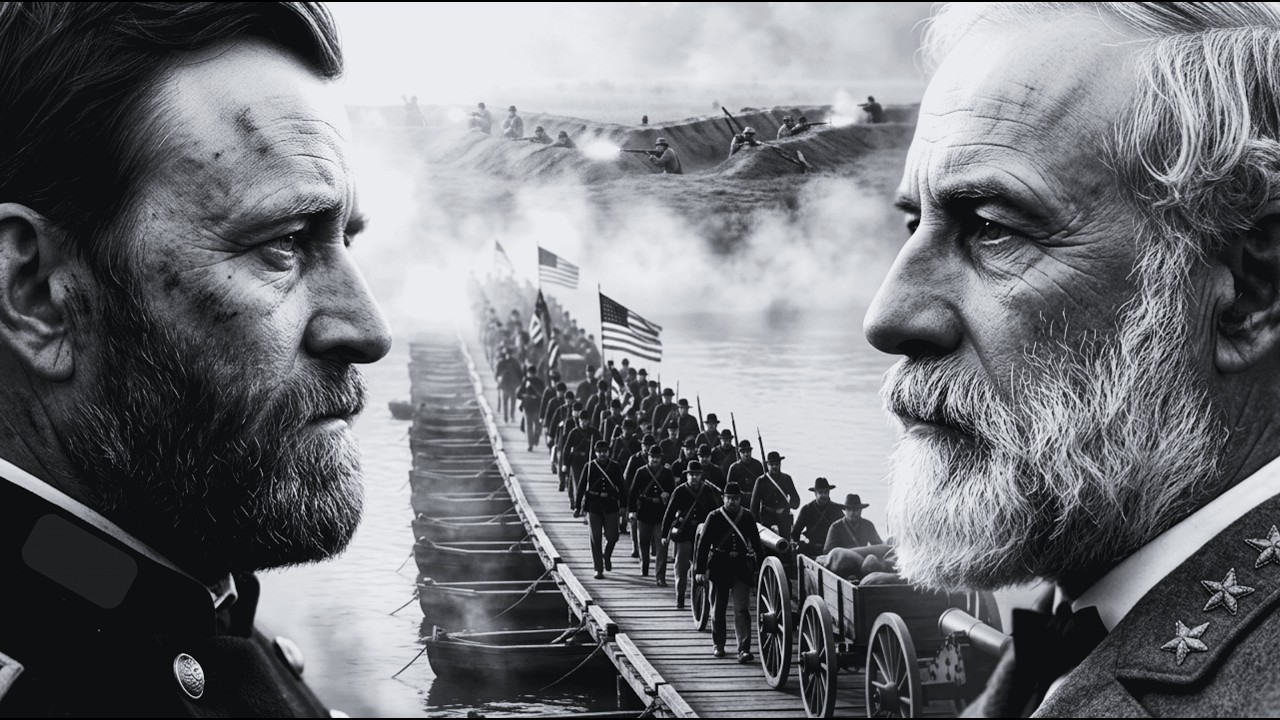
On May 23rd, Grant’s advance units approached the river. Some crossed without meeting much resistance, assuming Lee was retreating. But when they advanced inland, they realized the truth. Lee wasn’t retreating. The Union Army was caught between Lee’s two wings, split and vulnerable.
At dawn, Union cavalry crossed first, skirmishing with Confederate pickets. By midday, the V Corps began crossing at Jericho Mills. This is where A.P. Hill spotted an opportunity. He attacked the vulnerable Union units crossing in column. His Georgians launched fierce assaults, causing about 377 Union casualties. However, Warren’s units held the bridgehead.
Further east at Chesterfield Bridge, a small South Carolina Brigade held desperately against Hancock’s massive Second Corps. Despite being vastly outnumbered, they used their prepared defenses to slow the Union advance. For a moment, it seemed like Lee’s trap was working exactly as planned.
The Union commanders halted their advance and started entrenching. They realized with horror that they had walked directly into Lee’s trap. For the first time in the campaign, Lee had a genuine chance to destroy Grant’s army.
But it was May 24th, and Lee was too sick to coordinate the attack himself. He summoned his subordinates to his tent and urged them to strike hard and coordinated. This was the moment. The Union Army was divided. The opportunity wouldn’t last.
Without Lee physically commanding, the attack was delayed. Communications between Confederate units started to break down. By the time Hill was ready to attack, Grant had figured out the trap.
When Grant realized his army was split into three pieces, he had a choice. He could panic or retreat. McClellan would have retreated. Hooker would have been second-guessing himself. But Grant did something different. He decided to sit there, entrench, and see what Lee would do.
Grant understood something practical. The Union Army had superior numbers, roughly 68,000 effective strength to Lee’s 53,000. The longer Grant sat entrenched, the less effective any Confederate assault would be. Time was on his side.
At his headquarters, Grant appeared composed and methodical. He told his generals something simple: “If Lee attacks, we’ll be ready.” He ordered his commanders to halt, dig in, and establish strong fortified positions. He was betting that Lee’s attack, even if it came, would fall against well-entrenched Union forces.
Union soldiers worked frantically through the day and night digging entrenchments. They knew they were trapped, but instead of retreating, they dug deeper. Grant understood that Lee’s trap had a flaw. The flaw wasn’t in the fortifications. The flaw was in Lee’s absence.
Grant knew Lee was sick. He bet that Lee’s illness would prevent the attack from being properly coordinated. He was right. Without Lee’s presence directing the assault, the Confederate attack fell apart. Hill didn’t know what Anderson was doing. Anderson didn’t know what Ewell needed. The whole thing became a series of local fights instead of one coordinated hammer blow.
On May 24th, Brigadier General John B. Gordon led a fierce attack on the apex of the V at Ox Ford. It cost the Confederates roughly 500 casualties, but it failed. Hancock’s entrenchments held.
By May 25th, it was clear the greatest opportunity was gone. Lee, lying in his tent, could only listen to the sounds of fighting and wait for reports of success that never came. Meanwhile, Grant was already planning his exit.
Grant disengaged his army from the trap and began moving southeast toward the Pamunkey River. He left behind a rear guard to maintain the impression that the Union Army was still at North Anna. By May 26th, before Lee had even fully realized what was happening, Grant’s army was crossing the Pamunkey River, moving closer to Richmond.
Lee had set the perfect trap. Grant had walked into it, but instead of being destroyed, he had simply walked out the other side. When Lee realized Grant had escaped, he was devastated.
By the numbers, North Anna was an inconclusive battle. Union casualties were estimated at 2,000 men. Confederate casualties were also estimated at 2,000 men. There was no major breakthrough for either side. But the real victory wasn’t about numbers. It was about what happened in the minds of the two commanders.
For Lee, North Anna was the moment he realized Grant was different from every other Union general he had faced. Grant didn’t panic when trapped. Grant didn’t retreat when cornered. Lee had broken dozens of Union generals before, but Grant was fundamentally different.
For Grant, North Anna was a moment of profound affirmation. He realized that Lee was fallible. By simply refusing to break, by maintaining his composure and forward momentum, Grant had defeated Lee’s psychological assault. Grant’s strength wasn’t tactical brilliance. His strength was his unwillingness to be broken.
After North Anna, Grant continued his relentless push toward Richmond. He marched toward Cold Harbor, where the campaign would reach its bloody climax. Then he pivoted toward Petersburg, where he would settle into a siege that would last until the spring of 1865.
But something had changed after North Anna. Lee had lost his confidence. The trap had failed not because Grant was more brilliant, but because Grant simply wouldn’t break under pressure. Historians have debated North Anna for over 150 years. Some argue that if Lee had been healthy, Grant would have been destroyed. Others argue Grant recognized the trap too quickly.
The simpler truth might be that Grant understood Lee’s power came from psychology. By refusing to be psychologically broken, Grant had beaten Lee at his own game. Grant wasn’t the most brilliant military strategist, but he was something more important. He was the man who wouldn’t break.
Lee would never set another trap as promising as the one at North Anna. He would fight with the same courage and tactical brilliance, but he would do it knowing that his opponent would simply refuse to be broken. That knowledge, more than any defeat in battle, would shape the rest of the war.
Robert E. Lee surrendered to Ulysses S. Grant at Appomattox Courthouse on April 9th, 1865. That determination, that refusal to break, began at the North Anna River on May 23rd, 1864. When Lee set his best opportunity and Grant simply refused to be caught, something changed in the Civil War. It wasn’t the tactics or the strategy. It was the psychological balance of power.