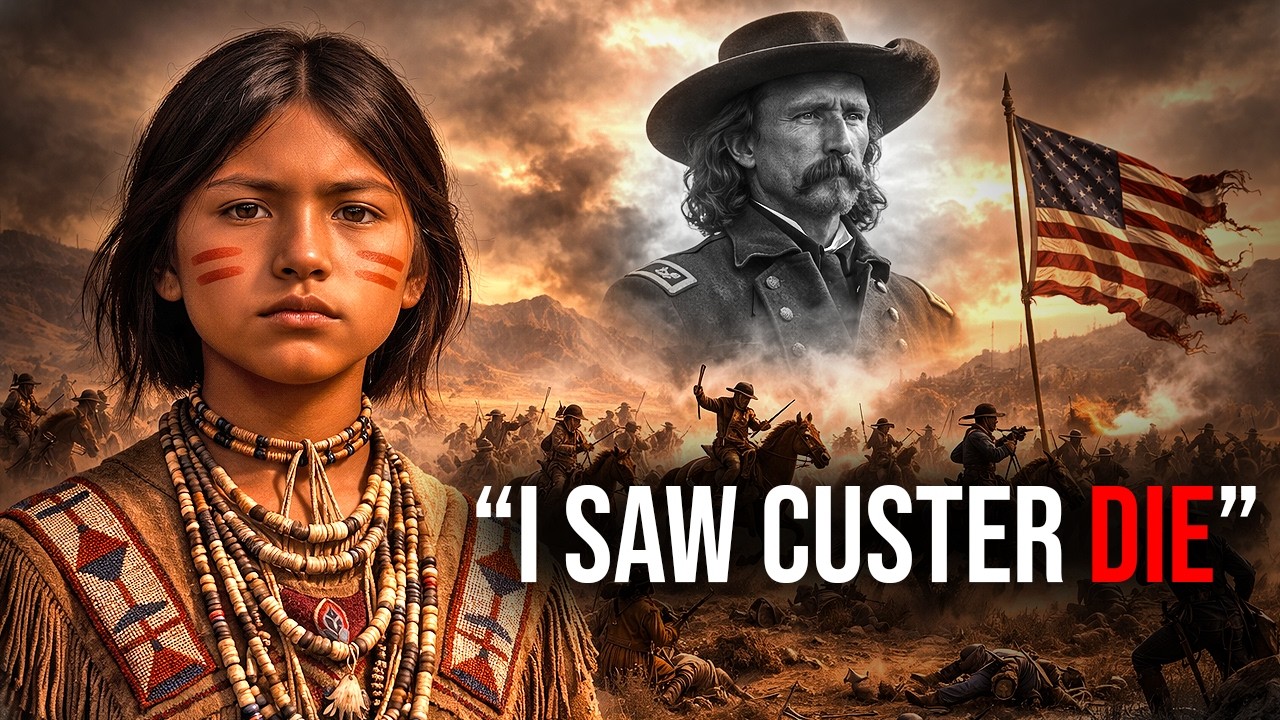
In the summer of 1876, along a river in Montana Territory, more than 200 U.S. cavalrymen rode into a valley. None of them came out alive. The U.S. Army called the event a massacre. The Cheyenne and Lakota called it a victory.
Twenty-two years later, a man named Two Moons sat down to tell his version of what happened. He was a chief of the Northern Cheyenne who had fought in the battle that day. His testimony became one of the most important Native American accounts of the 19th century.
What he described was not the heroic last stand America wanted to believe in. It was something far more brutal, more chaotic, and more human.
This is the battle as told by the winning side.
It was not an ordinary battle. It was a collision between two worlds. The expanding United States was determined to force every Native nation onto reservations. The largest gathering of Plains warriors in living memory was fighting for their families, their land, and their way of life.
What happened along the Little Bighorn River shocked the nation. It ended careers, launched legends, and became the most controversial military engagement in American history. Yet for over a century, one side of the story was almost entirely ignored.
Two Moons later described a moment in the battle when soldiers stopped fighting. Not because they surrendered, but because something inside them broke. What caused that collapse is one of the most chilling details in any firsthand account of the battle.
The grim tally conducted by Two Moons and other chiefs the next morning produced a number that haunted the American frontier for a long time.
To understand how things went so wrong, we need to go back to the decisions, the arrogance, and the sheer miscalculation that brought Custer’s Seventh Cavalry to the banks of the Little Bighorn.
By 1876, the United States was in the final phase of its campaign to force all remaining Native nations onto reservations. The discovery of gold in the Black Hills of Dakota Territory, land guaranteed to the Lakota Sioux by the 1868 Treaty of Fort Laramie, brought a flood of white prospectors and miners.
The government’s response was not to enforce the treaty. It was to demand that all Lakota and Cheyenne bands report to their agencies by January 31, 1876, or be considered hostile. Many bands, including those camped along the Yellowstone River and its tributaries, never received the order or refused to comply.
The army sent three columns converging on the region. It was supposed to be a swift, coordinated pincer movement. Three separate forces advancing from different directions would trap the tribes between them and force surrender without a major battle.
Instead, it led to one of the most catastrophic defeats in U.S. military history.
Two Moons was 34 years old in the summer of 1876. He was a minor chief in the Kit Fox Society of the Northern Cheyenne, a warrior society responsible for maintaining order in camp and leading raids. He had been a warrior since age thirteen, carrying weapons and riding toward danger before most boys in the East finished elementary school.
He even served briefly as a government scout, giving him a rare dual perspective on both the world of soldiers and the world of the Cheyenne.
His account of the Battle of the Little Bighorn, recorded about 22 years later by writer Hamlin Garland and published in the September 1898 issue of McClure’s Magazine, remains one of the most vivid and important Native testimonies of the conflict.
Two Moons spoke clearly and without exaggeration. His language was direct. It was the language of a man describing what he saw, not what he wanted others to believe.
This matters because the story he told contradicts nearly everything white America chose to remember about that day.
George Armstrong Custer was a 36-year-old lieutenant colonel commanding the Seventh Cavalry Regiment. He was a man whose entire career was built on audacity. During the Civil War, he was the youngest brevet general in the Union Army, famous for leading reckless cavalry charges that somehow succeeded.
He carried that reputation and that recklessness onto the plains. Custer believed in speed, aggression, and the element of surprise. He had used all three to devastating effect at the Battle of the Washita in 1868, attacking a Cheyenne village at dawn.
He expected the same formula to work at the Little Bighorn. He was catastrophically wrong.
But Custer was not riding toward an ordinary camp. What waited along the Little Bighorn River was something no U.S. commander had ever faced, and something Custer refused to believe despite multiple warnings.
By late June 1876, the Lakota Sioux bands had gathered. Hunkpapa, Oglala, Miniconjou, Sans Arc, Blackfeet Sioux, Two Kettle, and Brulé, along with the Northern Cheyenne and some Arapaho, formed what may have been the largest gathering of Plains Indians in a generation.
The village stretched about three miles along the west bank of the river. Population estimates range from 6,000 to 8,000 people, including an estimated 1,500 to 2,500 warriors.
The Little Bighorn River flows north through a valley surrounded by bluffs and hills to the east and rolling grasslands to the west. Deep ravines, dry gullies carved by seasonal rains, cut through the bluffs, providing hidden routes to the river. The terrain was a natural fortress for anyone defending the valley and a nightmare for anyone attacking it.
Among the gathered nations were leaders whose names would echo through history. Sitting Bull, the Hunkpapa spiritual leader whose vision of soldiers falling into camp had inflamed the gathered nations. Crazy Horse, the Oglala war leader whose tactical brilliance had proven decisive in previous battles. Gall, the Hunkpapa war leader whose family would be among the first casualties of the coming battle.
This was not a war party. It was a nation, with women, children, elders, and warriors. They had no intention of fleeing.
The Seventh Cavalry consisted of about 600 men plus scouts, packers, and a few civilians. They were armed with Springfield Model 1873 single-shot rifles. These were reliable weapons at long range but slow to reload and dangerously prone to jamming when overheated.
The brass cartridges would expand in the hot chamber and stick. A soldier had to pry the empty cartridge out with a knife before he could fire again. Officers carried Colt revolvers as sidearms.
The regiment had no Gatling guns. Custer had refused them, believing they would slow his march. They had no artillery of any kind.
Compare that to the warriors’ armament. Cheyenne and Lakota fighters carried a mix of Winchester and Henry repeating rifles, some captured from soldiers in earlier engagements, along with single-shot rifles, bows and arrows, war clubs, and lances. The repeating rifles gave many warriors a significant firepower advantage over the single-shot Springfields. That gap would prove devastating.
The regiment was on a grueling forced march, covering ground day and night. The men were exhausted. The horses were spent. But Custer pushed them onward anyway, driven by the fear that the village would scatter before he could attack it.
Eight days before the Little Bighorn, on June 17, warriors from the same camp had fought General George Crook’s column to a standstill at the Battle of the Rosebud. Two Moons himself fought in that engagement alongside a small group of Sioux warriors near Chief Little Wolf’s Cheyenne camp.
Crook had brought over 1,000 soldiers and nearly 300 Crow and Shoshone scouts to the field. A formidable force by any measure. But the warriors forced him to retreat. Crook withdrew south and played no further role in the summer campaign.
This meant two critical things. First, the warriors along the Little Bighorn were battle-tested veterans who had already defeated an American column in open combat. They were not a disorganized group of hunters. They were fighters who had faced professional soldiers recently and won.
Second, one of the three army columns supposed to converge on the village was now permanently out of the fight. Custer did not know this. No messenger reached him. No intelligence leaked across the vast distances of Montana Territory.
He was advancing into an information vacuum, building assumptions that proved wrong with every mile.
On the morning of June 25, 1876, Custer’s Crow and Arikara scouts climbed to a high point called the Crow’s Nest. What they saw in the valley below changed everything and set off a chain of decisions that would end in disaster.
From the lookout point, the scouts stared into the valley and saw something that stunned them. A massive herd of horses grazed along the lowlands, so wide it looked like a moving shadow on the earth. Behind the herd, the sprawling white shapes of thousands of tipis stretched along the Little Bighorn. The camp was so large its far end disappeared into the haze.
The scouts were worried. Mitch Bouyer, the mixed-blood interpreter and scout who knew this country and its people, was said to have told Custer, “There are more warriors in that valley than the regiment has bullets.”
Custer was skeptical. Other scouts echoed Bouyer’s warning. Custer ignored them.
His greatest fear was not that the village was too large. His greatest fear was that the village would break apart and flee before he could close the distance. That fear, that obsession with preventing escape rather than assessing danger, drove every decision he made in the next few hours.
Instead of waiting for the other converging columns, General Terry’s infantry and Colonel Gibbon’s forces still a day or more away, Custer decided to attack immediately. He would not wait for support. He would not conduct further reconnaissance.
He would attack now. And instead of striking the village with the full regiment in one devastating blow, he divided his force into three separate battalions.
Captain Frederick Benteen was sent with about 125 men southwest on a reconnaissance to make sure no warriors escaped through the upper valley. Major Marcus Reno was ordered to take about 175 men plus scouts across the Little Bighorn and attack the southern end of the village directly. Custer himself, with about 210 men in five companies, would head north along the bluffs above the east bank to attack the village from the flank or rear.
A classic hammer-and-anvil tactic. On paper, the plan looked bold. In reality, it was suicide.
Custer had divided a 600-man regiment into three commands that could not see each other, could not communicate across miles of rough terrain, and could not support each other against an enemy he had not scouted in country he did not know. With no reserves, no artillery, and no reinforcements, what happened next unfolded in barely two hours.
It is almost three in the afternoon. Major Reno leads his battalion across the Little Bighorn at the ford and forms a skirmish line facing the southern end of the village. For a few exciting minutes, the attack seems to work. The soldiers advance quickly, rifles firing, dust rising behind them. The line pushes forward across open ground toward the edge of camp.
Then the warriors appear. Hundreds of them. They pour from the village on foot and horseback, surging from among the tipis like water breaking a dam.
Gall, the Hunkpapa war leader, leads a fierce counterattack. His two wives and three of his children have just been killed in the initial barrage, falling as soldiers’ bullets tore through the southern tipis. His grief turns into something else entirely. A cold, devastating fury that drives him into the heart of Reno’s line.
The sheer numbers of warriors emerging from camp stun the soldiers. The skirmish line begins to collapse. Horses spin in place. Men look left and right to see warriors flanking them on both sides.
Reno, overwhelmed by panic, orders a retreat. First to a timber area along the river, then in a chaotic, stumbling flight toward the bluffs on the east side of the crossing.
The retreat is catastrophic. Men are killed as they flee across open ground. Horses fall in the river, throwing their riders into the current. Some soldiers are left behind in the woods and must fight their way out alone.
By the time Reno’s surviving forces reach the high ground, they have lost about 40 dead and 13 wounded. They are pinned down on the bluffs, unable to move or help anyone.
Two Moons describes in his account the rush south with other warriors to meet Reno’s attack. Warriors pour out to meet the threat and push it back with astonishing speed.
But as quickly as Reno’s attack collapsed, word spread through camp like an electric current. More soldiers were seen to the north, riding along the bluffs above the river. More blue coats were coming fast.
That was Custer. Two Moons turns north.
Custer’s battalion, 210 men in five companies, moves north along the high ground east of the river. His exact intentions at this moment remain one of the great debates in military history. Was he looking for a ford to cross and attack the village from the north? Was he planning to capture women and children as hostages to force surrender? Was he expecting to meet Reno from the other end of camp?
What is not debated is what was happening around him. From below, the warriors who had just shattered Reno’s battalion were already streaming north along the river, paralleling Custer’s path. Others crossed the Little Bighorn at multiple points, climbing through the coulees, those deep hidden ravines that cut through the bluffs, to emerge behind and around the soldiers in positions they could not see until it was too late.
Custer’s men could see the village below them. They could see the massive horse herd, the sprawling camp, the smoke of cooking fires. Some accounts say the soldiers were cheering. Believing victory was close.
Custer reportedly sent a messenger galloping back to Benteen with a written note from his adjutant. “Come on. Big village. Be quick. Bring packs.” An urgent call for reinforcements and ammunition.
Benteen received the message. He did not hurry. Custer’s last written order, scrawled on a scrap of paper, was a plea for help that would never arrive in time.
Within an hour, Custer and every man with him would be dead. And Two Moons, the Cheyenne war chief who had been fighting since he was a boy, was about to witness their destruction from close enough to see their faces.
Two Moons had just finished driving Reno’s soldiers toward the bluffs in the south. The blue coats were fleeing in defeat, scrambling for the high ground. There was no time to chase them. Word was already spreading among the warriors. More soldiers to the north, riding along the ridge line above the river.
Two Moons turns his white horse and heads north. Around him, hundreds of warriors, Cheyenne and Lakota together, do the same. Some ride at full speed, leaning forward with rifles across their saddles. Others move on foot through the wild grass, using the terrain for cover.
The emotion running through the mass of warriors is not fear. It is anger. Soldiers had attacked their village. They had fired into tipis where women and children were sleeping. Now more soldiers were coming.
The movement is massive and fluid. A gathering of fighters streaming north along the river and through the hidden passages that cut through the hills like deep scars. This is not a chaotic mob. These are seasoned fighters, warriors who have ridden together for years, who know every slope and ridge of this country, who understand instinctively how to use the terrain to move unseen and appear where the enemy least expects them.
Two Moons’ account describes Cheyenne and Sioux warriors emerging from the foot of Reno’s hill and surging north in a great wave. They are not waiting to be attacked. They are on the hunt.
The sound of hundreds of hooves on dry summer grass echoes through the valley like distant thunder. Dust raised by the moving mass hangs in the still air. A pale curtain drifting eastward. Sharp Cheyenne war cries mix with Lakota shouts, creating a sound that carries across the water and up the hills to where the soldiers sit on their horses.
The warriors reach positions below and around Custer’s column. They can see the soldiers above them on the ridge top. Small dark shapes silhouetted against the sky.
Now the soldiers do something that tells every warrior on that field that the blue coats know they are in trouble. They dismount. For a cavalry force, dismounting means giving up the only thing that keeps you alive on the open plains. Mobility. It means they will fight on foot. It means they have decided to make a stand.
What happened next was not a last stand. It was an encirclement, a textbook tactical destruction executed by warriors who had spent their entire lives fighting such battles.
Two Moons leads his warriors forward. Custer and his men take positions along the ridge, a long grassy spine running roughly north to south above the river. Some soldiers move partway down into the valley, perhaps trying to reach water or find more defensible ground in the lower slopes.
It is a fatal mistake. The moment they move downward, warriors emerge from the coulees on the east side of the ridge, cutting off any line of retreat toward the high ground. Others surge up from the river to the west, climbing through brush and grass.
Within minutes, Custer’s entire command is surrounded on three sides. The fourth side, the north, is closing fast.
Crazy Horse leads Oglala warriors and others in a wide arc to the north, sealing the trap. The veteran Rosebud fighters, who had routed an entire army eight days earlier, press from the south and east. The same fighters who had crushed Reno barely an hour before. Two Moons’ Cheyenne press from the west and northwest, advancing uphill toward the soldiers’ positions.

The command shrinks into smaller and smaller pockets strung along the ridge. Each group of soldiers becomes increasingly isolated from the next.
Two Moons describes leading warriors forward as soldiers race to reach positions along the ridge line. The fighting is intense. Warriors break through the soldiers’ ranks, crossing from hill to hill, engaging in close combat where the distance between enemies shrinks to feet.
The soldiers fire, but their single-shot rifles are painfully slow. A soldier fires, then must open the breech with his thumb, extract the empty brass casing, pull a new cartridge from his belt, insert it, close the breech, and fire again. In the time it takes to complete that sequence, a warrior with a repeating rifle can fire seven or eight shots.
The Springfield fires one round every 8 to 10 seconds. The Winchester repeater fires 15 rounds per minute. Do the math.
The rifles also jam. They seize up in burning hands. Brass casings expand in hot breeches and refuse to come out. Soldiers try to pry stuck casings loose with their knives while warriors close in. The metallic scrape of blades on jammed metal mixes with the acrid smell of black powder smoke hanging thick in the still air.
Wounded horses scream in a high, terrible pitch that drowns out the gunfire.
The soldiers’ ranks begin to disintegrate. They no longer fight as organized units. They fight in groups of five or six, or even in pairs. Some try to run downhill toward the river. They do not get far.
Warriors are everywhere. Below them, above them, on all sides. They rain fire on the shrinking pockets of resistance from horseback and on foot.
Imagine being one of those soldiers. You have been in the saddle for days without real sleep. Your rifle jams after every three shots. The warrior shooting at you has a rifle that does not stop. Your commander led you here with no reserves and no escape route. Benteen, still miles away, is not coming. You can hear war cries from every direction. The man next to you falls.
That is the moment when soldiers stop fighting as a unit and start fighting for survival. The ridge collapses.
Two Moons dismounts from his white horse. He is now on foot, fighting at close range, close enough to see the sweat and terror on the soldiers’ faces. He holds his position with his men, reloading rifles and firing at soldiers who still stumble forward or try to form defensive clusters.
He notes a crucial detail. The warriors pass empty weapons back to be reloaded while firing others. It is a practiced, efficient system born from years of experience. One man fires while another feeds cartridges into a second rifle. When the first weapon is empty, they switch roles.
The density of fire is relentless.
Two Moons describes the close combat in terse, powerful language. Warriors break through the remaining soldiers’ lines. They cross the hills. They engage men who are no longer resisting effectively. Wounded men. Men who have fired their last cartridge. Men standing or kneeling or sitting with empty faces while the world roars around them.
Coarse black powder residue covers every surface. Fingers and faces. Rifle barrels heat to the point of burning bare skin. Dust rises from the trampled, churned earth, mixing with smoke to form a haze that turns the afternoon light the color of old copper.
What is striking about Two Moons’ account is its absence of anger or triumph. He describes the fighting the way one describes hard, dangerous work. Not with bravado. Not with relish. With the measured tone of someone recounting what had to be done.
He does not demonize the soldiers. He does not elevate himself to make himself a hero. He simply tells what happened. That restraint makes his words more powerful than any embellishment.
Two Moons was not telling a story of glory. He was describing the systematic killing of 200 men. The calm in his voice is the most disturbing part.
Around him, the battle reaches its final stage. The soldiers on the ridge are being crushed pocket by pocket. Some groups of soldiers put up brief, desperate resistance, firing until their rifles jam or their ammunition runs out. Others try to break through the warrior lines toward the river.
The warriors tighten the noose. The gunfire reaches a crescendo, a roaring wall of sound, then gradually begins to diminish. Fewer soldiers return fire. The intervals between shots grow longer and longer.
Something breaks inside them. It is not surrender. There is no white flag, no raised hands. It is collapse. Organized resistance simply stops. Men stumble forward and fall. Others stand motionless in the open as if their capacity for action has drained away entirely.
The will to fight does not end with a decision. It ends when the mind reaches a point where it can no longer function. That is what Two Moons witnessed on that ridge. Two hundred souls rode into the valley and vanished from the face of the earth.
The annihilation of Custer’s battalion takes less than an hour. Some historians estimate the final phase, the concentrated killing on what would later be called Last Stand Hill, takes only 20 minutes.
The warriors surround the remaining soldiers, those still alive, clustered on the hilltop in a ring that tightens around them. Two Moons’ account captures this moment. Warriors firing from horseback and on foot, surrounding the soldiers, closing the distance step by step.
The last organized resistance is a cluster of soldiers packed near where Custer’s body would later be found. Though in the chaos of battle, no warrior on the field knows or cares which of the blue coats is the commander. To the warriors, Custer was not a legend. He was not a general. He was just another soldier who attacked their families. Now he was dead.
The firing stops. The valley falls into a strange, oppressive silence. The silence that follows sustained gunfire when your ears are still ringing and the world seems muffled and distant.
Every soldier in Custer’s battalion, about 210 men, is dead. Not one survivor. Not one prisoner. Not one man escaped to tell the story.
The only living things on the ridge are the warriors, the wounded horses, and the dead. The smell of blood and burnt powder mixes with the scent of sagebrush growing thick on these slopes. Flies are already gathering in the June heat, drawn by the smell of what happened here.
Wounded horses scream and thrash. It is a sound many participants from both sides later described as the most painful memory they carried from this place.
A Lakota warrior who survived the battle described the hillside as he saw it in the aftermath. Grass trampled, pulverized, stained dark. The scattered debris of a destroyed unit covering the ground. Cartridge casings, hats, canteens, letters from home that would never be answered.
Then, in the silence that followed, Two Moons and other tribal leaders did something no army report recorded for decades. They walked among the dead and began to count.
The fighting is over. The adrenaline drains from Two Moons’ body like water from a cracked vessel. What replaces it is something heavier. He looks across the ridge at what remains.
The bodies are stripped of clothing and equipment. Not as desecration, but as a practical recovery of weapons, ammunition, and supplies the people need to survive. After the stripping, officers and enlisted men cannot be distinguished. Rank, reputation, fame, all erased by death and the leveling of the naked body.
Two Moons’ observation is matter-of-fact. Once the bodies were stripped, no one could tell who had been an officer. The great Custer, Yellow Hair, Son of the Morning Star, lies somewhere on that ridge, indistinguishable from the youngest soldier who followed him there.
Late afternoon sun casts long shadows across the ridge top, stretching eastward from the bodies, the standing warriors, the exhausted horses. Shreds of torn cloth flutter in the evening breeze.
From far to the south comes the sound of continuous gunfire. The survivors of Reno’s and Benteen’s forces, pinned down on the bluffs, are still fighting, still surrounded. Their battle will last through the night and into the next day.
But here on this ridge, the violence is over. The sharp edge of emotion begins to recede. What replaces the anger is not celebration. It is weight.
History would remember this as Custer’s Last Stand. Two Moons remembered it as the day no one danced.
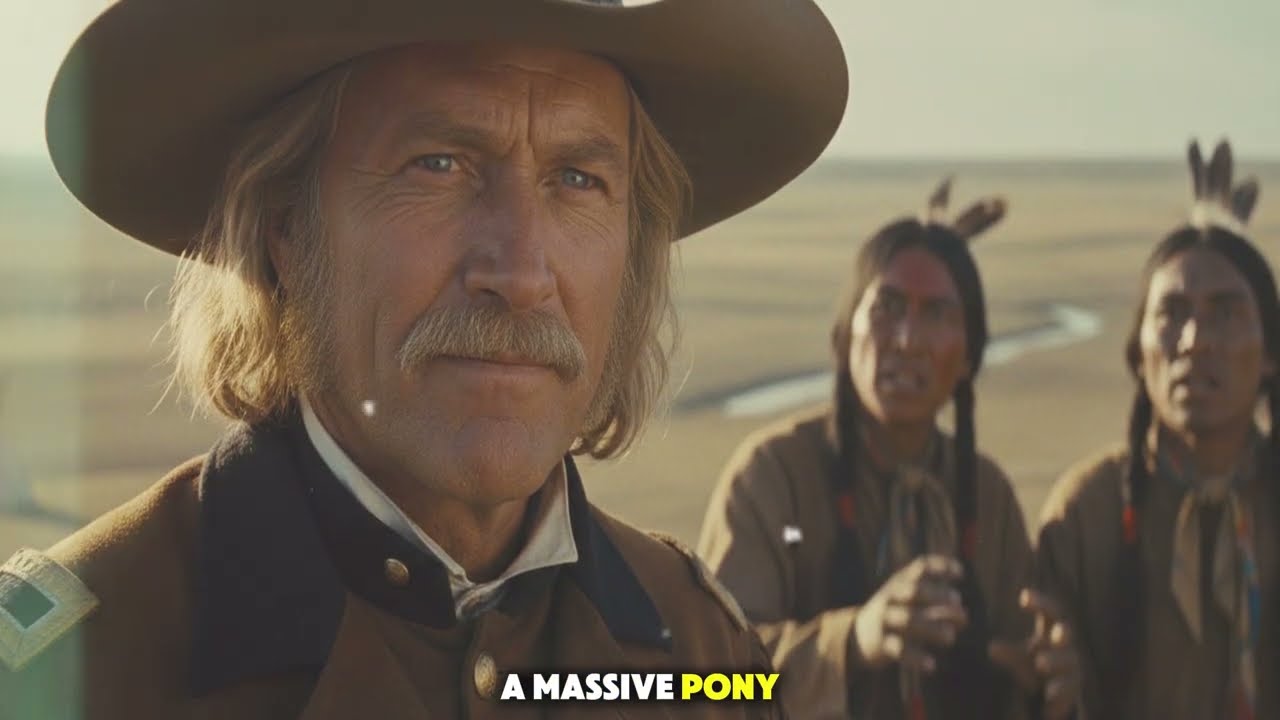
What Two Moons said later would become one of the most quoted and sorrowful lines in all Native American testimony. Two Moons stated simply, “All the soldiers were now dead, and the bodies were stripped. After that, no one could tell who was an officer. The bodies were left where they fell. We held no dance that night. We were sorrowful.”
Let those last words stand for a moment. “We held no dance that night.”
Victory dances were an essential part of Plains warrior culture. A celebration of courage, a communal honoring of valor performed under the stars while drums beat and voices rose. The absence of the dance is not trivial. It is a statement of profound emotional complexity.
This was not a joyful slaughter. The warriors had defended their families against an army that attacked their village without warning. The scale of the killing, its totality, left them subdued.
The dead soldiers were someone’s sons too. “We were sorrowful.” Two Moons does not say triumphant. He does not say proud. He says sorrowful.
That single word is the most human expression in any account of the Battle of the Little Bighorn from either side. Victory and sorrow are not opposites.
The next morning, Two Moons and other leaders walked the battlefield. They counted the dead using tally sticks, an old, deliberate method. Each body received a stick. When the count was finished, Two Moons indicated that 388 soldiers had been killed, with 39 Sioux and seven Cheyenne dead and about 100 wounded on the Native side.
Historians note that some of Two Moons’ numbers may be inflated. Modern studies place U.S. deaths at about 268, including all of Custer’s men plus losses from Reno’s and Benteen’s forces during the long siege on the bluffs. Native casualties are estimated at between 30 and 100 dead.
But this discrepancy does not diminish the power of the account. It reflects the fog of battle, the chaos of counting across miles of rough terrain, and the passage of more than two decades before those words were written down.
What matters is the method. Leaders walking among the dead, marking each body with a stick. The deliberateness of it. The respect inherent in the act of counting.
The bodies were left where they fell. They stretched across the ridge line and down into the ravines, scattered over nearly a mile of rugged ground. Equipment had been taken. Clothing had been removed. The hill where the last soldiers fell was quiet now.
The first soldiers to discover the scale of the disaster were General Terry’s and Colonel Gibbon’s column, arriving at the battlefield on June 27, two days after the fight. What they found shocked even hardened frontier veterans.
The remains of more than 200 men lay on the hillside in advanced stages of decomposition under the Montana sun. Many of the bodies bore signs of post-mortem treatment. Practices that carried spiritual significance for Plains warriors but horrified the soldiers who found them.
The dead were buried where they fell in shallow graves that wind and rain would eventually expose.
When word finally reached the outside world, it came on July 4, 1876. The centennial of American independence. The contrast was devastating. A nation celebrating its hundredth birthday learned at the same time that an entire cavalry regiment had been wiped out by those it was trying to subdue.
In less than an hour, an entire force ceased to exist. History turned on that single afternoon in Montana Territory.
Gall, the Hunkpapa war leader who fought with terrifying intensity throughout the battle, had lost his two wives and three children in Reno’s initial attack on the village. His ferocity during the fighting was described by multiple witnesses as something beyond ordinary anger. Unrelenting, merciless. The grief of a man who had nothing left to lose, channeled into pure destruction.
When the guns fell silent, Gall was left with victory and nothing else. The man who helped destroy Custer’s force returned to an empty home.
Within days of the battle, the great village began to break apart. The leaders knew what was coming. The army would return. Not with one regiment, but with thousands of soldiers. This time, nothing would stop them.
The bands scattered in every direction. Some north toward Canada with Sitting Bull. Others west toward mountain passes and prairies that were already shrinking. The largest gathering of Plains warriors in living memory faded like smoke in an autumn wind.
They had won the battle. But the war, the long grinding war of removal and displacement, was already lost.
Two Moons himself eventually surrendered. He became a leader on the reservation. He cooperated with the government. He even served as a scout again. The double life he had always lived continued in a world that was shrinking.
He lived until 1917. Long enough to see cars on roads and airplanes in the sky. Long enough to watch the world that existed along the Little Bighorn fade completely. The warrior who fought Custer at age 34 became an old man on a reservation, telling his story to a magazine writer recording it for readers in the East who could barely imagine the country he described.
The era of the free Plains warrior ended, not on that day, but because of it.
But the end of the battle was just the beginning of a legend, a controversy, and a reckoning America has never fully resolved.
Within months of the battle, the myth of Custer’s Last Stand was already being built. Paintings depicted him as a hero with golden hair, raised sword, and perfect uniform, fighting heroically to his last breath, surrounded by hordes of savages.
The most famous painting, by Cassilly Adams, was later printed and distributed to bars across America by the Anheuser-Busch company. It showed a noble, doomed officer making a glorious sacrifice against impossible odds. It bore no relation to what actually happened.
The reality, a divided command, a catastrophic tactical error, and a battle that lasted less than an hour, was buried under layers of romantic nationalism. Custer became a martyr. The warriors who defeated him became villains in the national narrative.
Native voices were ignored for decades. Two Moons, Gall, Wooden Leg, Kate Big Head. Their testimonies, when finally recorded by journalists and ethnographers, revealed a battle far more chaotic, human, and tragic than any painting could depict.
Historians did not begin taking these testimonies seriously until the late 20th century, comparing them with archaeological evidence from the battlefield itself. The myth took a century to build. But the truth was always there, waiting to be found.
In the 1980s, after a grass fire swept the Little Bighorn battlefield and removed decades of accumulated vegetation, archaeologists conducted the first systematic excavations of the site. What they found in the exposed soil confirmed much of what Native accounts had described for over a hundred years.
Scattered cartridge casings marked the positions of individual soldiers, showing men firing from isolated, dispersed positions. Not from a tight, organized defensive ring. The patterns of spent brass told the story of units breaking apart, men fighting alone, command dissolving under pressure.
Evidence of warrior movements through the coulees was unmistakable. The hidden ravines Two Moons and others described were clearly visible. The rapid collapse of organized resistance left its mark in the earth itself.
The archaeological record agreed far more closely with Two Moons’ account of a swift, overwhelming siege than with the heroic last stand of American myth. The battlefield told the story the paintings had tried to erase.
Return one last time to the image we started with. A 34-year-old Cheyenne chief sitting across from a white writer named Garland in 1898, calmly and without bravado describing the destruction of Custer’s command.
More than two decades have passed since that June afternoon. The world Two Moons fought to protect is gone. The Northern Cheyenne and Lakota Sioux bands that once roamed free now live on reservations. The buffalo that sustained them for centuries are nearly extinct. The open plains as Two Moons knew them exist only in memory, and in the stories told by old men to anyone who would listen.
Yet his words survived. They survived because Garland wrote them down. Because McClure’s Magazine published them in the September 1898 issue. Because historians and readers slowly realized over the decades their truth. A testimony from a man who was there, who saw it with his own eyes, and who told the truth without hesitation or embellishment.
“We held no dance that night. We were sorrowful.”
That single line tells you more about the Battle of the Little Bighorn than a hundred heroic paintings ever could. It tells you that the men who won felt the weight of what they had done. It tells you that the distance between victory and sorrow can be measured in a single breath.
And it tells you that history, when it finally listens to all its voices, sounds very different from the story we were taught.