On March 21, 1980, Angelo Bruno pulled his car up to his home on Snyder Avenue in South Philadelphia. He was 69 years old and had run the Philadelphia crime family for 21 years. His driver, Johnny Stanfa, lit a cigarette as Bruno cracked the passenger window. A man stepped out of the shadows with a 12-gauge shotgun and fired one blast behind Bruno’s right ear. The hit took four seconds.
Bruno was known as the Docile Don. For two decades, he ran Philadelphia without a single made man killed in a power play. He avoided drugs, avoided chaos, and kept the peace. The FBI barely bothered him. That one shotgun blast ended the most peaceful Mafia reign in American history.
What followed was the bloodiest chapter in post-war organized crime. A 5-foot-5 gangster from Atlantic City named Nicodemo Scarfo turned Philadelphia into a battlefield. Over 10 years, more than 30 bodies dropped. Bombs, betrayals, a flipping underboss, and a son shot on Halloween defined his reign.
Nicky Scarfo did not become a monster. He was always one. The peace Bruno built was the only thing keeping him caged, and the moment that cage broke, everything Bruno protected came down with him.
Scarfo was born in Brooklyn in 1929 and moved to South Philadelphia as a kid. His uncle, Nicholas Piccolo, was a made man in the Bruno family. Scarfo grew up around the life, but he was nothing like Bruno. Bruno was patient. Scarfo was a wire. Guys called him Little Nicky, not out of affection, but because the only small thing about him was his body.
In 1963, Scarfo stabbed a longshoreman named William Dugan to death over a barstool argument. He pleaded down to involuntary manslaughter and served less than a year. Bruno was furious. He exiled Scarfo to Atlantic City, a rotting boardwalk town with nothing going on. It was meant as punishment. It turned out to be the keys to the future.
On May 26, 1978, New Jersey legalized casino gambling in Atlantic City. Scarfo had been stewing there for 15 years. Suddenly, he sat on top of a gold mine. Construction unions, concrete, cement, and vending machines all had to run through his crew. Every contractor who wanted to build a casino came through Atlantic City.
By 1979, Scarfo had his nephew Phil Leonetti running cement for him. Leonetti was 30 years younger than Scarfo, six feet tall, quiet, and built like a boxer. People called him Crazy Phil, but the nickname was ironic. He was the calmest guy in the room. He was already a killer by 25, and by 1980, he was the most trusted man Scarfo had.
Bruno did not want the casino money. He thought it was flashy and dangerous. His consigliere, Antonio Caponigro, called Tony Bananas, disagreed. Caponigro wanted the casino action and the drug money. He reached out to the Genovese family in New York for permission to kill Bruno. He claimed he got a green light. He did not.
Three weeks after Bruno’s murder, the bosses in New York summoned Caponigro to Manhattan. He never came back. His body was found in the trunk of a car in the South Bronx, beaten and tortured, with a $20 bill stuffed in his mouth and rectum.
The Genovese family let the Philadelphia family pick its own new boss. They chose Philip Testa, known as the Chicken Man, a 56-year-old who ran an egg distribution business. Testa made Scarfo his consigliere. For the first time, Scarfo sat at the top table of the Philadelphia family.
He lasted exactly 365 days. On March 15, 1981, Testa pulled his Cadillac up to his home on Porter Street. As he opened his front door, a nail bomb planted under the porch exploded upward. The blast tore him apart. He died on the operating table at St. Agnes Hospital.
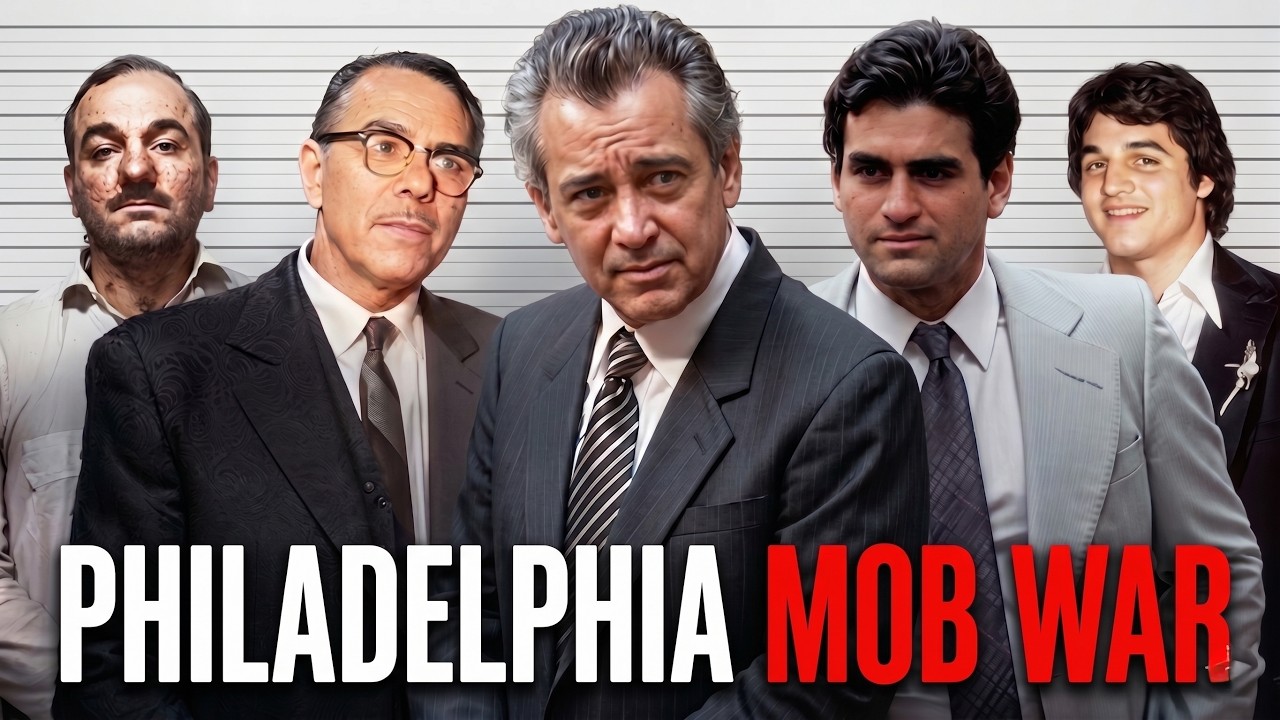
The bomb was built by capo Peter Casella, working with Frank Narducci. Their plan was to kill Testa and pin it on Scarfo. Scarfo figured it out and went to the commission in New York with the evidence. The commission ruled in his favor. Casella was exiled to Florida. Narducci got a bullet in the head outside his home in January 1982, shot by Salvatore Testa, the Chicken Man’s son.
That is how Scarfo became boss. Not by climbing, but by surviving. In the summer of 1981, the commission confirmed him. He was 52 years old, and he was about to preside over more Mafia murders than any boss in modern American history.
The first thing Scarfo did was make Phil Leonetti his underboss. Leonetti was 30 years old, the youngest underboss in the history of La Cosa Nostra. Scarfo trusted nobody except blood, and Phil was blood. The second thing he did was start killing everybody who was not.
The Scarfo shakedown operation was simple. Every construction project, every union contract, and every cement pour in Atlantic City ran through his people. If you wanted to operate any bookmaking, numbers game, or drug corner in South Philadelphia or Atlantic City, you paid the street tax. Usually a third of your gross, sometimes more. You did not negotiate. You paid or you died.
On any given week, the family took in somewhere between $200,000 in street tax alone. That is in 1982 dollars. Add casino skim, union kickbacks, and loan sharking at 3 percent a week, and Scarfo was personally clearing millions a year. He lived in a modest row house in Atlantic City and kept a boat named Usual Suspects at the marina.
The paranoia started early. Scarfo did not believe anybody was loyal except Phil Leonetti. He began killing people on the mere suspicion of disloyalty. Not evidence. Suspicion.
Take the Riccobene war. Harry Riccobene was an old-time made man, 67 years old and 4-foot-11. They called him the Hunchback. When Scarfo became boss, Riccobene refused to pay the street tax. Scarfo declared war.
On June 8, 1982, Scarfo’s crew tried to kill Riccobene at a phone booth. Six shots. He survived with a grazed skull. The Riccobene faction hit back, and over the next 18 months, bodies dropped on both sides.
Salvatore Testa, the kid who had killed Narducci for his father, became Scarfo’s primary enforcer. He was 27, good-looking, charismatic, and fearless. The other wise guys called him the crown prince because everybody assumed he would be boss someday. That assumption is what got him killed.
The Riccobene war ended in December 1983 when Harry and his half-brother Mario were hit with RICO charges and went to prison. Scarfo had won. But in his mind, the war never ended. He started seeing threats inside his own family, and Salvatore Testa was the biggest threat of all because Testa was loved.
In 1983, Testa got engaged to the daughter of capo Salvatore Merlino, Scarfo’s best friend and consigliere. Then Testa broke it off. Merlino was humiliated. He went to Scarfo and begged him to kill Testa to restore his honor. Scarfo said yes, not because Merlino asked, but because Testa was getting too popular.
On September 14, 1984, Testa walked into a candy store in South Philadelphia to meet Joseph Pungitore, a man he considered his best friend. Pungitore had set him up. Another made man walked up behind Testa and shot him twice in the back of the head with a .22 caliber pistol. Testa was 28 years old. His body was dumped in a wooded field in New Jersey. A Boy Scout troop found him five days later.

That murder broke the Philadelphia mob. Every wise guy understood what it meant. Salvatore Testa was a made man, a capo, and the son of a murdered boss. If Scarfo would kill him over an engagement, Scarfo would kill anybody for anything.
From September 1984 forward, every man in the Philadelphia family went to bed wondering if tonight was his night.
The guys Scarfo should have trusted, he killed. The guys he should not have trusted, he promoted. He elevated men with no record and no discipline, guys who would kill on command but could not earn. Thomas DelGiorno, Nicholas Caramandi, and Eugene Gino Milano were the new capos. And they were terrified.
DelGiorno was a 42-year-old capo with a drinking problem. He was skimming money from the street tax collections. In 1986, he found out Scarfo had put him on the list. DelGiorno went to the New Jersey State Police and offered to testify against everybody.
A few weeks later, Caramandi, a capo involved in 19 murders, got caught trying to extort a million dollars from a Philadelphia developer. He knew Scarfo would kill him before trial. So he flipped, too.
DelGiorno and Caramandi became the first made members of the Philadelphia family ever to become government witnesses. They testified about 24 separate homicides. They put Scarfo in the crosshairs of the federal government, the state of New Jersey, and the state of Pennsylvania all at the same time.
In January 1987, Scarfo was indicted on racketeering and murder charges. He went to jail pending trial. He never got out again.
On November 17, 1988, a federal jury in Philadelphia convicted Scarfo and 16 co-defendants on RICO conspiracy, nine counts of murder, attempted murder, extortion, and drug trafficking. The judge sentenced Scarfo to 55 years in prison. In May 1989, he got life without parole on a state murder conviction. He was 60 years old. He would never walk free again.
But Scarfo was not done ordering murders.
On October 31, 1989, Halloween night, Nicodemo Scarfo Jr., the boss’s only son, sat at a table in Dante and Luigi’s Restaurant in South Philadelphia. A man in a Halloween mask walked in carrying a trick-or-treat bag. Inside the bag was a MAC-10 submachine gun. The gunman opened fire. Eight bullets hit Scarfo Jr. He survived, barely.
The man who ordered the hit was widely believed to be the new acting boss, Joey Merlino, working with former Scarfo capos. The shooting was a message to the father. Your power is gone. Your name means nothing anymore.
And then came the knife that cut deepest. Phil Leonetti, the nephew, the underboss, the one man Scarfo trusted on Earth, flipped.
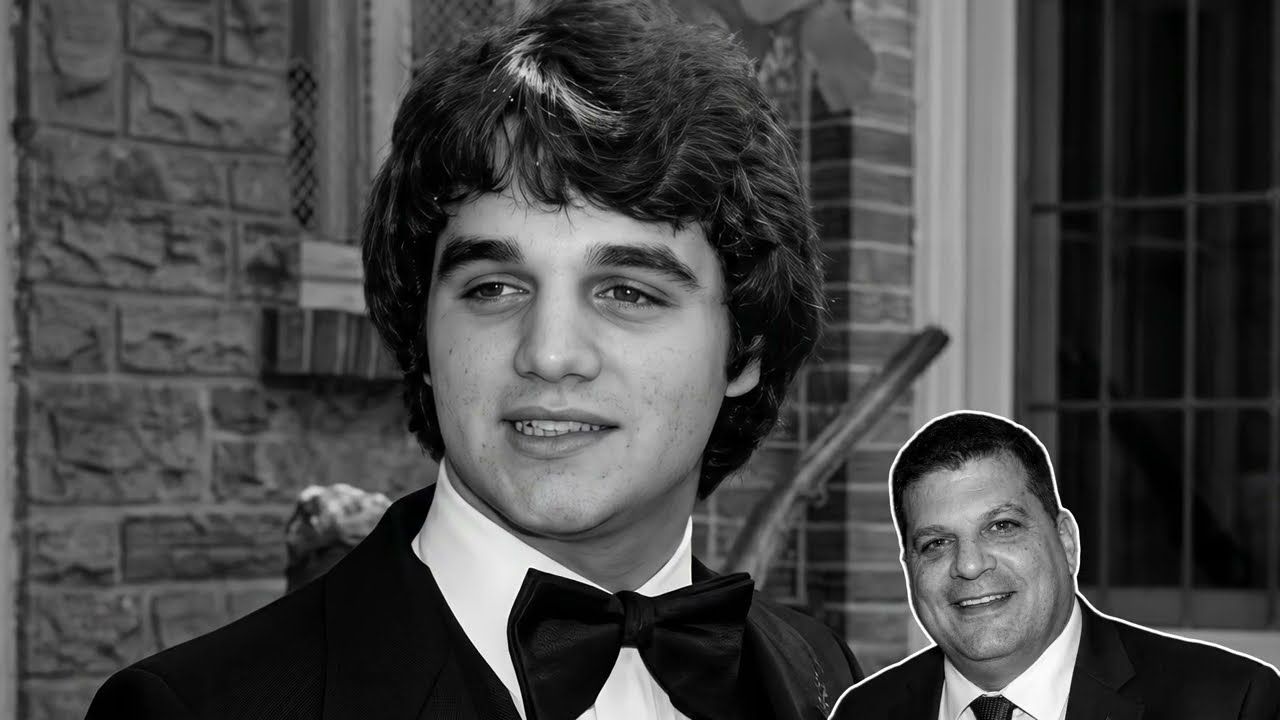
Leonetti had been convicted alongside his uncle in 1988 and was doing 45 years. In 1989, staring at never seeing his young son grow up, he made a calculation. His uncle was never getting out. The family was falling apart. He had watched Scarfo order the murder of Salvatore Testa, a kid he grew up with. He had watched the paranoia.
In June 1989, Leonetti agreed to cooperate. He admitted to 10 murders personally. He named every member of the family, every contract, every payment, every meeting. He testified against his own uncle.
When Scarfo was told Phil had flipped, he went completely silent for a full minute. Then he said one word. Unbelievable.
Leonetti’s testimony put guys away all up and down the East Coast. His cooperation reduced his 45-year sentence to 5 years and 4 months. He walked out of prison in 1992, entered witness protection, and later wrote a book called Mafia Prince. He is still alive today.
By 1991, Philadelphia was a wasteland. More than 30 made men and associates were dead. Seventeen convictions came from the 1988 trial. Scarfo was locked up for life. Scarfo Jr. was shot up. Leonetti was in witness protection. Merlino was running a young crew that would cause its own problems through the 1990s.
What Bruno built in 21 years of careful silence, Scarfo dismantled in 10 years of screaming paranoia. The Philadelphia family never fully recovered. Every boss who came after operated in the shadow of the Scarfo years. The FBI learned every name, every routine, and every meeting place. The code of silence was broken forever.
Scarfo spent the next 28 years in federal prison. He died on January 13, 2017, at the Federal Medical Center in Butner, North Carolina. He was 87 years old. To the end, he refused to accept that Phil had betrayed him. In letters, he called his nephew a disgrace, a weakling, and a coward. He never once looked in the mirror.
Scarfo Jr. tried to stay out of the life. He could not. In 2014, he was convicted of a $40 million corporate fraud scheme. He is currently in federal prison.
In October 2025, Netflix released a documentary series called Mob War, Philadelphia versus the Mafia. It featured hours of archival footage and interviews with Phil Leonetti on camera. The series brought the whole story roaring back into public attention.
Angelo Bruno ran Philadelphia for 21 years without killing a single made man in his own family. Peace made him rich. Silence made him safe. Nicky Scarfo ran Philadelphia for 10 years and killed 30-plus people. Violence made him feared. Fear made him paranoid. Paranoia made him alone.
In the end, the only person left to love him was his own nephew, who flipped. That is the real math of organized crime. Every murder you order puts one more person in a room who has a reason to kill you back.
The peaceful king died in his own bed. The violent king died alone in Butner, North Carolina, with nobody in his corner except a son who had been shot in a Halloween mask attack and could not even visit.