The murder of Carmine Galante unfolded on July 12, 1979, at 2:45 in the afternoon. Galante had just finished a meal of salad and veal at Joe & Mary’s, an Italian-American restaurant on Knickerbocker Avenue in Bushwick, Brooklyn. He lit a large Cuban cigar, the kind he was known for.
Three masked men entered through the back door and opened fire across the courtyard. Galante took direct shots to the face and chest. He collapsed on the tiled floor with the cigar still between his teeth. The crime scene photo circled the globe: a dead boss, a still-lit cigar, and a pool of blood spreading across a quiet Brooklyn restaurant patio on a Thursday afternoon.
This was not just an assassination. It was a message written in shotgun shells. Galante was the acting boss of the Bonanno family, a man so feared that the other four families voted unanimously to erase him. He had spent 20 years in federal prison. He spoke four languages. He once told a parole officer that his ambition was to become the boss of bosses. He died with his cigar still burning, which tells you everything about how fast it happened.
These are the stories of ten mafia hits that were so brutal, so cinematic, and so completely insane that Hollywood looked at the files once and walked away. Each scene is worthy of a film. None made it to the screen because the truth was worse than anything a screenwriter would dare put on paper.
The men who carried out these crimes were not madmen. They were professionals following a specific code. And the men who died, most of them, knew exactly why it was happening before the first bullet hit.
In the Galante case, the gunmen were three imported Sicilian killers brought in specifically for the job. They arrived in a stolen Mercury. They came through the kitchen. Galante was sitting with his cousin Giuseppe Turano, the owner, and his bodyguard Leonardo Coppola. All three fell in under 15 seconds. The guns kept firing even after they hit the ground.
Two of Galante’s personal bodyguards were sitting at the table. They walked away without a scratch. They were in on it. Everything was approved by the Commission, the governing body of the Five Families. Galante had become too greedy in the heroin trade and refused to share. So the bosses voted, and the cigar went out.
On April 7, 1972, at 5:30 in the morning, Joey Gallo was celebrating his 43rd birthday at Umberto’s Clam House on Mulberry Street in Little Italy. He was with his new wife Sina, his adopted daughter Lisa, his sister Carmela, and his bodyguard Pete the Greek. They had just come from a nightclub. Gallo ordered a plate of scungilli. He was laughing. He was happy. For the first time in years, he felt completely at peace. That was the problem. He had let his guard down.
A side door opened. A single gunman entered. Some accounts say it was Joseph Luparelli’s crew. Others say it was Carmine DiBiase. What is documented is this: the gunman fired five times. Three bullets hit Gallo in the back, elbow, and buttocks. He staggered to his feet, overturned a table, and ran out onto Hester Street. He collapsed 20 feet from the door. His sister Carmela stood over his body screaming, “They killed my brother. They killed my brother.”
Bob Dylan wrote a song about him. Hollywood made a film called *Crazy Joey*. But the film left out the worst part: the reason he was killed. Gallo allegedly ordered the hit on Joe Colombo 11 months earlier at an Italian-American rally in Columbus Circle. The Colombo family waited. They watched. They chose his birthday because that is how messages are delivered.
In August 1990, Bruno Facciola was a soldier in the Lucchese family. He was 56 years old, ran a pizza shop in Brooklyn, and drove his granddaughter to dance lessons every Saturday. He was a made man. He was supposed to be untouchable. But Anthony Casso, the Lucchese boss, decided Bruno was an informant.
Casso had a source inside the police department: two corrupt NYPD detectives named Louis Eppolito and Stephen Caracappa. They fed him names. It was never proven whether Bruno was actually talking. But Casso believed it. That was enough.
On August 31, 1990, Bruno was lured to an auto repair shop in East New York. Three Lucchese soldiers were waiting. They beat him with bats. They stabbed him. They shot him in the head. Then, before they threw him into the trunk of his own car, they did something straight out of a Sicilian nightmare. They opened his mouth and stuffed a dead canary inside.
The symbolism came from the old country. The canary sings, and the informant sings. The message was meant for everyone. The car was found two days later in a Brooklyn parking lot. The trunk was open. Investigators could smell it from across the street. The canary was still there.
Anthony Casso ordered that hit based on information from two cops who worked for him. Eppolito and Caracappa were eventually convicted of participating in eight mafia murders. They were sentenced in 2009. Eppolito received life plus 100 years. Caracappa received life plus 80 years. The canary idea was theirs, according to one cooperating witness. Hollywood made a film about these cops. They left out the canary.
Tony Mira was a Bonanno associate. He was the man who introduced Donnie Brasco to the Bonanno family without knowing that Donnie Brasco was FBI agent Joe Pistone. Mira spent six years believing he was mentoring someone who would become a future earner. When Pistone’s cover was blown in 1981, the Bonanno family had a problem. Five made men had vouched for an undercover FBI agent. Someone had to pay. Mira was first.
On February 18, 1982, Tony Mira walked into a garage on Greenwich Street in lower Manhattan. He was on his way to meet his nephew, Joseph D’Amico. Mira was 45 years old. He was a ruthless killer known for his unpredictable temper and violence. He was said to have killed 25 men himself. He sat in the passenger seat. His nephew pulled a .38 from under the seat and shot him three times in the head. They left the body in the car and walked out of the garage on foot.
A garage attendant found the car six hours later. There were no witnesses. The case went nowhere for years. Mira’s killer was his own blood. That is how the Bonanno family handled it. They killed their own because it was the only way to keep the secret safe.
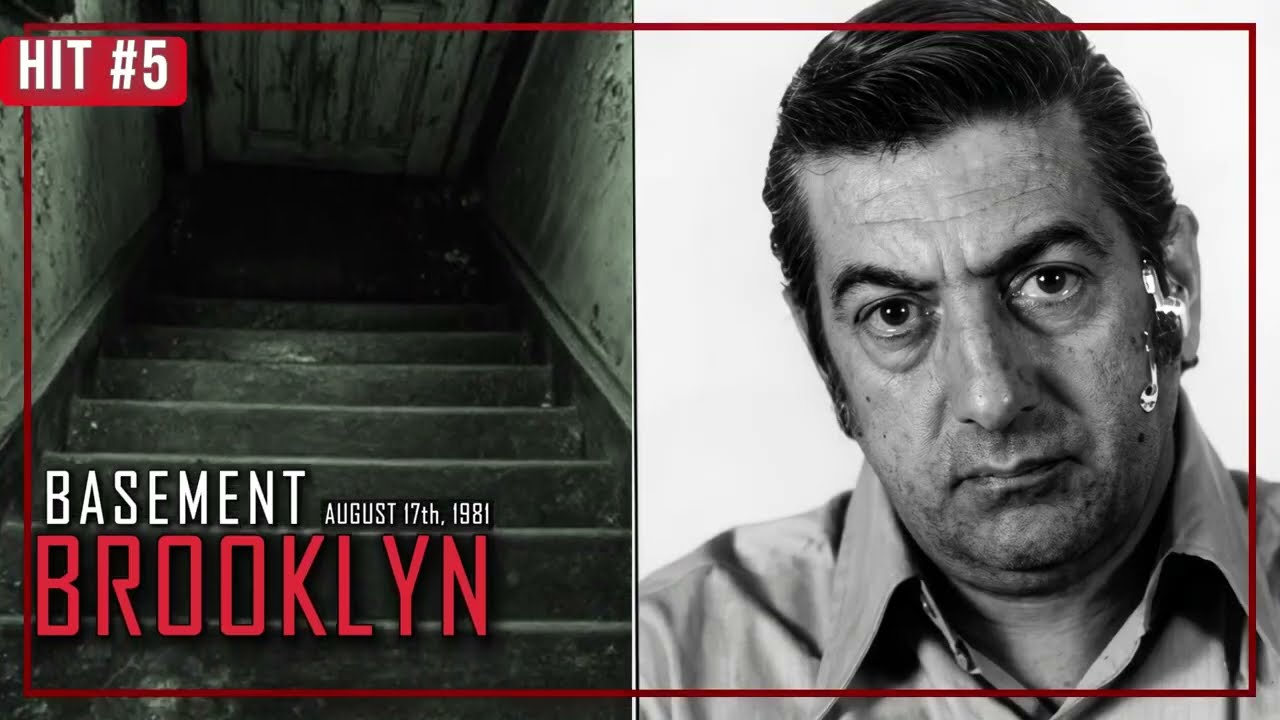
The Donnie Brasco infiltration did not just cost Mira his life. It set off a series of executions inside the Bonanno family that lasted three years. Sonny Black Napolitano, the captain who sponsored Brasco, was lured to a basement in Brooklyn on August 17, 1981. He knew exactly what was coming. He took off his watch and ring and handed them to a friend before going down the stairs. He said, “Give these to my wife.” Then he went downstairs. He was shot in the head. His body was found a year later in a Staten Island creek with his hands cut off. The severed hands were the message. He had shaken hands with a federal agent, so the hands had to go.
Everyone knows the name Jimmy Hoffa. Almost no one knows the details of what actually happened. On July 30, 1975, Hoffa arrived at Machus Red Fox restaurant in Bloomfield Township, Michigan, at 2:45 in the afternoon. He was there to meet Anthony Provenzano and Anthony Giacalone. Neither showed up. At 2:45, Hoffa called his wife from a payphone and said, “Where the hell is Tony?” At 3:30, a maroon Mercury Marquis pulled into the parking lot. Four men were inside. Hoffa got into the car. He was never seen again.
The most credible account, given by Frank Sheeran on his deathbed to author Charles Brandt and dramatized in the film *The Irishman*, places Hoffa’s body in a Detroit house where he was shot twice in the back of the head, then taken to a crematorium. Other accounts place him in the foundations of Giants Stadium, a New Jersey landfill, or a Florida swamp. The FBI dug up driveways, tore down barns, and excavated horse farms. They found nothing.
Hoffa remains the most famous missing person in American history. He was killed because he would not stop trying to take back control of the Teamsters union from the men the mafia had installed. He died because he did not take the warning seriously.
Paul Castellano, December 16, 1985, 5:45 in the evening. Sparks Steak House, 210 East 46th Street, midtown Manhattan. Castellano was the boss of the Gambino family, the largest crime family in America. He was 70 years old. He had a heart condition. He was about to enter the restaurant for dinner with his aide Thomas Bilotti when four men in long coats and Russian-style fur hats stepped out of the crowd on the sidewalk. They opened fire with automatic pistols. Castellano took six bullets. Bilotti took four. Both men fell on the pavement. One gunman walked up and fired a final shot into Castellano’s head, execution style. The entire hit took 11 seconds.
Across the street, John Gotti and Sammy Gravano sat in a Lincoln watching everything through binoculars. Gotti became boss of the Gambino family that night. He became famous. He became known as the Teflon Don. He died in federal prison in 2002. Gravano turned against him, testified at his trial, and disappeared into witness protection.
Here is the part the movies got wrong. Castellano had no bodyguards that night. He refused them. He said, “This is America. We’re going to dinner. We don’t need guns.” Those were his last recorded words to Bilotti before they stopped at the curb.
October 25, 1957. Park Sheraton Hotel, Seventh Avenue and 55th Street, Manhattan. Albert Anastasia, head of Murder Incorporated and the most prolific killer in mafia history, sat in a barber’s chair getting a shave. His face was covered in hot towels. Two men entered with scarves covering their faces. They drew their guns and emptied both magazines into Anastasia’s body. He lunged toward his reflection in the mirror, thinking the gunmen were behind him. He died on the barbershop floor with shaving cream still on his face.
The barber, Arthur Grasso, hid behind the chair. The shoeshine boy crawled out the front door. The two gunmen walked calmly into the Park Sheraton lobby, dropped their weapons in a trash can, and disappeared into the midtown crowd at 9:30 in the morning. No one was ever convicted. Vito Genovese was believed to have ordered the hit as part of a power struggle for control of the Luciano family. Anastasia had personally ordered more than 400 murders during his tenure at Murder Incorporated. He died unarmed, with his eyes closed, during a shave.
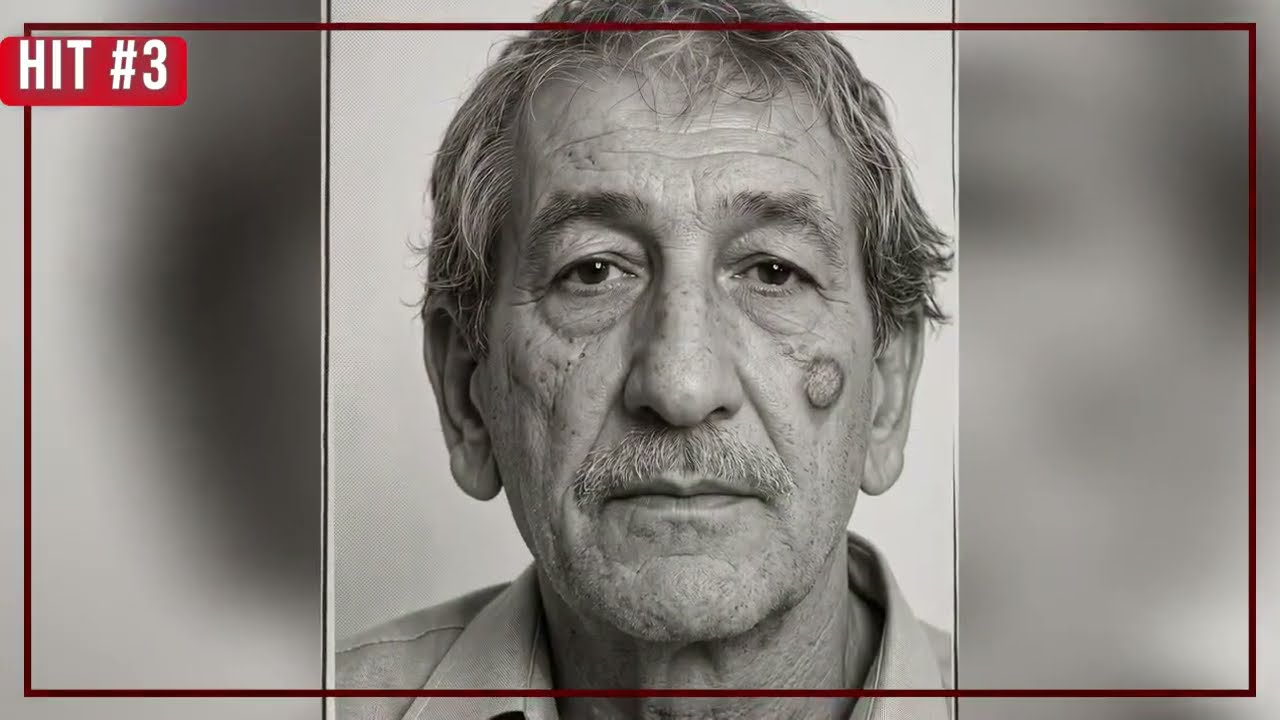
Carmine Persico’s soldier William “Wild Bill” Cutolo was a captain in the Colombo family who backed the losing side in the Colombo war. He had a wife and three children. He went to a meeting in Brooklyn on May 26, 1999. He never came home. His body was never found.
According to cooperating witness testimony, Cutolo was shot in the head in a Bensonhurst basement. His body was wrapped in plastic, taken to a remote spot on Long Island, and buried in a pre-dug hole. His killer, Dino Calabro, eventually flipped and led the FBI to the area in 2008. They never found the grave. The trees had grown. The landmarks had changed. Cutolo’s son became a lawyer and spent 20 years searching for his father’s remains. He never found them. He died still searching.
Finally, the one that should have been the film of the century: the murder of Sam Giancana, June 19, 1975, Oak Park, Illinois. Giancana was the boss of the Chicago Outfit. He had connections to movie stars. His name was linked to John F. Kennedy through Judith Exner. He reportedly worked with the CIA on plots to assassinate Fidel Castro. He was scheduled to testify before a Senate committee about all of it in seven days.
On the night of June 19, he was in the basement kitchen cooking sausages and peppers. A man he knew came down the stairs. They talked. Giancana turned back to the stove. The man pulled a .22 caliber pistol with a silencer. He shot Giancana once in the back of the head, then six more times around his mouth. The mouth shots were the message: he talks too much. The killer walked out the back door. The case was never solved.
The Senate hearing never happened. CIA documents stayed classified for 40 years. The mafia’s deepest secrets, what it knew about the Kennedy assassination, about Castro, about the men who ran America, died in that basement with Sam Giancana and a pot of burning sausages.
Ten assassinations. Ten scenes Hollywood could not touch. Not because they were not dramatic, but because they were too real. In every one of these stories, there is a detail that breaks the unwritten rule of cinema. The meat hook. The canary. The shaving cream. The cigar. The severed hands. The sausages burning on the stove while a boss dies six feet away.
What do all these assassinations have in common? They were ordered by men the victims trusted. Galante was killed by his own bodyguards. Gallo was killed by men he had dealt with. Bruno was killed by his own family. Mira was killed by his nephew. Castellano was killed by his own captain. Anastasia was killed by his ally. Cutolo was killed by his own men. Giancana was killed by a man he let into his house in the middle of the night.
That is the real lesson of the mafia. The bullet always comes from the chair next to you. The only people who can kill a made man are the men he has dinner with. By the time you realize it, you are already on the floor.
These ten men led thousands of soldiers between them. They controlled billions of dollars in rackets. They sat at tables with senators, judges, movie stars, and presidents. And every one of them died because someone they trusted picked up the phone and said yes.
This is not a Hollywood story. This is a true story. And the truth in that world was always worse than fiction.