Florence Pritchette Smith died in New York on November 9, 1965, less than 36 hours after her closest friend, journalist Dorothy Kilgallen, was found dead under suspicious circumstances. The official cause of death was a cerebral hemorrhage brought on by leukemia. There was no autopsy, no toxicology screen, and no formal investigation. Her body was cremated almost immediately.
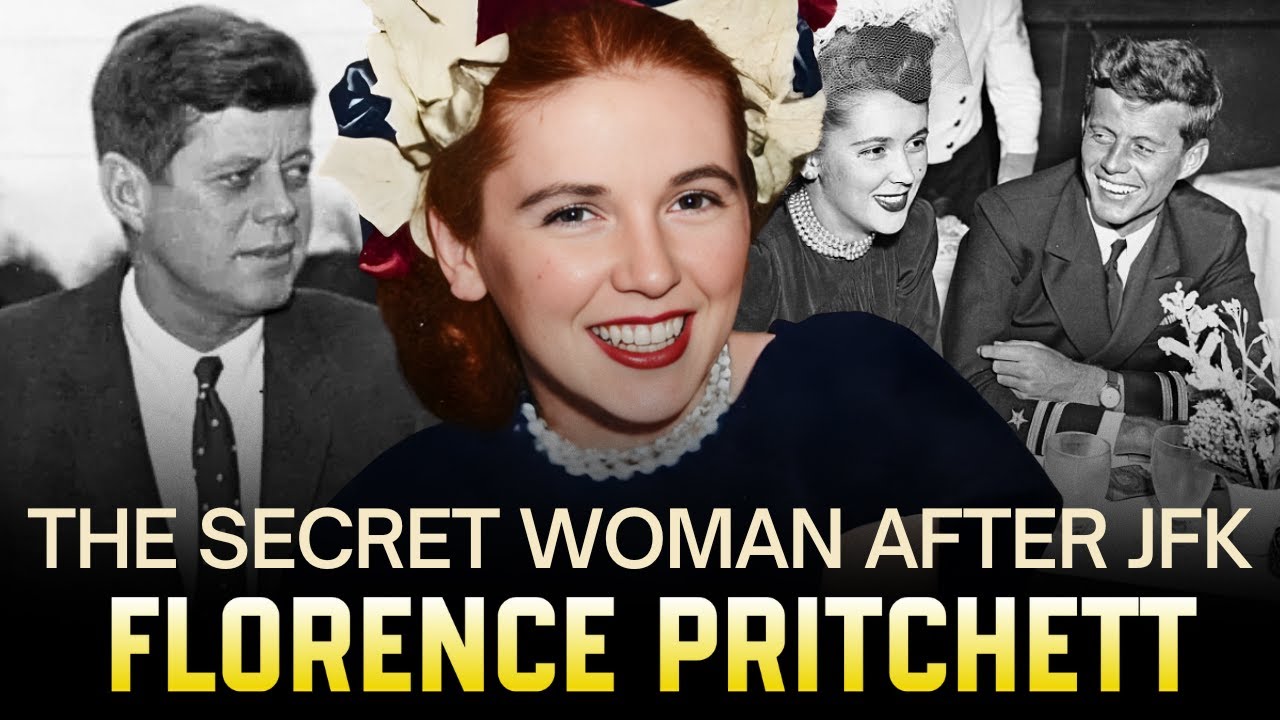
The timing, the rushed cremation, and the abrupt silencing of two women who shared deep knowledge of John F. Kennedy’s private life have led many researchers to conclude that their deaths were not coincidental, but part of a coordinated cleanup operation targeting those who held dangerous secrets about the president and his ties to Cuba. Born in New Jersey in June 1920, Florence Pritchette rose to prominence in the 1940s as a model with the prestigious John Robert Powers Agency. She later became a fashion editor at the New York Journal American, part of the Hearst media empire, writing under the pen name Barbara Bundles.
She also appeared as a panelist on popular radio and television programs such as “Leave It to the Girls” and “What’s My Line? ”
By the late 1940s, Florence had built a reputation as a glamorous, witty socialite with access to the highest circles of New York politics and society. She knew the powerful men who shaped the era, and she understood the value of the information they shared in private settings. Florence first met Jack Kennedy in 1944.
He was a young naval officer freshly returned from the Pacific. She was a media darling with a vast network of contacts. Their relationship was intense and long-lasting. Even after Kennedy married Jacqueline Bouvier in 1953 and Florence married investment broker Earl E.
T. Smith in 1947, the affair continued. Kennedy’s personal diary reportedly contained an entry written in Florence’s own handwriting, reminding him of her birthday and instructing him to send diamonds. Friends of Kennedy, including Betty Spalding, later described Florence as one of the closest relationships Jack ever had with a woman, sometimes rivaling his bond with his wife.
Florence’s marriage to Earl E. T. Smith placed her at the center of American power. Smith was a wealthy broker, a staunch anti-communist, and a man with deep political connections.
In 1957, President Eisenhower appointed him United States Ambassador to Cuba. The Smiths moved to Havana, where Florence became the hostess of the American Embassy. She hosted lavish receptions and curated guest lists that included diplomats, businessmen, intelligence figures, and organized crime leaders. Havana at the time was a playground for American gangsters, including Meyer Lansky and Santo Trafficante Jr.
, who ran the island’s lucrative casino operations with the blessing of dictator Fulgencio Batista. Florence and her husband strongly supported Batista, viewing him as a barrier against communism. They considered Castro a dangerous Soviet puppet. Florence shared this view directly with Kennedy.
According to FBI records and historical investigations, Kennedy made multiple secret trips to Havana between 1957 and 1959, while the Smiths were stationed there. These were not official visits. Kennedy reportedly bypassed State Department protocol and relied on Florence as his guide and back channel. She introduced him to the power players on the island, including mob figures and anti-Castro businessmen, shaping his understanding of Cuba and its strategic importance.
Researchers have argued that Florence’s influence helped harden Kennedy’s anti-Castro stance, which ultimately contributed to the disastrous Bay of Pigs invasion in 1961. She was the connective tissue between Kennedy, the CIA, and the mafia figures who shared a common interest in removing Castro. The revolution ended the Smiths’ time in Cuba. Batista fled the country on New Year’s Eve 1958, and Castro’s forces took control of Havana.
The casinos were smashed, the mob lost its empire overnight, and the Smiths returned to the United States bitter and resentful toward the Eisenhower administration. In 1960, after leaving the ambassador’s post, Smith wrote a book titled “The Fourth Floor,” criticizing the State Department for losing Cuba. He testified before the Senate Internal Security Subcommittee, blaming Washington for Castro’s rise. Meanwhile, Florence remained close to Kennedy as he advanced toward the White House.
After his election in 1960, the relationship continued. But the stakes had risen. By 1963, the Cuban missile crisis had brought the world to the brink of nuclear war, and Kennedy was making enemies in the intelligence community and organized crime. Kennedy’s assassination in Dallas on November 22, 1963, shattered Florence’s world.
In the following two years, her friend Dorothy Kilgallen, a celebrated journalist and television personality, began investigating the assassination in depth. Kilgallen publicly challenged the Warren Commission’s findings, questioned the single-bullet theory, and traveled to Dallas to interview Jack Ruby, the man who killed Lee Harvey Oswald. Researchers believe Kilgallen obtained explosive information from Ruby and that she shared her evidence with Florence. According to this theory, Florence, who knew the Havana underworld and Kennedy’s secret dealings, was feeding Kilgallen information from her own knowledge.
Kilgallen told her makeup artist she was going to break the case and planned to leave the country afterward. She was preparing to publish when she died. On November 7, 1965, Kilgallen appeared on “What’s My Line? ” appearing sharp and lucid.
Afterward, she was seen at a hotel lounge engaged in an intense conversation with a man whose identity has never been confirmed. She was last seen alive that night. The next morning, November 8, Kilgallen was found dead in her townhouse. She was seated upright in bed, fully dressed in a nightgown and robe, still wearing her false eyelashes and television makeup.
A book was placed on her lap, open with reading glasses on her nose. Friends immediately noted that the book was one she had finished weeks earlier and that she never read books twice. The staging, they said, looked like a doll placed on a shelf. The official cause of death was accidental overdose of alcohol and barbiturates.
But the toxicology report showed traces of three different barbiturates, a combination no doctor would prescribe. The thick file of investigation notes Kilgallen carried everywhere had vanished. Family members and friends reported evidence of staging that was absent from official police reports. Florence learned of Kilgallen’s death on November 9.
Within hours, her condition, already weakened by chronic leukemia, collapsed. That evening, the great Northeast blackout plunged New York City into darkness. Ambulances were delayed, communication was cut, and Florence Pritchette Smith died in the dark. There was no autopsy.
Her body was removed quickly and cremated at the Frank E. Campbell Funeral Chapel, the same establishment used by the city’s elite. The cremation destroyed any possibility of testing for signs of foul play. Her husband, Earl Smith, remained silent about the circumstances of her death.
He never publicly discussed her connection to the Kennedy investigation or the material she may have held. He remarried and continued his career as a Palm Beach patriarch until his death in 1991. Researchers have long suggested that Kilgallen had given her most sensitive material to Florence for safekeeping. If those files existed, they were never recovered.
Rumors of a box or safe emptied from the Smith apartment after Florence’s death have never been confirmed. The timing of the two deaths, the missing evidence, the refusal to perform autopsies, and the rapid cremations created what many consider a classic tradecraft cleanup operation. The men who could link Florence and Kilgallen’s knowledge to the JFK conspiracy, figures like Santo Trafficante Jr. , who admitted on his deathbed that the mob had made a mistake in killing John Kennedy instead of his brother Robert, lived out their lives without facing consequences.
For decades, Florence’s name appeared only as a footnote in Kennedy biographies, listed among girlfriends and social acquaintances. Declassified FBI files have since revealed that J. Edgar Hoover viewed Florence as a security vulnerability and authorized wiretaps on her residence. Those recordings, which may capture conversations between Kennedy and Florence about politics, Cuba, and campaign strategy, have never been fully released.
The full truth of what Florence knew remains unknown. Her personal letters, diaries, and notes from the Havana years disappeared after her death. The missing Kilgallen dossier was never found. No surviving records conclusively prove that Florence was murdered.
What remains is the documented timeline: two women connected to Kennedy’s Cuba dealings, each holding sensitive information about his relationship with organized crime and covert operations, both dead within 36 hours of each other in November 1965. One case was closed as an accidental overdose with contradictory evidence. The other was closed as a stroke, with no examination at all. Florence Pritchette Smith is buried in a grave that has yielded no testimony.
The questions around her death and the missing evidence continue to fill the pages of assassination research. Her final role, as a woman who knew too much about the intersection of power and crime, remains one of the last unresolved threads from the Kennedy era.