In September 1938, Adolf Hitler stood at the height of his power. The Munich Agreement had secured the Sudetenland without a shot, leaving Czechoslovakia weakened and betrayed. At home, he was celebrated as a diplomatic genius. Nazi propaganda projected an image of an untouchable regime, but beneath that polished surface, a scandal was brewing.
One of the most powerful men in the regime, Propaganda Minister Joseph Goebbels, was entangled in a passionate affair. The woman at the center of it was a Czech actress whose beauty captivated even the coldest hearts. Her name was Lída Baarová.
She was born Ludmila Babková on September 7, 1914, in Prague, then part of Austria-Hungary. Her father was a municipal official, and her mother was an opera singer who performed in the chorus of the Czech National Theater. She had a younger sister, Zora, who later became known under the stage name Zorka Janů. Both girls showed a flair for performing from an early age.
The interwar Czechoslovak Republic was a stable democracy, especially compared to its neighbors. It had regular elections, a vibrant cultural life, and a progressive approach toward national minorities. In this environment, Lída attended the Prague Conservatory, aiming for an artistic career.
At age 17, she was offered a part in a 1931 film and seized the chance. The conservatory expelled her for breaking rules against student film work. Instead of thwarting her ambitions, the episode ignited her drive. Throughout the early 1930s, she became one of Czechoslovakia’s most sought-after movie stars.
She made her mark in comedies, co-starring with popular actors like Vlasta Burian. Her glamorous appearance and natural screen presence attracted wide audiences. Critics often focused on her beauty rather than her acting range, so she sought more challenging roles to prove her depth. Her younger sister, Zorka Janů, was following in her footsteps with a promising career in theater and film.
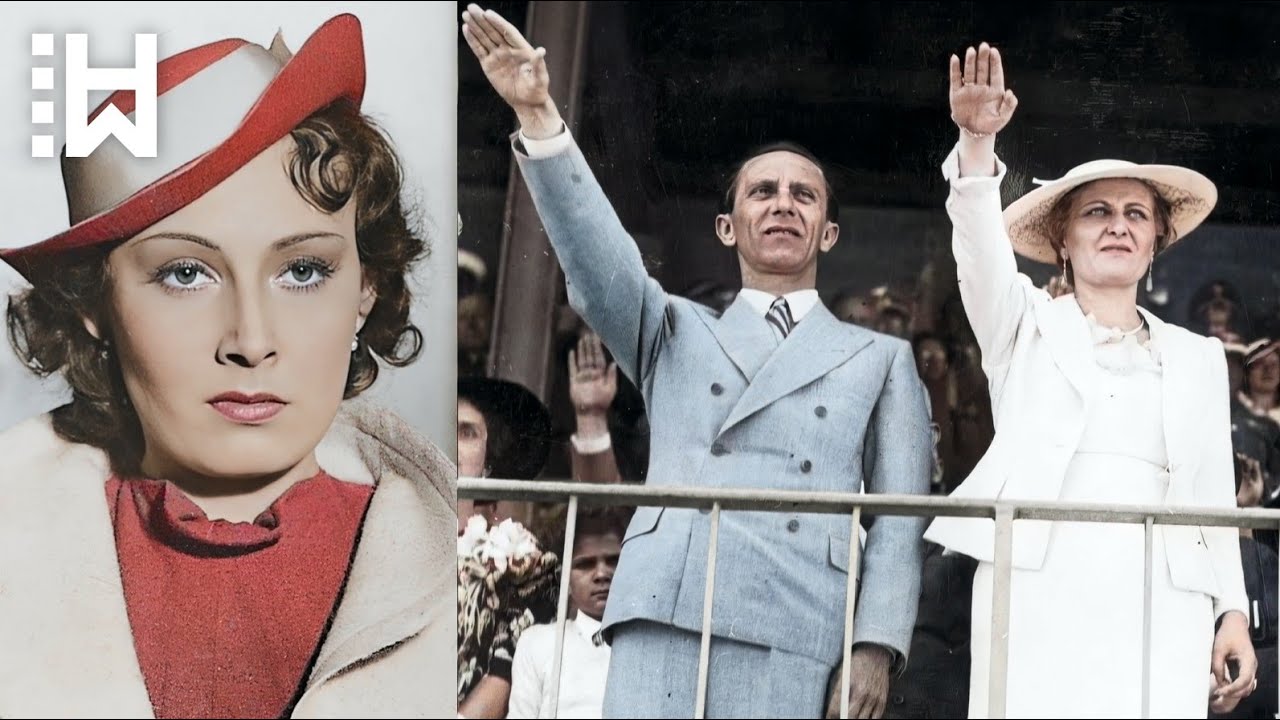
By the mid-1930s, Baarová’s popularity extended beyond the border into Nazi Germany. She was ambitious and aware of Berlin’s major film studios, so she made the decision to work with the enemy. Nazi Germany boasted the largest film industry in Europe but suffered from a shortage of actors, as many artists had gone into exile or did not meet Nazi demands.
In 1934, Baarová left Prague for Berlin. That same year, she met Adolf Hitler, who told her she looked like someone who had played a major role in his life. He was referring to his niece Geli Raubal. In Germany, she signed with UFA film studios, which were available to the Nazi propaganda machine, and appeared in well-received films.
Her graceful transition to the German language and her timeless beauty made her a sensation. There was talk of Hollywood interest, but she reportedly declined a long-term American contract, later calling it the greatest mistake of her life. She said she could have been as famous as Marlene Dietrich.
During her time in Nazi Germany, she had an affair with actor Gustav Fröhlich. He was known for renouncing his Jewish wife to protect his career. Meanwhile, Goebbels considered cinema an ideal tool to influence hearts and minds. He curated the image of foreign actors carefully, expecting them to reflect well on the regime.
Amid Berlin’s glittering premieres and parties, Baarová caught Goebbels’s personal attention. Known for his stern public persona, he was enchanted by cinema and its attractive stars. Rumors of a romance spread quickly. Baarová later asserted that she initially resisted, but Goebbels’s high position made it impossible for her to refuse.
Their affair progressed even though Goebbels was married with children and upheld as a model family man. The relationship posed a risk to his image and Hitler’s carefully maintained ideology. Goebbels was not a handsome man. He suffered from chronic health problems and a congenital deformity that left him with a limp. What he lacked in appearance, he made up for in charisma, ambition, and power.

The scandal peaked in 1938 when Goebbels considered divorcing his wife Magda. Alarmed by the potential fallout, Hitler stepped in and forced an end to the affair. Officials banned Baarová from working in German films, effectively ending her Berlin career. Shunned, she returned home to Prague.
When she returned, the country she once knew had changed beyond recognition. Czechoslovakia had lost territory in September 1938, and in March 1939, the state broke up. A large part was invaded by Nazi Germany, leading to the establishment of the Protectorate of Bohemia and Moravia. Daily life was marked by repression, censorship, and fear.
Public opinion toward those who collaborated with the Nazis was overwhelmingly negative. For someone like Baarová, whose past was entangled with the Nazi elite, coming back meant stepping into a society that viewed her with hostility. She managed to act in a few local productions but soon found herself barred from appearing in Czech films.
Hoping for a fresh start, she traveled to Italy, performing in titles like La Fornarina and working alongside stars such as Vittorio De Sica. Although these roles momentarily revived her career, the war’s chaos repeatedly disrupted production. After the Allied landings in Italy, she returned to Prague even before the war ended.
In early 1945, with the Allies closing in on Nazi Germany, she fled to southern Germany, where she was detained by American forces. She was interrogated by the American Counter Intelligence Corps, who were interested in her relationship with one of the most prominent Nazis. After a few months, she was extradited to Czechoslovakia on allegations of collaboration.
She spent 16 months in custody facing further interrogations. During this time, her family suffered enormous losses. Her mother died of a heart attack in the middle of an interrogation related to Baarová’s case. Worse still, her sister Zorka Janů, humiliated by associations with her collaborator sibling, could not find acting work. Plagued by despair, Zorka committed suicide in March 1946. She was only 24 years old.

Ultimately, the courts decided there was insufficient evidence to convict Baarová of treason. She was freed in December 1946, but the stigma surrounding her remained. Her mother’s death and her sister’s suicide haunted her, revealing the tremendous toll of public condemnation.
Determined to escape the political turmoil in postwar Czechoslovakia, Baarová married puppeteer Jan Kopecký and fled with him to Austria after the communist coup in 1948. In the 1950s, she tried to resume acting, taking minor roles in Italian and Spanish productions, including a small part in Federico Fellini’s La dolce vita. The big screen spotlight never fully returned.
She married her second husband, an Austrian doctor, and settled with him in Salzburg. Despite living comfortably, she remained isolated and dogged by questions about her Nazi connections. Although she sometimes gave interviews offering her version of the Goebbels affair, her pleas of innocence failed to sway many critics.
Lída Baarová’s story shows the moral and personal dilemmas faced by artists in a totalitarian regime. She began as a promising teenager in Czechoslovakia, briefly conquered the German screen, and then fell into scandal because of her affair with Goebbels. That relationship and the repressive Nazi film system forever tainted her achievements.
Even her sister, the talented but ill-fated Zorka Janů, could not escape the doom overshadowing the family. Baarová lived out her later decades in Salzburg, essentially cut off from her homeland. In her solitude, she often clung to alcohol, trying to forget the disappointments of a career that brought her more sorrow than joy.
Baarová died childless on October 27, 2000, aged 86. Her ashes, along with those of her parents and her tragic sister, were interred in the family grave at Prague’s Strašnice Cemetery. Lída Baarová finally rested in her homeland.