Tomoyuki Yamashita was one of the most famous Japanese commanders of World War II. In Japan, many remembered him as the "Tiger of Malaya," the general who led the swift conquest of British Malaya and Singapore in 1941 and 1942. For the Allies, especially after the fighting in the Philippines, his name became tied to one of the most controversial war crimes trials of the postwar period.
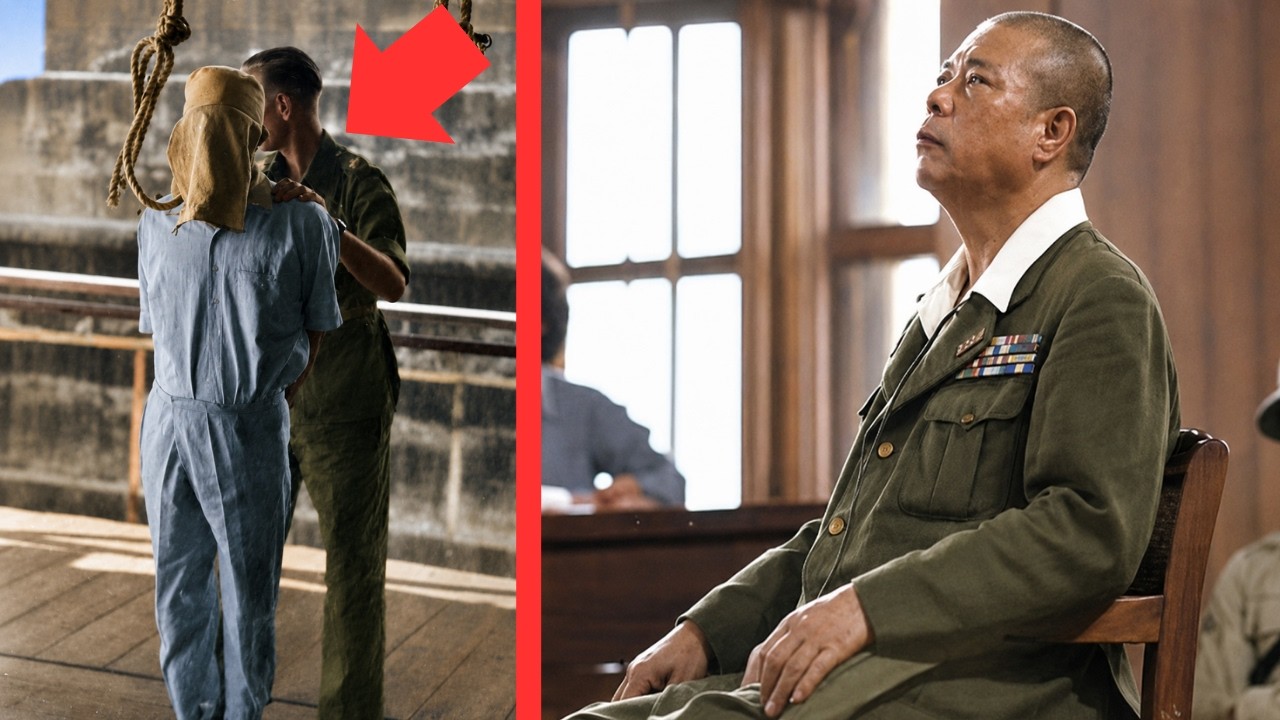
When Yamashita was executed in 1946, he was not shot by a firing squad. He was hanged. That detail might seem surprising. He was a high-ranking military officer, and death by firing squad was often considered a soldier’s form of execution. But Yamashita was not executed simply as a defeated general. He was executed as a convicted war criminal, and that difference explains why he was hanged rather than shot.
Born in 1885, Yamashita rose through the ranks of the Imperial Japanese Army. He became famous during Japan’s early victories in the Pacific War. In December 1941, Japanese forces attacked British Malaya. Yamashita led the Japanese 25th Army, which advanced rapidly through the Malay Peninsula. The campaign ended with the fall of Singapore in February 1942, one of the worst defeats in British military history.
That victory gave Yamashita a fearsome reputation. He was admired by many Japanese officers and feared by his enemies. However, his career later took a very different turn. In 1944, he was sent to the Philippines to command Japanese forces there as American troops under General Douglas MacArthur returned. Yamashita’s position was extremely difficult. Japan was losing the war, its navy and air force were badly weakened, and Japanese units in the Philippines were increasingly cut off from one another.
The final fighting in the Philippines was brutal. Manila, the capital, became the scene of horrific violence in early 1945. Japanese naval forces and other units carried out massacres, assaults, torture, and widespread destruction. Tens of thousands of Filipino civilians died during the Battle of Manila. Some were killed in crossfire and bombing, but many were deliberately murdered by Japanese troops.
Yamashita’s defense later argued that he did not order these crimes. In fact, he wanted to withdraw from Manila and fight in the mountains of northern Luzon. Some Japanese forces in Manila, especially the naval troops under Admiral Sanji Iwabuchi, did not follow his plan. They stayed in the city and fought to the death. During that fighting, they committed atrocities against civilians.
That was the core issue in Yamashita’s case. He was not primarily accused of killing civilians with his own hands. He was accused of failing as a commander to control the troops under his authority. The prosecution argued that the scale and pattern of crimes were so massive that Yamashita knew, or should have known, what was happening. As the top commander, they said, he had a duty to stop it.
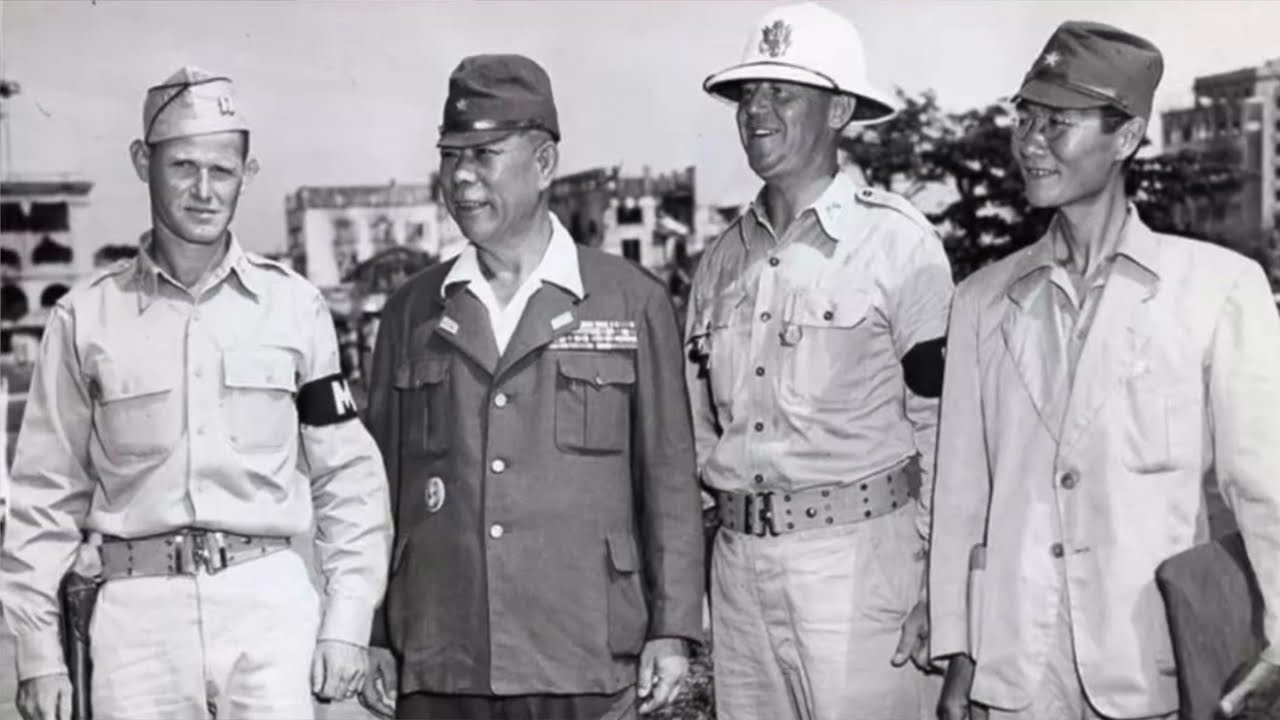
After Japan surrendered in August 1945, Yamashita surrendered in the Philippines. He then faced trial before a United States military commission in Manila. The trial began in October 1945 and moved quickly. It was not an ordinary civilian trial. It was a military commission created to hear war crimes cases.
Yamashita’s lawyers argued that the trial was deeply unfair. They said he was being blamed for crimes committed in chaotic conditions when his chain of command had collapsed. Communication lines had been destroyed. Units were scattered. Some troops were not actually under his direct control. His defense also argued that there was no actual evidence that Yamashita ordered the atrocities.
The military commission convicted him anyway. It found that as a commander, Yamashita had failed in his duty to control his troops. He was sentenced to death. The decision became famous because it helped create what was later called the Yamashita standard. That is the idea that a military commander can be held responsible for war crimes committed by subordinates if he fails to prevent them or punish them, even without evidence that he personally ordered each crime.

That standard remains important in discussions of command responsibility, although the trial itself has been repeatedly criticized. The question here is why General Yamashita, despite his high rank in the Japanese army, was hanged instead of shot. The answer lies in the difference between executing a soldier and executing a criminal.
A firing squad is often seen as a military death. Soldiers convicted of military offenses, spies, or enemy combatants were sometimes executed by firing squad. In many armies, execution by firing squad carried a certain military meaning. It could suggest that the condemned person was still viewed and treated as a soldier, even if sentenced to death.
Hanging had a very different meaning. In many countries, hanging was associated with criminals. It was a method used for murderers and other condemned prisoners. After World War II, the Allies often used hanging for convicted war criminals because it marked them not as honorable defeated soldiers, but as war criminals, men who had violated the laws of war and were therefore criminals.
The same logic was seen in Europe. At the Nuremberg trials, prominent Nazi figures were sentenced to death by hanging. These included Foreign Minister Joachim von Ribbentrop, Armed Forces High Command chief Wilhelm Keitel, and Alfred Jodl, a senior member of the armed forces. Some of them were very high-ranking military officers. Keitel and Jodl were senior officers. Both asked to be shot by firing squad as soldiers, but their requests were denied.
The Allies wanted to make clear that their crimes were not merely acts of war. They were, first and foremost, criminal acts. The same reasoning applied to Japanese war criminals. Hanging was the usual method for many convicted war criminals in postwar trials. Yamashita, despite his rank, was not given the symbolic status of a soldier facing a firing squad. He was executed as a convicted criminal.
There was also a political and emotional background to the case. The Philippines suffered terribly under Japanese occupation. The destruction of Manila was one of the great urban tragedies of the war. Filipino civilians were slaughtered in churches, hospitals, homes, schools, and public buildings. Women and children were among the victims in large numbers. For many, Yamashita represented Japanese command responsibility for that horror, even if the chain of command and orders were disputed.
General Douglas MacArthur also played an important role. MacArthur led the return to the Philippines and had a deep personal connection to that campaign. Yamashita’s appeals reached the United States Supreme Court, but they failed. President Harry Truman also refused to intervene. Once the death sentence was confirmed, it was carried out.
Yamashita was hanged on February 23, 1946, at Los Baños in the Philippines. Before his death, he was said to have acted calmly. He maintained that he had not ordered the atrocities. His defenders later argued that he was made a scapegoat for crimes committed by others, especially the forces in Manila who ignored his withdrawal strategy. Critics of the trial also said it was rushed and that the evidence did not prove personal guilt in the traditional sense.
Supporters of the verdict argued that a commander cannot escape responsibility simply by claiming the war became chaotic. The more terrible the crimes, they said, the greater the duty of command. If a general has authority over an army, he also bears responsibility for what that army does. That is why the Yamashita case remains controversial. It sits at the difficult intersection of justice, vengeance, military law, and the atrocities of wartime occupation.
On one side is the argument that leaders must be held accountable when their forces commit mass atrocities. On the other side is the argument that no one should be executed for crimes they did not order and perhaps could not prevent. But the reason Yamashita was not shot is clearer. He was not given what many considered a cleaner military death. The Allies hanged him because they wanted his execution to send a clear message.
He had not just lost the war. He had been convicted of criminal responsibility for atrocities and crimes. In that sense, the method of execution mattered. A firing squad might have made Yamashita look like a defeated warrior. It might even have made him a martyr. Hanging made him look like a convicted war criminal. That was exactly the message the postwar authorities wanted to deliver.