On December 23, 1948, Hideki Tojo, Japan’s former prime minister, was led to the gallows inside Sugamo Prison in Tokyo. Just seven years earlier, he had been one of the most powerful men in Asia. He led Japan when it attacked the United States at Pearl Harbor and when Japanese forces swept through Southeast Asia and the Pacific. Now, Japan was defeated, its empire had collapsed, and Tojo had been convicted as a war criminal.
Shortly after midnight, he and six other senior Japanese wartime leaders were executed by hanging. Tojo was executed because the International Military Tribunal for the Far East convicted him of major war crimes, particularly his role in planning and waging aggressive wars. His position made him an especially important figure.
Tojo was not just a general carrying out orders on a distant battlefield. He held some of the highest political and military offices in Japan and played a key role in the decisions that brought the country into World War II.
Hideki Tojo was born in Tokyo in 1884 into a military family. He followed his father into the Imperial Japanese Army and rose steadily through the ranks. He gained a reputation as a strict, disciplined, and hardworking officer. He was also a strong supporter of Japanese military power and believed Japan should expand its influence to become a greater world power.
By the 1930s, Japan was already building a vast empire. Japanese forces took control of Manchuria in northeastern China in 1931, and in 1937 Japan began a much larger war against China. The fighting became extremely brutal. Japanese troops captured major Chinese cities and committed atrocities against civilians and prisoners. The most famous example was the Nanjing Massacre of 1937 to 1938.
Tojo’s importance grew significantly during this period. In 1940, he became Japan’s war minister. Relations between Japan and the Western powers were becoming dangerously hostile. Japan wanted access to oil, rubber, and other resources in Southeast Asia, while the United States and other countries tried to restrict Japanese expansion.
The crisis became especially serious after Japanese forces moved into French Indochina. The United States froze Japanese assets and imposed restrictions that effectively cut off vital American oil supplies to Japan. Japanese leaders faced a difficult choice. They could make concessions and withdraw from some of their conquests, or they could try to seize the resources they needed by force.
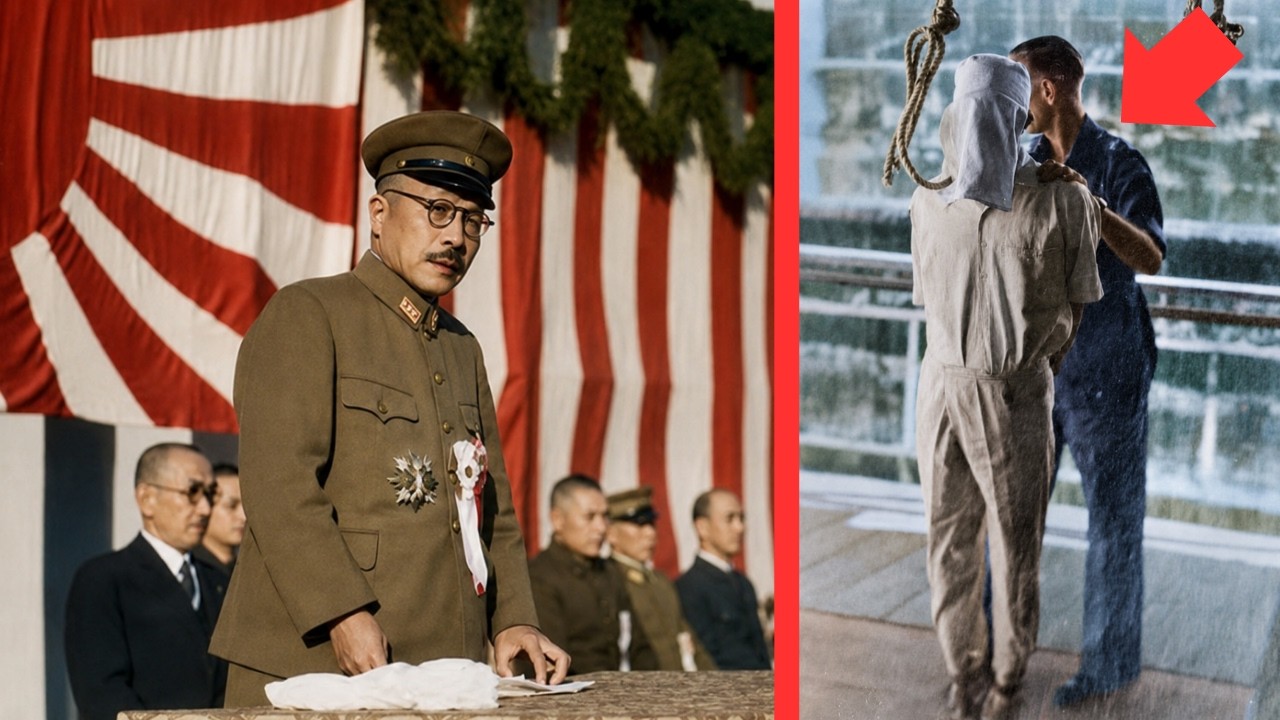
Tojo was among those who did not want to accept the kind of retreat the United States demanded. In October 1941, Prime Minister Konoe resigned after failing to resolve the crisis. Emperor Hirohito then appointed Tojo as prime minister on October 18, 1941. Tojo became prime minister at one of the most critical moments in Japanese history.
Negotiations with the United States continued, but Japanese military preparations also accelerated. Japan’s leaders eventually decided that unless an acceptable diplomatic settlement was reached, they would go to war. Their plan included attacking Western territories across the Pacific and Southeast Asia while destroying or severely damaging the U.S. Pacific Fleet.
On December 7, 1941, Japanese aircraft attacked the U.S. naval base at Pearl Harbor in Hawaii. Thousands of Americans were killed or wounded, and the United States entered the war. At nearly the same time, Japanese forces launched attacks across Asia and the Pacific. They struck British Malaya, Hong Kong, the Philippines, and other territories.
Within months, Japan occupied a vast area. Singapore fell in February 1942, the Dutch East Indies were occupied, and U.S. forces in the Philippines eventually surrendered as well. These victories made the Japanese Empire seem almost unstoppable. But behind these victories was immense suffering.
Japanese forces became notorious for their mistreatment of prisoners of war. After U.S. and Filipino forces surrendered in the Philippines, thousands died during the Bataan Death March. Allied prisoners elsewhere were beaten, starved, sickened, and forced into labor. Thousands were sent to work on projects such as the Burma-Thailand Railway, where terrible conditions caused enormous numbers of deaths.
Civilians also suffered throughout the territories Japan occupied. Mass killings, forced labor, torture, and violence occurred on an unprecedented scale in various parts of the empire. Japan’s wartime record involved far more than conventional battles between armies. This became very important after the war because the Allies wanted to hold senior Japanese leaders accountable.
Tojo’s responsibility, however, was highly complex. He did not personally commit most of these atrocities and was not present in many of the places where crimes occurred. But international prosecutors argued that senior political and military leaders should bear responsibility for the actions of the system they controlled.

Tojo was especially accountable because he had accumulated extraordinary power. He was prime minister and also served as war minister. At various times, he held additional government positions. He could not easily present himself as a minor official who knew nothing about Japan’s military policies.
The situation changed dramatically after 1942. Japanese expansion stopped, and the Allies gradually began pushing Japanese forces back. Tojo’s popularity declined as military defeats increased. In July 1944, after the loss of Saipan, Tojo resigned as prime minister.
Japan continued fighting for another year. In August 1945, the United States dropped atomic bombs on Hiroshima and Nagasaki, while the Soviet Union entered the war against Japan. Emperor Hirohito then announced Japan’s surrender on August 15, 1945.
For Tojo, surrender meant arrest was almost inevitable. On September 11, 1945, U.S. Army personnel arrived at Hideki Tojo’s home to arrest him. Instead of surrendering, Tojo tried to end his life by shooting himself in the chest with a pistol. But the bullet missed his heart. American medical teams treated him, and he survived. He was then imprisoned and prepared for trial.
The Allied trial of Japan’s senior leadership was called the International Military Tribunal for the Far East, commonly known as the Tokyo War Crimes Trial. It began in 1946 and was similar in purpose to the Nuremberg trials of senior Nazi leaders in Europe. Twenty-eight Japanese political and military leaders were initially indicted.
The charges included crimes against peace, conventional war crimes, and crimes against humanity. Much of the prosecution focused on the argument that Japanese leaders had conspired to wage aggressive wars. Tojo became perhaps the most famous defendant.
The prosecution examined Japan’s wars against China and the Western powers and argued that Tojo was directly involved in the political decisions that led to these conflicts. His involvement in decision-making before Pearl Harbor was also highly significant. The court also considered how prisoners and civilians were treated.

Tojo’s position at the top of Japan’s wartime government meant prosecutors argued he was responsible for ensuring the laws of war were respected and for preventing serious crimes or punishing those who committed them. The trial, however, remains controversial among historians.
One major criticism concerns crimes against peace. Critics argued that trying leaders for waging aggressive wars involved legal principles that had not been applied in the same way before. Some described it as a case of victors trying defeated leaders. There was also the controversial issue of how Emperor Hirohito was treated.
U.S. occupation authorities decided not to try the emperor. General Douglas MacArthur believed preserving the imperial institution would make the occupation of Japan easier and reduce the chance of political chaos. As a result, responsibility for Japan’s wartime decisions was heavily focused on military and political leaders such as Tojo. This contributed to debate over how responsibility should be divided among Tojo, Hirohito, and other members of Japan’s leadership.
Still, the fact that the court was controversial does not mean Tojo was an unimportant figure. He held a very powerful position and was involved in critical decisions regarding Japan’s war.
On November 12, 1948, Hideki Tojo was sentenced to death. Seven men received the death penalty: Tojo, Kenji Doihara, Sadao Itagaki, Heitaro Kimura, Iwane Matsui, Akira Muto, and Koki Hirota. Their backgrounds differed, but all were convicted for their roles in leading Japan during the war and its crimes.
The executions were carried out at Sugamo Prison in the early hours of December 23, 1948. Tojo was hanged at the age of 63. After the executions, the bodies were cremated. U.S. occupation authorities were concerned that known graves might become shrines for Japanese nationalists. The ashes were secretly moved and scattered.
Years later, claims emerged that a small amount had been recovered and preserved by Japanese sympathizers. The execution of Hideki Tojo remains one of the most important and controversial events in the aftermath of World War II.
He was not executed simply because Japan lost the war, nor was he sentenced to death only because he held the office of prime minister. The court convicted him because it considered him one of the senior leaders responsible for Japan’s aggressive wars and for failures related to the brutal conduct of Japanese forces.
His story also raises a much larger question that emerged from the ruins of World War II. To what extent should national leaders be held responsible for crimes committed by their governments and armed forces? The Allies believed political and military leaders could not escape responsibility simply because they did not personally pull a trigger or kill a prisoner.
Those who planned wars, approved policies, and managed the institutions responsible for atrocities could be held accountable themselves. That principle was central to both the Nuremberg and Tokyo trials. For Hideki Tojo, it ultimately led to the gallows.