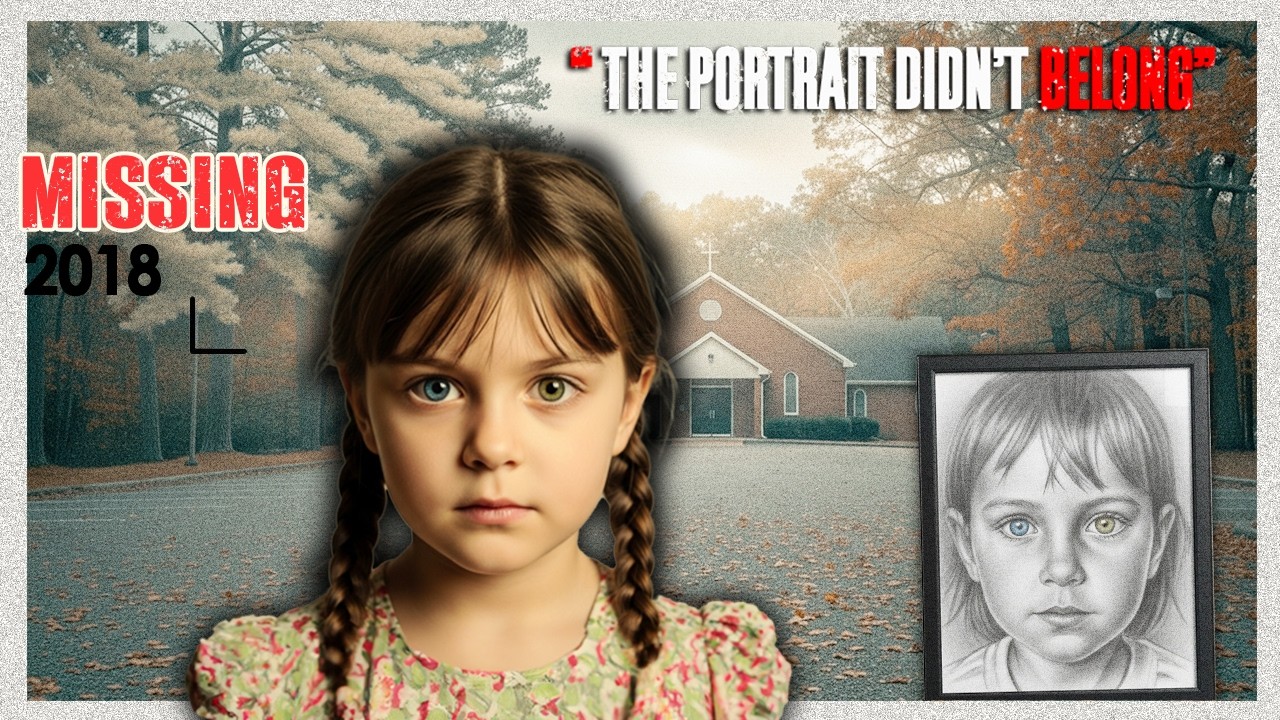
On a Sunday morning in October 2018, a four-year-old girl vanished from the parking lot of a small church in Pinehurst, North Carolina. Her name was Lily Morgan. She had brown hair in two braids and a distinctive physical trait that made her unforgettable: one blue eye and one green eye.
Her mother, Clare Morgan, had turned her back for roughly 30 seconds to grab a diaper bag from the trunk of her sedan. When she turned around, Lily was gone. There was no scream, no struggle, only silence.
Clare had moved to Pinehurst six months earlier. She was a single mother working two jobs, looking for a slower, safer place to raise her daughter. She began attending Cornerstone Baptist Church, a congregation of about 150 people. The community was warm and welcoming. People offered help, brought food, and volunteered to babysit.
Among the volunteers were a couple in their early 50s, Daniel and Rebecca Hol. They had attended the church for about two years. Rebecca worked in the nursery. Daniel helped with parking and setup. They had no children of their own but seemed to enjoy being around them. Clare had spoken to them only in passing, mostly small talk about the weather or Lily’s striking eyes.
On the morning of the disappearance, Clare and Lily arrived just after 10 a.m. The service ended around 11. Lily ran ahead toward the car while Clare gathered their things. When Clare turned around after opening the trunk, Lily was gone.
Within minutes, church members began searching the property. Within 20 minutes, someone called 911. Police arrived and sealed off the lot. The church had two security cameras, one at the front entrance and one overlooking the parking lot. The footage showed a dark red Chevy Tahoe pull into the lot at 11:03 a.m. Two figures exited. An adult approached Lily. The interaction appeared casual and friendly. Lily showed no signs of fear. She was lifted and placed inside the vehicle. The Tahoe left the lot by 11:04.
Clare collapsed when she saw the footage. She could not identify the figures. The angle was poor and the resolution too low. But she thought she had seen the Tahoe before, possibly in the church lot on other Sundays.
An Amber Alert was issued within the hour. Tips poured in from across North Carolina, South Carolina, Virginia, and Tennessee. Every lead was chased. None panned out. The investigation expanded to include the FBI. Interviews were conducted with everyone at the church. Background checks were run. Woods, rivers, and abandoned buildings were searched. The footage was analyzed frame by frame. Nothing usable emerged.
The case went cold by the spring of 2019. Clare refused to give up. She kept Lily’s room exactly as it was. She celebrated her daughter’s birthday every year. She attended support groups for parents of missing children. The police kept the case open, but the trail grew colder with each passing year.
Six months before the abduction, Clare had done something unusual. She commissioned a charcoal portrait of Lily from a local artist. Clare had studied art in community college and wanted something timeless, something that captured Lily exactly as she was at four years old, especially her eyes. The portrait was delivered in early May 2018. It was 11 by 14 inches, framed in simple black wood. Clare hung it in her living room. After Lily disappeared, the portrait became the image on missing posters across the region.
Three hundred miles west, in a mobile home park outside Knoxville, Tennessee, a little girl was growing up. She was called Emma. She was told her name was Emma Hol. The couple raising her, Rebecca and Daniel Hol, told neighbors they were retired and caring for their granddaughter after a family tragedy. They said the girl’s mother had died of a drug overdose and the father was never in the picture.
The neighbors believed them. The Holts kept to themselves. They attended a small church on the edge of town. They homeschooled the girl. Emma seemed quiet and polite. She played in the yard and helped with chores. If she seemed shy or withdrawn, people assumed it was because of the trauma she had supposedly endured.
Inside the mobile home, above the dining table, hung a charcoal portrait in a black frame. It showed a young girl with a direct gaze and two different colored eyes, one blue, one green. The Holts had kept it for seven years.
In late September 2025, a social worker named Monica Grant was making routine visits in rural Knox County. She worked for the Tennessee Department of Children’s Services. One of her cases involved a family flagged for a wellness check. A neighbor had mentioned that the homeschooled girl had not been seen much lately. Nothing serious, but protocol required a visit.
Monica arrived at the mobile home and was greeted by Rebecca Hol. The interior was clean and modest. Rebecca called for Emma. A girl appeared, about 10 years old, with light brown hair pulled into a ponytail. She answered Monica’s questions quietly and politely. Monica took notes and scanned the room.
Then her eyes landed on the wall. A portrait framed in black. A girl’s face rendered in charcoal. The eyes were two different colors, one blue, one green.
Monica froze. She had seen that image before, years earlier, when she was a college student at the University of Tennessee. She had walked past a bulletin board in the student union and seen a missing child poster. The detail that stuck with her was the eyes. Heterochromia. One blue, one green. She remembered thinking how unusual it was and how she hoped the girl would be found.
She finished the visit calmly, thanked Rebecca, and said everything looked fine. Then she got in her car and searched for missing child, North Carolina, heterochromia. The image that came up was identical to the portrait on the wall. The missing child was Lily Morgan, abducted on October 14, 2018.
Monica called her supervisor. Then she called the Knox County Sheriff’s Office. Within hours, detectives were briefed. The FBI and the Pinehurst Police Department were contacted. A tactical plan was put in motion.
The following morning, law enforcement descended on the mobile home park. Daniel Hol saw the badges and ran. He was tackled in the yard. Rebecca was arrested inside without resistance. Emma was found in her bedroom, confused and terrified. She kept asking for her grandmother and what she had done wrong.
Back in Pinehurst, Clare Morgan received a phone call she had been waiting seven years to receive. A detective told her to sit down. They had found Lily. She was alive. She was safe. She was in Tennessee.
The Holts were charged with kidnapping, child endangerment, and other felonies. Investigators later learned that Daniel Hol had a criminal record, a fraud conviction from 2004, and a rejected adoption application from 2016. The rejection, investigators believed, had set them on a darker path. They wanted a child. The system told them no. So they took one.
The abduction had been planned. The Holts had attended Cornerstone Baptist Church for months before October 14, watching families and identifying vulnerabilities. Clare was a single mother, new to town, with no nearby family. She was isolated. Lily was an easy target. On that Sunday morning, the Holts approached Lily as familiar faces. She did not scream because she recognized them.
The Tahoe was sold for scrap in Virginia weeks later. The Holts drove Lily to Tennessee, dyed her hair a lighter shade, and created a new identity. They kept her isolated and homeschooled. They told her a lie, that her real mother had been a drug addict who abandoned her. Over time, Lily believed it.
Rebecca Hol broke first during FBI interviews. She admitted everything, the planning, the abduction, the years of deception. She said they had never hurt Lily and had given her a good life. Daniel said nothing and lawyered up. It did not matter. The evidence was overwhelming.
The reunion was arranged at a child advocacy center in Asheville, North Carolina. Clare was brought in first. She waited in a small room, clutching the original portrait. When the door opened, Lily stood in the doorway. She was taller now, her hair lighter, but her eyes were the same. One blue, one green.
Lily did not recognize her mother. Clare stayed still and let Lily come to her. She set the portrait on the table and showed Lily a photo of the one found in the Holts’ trailer. Side by side, they were identical. Lily stared at them, then looked at Clare and whispered, “You have eyes like mine.”
Clare nodded and said, “Because you’re my daughter. I drew this picture of you before you were taken. I drew it so I wouldn’t forget, and I never forgot. Not for one single day.”
Lily reached out and touched the frame. Something shifted. Not a memory, but a feeling. A recognition. Clare opened her arms, and Lily leaned in and let herself be held.
The Holts were convicted in early 2026. Daniel received 35 years. Rebecca received 28. They will both die in prison.
Lily entered therapy. She is learning who her mother is and who she is. She is grieving the people she thought were her grandparents. She is angry and confused, but she is also healing. Clare quit both her jobs and dedicated herself to her daughter. They moved to a new town and are rebuilding one day at a time.
On the wall of their new apartment hangs the original portrait. The one that never let Clare forget. The one that brought her daughter home.
Monica Grant was commended by the Tennessee Department of Children’s Services. She later gave a lecture at a national conference on missing and exploited children. She said that if she had been distracted that day, if she had just glanced at the wall instead of really looking, she might have missed it. Lily would still be gone.
The case left ripples. Churches across the country re-evaluated their volunteer policies. Background checks became stricter. Awareness campaigns expanded to include trusted insider danger. The Holts were not strangers. They were volunteers. They were the people you trust to watch your kids. That is what made them so dangerous.
Lily is now 14. She plays soccer and is thinking about colleges. She still sees a therapist, though less frequently. She and Clare are close. They argue about normal teenage things. Lily has started asking questions about her early childhood. Clare answers honestly and gently.
Lily has also started speaking publicly, sometimes. She gave a talk at her school about resilience and trauma. She wants other survivors to know they are not alone.
The portrait still hangs in their living room. Clare thought about taking it down once, but Lily asked her to keep it up. She said it reminds her of something important. Even when she was gone, even when she did not remember, someone remembered her. Someone never stopped looking. Someone loved her enough to hold on.
Rebecca Hol has written letters to Clare from prison, apologizing and explaining. Clare has never opened them. She does not need them. She has what matters.
There is a detail from the trial that stands out. Rebecca admitted that a few months after the abduction, she suggested sending the portrait back to Clare anonymously. Daniel refused. He said the portrait was theirs now. So Rebecca kept it and hung it on the wall. Over time, the guilt faded. She convinced herself they had done the right thing.
The portrait, the very thing Rebecca kept as a symbol of ownership, became the evidence that brought everything down.
Seven years. That is how long Lily was missing. In all that time, no one got close. Not until a social worker walked into a trailer and saw a drawing on a wall.
Clare now works with the National Center for Missing and Exploited Children. She speaks at conferences and helps other families navigate the nightmare of a missing child. Lily sometimes joins her. They tell their story together, not for attention, but because awareness saves lives.
The case is closed. The Holts are in prison. Lily is home. But the questions linger. How many others are out there? How many children are living under stolen names? How many portraits hang on walls in the wrong homes?
Lily is 14 now. She looks different, taller, older. Her hair is darker again. But her eyes are the same. Still blue, still green, still unforgettable.
When visitors ask about the portrait, Clare tells them the story. She tells them it is her daughter, that it was drawn a long time ago, and that it helped bring her home when she was lost. And Lily, if she is there, will sometimes add her own detail. She will say, “My mom drew this so she wouldn’t forget me, and she never did.”