On the evening of July 20, 1923, a 1919 Dodge roadster raised dust on a dirt road ten kilometers outside Parral, Chihuahua. Five men sat inside. The man behind the wheel was Pancho Villa. He was 45 years old.
Villa had survived a revolution, an American invasion force of 10,000 soldiers, a decade of civil war, and more assassination attempts than anyone had bothered to count. Now he was retired, living on a hacienda, raising cattle, and driving himself to town with four men instead of the 50 who once surrounded him. His .45 caliber pistol sat on the seat next to him. That detail would matter in about 30 seconds.
In less than 60 seconds, more than 40 bullets tore through that car. Nine hit Villa's body. Four entered his head. Three of the five men in the vehicle were dead. The most feared military commander in Mexican history died on a dirt road with his hand reaching for a gun he never got to fire.
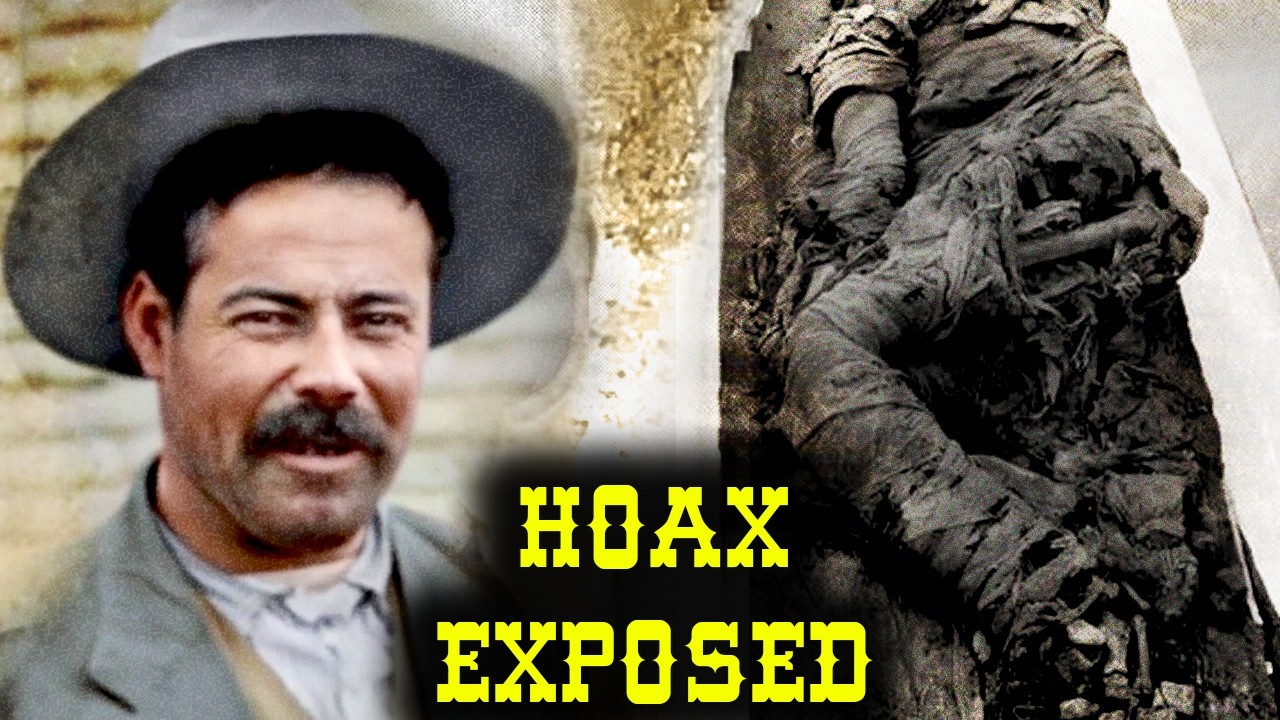
But the killing was not the strangest part of this story. Two and a half years later, someone opened Pancho Villa's grave, pried apart his coffin, and sawed off his head. The head has never been found.
The theories about who took it and why involve the United States military, an Italian dictator, and a Skull and Bones secret society at one of America's most elite universities. Some of those theories are almost certainly wrong. But at least one of them might be true.
And then there are his last words. "Don't let it end like this. Tell them I said something." The most famous dying words in Mexican history. The problem is, the only man who heard them had every reason to lie.
The man in the Dodge was born Doroteo Arango in 1878 on a hacienda near La Noria in the state of Durango. He was a peon's son, born into debt and born into someone else's land. He was illiterate. He would not learn to read until he was an adult, long after he had already learned to kill.
At 16, he shot a landowner. The story, and Villa told it himself, was that the man had assaulted his sister. Whether the details are exact, the result is not disputed. Young Doroteo Arango became a fugitive. He fled into the Sierra Madre, took the name Francisco Villa, and began the transformation from runaway farmhand to the most famous outlaw in North America.
By the time the Mexican Revolution erupted in 1910, Villa was already a legend in Chihuahua. He could not read a map, but he could move an army. He commanded thousands, at his peak a cavalry force that rivaled anything on the continent. He robbed trains to fund his campaigns and gave the money to the poor. Hollywood filmmakers literally followed him into battle.
Then Villa made enemies he could not outrun. In 1916, he raided the town of Columbus, New Mexico, American soil. President Woodrow Wilson sent General John "Blackjack" Pershing with 10,000 troops across the border. The punitive expedition covered 500 miles of Mexican desert and failed to catch one man. Pershing went home empty-handed. The humiliation never faded.
By 1923, Villa had become exactly what he had fought against. He owned Canutillo, a massive hacienda. He employed peons. The revolutionary who bled for land reform was now a landlord. He had married five times, fathered 18 children, and settled into a retirement that looked from the outside almost peaceful. From the inside, it was a slow-burning target.
Villa had no shortage of enemies in 1923. The Carrancistas, followers of the late President Venustiano Carranza, had never forgiven him. The Mexican government under President Álvaro Obregón had made a deal with Villa: retire quietly, take the hacienda, stop making trouble. But Villa was talking about returning to politics. Rumors reached Mexico City that he intended to run for governor of Durango.
The man who actually organized the killing was a schoolteacher. Jesús Salas Barraza was 38 years old in the summer of 1923. He had been born in Coahuila and for a time had taught children in a rural school. Then the revolution came, and the teacher became a soldier. He fought with Carranza's Constitutionalists. He fought against Villa.
By 1923, Salas Barraza had assembled a cell of seven men, volunteers, not conscripts. They were miners and farm workers from Chihuahua and Coahuila, all veterans of the revolution, all carrying personal grudges. They armed themselves with Mauser 98 bolt-action rifles and waited for their moment.
"We trembled with excitement, but duty steeled us," Salas Barraza wrote later in his confession. The schoolteacher had become an assassin, and he did not feel conflicted about it. He felt righteous.
Seven men with rifles against the most dangerous guerrilla commander in Mexican history. The reason they believed they could take him comes down to one decision Villa made weeks before the ambush. He decided to stop being afraid.
For the first year of his retirement at Canutillo, Villa had traveled like a man who expected to be murdered, because he was. His bodyguard numbered between 20 and 50 armed men. Scouts rode ahead. The routes varied. But retirement does something to a man. Slowly, the bodyguard detail shrank. 20 became 10. 10 became six. Six became four.
Villa began driving himself into Parral, a 10-km trip along the road he had taken dozens of times without incident. His loyalists warned him. Villa reportedly waved them off. He had survived Pershing's 10,000 soldiers. He had survived the revolution itself. He was Pancho Villa. Who would dare?
On July 20, 1923, he climbed into his 1919 Dodge roadster with four men: his driver, two bodyguards, and Ramón Contreras, a ranch hand turned fighter in his early 30s. Contreras was loyal, tough, and armed. He was also the only one who would survive the next hour.
The ambush site was a stretch of dirt road flanked by a dense stand of cottonwood trees. Salas Barraza had chosen the spot carefully. The grove sat close enough to the road that a rifle shot at a passing car would be nearly point-blank.
The seven riflemen arrived in the early afternoon and positioned themselves behind the trees. The summer heat was brutal, over 30° C. They had been tipped off by a network of informants in Parral. Today the scouts had confirmed Villa was driving from Canutillo. He would take this road. He would pass this grove.
At roughly 7:00 in the evening, Villa was behind the wheel of the Dodge roadster. The road was familiar. No one was scanning the tree line. No one was watching for the glint of a rifle barrel in the fading light. They were five men going home.
In the grove, Salas Barraza heard the engine before he saw the car. He turned to his men. He gave the signal.
The car approached the grove. The shadows of the cottonwoods fell across the road. And then someone shouted from the trees, "Viva Villa!" It was a greeting, or it was a signal, or it was both. A final bitter piece of irony: the famous revolutionary's battle cry turned into the last thing he would ever hear.
The grove came alive with gunfire. The Mausers opened up. More than 40 bullets crossed the ten meters between the trees and the Dodge in a wall of sound that eyewitnesses in Parral, ten kilometers away, later claimed they could hear rolling across the flatland like distant thunder.
More than 40 bullets hit the Dodge roadster. Holes punched through the metal body, through the doors, through the windshield, through the seats. There was no battle here. This was an execution with a car for a coffin.
The driver was hit first or simultaneously with Villa. The two bodyguards in the back seat were struck multiple times. The car veered to the right, off the road, and ground to a stop in the dust and scrub.
Inside the car, three men died in the first 30 seconds. Nine bullets struck Pancho Villa. Four entered his head. The forensic reality of that is unsurvivable, instant, catastrophic, final.
Ramón Contreras, bleeding from a graze wound, turned to look at his boss. "I saw Villa's hand reaching for his gun," Contreras told a Parral newspaper journalist that same night, speaking through bandages. "He was ready to fight even in death." The .45 caliber pistol lay on the seat where Villa had placed it. His right hand was extended toward it.
Whether that extension was a final conscious act of defiance or simply the way a body falls when it is struck by multiple rounds to the head, Contreras chose to see it as defiance. Mexico chose to believe him.
From the grove, the assassin Aureliano González, the miner, saw something different. He wrote in his diary, "The shout surprised even us. Then we fired without mercy. What terrified me was Villa's calm face in death. That calm was not courage. It was the instant cessation of a life."
Now the question of the last words. "Don't let it end like this. Tell them I said something." Contreras reported these words in interviews that same evening and repeated them consistently for years afterward. They are among the most famous dying words in the history of the Americas.
They are also, in all probability, impossible. Villa was hit by nine bullets, four in the head. The medical reality of four head wounds from Mauser rounds does not leave room for speech. Forensic experts who have examined the autopsy report consistently conclude that death was instantaneous.
Contreras was the only survivor. There were no other witnesses. He told a story in which his commander died with poetry on his lips and no one could contradict him. Whether Villa said those words or not, they became true in the way that myths become true, not because they happened, but because they captured something real.
While Villa and three others died in the car, Ramón Contreras did something remarkable. He fought back. He was in the back seat, partially shielded by the bodies of the two bodyguards. In the chaos of the barrage, Contreras pulled his weapon, leaned out from behind the wreckage, and fired. He killed one of the seven riflemen.
The surprise was enough to create a gap, a moment of hesitation in the firing line. Contreras used it. He threw himself out of the car, hit the dirt road, and ran. He reached help and raised the alarm.
Within hours, Villa's loyalists had recovered the bodies and transported them the ten kilometers back to Parral. The Dodge roadster sat on the side of the road riddled with more than 40 bullet holes.
The news moved through Parral like a shockwave. By midnight on July 20, 1923, the town knew. By the morning of July 21, all of Chihuahua knew. By that evening, telegraph wires had carried the message to Mexico City. Pancho Villa was dead.
On July 22, the funeral procession through Parral drew thousands. Villa's body in a wooden casket was carried through streets lined with mourners. The ceremony lasted approximately two hours, and when it was over, the casket was lowered into a cemetery plot and sealed beneath a cement slab.
The assassins scattered. Six of the seven had survived. But Salas Barraza did something unexpected. Within days, he surrendered to authorities. From his jail cell, he wrote a letter to the governor of Chihuahua. "We acted in the name of duty to the fatherland," he declared.
Salas Barraza was convicted but served minimal prison time. He was released, lived freely, and died in 1957, 34 years after the assassination, having written memoirs that presented the killing as a patriotic act. González fled to the United States and was never brought to trial. The other four assassins vanished into history.
The grave was sealed. The cement slab lay heavy and final over the wooden casket. Pancho Villa was dead, buried, and it seemed finished. But the grave would not be left in peace.
From July 1923 to February 1926, nothing happened at Pancho Villa's grave. The years between the burial and the desecration are important because they eliminate the most obvious theory. If the head had been taken immediately after death, it would have happened in the chaos of July 1923. It did not.
Whoever opened that grave did so two and a half years later, deliberately, with tools in the middle of the night. This was not a crime of passion. This was a mission.
February in Parral is cold. The cemetery caretaker, a man in his early 50s who could not read or write, began his morning patrol at approximately 6:00 in the morning as he did every day. What he found that morning would make international headlines.
The cement cover on one of the graves had been disturbed. Pieces of the casket were missing, and the body within had been mutilated. The head of the famous resident had been removed.
The cement slab had been shifted roughly 30 centimeters, just enough to access the casket below. The wooden lid had been partially destroyed. An estimated 20 to 30 percent of the lid was gone, broken apart with what investigators believed were crowbars or similar tools. The body inside had been disturbed. And the head, Pancho Villa's head, had been cleanly severed and taken.
This was not grave robbery. Nothing of material value was taken. Whoever did this wanted one thing and one thing only: the skull of Pancho Villa.
The investigation that followed produced no arrests, no witnesses, and no physical evidence pointing to a perpetrator. The head of Pancho Villa has never been recovered.
The theories began circulating immediately and have never stopped. The United States military had never forgiven Villa for the Columbus raid and the humiliation of the punitive expedition. In one version, American intelligence agents or Pershing loyalists arranged the desecration to obtain Villa's skull as a trophy or for study.
A persistent sub-theory claims that members of Yale University's Skull and Bones secret society were involved. No documentary evidence has ever surfaced.
The most sensational claim is that Villa's head was sent to Benito Mussolini in Italy as a gift or curiosity. This theory gained traction in the 1960s through tabloid reporting but has been thoroughly debunked by Italian archival research. There is no record of such a gift in Mussolini's extensive inventories.
Chihuahua folklore and 1926 police speculation pointed to local enemies of Villa who may have taken the head for use in brujería, or witchcraft rituals. In rural Mexico in the 1920s, the skulls of powerful men were believed by some to carry supernatural properties.
The darkest theory involves Obregón's government. They wanted Villa dead. They got their wish. But a dead Villa could still become a martyr, a revolutionary saint whose grave became a pilgrimage site. A headless corpse is harder to mythologize. The desecration in this reading was not about the skull. It was about the symbol. Remove the face and you remove the icon.
No theory has been proven. No arrests were ever made. The head remains missing a century later.
Contreras, the only man who claimed to hear Villa's dying words, lived quietly in the Parral area for the rest of his life. He died obscurely in the 1940s. He never changed his story. He never admitted to fabricating the famous last words. But he also never had to prove them because there was no one left alive who could contradict him.
Pancho Villa's grave is still in Parral. Tourists visit it. Guides tell the story of the assassination and the headless corpse and pause for effect at the part about the missing skull.
Villa himself has undergone the transformation that Mexico specializes in: from human being to symbol, from man to myth. He appears on murals and in corridos. The complexities, the five wives, the 18 children, the hacienda where he employed the same kind of peons he had once fought to liberate, those get smoothed away. What remains is the image, the mustache, the bandolier, the horse, the legend.
The head theft was not just a crime. It was the final act in the transformation of Villa from a man into a ghost. A body with a head can be laid to rest. A headless body is an open question.
Whoever took that skull, American agents, local enemies, political operators, they guaranteed that Villa's story would never have an ending. And a story without an ending cannot be buried.
The popular image is of a man gunned down in the heat of revolutionary battle, going out in a blaze of glory. The truth is quieter and sadder. Villa was retired. He was driving to town. He had four men with him instead of 50 because he had started to believe his own survival meant he was untouchable.
He was killed on a dirt road by seven men, farmers and miners led by a former school teacher, in an ambush that lasted less than a minute. There was no battle. There was no last stand. There was a car full of bullet holes and a man who never got his hand to his gun.
DNA testing has been proposed as a way to settle the matter once and for all, to match a skull if one ever surfaces. The proposals have never been funded. The mystery persists not because it cannot be solved, but because no one with the power to solve it has decided it matters enough.
Return to the beginning. A Dodge roadster on a dirt road. Five men inside. A pistol on the seat. 40 bullets and 60 seconds. And then, two and a half years later, someone in the dark with tools and purpose opening a grave and removing a head, not for money, not for revenge, but for something harder to name: control of the story, ownership of the legend.
The final theft was not of a skull, but of the right to decide how Pancho Villa is remembered.
"Don't let it end like this. Tell them I said something."
They did. And they are still arguing about what it was.