Carolyn Roehm was once the undisputed empress of New York society. In 1987, she stood in the Temple of Dendur at the Metropolitan Museum, draped in silk, hosting a party that cost millions. She was the wife of the most feared man on Wall Street, a woman with private jets, Renoirs, and the envy of the world.
Just four years later, that same woman stood in a grocery store checkout line, humiliated and trembling, unable to pay for milk because her credit cards had been cancelled without warning. She had been discarded. The queen of the nouveau riche hadn’t just fallen from grace. She had been executed by the very social hierarchy she had conquered.
This is the story of a woman who climbed to the highest peak of high society, only to learn that in the world of the super-rich, you are never truly a partner. You are just an employee who can be fired.
Born Carolyn Jane Smith in 1951 in Kirksville, Missouri, she grew up in the heart of the American heartland. Her father was a school principal. Her mother was a teacher. It was a life of safety and predictability, governed by the rhythms of the school year and Sunday church services.
But Carolyn was different. She felt a profound sense of displacement. While other girls dreamed of being cheerleaders or teachers, Carolyn dreamed of a world she had only seen on the glossy pages of magazines. She devoured Vogue and Harper’s Bazaar not as entertainment, but as maps. She was teaching herself the language of elegance.
She realized early on that clothes were not just functional. They were transformative. They were armor. With the right dress, a girl from Missouri could become a princess. With the right silhouette, she could escape the gravity of her ordinary life.
After high school, she attended Washington University in St. Louis, one of the few schools in the Midwest with a serious fashion design program. But St. Louis was still too small. The beating heart of the industry was in New York City.
In 1973, armed with a portfolio and a terrifying amount of determination, Carolyn bought a one-way ticket to Manhattan. The New York she arrived in was gritty, dangerous, and teetering on the edge of bankruptcy. To a girl from Kirksville, it should have been terrifying. To Carolyn, it was Oz.
She landed a job that would define her life. She became an assistant to Oscar de la Renta. It was not just a job. It was an adoption. Oscar was the grand señor of American fashion, a man of immense charm and deep connections to the old-money aristocracy. In Carolyn, he saw a mirror of his own love for beauty.
Oscar took her under his wing. He taught her not just how to sketch a gown, but how to live the life of the women who would wear it. He taught her about French furniture, floral arrangements, and the subtle codes of high society. He introduced her to the swans, legendary socialites like C.Z. Guest and Babe Paley.
Carolyn watched them. She studied them. She was shedding the skin of Carolyn Jane Smith from Missouri and becoming someone polished and refined.
During these early years, she made her first foray into wealth through marriage. She married Axel Roehm, a German chemical heir. The marriage was short-lived, but it gave her a new last name with a European aristocratic ring. The Smith was gone forever.
By the early 1980s, Carolyn was a rising star in the fashion world. She was beautiful, talented, and single. She was moving in the right circles, but she was still on the periphery of the true power structure.
Then, at a dinner party, the final piece clicked into place. She met Henry Kravis.
Henry Kravis was not a designer. He was a shark. As one of the founders of KKR, he was the pioneer of the leveraged buyout. He was reshaping the American economy, buying up massive companies using debt, stripping them down, and selling them for profit. He was the man who would inspire the book *Barbarians at the Gate*.
Physically, they were a mismatch. Carolyn was tall, statuesque, and willow-thin. Henry was shorter, intense, with eyes that constantly scanned the room for the next opportunity. But functionally, they were perfect for each other.
Henry needed a queen. He had billions, but he lacked social cache. He needed a wife who could host the perfect dinner party, decorate the perfect house, and look perfect on his arm at the Metropolitan Opera. Carolyn saw in Henry the ultimate patron. With his resources, she could have her own label and the houses she had dreamed of since girlhood.
Their courtship was a merger of ambitions. They married in 1985. It was not a quiet affair. It was a coronation.
Carolyn Roehm became Mrs. Henry Kravis and overnight ascended to the very peak of the social mountain. The couple became the center of a new social solar system. This was the era of the nouveau riche, a group of flashy newcomers pushing aside the quiet money of the past. They didn’t want to hide their wealth. They wanted to celebrate it.
Carolyn threw herself into the role of hostess with obsessive focus. She bought 18th-century French furniture that belonged in museums. She filled their Park Avenue apartment with Renoirs and Monets. She bought estates in Connecticut, Colorado, and the Dominican Republic.
The jewel in her crown was her own fashion label. With Henry’s backing, she launched the Carolyn Roehm brand in 1985. The clothes were beautiful, classic, and unapologetically luxurious. Nancy Reagan became a client. The Duchess of York wore her designs.

From the outside, it looked like the perfect life. Vogue, Town & Country, and W chronicled the Kravis lifestyle with breathless adoration. But there is a law of physics in high society. The brighter the light, the darker the shadow.
The sheer labor required to be Carolyn Roehm was exhausting. She was running a struggling fashion business, managing five households, overseeing a staff of dozens, and maintaining a social calendar that would break a diplomat. She was performing a role 24 hours a day.
Henry approached everything in life with a transactional mindset. He had invested in Carolyn and he expected a return. As long as the stock market was booming, the arrangement worked. But the wind on Wall Street was beginning to shift.
If there was a single night that marked the zenith of the Kravis Empire, it was December 7, 1987. The location was the Metropolitan Museum of Art. Henry had just completed the legendary leveraged buyout of RJR Nabisco, a deal worth $25 billion, the largest in Wall Street history.
For that one night, Carolyn transformed the Temple of Dendur into her own private court. She imported thousands of yards of silk to drape the ancient sandstone walls. She flew in out-of-season flowers by the cargo plane load. The guest list was a roll call of global power: Henry Kissinger, the Rockefellers, the Beises, the Trumps.
The press dubbed it a scene from *The Great Gatsby* brought to life in the age of the junk bond. It was the moment where the brute force of new money finally eclipsed the quiet restraint of the old guard.
But in the economy of hubris, the bill always comes due. The stock market had crashed in October 1987, sending a tremor of fear through the financial class. The public mood was turning. The “greed is good” mantra was starting to sound less like a philosophy and more like an indictment.
Inside the Kravis marriage, the atmosphere was cooling just as rapidly. Henry Kravis lived by the numbers. As the 1990s approached, he began to run the numbers on his wife’s fashion business.
The Carolyn Roehm label was a critical darling, but financially it was a disaster. High fashion is a furnace that burns cash. Carolyn refused to compromise on quality. The business was losing millions of dollars a year, losses Henry had been quietly covering.
But Henry Kravis didn’t become a billionaire by subsidizing failing assets indefinitely. As the pressure on his own business mounted, his patience evaporated. The trophy was becoming expensive to polish.
Furthermore, the lifestyle Carolyn had curated so meticulously began to feel like a cage. She was the chief operating officer of Kravis, Inc., managing the houses, the staff, the dinner parties, and the charity galas. The spontaneity had been strangled by the schedule.
Then came a tragedy. In 1991, Carolyn’s beloved stepson, Henry’s son from a previous marriage, died in a car accident. The grief was shattering. But instead of bringing them together, it drove a wedge between them. Henry processed his pain by working harder. Carolyn needed to stop and mourn.
The end arrived in 1991, and it was brutal. Henry asked for a divorce. For Carolyn, the shock was total. She thought she was a partner. She discovered she was an employee who could be fired.
Because she had signed a prenuptial agreement, she was not walking away with half the empire. The financial blow was secondary to the professional execution. Henry stopped funding the fashion label. Overnight, Carolyn Roehm went from being a top American designer to being unemployed.
The fall from grace was dizzying. In the stratified world of New York society, status is often attached to the husband rather than the wife. When Carolyn was Mrs. Henry Kravis, she was the sun around which the planets revolved. When she became just Carolyn Roehm, divorcee, the planets moved on.
Invitations stopped coming. Phone calls went unreturned. It was a cold, silent exile.
There is a story from this period that perfectly captures the humiliation of her descent. Shortly after the separation, Carolyn found herself alone in a grocery store. She filled her cart with food. When she got to the register, she handed over her credit card. It was declined.
Henry, or his accountants, had cancelled the cards. There she stood, the woman who had draped the Temple of Dendur in silk, unable to buy milk and bread. She had to leave the cart and walk out of the store with nothing.
She retreated to the one piece of property she had managed to keep in the divorce settlement: a historic house in Connecticut called Weatherstone. It was beautiful, but it was empty. The Renoirs were gone. The servants were gone. Carolyn Roehm was 40 years old, with no husband, no children, no business, and her social standing in ruins.
She could have crumbled. Many women in her position did. But Carolyn possessed something Henry couldn’t repossess: taste. She had an eye. She had the ability to look at a blank canvas or a barren garden and see the beauty that could be there.
In the silence of Connecticut, Carolyn began to plant a garden. It started as therapy. She got down on her knees in the dirt. She dug. She pruned. She planted. As she worked the soil, something miraculous began to happen.

She began to arrange the flowers she grew. She arranged them like a fashion designer, playing with color, texture, and scale. A friend suggested she write a book about her flowers.
In 1997, she published *A Passion for Flowers*. The industry expected it to flop. But the public disagreed. The book was a sensation. It launched a second career. Carolyn Roehm wasn’t just Henry Kravis’s ex-wife anymore. She was a lifestyle icon.
But just as she was finding her footing, the universe had one final cruel test in store.
By the late 1990s, Carolyn had achieved a second act. Weatherstone, the historic house in Sharon, Connecticut, built in 1765, had become her fortress. She had poured every ounce of her creativity into restoring it. It wasn’t just a house. It was a mirror.
Then, on a freezing night in January 1999, the universe decided to test her resolve one more time. A fire began in the middle of the night, likely sparked by an electrical fault in the ancient wiring. Carolyn managed to escape with her dogs, running out into the snow in her nightclothes.
She stood on the frozen lawn and watched her life burn down. Inside the house were the archives of her fashion career, the sketches from the Oscar de la Renta years, the patterns from her own label. Inside were the family photographs, the love letters, and the irreplaceable antiques.
By morning, Weatherstone was a smoking, blackened crater.
For most people, this would have been the breaking point. To lose everything once in the divorce was a tragedy. To lose everything twice in a fire felt like a targeted assassination by fate.
But the fire did something unexpected. It cauterized the wound. Standing in the ruins, Carolyn had a revelation. She had survived. The fire could destroy her possessions, but not the hand that created beauty, or the eye that recognized it.
Instead of leaving, she decided to rebuild. She didn’t want to reclaim the past. She wanted to build something better. She wanted to build a tribute to endurance.
The reconstruction of Weatherstone became her magnum opus. She became the general contractor, the architect, and the historian. She dove into the archives of American colonial architecture.
This project marked a shift in her public persona. In the 80s, she had been the trophy wife. In the late 90s and early 2000s, she became the maker. She was photographed in hard hats holding blueprints. She demystified the process of creating beauty.
As the new Weatherstone took shape, so did Carolyn’s new life. She expanded her publishing career. She wrote books about wrapping presents, about summer parties, about winter comfort. Each book was a bestseller.
She launched a line of home accessories, not financed by a billionaire husband, but funded by her own earnings. She was building a business that was sustainable.
And in the midst of this reconstruction, she found love again. But this time, it wasn’t a transaction. She wasn’t looking for a savior or financier. She was secure enough to want a partner, not a patron.
As the new millennium dawned, the scaffolding came down around the resurrected Weatherstone. The house that emerged from the ashes was not a replica. It was a refinement. It was a physical manifestation of her own internal restructuring.
The completion of the house was merely the backdrop for a far more significant reconstruction: the rehabilitation of her name.
Carolyn refused to follow the script of the discarded first wife. She refused to be a ghost. Her weapon of choice was the printing press.
Following the success of *A Passion for Flowers*, she embarked on a publishing marathon. Her books, *At Home with Carolyn Roehm*, *Presentations*, and *A Passion for Blue and White*, were tactile experiences. They were heavy, bound in silk, filled with photographs that looked like Renaissance paintings.
Carolyn democratized the aesthetic of the Upper East Side. She showed that you didn’t need a staff of ten to fold a napkin beautifully. You just needed to care. By selling the secrets of high society to the masses, she made herself independent of high society.
Slowly, inevitably, the ice on the Upper East Side began to thaw. As Carolyn’s books topped the charts, the invitations began to trickle back in. The women who had crossed the street to avoid her in 1992 began to greet her with air kisses in 2002.
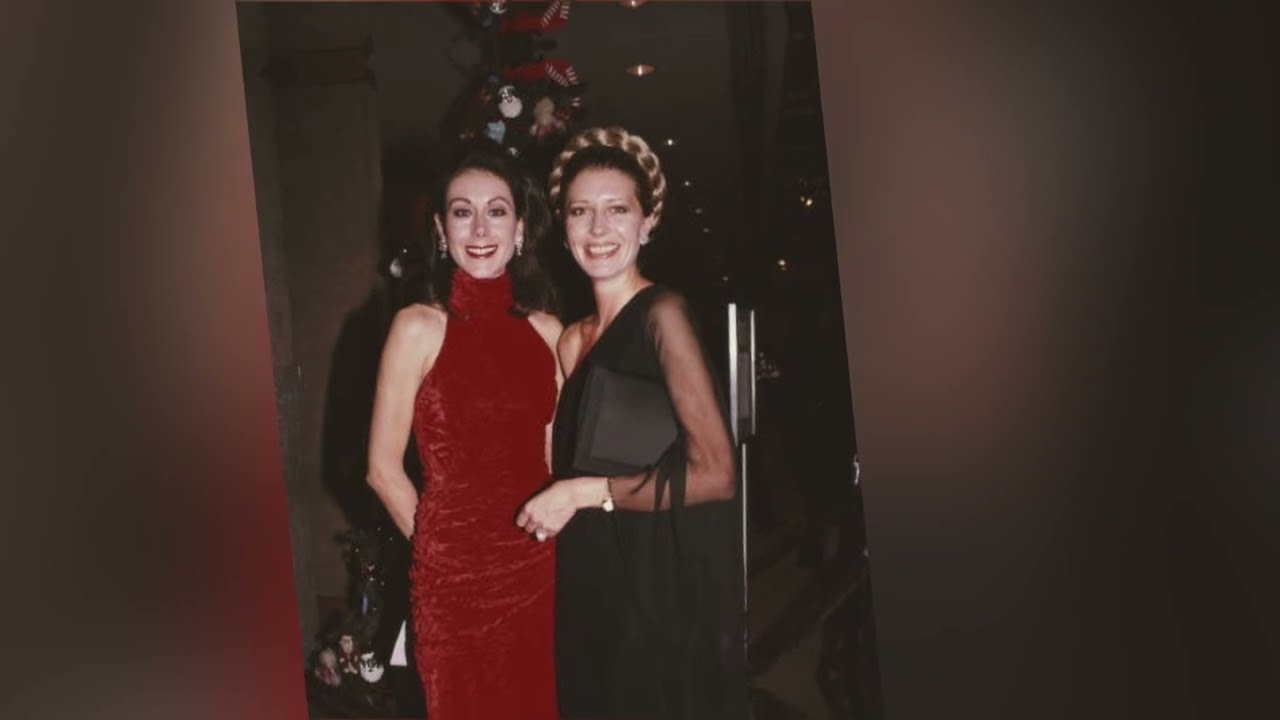
But the woman who returned was not the same woman who had been exiled. The Mrs. Henry Kravis who had thrown the million-dollar parties was desperate to please. The Carolyn Roehm who walked into the gala in 2005 was cooler, calmer, and possessed of a steely self-assurance.
She also found a new kind of partnership. She entered a long-term relationship with Simon Pinniger, a man who was handsome, kind, and distinctly not a master of the universe. It was a relationship built for living, not for photographing.
As the decade progressed, Carolyn began to think about legacy. She became a mentor to younger designers and authors. She spoke openly about her failures. She realized that her scars were what made her interesting. Perfection is boring. Survival is riveting.
By 2010, the nouveau riche society of the 80s was a distant memory. But Carolyn remained. She had outlasted the trend she helped create. She was no longer fashionable. She was classic.
In a sense, she fulfilled the promise of her name. The original Vanderbilts built railroads to connect the country. Carolyn Roehm built a bridge between the aspirational and the attainable.
As she walked through the gardens of Weatherstone in her later years, surrounded by the peonies she had planted with her own hands, Carolyn must have felt a profound sense of irony. She had traveled the world and dined with kings. But she found her true kingdom on a plot of land in Connecticut, armed with a pair of gardening shears.
She proved the last swan didn’t die when the lake froze. It learned to fly.
In the second decade of the 21st century, the digital age did not render Carolyn Roehm obsolete. It beatified her. As millions of young people began to curate their own lives online, they looked for blueprints. They stumbled upon the images of Weatherstone and saw a lost civilization of elegance.
She became the grandmother of the aesthetic internet. She joined Instagram, but she used it as a digital gallery. She posted photos of her watercolors, her dogs, and her peonies. She proved that dignity could translate to the pixel.
Carolyn Roehm serves as the crucial link between two distinct eras of American womanhood. She is the spiritual heir to the swans of the mid-century. But unlike the swans, Carolyn did not die when her husband left. Babe Paley withered under the infidelities of Bill Paley. Slim Keith drifted into a lonely old age.
Carolyn broke that mold. She was the swan who learned to fly. She took the skills that were traditionally dismissed as women’s work—decorating, gardening, entertaining—and professionalized them. She monetized her taste.
Her life offers a profound commentary on the nature of American ambition. Carolyn started as the ultimate climber. She wanted the highest peak. She got it. And she found out in the most brutal way possible that the view from the top is cold and lonely.
Her fall in the early 90s was a necessary destruction. It stripped away the artifice. It forced her to confront the difference between status and worth. Status is what Henry Kravis gave her. Worth is what she built in Connecticut.
As Carolyn moves through her 70s, she occupies a unique space. She is a survivor of the bonfire of the vanities. She paints watercolors that sell to collectors. She continues to refine her house. She mentors younger women.
But the scars remain. There is a certain melancholy in her eyes, a shadow that lingers behind the smile. It is the memory of the humiliation in the grocery store. It is the memory of the fire. It is the memory of the friends who turned their backs.
Carolyn Roehm knows better than anyone that the ice is thin. And perhaps that is the source of her beauty now. It is no longer the brittle porcelain perfection of the 80s trophy wife. It is the weathered, resilient beauty of the garden she tends.
A garden is beautiful not because it is perfect, but because it survives the winter. It endures the frost, the rot, and the storms, and it blooms again.
Ultimately, the legacy of Carolyn Roehm is found in the simple, radical act of planting a seed in the ashes of a burnt-down house.
Imagine her there at Weatherstone on a quiet evening in late summer. The sun is setting, casting long golden shadows across the lawn. Carolyn is walking through the garden, her dogs at her heels. She stops to inspect a hydrangea bush. She prunes a dead leaf.
She looks back at the house, the house that burned and rose again. It glows in the twilight, warm and solid. It is a monument to the only thing that truly matters: the refusal to give up.
The world called her a socialite, a gold digger, a victim, a swan. But standing there with the dirt on her hands and the sky turning purple above her, she is none of those things. She is simply the gardener.
And she knows that as long as she tends the soil, the beauty will return.