In 1991, a doctor cycled to Kensington Palace with a briefcase in his bicycle basket. Inside were a tape recorder and a list of questions from a journalist. The woman waiting for them was the Princess of Wales.
She clipped the microphone to herself and talked about her marriage, her bulimia, and the woman she believed had taken her husband. A year later, the Queen's private secretary, who was also her brother-in-law, asked her directly whether she had helped with the book. By the author's account, she looked him in the eye and said no.
The man on the bicycle was James Colthurst. He had known the Princess of Wales since a ski trip when she was about 17. He was a medical student then. She had twisted her ankle, and he offered to look at it.
Colthurst came from an Irish landed family. He became a doctor for most of his life. In October 1986, he met a journalist named Andrew Morton, who wrote about the royal family for a living. Morton could not get access to the princess herself, and the palace would never have allowed an interview.
So in 1991, the two men found another way. Morton wrote questions. Colthurst carried them. He would arrive at Kensington Palace for what looked like lunch with an old friend. In the briefcase sat a tape recorder.
Colthurst later described what happened when he arrived. She snatched the questions away from him and clipped the microphone onto herself. Sometimes Colthurst did not even need to stay. She would keep talking after he had gone, alone in the room, and he would collect the tapes and carry them back across London.
The method gave her something she valued more than any interview. It gave her distance. Morton never sat in that room. If anyone asked whether she had spoken to him, she could say that she had not, and in the narrowest sense, it would be true. Her publisher would later use a single word for what the arrangement bought her. The word was deniability.
Colthurst later listed the subjects that came up during the sessions. There were the suicide attempts. There was Camilla. There was the bulimia. These were things no one in her family had ever spoken of in public.
Over the next six years, the Princess of Wales would build a whole second life. There would be men the palace did not choose. There would be a false name on a hospital switchboard, a wig, a borrowed jacket, and a car with a man folded into its boot. Almost none of it was confirmed while she was alive.
The final piece, the truth about how her most famous interview was obtained, would not arrive until 24 years after her death.
Ten years before the bicycle, the same woman had stood at the altar of St. Paul's Cathedral in front of an audience of hundreds of millions. She was born Diana Frances Spencer on the 1st of July 1961 at Park House on the Sandringham estate in Norfolk. The Spencer family rented the house from the Queen.
The Spencers were one of the oldest families in England. Her father had served as an equerry to two monarchs. His daughter was raised close to the throne. Park House itself was a grand place for a childhood, but not a happy one.
She was the fourth child, born 18 months after the death of a longed-for son. In 1967, when she was six, her mother left the marriage. The next year, her mother lost a custody case for the children. Society gave Frances a name that stuck for decades. They called her the bolter.
On Morton's tapes, she remembered the day her mother drove through the gates of Park House and out of her life. At night, she could hear her younger brother sobbing, crying for his mother. She learned early that grown-ups kept secrets and that families took sides.
In 1975, her father became Earl Spencer, and the family left Park House for Althorp. She was not raised to sit on a throne. Before the engagement, she shared a London flat with friends and worked at the Young England kindergarten in Pimlico, looking after small children. The press pursued her relentlessly and nicknamed her Shy Di.
The courtship was short. Prince Charles had met her only around a dozen times before he proposed. Her grandmother, Lady Fermoy, warned her that their sense of humor and their lifestyle were different and that it would not suit her.
The engagement was announced on the 24th of February, 1981. That day, in a television interview, the young couple were asked whether they were in love. She said, of course. Prince Charles added a phrase that would follow them both for the rest of their lives. Whatever in love means, he said.
The wedding came on the 29th of July 1981. Some 3,500 guests filled St. Paul's Cathedral. An estimated 750 million people watched on television around the world. She was 20, the groom 32.
Within a year, she gave birth to Prince William, and in 1984 to Prince Harry. The public saw a fairy tale, and the palace had every reason to keep selling it. One guest the cameras did not linger on was Camilla Parker Bowles, who sat in the congregation dressed in gray and pink.
By the later accounts of both husband and wife, the marriage was failing almost from the start. On Morton's tapes, she dated her bulimia to the period of the engagement. The cycle of eating and purging was hidden from the cameras that followed her everywhere.
Through the 1980s, she became the most photographed woman alive. By the middle of the decade, the Prince and Princess of Wales were living largely separate lives. They kept separate staffs and separate diaries. The marriage became two households sharing an address.
In 1985, a police officer named Barry Mannakee was assigned to protect the Princess of Wales. By her own account, she fell in love with him. In 1986, he was transferred out of royal protection. In her own words, he had been chucked out.
On the 15th of May, 1987, Mannakee was riding as a passenger on a motorcycle that collided with a car. He died of a spinal cord injury. An inquest found that his death was an accident. On her later recordings, she called his death the biggest blow of my life.
In the summer of 1986, the Princess of Wales began taking riding lessons from an officer of the Household Cavalry. His name was James Hewitt. The lessons gave them a reason to be seen together, and the reason became a relationship. It would last, by the usual reckoning, for roughly five years.
In 1991, Hewitt went to the Gulf War. While he was in the desert, she wrote to him. One line from her correspondence would surface in 2003. She said, Boy, oh boy, does the earth shake when I get a letter from my desert friend.
By the end of 1991, the relationship was over. In the early autumn of 1994, a book called Princess in Love was published with Hewitt's cooperation. The British press turned on him at once.
She did not deny him in the end. On the 20th of November 1995, she was asked about him directly on the BBC program Panorama. Her answer is one of the most quoted things she ever said. Yes, I adored him. Yes, I was in love with him. But I was very let down.
Hewitt has denied the rumor that he was Prince Harry's father. In 2002, he said that Harry had already been born by the time of the affair. In 2017, he said the same again.
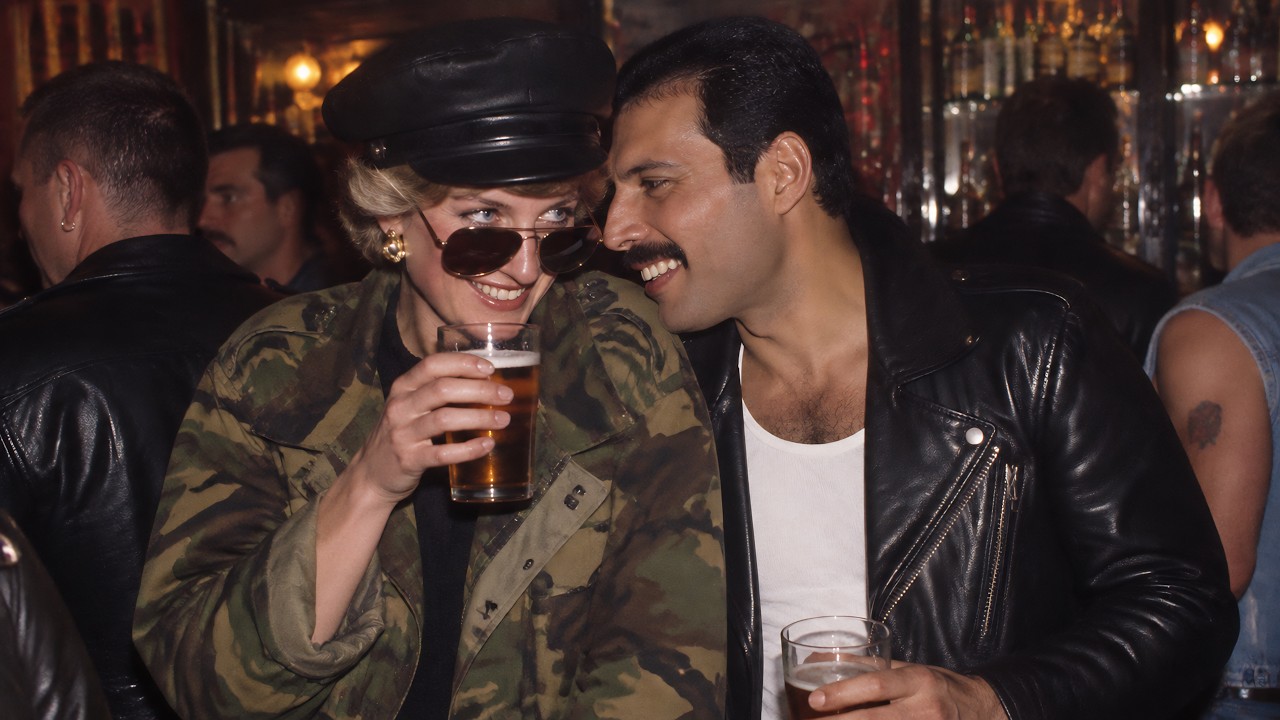
By the account of the actress Cleo Rocos, one afternoon around 1988 ended in a South London pub. Everything in this chapter rests on that account. Rocos was the comedy partner of the television star Kenny Everett.
By her telling, after lunch, the group went back to Kenny Everett's flat. The Princess and Everett danced to the Gypsy Kings. Then the talk turned to the evening. Everett and his friends were planning to go to the Royal Vauxhall Tavern, one of London's best-known gay venues.
According to Rocos, the princess asked to come. She tried on a leather cap, put on aviators, and tucked her hair up. Everett tried to put her off. The man who answered him in Rocos's story was Freddie Mercury. Go on, he said by her telling. Let the girl have some fun.
Rocos says they dressed her in a camouflage army jacket, a leather cap, and dark aviator sunglasses. The group walked into the tavern. Nobody recognized the princess. After about 20 minutes, they left.
Peter Freestone, Freddie Mercury's personal assistant, has said plainly that Mercury never actually met Princess Diana. In his view, the tale belongs with the other legends told about Mercury. The building at least is real. In 2015, it was listed by Historic England as the first building in the country to be listed for its importance to lesbian, gay, bisexual, and transgender history.
On New Year's Eve 1989, the Princess of Wales picked up a telephone at Sandringham and talked to a friend for a long time. The friend was James Gilbey. He had known her since childhood.
He opened the transcript with a question. And so, darling, what other lows today? She told him she had nearly cried at lunch. She said she felt so sad and empty and thought, Bloody hell, after all I've done for this family.
She talked about the Queen Mother. She talked about spiritualism. Gilbey called her by a pet name, Squidgy, over and over. It was the most ordinary kind of conversation, except for who she was. And someone was listening.
Two people later claimed to have recorded the call. One was Cyril Reenan, a retired bank manager. The other was Jane Norgrove, a 25-year-old woman. By their own accounts, both had been listening in from home with radio scanners.
For more than two years, the recording lay in the hands of a newspaper that did not print a word of it. Then, in the summer of 1992, everything changed. A book had been published in June that put the state of the Wales marriage on every front page.
On the 23rd of August 1992, The Sun ran the story on its front page. The scandal was called Squidgygate. The newspaper set up a premium rate telephone line so that readers could hear her voice for themselves. About 60,000 people called it.
In 1993, a company called Audio Tell International examined the recording. It found short bursts of data on the tape that appeared too fast and too loud. Its conclusion was that the tape might have been doctored and the call rebroadcast.
Two engineers argued that the recording could not have been made the way Reenan described. Their conclusion was that the data bursts were added later to make what may have been a local telephone tap sound like a radio interception. If that analysis was right, then someone had tapped the line, recorded the call, and then rebroadcast it.
Some people pointed at the security services. None of it has ever been proved. The security service theory remains just that, a theory.
The tapes that Colthurst carried home in his bicycle basket held a voice the public had never heard. She talked about the engagement. She talked about the bulimia. It was four times a day on the yacht, she said. She talked about despair and about the attempts she had made to harm herself.
Colthurst remembered something else about how she spoke when the questions reached those places. There was a sense of release in her, of unburdening.
Before publication, she wrote to Colthurst. Obviously, we are preparing for the volcano to erupt. She told him, Thank you for your belief in me.
On the 7th of June, 1992, The Sunday Times began to serialize the book under a headline about five suicide bids. Nine days later, the book itself was published. It was called Diana: Her True Story.
The reaction was ferocious. The Archbishop of Canterbury criticized it. Some bookshops refused to stock it. The chairman of the Press Complaints Commission publicly condemned the press. He had been assured by the palace that the princess had not cooperated with the book.
The assurance had come through one man. Sir Robert Fellowes was the Queen's private secretary. He was also married to the princess's elder sister. When he asked her whether she had cooperated with Morton's book, the answer was no.
By Morton's telling, she looked Fellowes straight in the eye and told him a bold-faced lie. Fellowes passed her denial to Lord McGregor. All of it rested on her single word.
What happened to Fellowes when the truth finally emerged belongs to a later chapter. When it did, according to his obituary, he offered to resign.
At 3 pm on the 9th of December 1992, John Major rose in the House of Commons with a statement from Buckingham Palace. It is announced from Buckingham Palace that with regret, the Prince and Princess of Wales have decided to separate. Their royal highnesses have no plans to divorce.
In January 1993, the second tape from that December of 1989 surfaced. It was the recording of Charles and Camilla Parker Bowles. The press called it Camillagate.
On the 29th of June 1994, Prince Charles gave his own account. In a television documentary, he admitted that he had been unfaithful once it became clear that the marriage had irretrievably broken down.
Even before the separation was announced, the princess had begun another set of secret recordings. This time, the man with the recorder was a voice coach named Peter Settelen. Between September 1992 and December 1993, the sessions were filmed on video.
She talked about the protection officer she had loved and lost. She talked about loneliness. There's just nobody to physically scream at, she said. Or someone to put their arms around me. Just listen when I cry.
The tapes then vanished from the story for years. They were seized by police in 2001 from the home of her butler. In 2004, they were returned to Settelen. That same year, an American network broadcast extracts. In 2017, a British channel broadcast more.

On the 13th of January 1994, the telephone in Oliver Hoare's London home rang and no one spoke. It rang again and again. By the reported count, the calls numbered about 300. Hoare was a dealer in Islamic art and a friend of Charles and Camilla.
At first, Hoare reportedly feared the calls were linked to terrorism. The police were brought in. They traced the calls by the published account to telephones inside Kensington Palace, to pay phones near the palace, to the princess's own car phone, and to the home of her sister.
In August 1994, the News of the World published the story. The princess, by the paper's account, had been making silent calls to a married man's house. Her response was immediate. She denied it flatly. I don't even know how to use a parking meter, she said, let alone a phone box.
A year later, on Panorama, she would admit that she had in fact called over a period of six to nine months, though not, she insisted, in an obsessive manner.
On the 27th of August, 1995, by his own later account, a heart surgeon at the Royal Brompton Hospital met the Princess of Wales. She had come to visit a friend's husband. The doctor she met that day was Hasnat Khan.
Khan was born on the 1st of April 1958 in Pakistan. He had qualified in medicine in 1984 and come to London in 1991. By the summer of 1995, he was a registrar at the Royal Brompton. Colleagues remembered him as quiet, with a dry sense of humor, and entirely unimpressed by celebrity.
She noticed him at once. According to the biographer Kate Snell, she turned to her friend and said, Una, isn't he drop-dead gorgeous?
Over the following three weeks, by the accounts of those around her, she returned to the hospital almost every day. To her healer, Simone Simmons, she spoke about him almost immediately. I think I've met my Mr. Wonderful, she said.
About two weeks after they met, the two of them drove out of London together. The destination was Stratford-upon-Avon. Khan later described it in a few plain words. We drove up there, drove back, and found this wonderful connection. He said she was very ordinary in many ways, a normal person with great warmth.
According to the biographer Kate Snell, she said, I'm no longer lonely. I know what love is now.
When the Princess of Wales telephoned the Royal Brompton and asked for Hasnat Khan, the switchboard by several accounts heard another name. She left messages as Dr. Armani. It was a small disguise, almost a joke.
She went further. According to one account, she wore a black wig to slip into a jazz club with him. The real problem was the palace itself. If Khan was to come to her, he could not simply walk through the front door.
The solution, according to her butler Paul Burrell, was the boot of a car. Burrell later said that he drove Khan into Kensington Palace, hidden there. A heart surgeon folded into the luggage space of a car, carried into a royal palace by a butler.
Khan himself said so years later in a sworn statement. Kensington, he said, was the only place we could have any real privacy, as they could not get to us there.
By the accounts of Burrell and the writer Tina Brown, Khan sometimes came straight off long shifts and slept there. The staff were told not to disturb him. Tina Brown's phrase for it was that Khan virtually moved in.
She went to him, too. He lived in a modest rented flat in Chelsea. By the accounts of Burrell and Simmons, she would go there late at night and leave before dawn. They described her doing his washing up and putting away his laundry.
Late in November 1995, a photographer caught her leaving the Royal Brompton in the small hours of the morning. She needed a story, and she needed it fast. She took the photographer's mobile phone and called the News of the World.
She went to the hospital, she said, to sit with patients. I try to be there for them, she told him. I hold their hands, talk to them, whatever helps. The paper ran it under a headline that would follow her for years. My secret nights as an angel.
It was a brilliant piece of misdirection. The man she was really visiting, according to her biographers, was never named. Was the story false? Not entirely. And that is what made it work.
The record of her hospital visits in these years is real and well documented. An 8-year-old girl named Danielle Stevenson recovering from heart surgery was visited by the princess five times. A hospital spokeswoman said she came as often as three times a week.
On the 31st of August 1995, a BBC reporter named Martin Bashir sat down with the Princess of Wales's brother. Bashir was a reporter for Panorama. He wanted an interview on camera with the princess herself. He had decided the way to her was through her brother.
What Bashir told Earl Spencer was alarming. He said that Spencer was a target of the tabloids and that there were people in his own household selling information to the newspapers. He had, he claimed, evidence.
The evidence was forged. Bashir had asked a graphic designer to mock up bank statements. The fake documents appeared to show payments to people close to the family. One set named Alan Waller, a former employee of the Spencer household. Another named Patrick Jephson, the princess's own private secretary.
None of it was true. The statements were made up from start to finish. Lord Dyson, who led the inquiry a quarter of a century later, would put it plainly. By showing Earl Spencer the fake statements and informing him of their contents, Mr. Bashir deceived and induced him to arrange a meeting with Princess Diana.
Years later, Hasnat Khan would say it plainly. Bashir, he said in 2021, had filled her head with rubbish. After meeting him, Khan said she became paranoid with talks of bugs and phone tapping.
On the 5th of November 1995, while Britain lit its bonfires, a BBC crew carried equipment into Kensington Palace under the cover of a new hi-fi system. The interview was recorded in her own sitting room.
The secrecy around it was extraordinary. The BBC's own board of governors was kept unaware. The finished tape was kept under constant watch. The interview was broadcast on the 20th of November 1995.
In Britain, nearly 23 million people watched. Worldwide, the estimate was some 200 million. She said there were three of us in this marriage, so it was a bit crowded. She spoke about depression and bulimia. She spoke about James Hewitt. She admitted making the calls to Oliver Hoare. She said that she would like to be a queen of people's hearts.
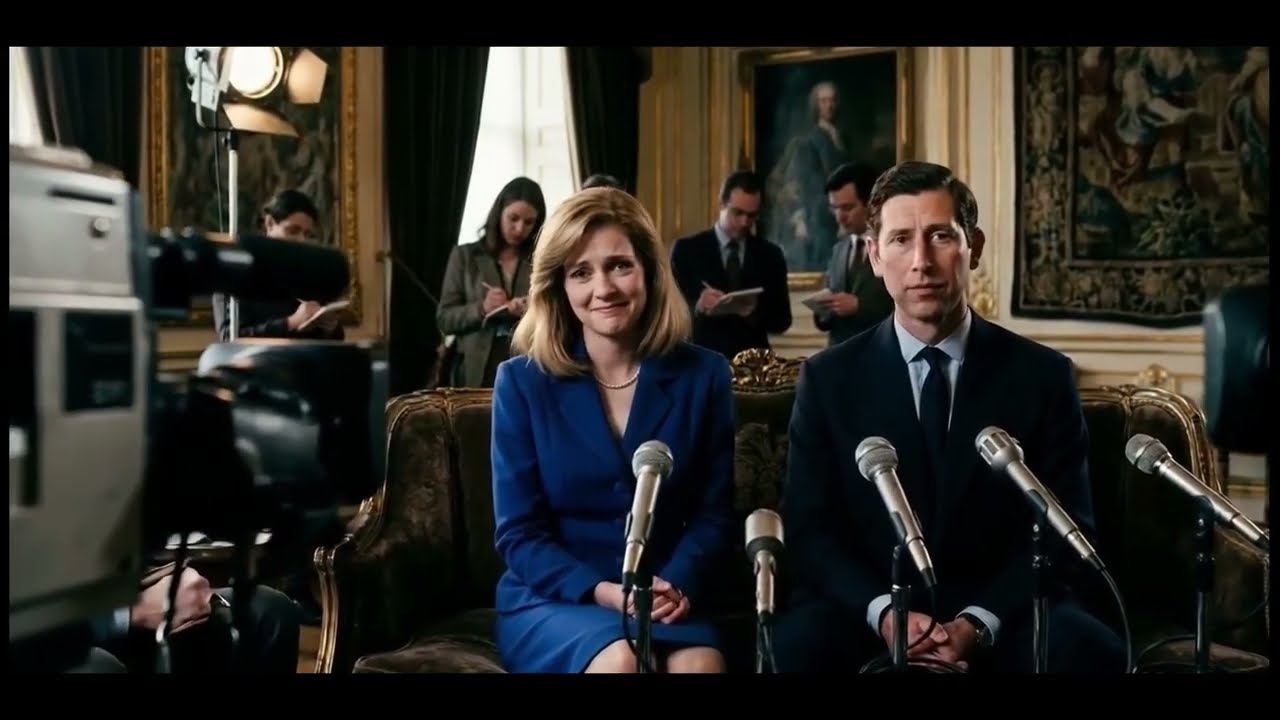
The interview left one thing out completely. In none of the lines quoted from it does she speak of the surgeon who, by her butler's account, was then sleeping at her palace. The one secret that had not yet leaked, she appears to have kept.
The palace's response was swift. In December 1995, the Queen wrote to both her son and her daughter-in-law, urging an early divorce. On the 22nd of December 1995, the princess wrote a short note. Martin Bashir did not show me any documents, she wrote, nor give me any information I was not previously aware of.
In 1996, Paul Burrell, by his own sworn evidence years later, had been sent on an errand. The princess wanted to know if it would be possible to arrange a private wedding. Burrell took the question to a priest. Khan, by Burrell's account, knew nothing of it.
Burrell told the inquest more. She called Khan her soulmate. He said she had considered giving him rooms at Kensington Palace and a second home in Pakistan.
The secret had already cracked once. On the 26th of January, 1996, The Sunday Mirror ran a front-page headline. It reported dinners at a Greek restaurant in Stratford-upon-Avon. It was the first time the relationship was named in print.
She traveled to Pakistan for the first time in February 1996. In May 1996, she went again, staying with Jemima and Imran Khan. During that visit, she went to the Khan family home in Lahore and took tea with his mother.
Jemima Khan later wrote about it in Vanity Fair. The princess, she said, was madly in love with Hasnat Khan and wanted to marry him, even if that meant living in Pakistan. She also explained why it would never happen. For a son to marry an English girl, she wrote, is every conservative Pashtun mother's worst nightmare.
The decree nisi came in July 1996, and the divorce was final on the 28th of August 1996. She kept the title Diana, Princess of Wales. She lost the style Her Royal Highness.
Khan's reasons for not marrying her, when he finally gave them, were simple and devastating. In a statement to police in 2004, later read to the inquest into her death, he said, My main concern about us getting married was that my life would be hell because of who she was.
He went on, I knew I would not be able to live a normal life, and if we ever had children together, I would not be able to take them anywhere.
In May 1997, she made her third trip to Pakistan. In the summer, after a holiday with the Al-Fayed family, she ended it with Khan in two meetings. He learned about Dodi Al-Fayed from the radio.
In the early hours of the 31st of August 1997, she and Dodi Al-Fayed left the Ritz Hotel in Paris. At about 23 minutes past midnight, the car struck the 13th pillar of the Pont de l'Alma tunnel. She was pronounced dead at about 4 in the morning.
French investigators found that the driver's blood alcohol was more than three times the French limit. In 2008, an inquest in London returned a verdict of unlawful killing caused by the driver's negligence and the pursuing vehicles. It found no evidence of any plot.
In October 1997, a few weeks after the funeral, Andrew Morton published a new edition with four extra words in its title. It was called Diana: Her True Story in Her Own Words. The princess had not merely allowed her friends to speak. She had been the source.
Morton, after years of denial, now acknowledged her role as the book's main source of information. For Sir Robert Fellowes, the revelation was not a matter of literary debate. According to his obituary, when the truth came out, he was mortified and felt duty bound to offer his resignation to the Queen. The Queen turned it down flat.
In 2004, American television viewers heard the Princess of Wales describe her own proposal, seven years after her death. The network was NBC. It had obtained clips from the tapes Colthurst had carried to Morton in 1991.
The same year, the same network broadcast extracts from the other secret recordings, the videotapes she had made with her voice coach. Britain did not see them for another 13 years.
On the 3rd of March 2008, Khan's statement was read to the inquest. The world heard for the first time in his own words why he would not marry her. He explained why he had kept the secret so long. I'm loyal to her, not because she was a celebrity, but because I'm loyal to all my friends.
On the 20th of May 2021, the BBC published a report it had commissioned into the most famous interview it had ever broadcast. Lord Dyson found that Martin Bashir had acted deceitfully. He had commissioned fake bank statements and shown them to Earl Spencer.
It was, in the report's words, a serious breach of the BBC's producer guidelines. The BBC's director general did not argue. The BBC accepts Lord Dyson's findings in full, he said. We can make a full and unconditional apology.
In March 2022, Patrick Jephson received substantial damages. In July 2022, Tiggy Legge-Bourke received substantial damages too. In September 2022, Alan Waller received a settlement. That same July, the BBC announced that it would never show the interview again.
Prince William said that the BBC's failures had contributed to his mother's fear, paranoia, and isolation. Hasnat Khan, breaking his silence again that January, said that Bashir had filled her head with rubbish.
Lay the secrets side by side, from the bodyguard to the bank statements, and a pattern appears. The public story of the Princess of Wales is that she was watched. All of that is true. The tapes prove it. The forged statements prove it.
But the private record shows something the public story left out. She was also the keeper of secrets, and a remarkably skilled one. She ran a love affair through a false name and the boot of a car. She dictated a book and denied it to her own brother-in-law. She turned a midnight visit to her lover's hospital into a story about holding the hands of the dying.
Nearly everyone in this story kept something from someone. She was simply the one whose secrets were in the end all published.
What did the double life give her? Perhaps the only privacy she ever had. A woman whose face was on every front page could not have a private life in the ordinary way. So she built one in the gaps, in a bicycle basket, at a hospital switchboard, behind a borrowed pair of sunglasses.
Look at the keepers once more. A doctor on a bicycle. A butler at a back door. A voice coach with a video camera. A healer who heard about Mr. Wonderful. A brother who believed a reporter. A courtier who believed his sister-in-law. Each held a piece of her life, and almost none of them held the whole of it.
Most of the people in this story are still alive. Hasnat Khan worked on as a heart surgeon. James Hewitt survived a heart attack and a stroke. Oliver Hoare died in 2018, and Robert Fellowes in 2024.
Long after her death, James Colthurst described what it had been like to sit with her while she recorded the first of the tapes. When she reached the heaviest subjects, he said, the suicide attempts, Camilla and her bulimia, there was an unmistakable sense of release, of unburdening.
It had all begun with a friend pedaling up to the palace with a tape recorder hidden in his basket, and a woman who could not speak freely anywhere else clipping a microphone to herself and starting to tell the truth. It took 24 years after her death for all of it to come out.