The Battle of the Little Bighorn on June 25, 1876, remains one of the most studied and debated disasters in American military history. It was not merely a defeat but a catastrophic convergence of arrogance, miscalculation, and ignored warnings. At the center of this storm was Lieutenant Colonel George Armstrong Custer, a commander who, according to eyewitness testimony, may have ignored direct orders that could have saved his men.
The account of Edward Godfrey, a Seventh Cavalry officer who survived the battle, provides a chilling look at the events leading up to the massacre. Godfrey’s testimony reveals a series of missed signals, a coded message, and a final plea from a doomed lieutenant who predicted the massacre hours before it happened.
Custer received written instructions dated June 22, 1876, at the mouth of the Rosebud River in Montana Territory. The orders were explicit, directing him to pursue the Indian trail discovered by Major Reno. The department commander expressed confidence in Custer’s zeal and energy but also conveyed specific views on the intended course of action.
The instructions recommended that Custer proceed up the Rosebud until he ascertained the direction of the trail. If it led toward the Little Bighorn, he was to continue southward, constantly feeling to his left to prevent the Indians from escaping to the south or southeast. The orders also noted that Colonel Gibbons’ column was en route to the mouth of the Big Horn and would advance up to the forks of the Big and Little Horns.
The plan was for the two columns to nearly encircle the Indians, rendering escape impossible. However, the instructions did not specify when Gibbons would arrive, and Custer was not expected to reach the area before July 5th or 6th, as his troops were rationed for 15 days.
At noon on June 22nd, the regiment marched out of camp in column of fours. Generals Terry, Gibbon, and Custer reviewed the regiment as it passed. The packed trains proved troublesome at the outset, with cargo falling off and mules straggling badly. However, after Lieutenant Maddie took charge, their efficiency improved significantly.
The regiment encamped at 4:00 p.m. after marching 12 miles. At sunset, officers’ call was sounded, and the officers assembled at Custer’s bivouac. The gathering was somber, with little conversation and a serious mood prevailing. Custer addressed his officers, stating that trumpet calls would only be sounded in emergencies and that marches would commence at 5:00 a.m. sharp.
He emphasized that troop commanders were experienced officers and that only two aspects would be regulated from headquarters: the timing of departing and arriving at camp. All other details would be left to their discretion. He stressed the importance of maintaining supporting distance, not advancing ahead of the scouts, and not falling far behind the column.
Custer estimated they might encounter at least a thousand warriors, potentially supplemented by young men from the agencies, totaling 1,500. He was confident based on reports from Washington that the opposing force would not exceed this number. General Terry had offered additional troops from the Second Cavalry, but Custer declined, believing the Seventh Cavalry could defeat any force that might combine against them.
He also declined the offer of Gatling guns, fearing they might hinder their movements due to inferior horses and challenging terrain. Custer’s address was unusual, as he typically did not share his thoughts so openly. His manner was conciliating and subdued, leaving a deep impression on those present.
As the officers dispersed, Lieutenants Macintosh, Wallace, and Godfrey walked to their bivouac in silence. Wallace remarked, “Godfrey, I believe General Custer is going to be killed.” When asked why, Wallace replied, “Because I have never heard Custer talk in that way before.”
At 5:00 a.m. on June 23rd, Custer mounted and began the march up the Rosebud. Eight miles in, they encountered the first Indian camping site, indicating a large village. They passed through three camping sites, and everyone was engaged in studying pony droppings, tracks, and lodge trails to estimate the number of lodges. They encamped at 5:00 p.m., having marched 33 miles.
On June 24th, they encountered numerous camping sites, all appearing to be of similar strength. They assumed these were successive camps of the same village, but in reality, they were continuous camps of various bands. They passed through a larger camp where they found the frame of a Sun Dance lodge with a white man’s scalp inside.
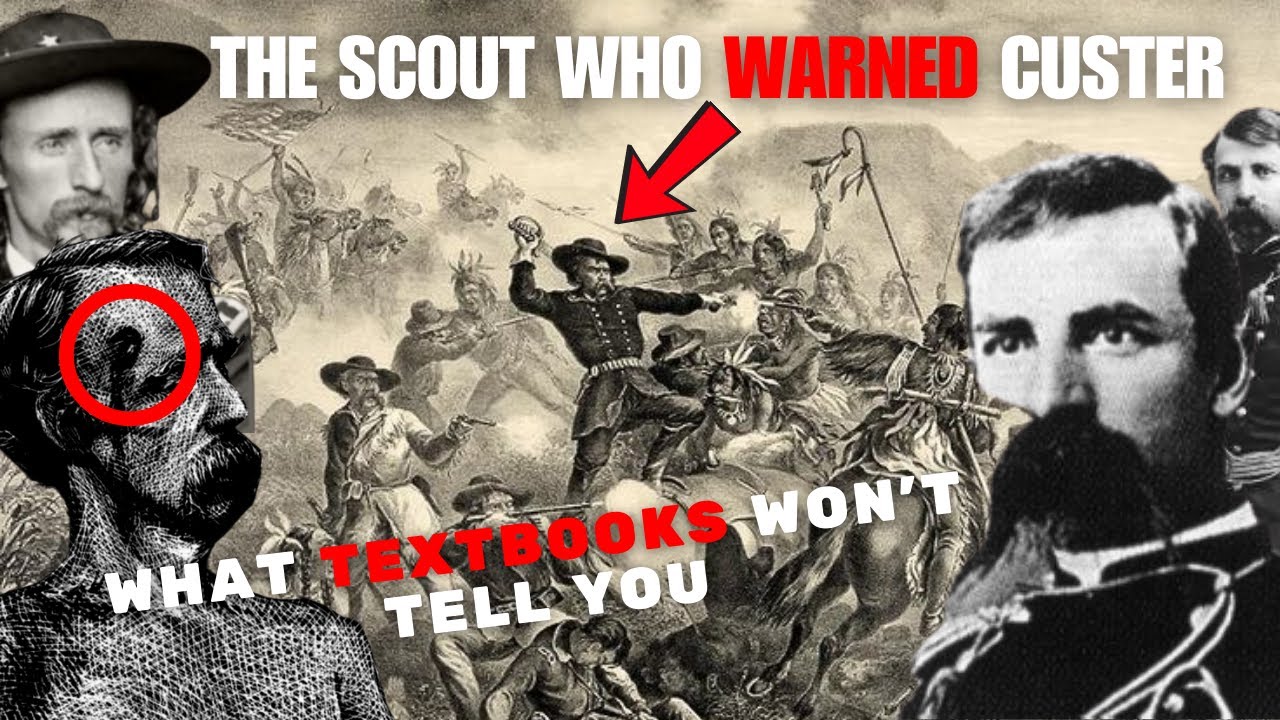
The command halted, and the officers learned that their Crow scouts had discovered fresh signs, including pony tracks and an Indian on foot. As they prepared to separate, Custer’s headquarters flag was blown down by a subtle breeze, falling toward the rear. Godfrey picked it up and replanted the staff, but it fell again. He then secured it with sagebrush. This incident seemed insignificant at the time, but later, Lieutenant Wallace mentioned it as a bad omen foretelling their defeat.
The day’s march was tedious with many long halts. They camped under a bluff at sundown, hiding the command as much as possible, having marched 28 miles. Fires were extinguished after supper, and they prepared to march again at 11:30 p.m.
Their rest was soon interrupted. Custer requested the presence of all officers at headquarters immediately. Upon arrival, he informed them that the trail led to the Little Bighorn, and they would march immediately to conceal themselves near the divide before daylight. This would allow time to study the terrain, locate the village, and plan the attack for the 26th.
The night march was challenging due to dust and noise. At 2:00 a.m. on June 25th, they halted to await further news from the scouts, having marched about 10 miles. Before 8:00 a.m., Custer rode bareback to each troop, giving orders to prepare for march and sharing information about the location of the Indian villages.
Just before departing, Godfrey observed Custer engage in a serious conversation with Bloody Knife, a scout, and an interpreter. The scouts appeared nervous, and Bloody Knife mentioned that they would find enough Sioux to fight for two or three days. Custer smiled, remarking, “I guess we’ll get through with them in one day.”
The command commenced its march at 8:00 a.m. and continued until 10:30 a.m., when they halted in a ravine and were instructed to maintain silence and conceal themselves. They had marched approximately 10 miles.
It was well known to the Indians that the troops were in the field, and a battle was fully expected by them. However, the close proximity of the column was not known to them until the morning of the day of the battle. Several young men had left the hostile camp that morning and saw the dust raised by the troops. They returned to the village, warning that the troops were approaching. Thus, the attack was not a surprise.
The Indian camp had been pitched at the site of the attack for two or three days. The location was not chosen with the intention of making it the battlefield but rather as a convenient spot to camp. In anticipation of fulfilling Sitting Bull’s prophecy, the village had massed together.
From the divide between the Little Bighorn and Rosebud, the scouts had spotted smoke rising above the village and pony herds grazing in the Little Bighorn Valley, approximately 12 to 15 miles away. Custer had gone to this point of view while the column halted in the ravine.
The Ree scouts, who had been anxious for some time, were anointed and invoked a great spirit of protection by their medicine man. They seemed convinced that they would encounter more Sioux than they could handle.
Captain Yates’ troop had lost a pack of hard bread during the night march, and a detail was sent back to recover it. Sergeant Curtis described finding an Indian opening a box of hard bread with his tomahawk. The Indian fled upon seeing the soldiers.
This information was promptly taken to Custer, who sounded officers’ call. The general recounted the report and mentioned that scouts had seen Indians observing their movements along the ridge. He believed their presence had been discovered, making further concealment unnecessary. He decided to attack the village immediately rather than waiting until the next morning to prevent the village from scattering and escaping.
Soon after, the regiment was divided into battalions. Major Reno’s advanced battalion comprised Troop M, Troop A, and Troop G. Captain Benteen’s battalion comprised Troop H, Troop D, and Troop K. The pack train under Lieutenant Mathey’s charge was escorted by Troop B led by Captain McDougall.

Reno’s battalion marched down a valley that developed into the south branch of a small tributary to the Little Bighorn. Custer’s column trailed Reno’s closely, bearing to the right and rear. Benteen’s battalion was ordered to the left and front toward a line of high bluffs.
Benteen’s march was arduous, traversing rough, steep hills and deep valleys. Many horses were greatly fatigued, with some falling far behind the column. Benteen wisely decided to follow the trail of the rest of the command, and they joined it just ahead of the pack train.
During this march, they occasionally saw Custer’s battalion, distinguished by the troop mounted on gray horses, marching at a rapid pace. They heard loud cheering and a few shots two or three times, but the cause of these demonstrations is unknown.
After joining the trail, they came to a water hole where a stream of running water originated. Benteen halted the battalion to water the horses. While watering, they heard firing in advance. Captain Weir grew impatient with the delay, starting off with his troop and taking the advance.
The battalions under Reno and Custer did not encounter any Indians until Reno arrived at a burning tepee where a few were seen. These Indians did not appear surprised by the troops’ appearance and made no effort to delay the column.
Reno’s command and scouts followed them closely until he received orders to move forward at a rapid gait and charge the village. According to Reno’s official report, this order was given near the burning tepee. Lieutenant Cook, the adjutant, informed him that the village was only two miles ahead and gave the order.
Reno followed the Indian trail, crossing a ford, and then moved up the valley. He delayed to water the horses and reform the column. He then sent word to Custer that he had the enemy in front of him and that they were strong.
Reno moved forward in column of fours, then formed a battalion line of battle across the valley and later deployed as skirmishers. The hostiles fell back, firing occasionally, but made no decisive effort to check Reno’s advance.
However, when the horses of two men became unmanageable and carried them into the Indian camp, the Indians developed great force, opened a brisk fire, and made a dash toward the foothills on the left flank. The Ree scouts fled, abandoning the field.
Reno realized he was being drawn into a trap. As the Indians were nearing their village and he could not see Custer or any other support, he decided to defend himself and give up the mounted attack. The troops began to cheer in response to the whoops of the hostiles, prompting Reno to yell, “Stop that noise!”
As Reno did not see the whole outfit within supporting distance, he disobeyed his orders to charge the village and instead dismounted his command to fight on foot. The movement of the Indians around the left flank and the flight of the scouts caused the left to fall back, and the command became defensive in the timber.
Reno’s loss at this point was one wounded. The position was strong, protected in front by the bank and fringe of timber. While Reno remained there, his casualties were few. The hostiles had him nearly surrounded.
After one man was killed close to him, Reno gave orders to mount and get to the bluffs. But this order was not generally heard or communicated. He countermanded the order, then repeated it, but again it was not widely understood.
Reno’s command left the bottom in a straggling formation, with Reno leading the retreat. The hostile strength pushed Reno’s retreat to the left, forcing him to find an alternative ford. A pony trail led up a funnel-shaped ravine into the bluffs where the command became jammed and lost all semblance of organization.
Lieutenant Donald Macintosh was killed shortly after departing the timber. Dr. DeWolf met his demise while ascending one of the bluffs. Lieutenant B.H. Hodgson’s horse leaped from the bank into the river and fell dead, with the lieutenant suffering a leg wound. Hodgson cried out, “For God’s sake, don’t abandon me.” He was assured that he would not be left behind, but soon after, he was shot and killed.
Reno’s casualties thus far were three officers and 29 enlisted men and scouts killed, with seven enlisted men wounded. Nearly all the casualties occurred during the retreat. Scout Charlie Reynolds and Isaiah Dorman were killed in the timber. Bloody Knife was killed by Reno’s side.
The Ree scouts continued their flight until they reached the supply camp at the mouth of the Powder on the 27th. The Crow scouts remained with the command. It is recalled that only one Crow scout, Curley, and Mitch Bouyer, the Crow interpreter, accompanied Custer’s immediate command.
Curley likely did not participate in the fight at all. He left Custer just before the fighting commenced and went to a high ridge, where he watched the battle long enough to see that Custer would be defeated. He then made his way to the Big Horn River.
Not long after departing the water hole, a sergeant met Benteen with an order from Custer to the commanding officer of the pack train to hasten its pace. As he passed the column, he exclaimed to the men, “We got him boys.” From this and other remarks, they inferred that Custer had attacked and captured the village.
Shortly afterward, they were met by Trumpeter Martin of Troop H bearing a message signed by Colonel Cook, the adjutant. It read: “Benteen, come on, big village, be quick. Bring packs.” The postscript added, “Bring packs.”
A riderless horse was the only living thing in their front. Benteen inquired what had transpired, and Martin informed him that the Indians were abandoning the village. The column had been marching at a trot and walk.
They now heard firing, initially straggling shots which grew more pronounced as they advanced. The column took the gallop with pistols drawn, expecting to meet the enemy they thought Custer was driving before him. They never suspected that their forces had been defeated.
As they formed in line to meet their supposed enemy, they came into full view of the Little Bighorn Valley. The valley was filled with horsemen riding to and fro in clouds of dust and smoke, as the Indians had set the grass ablaze to drive the troops out and cover their movements.
On the bluffs to their right, they saw a body of troops engaged. An engagement also appeared to be occurring in the valley, but due to the distance, smoke, and dust, it was impossible to discern if those in the valley were friends or foes.
A brief uncertainty arose regarding the direction they should take. Some Crow scouts passed by driving a small herd of ponies, and one of them said, “Soldiers,” and motioned for the command to go to the right. Following their directions, they soon joined Reno’s battalion, which was still firing.
Reno had lost his hat and had a handkerchief tied about his head, appearing very excited. Benteen’s battalion was ordered to dismount and deploy as skirmishers on the edge of the bluffs overlooking the valley.
The Battle of the Little Bighorn changed America forever, exposing the brutal cost of Westward expansion and the limits of military hubris. The real mystery isn’t just how Custer died, but why we still debate his legacy today.