The lesson of Shiloh transformed William Tecumseh Sherman. After that bloody battle, he personally positioned guards, moved between lookout lines, and drilled his troops in building fortifications. Yet one nagging question remained: how could he teach his men to secure supplies without resorting to plunder and without violating private property? The answer would come within months.
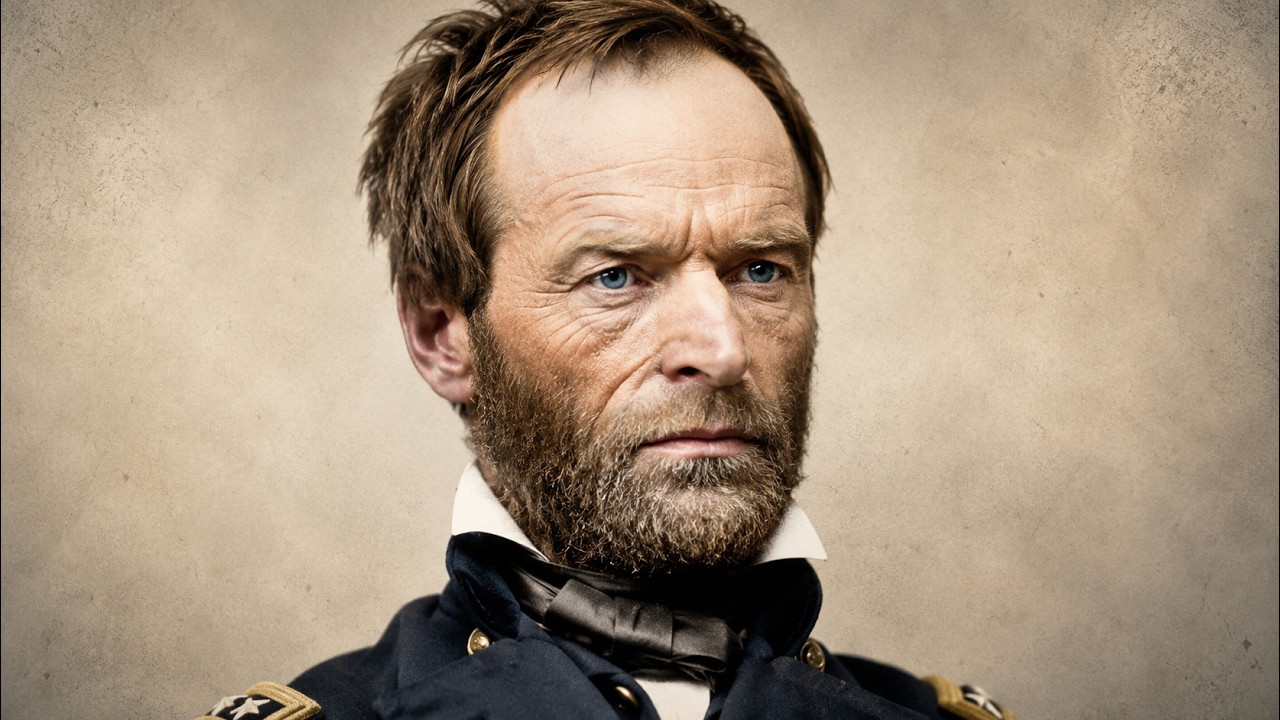
Like Stonewall Jackson, Sherman concluded that the true object of war was achieving results through death and killing. The South would learn firsthand what Shiloh had helped forge. Amid the surprise, chaos, and bloodshed of that battle, Sherman gained confidence. He proved to others, and more importantly to himself, that he could be a soldier.
In 1864 and 1865, Georgia and the Carolinas would witness a man who, after Shiloh, had mastered not only himself but his profession. But that was still in the future. On May 26, 1862, about seven weeks after Shiloh, Sherman received his second star. Even so, he and Grant came under fierce attack from correspondents who blamed them for the Confederate surprise at Shiloh.
Sherman growled to his wife that he would one day take revenge on what he called that miserable class of corrupt editors. Despite the warnings, he remained silent publicly, and through official channels he supported Grant, who had been reduced to second-in-command. In mid-July 1862, Henry Halleck was called to Washington. Grant took command of most of the western theater and assigned Sherman military control of Memphis.
Sherman arrived on July 21, opened the city, and restored its vitality. As an administrator, he understood that organization brought stability and predictability. If he needed a building, he arranged compensation for its owners. He helped the city council collect taxes, organized charity for Memphis’s poor, and established a relief bureau funded by federal soldiers.
On slavery, Sherman quietly criticized Lincoln’s Emancipation Proclamation. Militarily, the guerrillas infuriated him. He had little respect for partisan warfare and struck hard at recurring Confederate partisan activity. On September 27, 1862, he issued General Order No.
254: for every boat fired upon on the Mississippi, ten families would be expelled from Memphis. He also burned the small community of Randolph. Writing from Memphis on October 4, Sherman stated: “We cannot change the hearts of those people of the South, but we can make war so terrible that they will realize that however brave and gallant and devoted to their country, they are still mortal. ” To his brother, Senator John Sherman, he wrote that the North must realize the entire South, men, women, and children, was against them, armed and determined.
To Grant, he wrote that Southerners could not be made to love them, but they could be made to fear them and fear the passage of troops through their country. Sherman began to understand that the South’s social institutions must be paralyzed. Social disintegration, he reasoned, would lead to personal disintegration. His theory of war was evolving.
He met Grant at Columbus, Kentucky, on November 17, 1862, where they planned their next campaign: Vicksburg, the last great fortress on the Mississippi River. Like Grant, Sherman understood the river’s value, calling it the backbone of America. To secure it, he said, “I will kill millions. ”
On December 20, 1862, he received his first independent command and moved with 30,000 troops to the mouth of the Yazoo River, just eight miles north of Vicksburg.
On December 29, he attacked at Chickasaw Bayou near Walnut Hills. He was violently repulsed, suffering 1,776 casualties. The press took notice. The St.
Louis Missouri Democrat called the attack a stupid blunder and a national disaster, blaming mismanagement, incompetence, and the insanity of the commanding general. Another concern emerged: political general John A. McClernand, who arrived on the scene to take command with indirect approval from Lincoln. Sherman cooperated with dignity.
Together they captured Arkansas Post, or Fort Hindman, on January 11, 1863. The victory had little real military value, but it boosted morale and pleased the press. Grant eventually regained overall command. After several setbacks, he devised a bold plan to reach Vicksburg.
On April 16, 1863, David Dixon Porter’s fleet ran past Vicksburg’s heavy guns. Grant asked Sherman, not ordered him, to make a diversionary attack at Snyder’s Bluff to allow Grant’s forces to cross the Mississippi on Porter’s ships south of Vicksburg. Grant’s troops crossed on April 30. Deep in enemy territory and cut off from all supplies, they were ordered to live off the land.
Sherman was horrified by the deep penetration into Mississippi, even sending a message to stop. Again, he learned the lesson. By mid-May, Grant had moved fifty miles inside enemy territory, and Sherman’s XV Corps helped capture Jackson, Mississippi’s capital, on May 14. He struck the capital with a ferocity previously planted in him by the press and guerrilla warfare, yet he remained uneasy about destroying private property.
Grant then asked Sherman to help besiege Vicksburg. Sherman left part of his XV Corps around Jackson and responded. By July 4, the fortress finally fell. Sherman returned to Jackson on July 9 and discovered, to his indignation, that soldiers had lost control during his absence.
He ordered vandals hanged by their thumbs and court-martialed them, but he could not control what had already spread widely. Federal destruction extended over a thirty-mile area. Then came a revelation. He began to understand that federal foraging and plundering contributed to Confederate soldier desertions and created despair among civilians.
He concluded that if Confederates wanted to stop it, they should end the rebellion. He hoped Vicksburg and Jackson would teach Southerners a lesson. This was, as he described it, a logical cruelty that placed an exclamation point on breaking the backbone of the rebellion. Around that time, he learned the Confederate government had extended conscription from ages 18 to 45.
It enraged him. Something inside him broke. He wanted the U. S.
government and its military forces to make war so severe on those politicians who held the power to end the war that they would capitulate. As he said: “My purpose then was to defeat the rebels, break their pride, chase them to their deepest hiding places, and make them fear and dread us. ”
He even decided to cultivate his image as a madman, using it as a tool of intimidation. The man who had once respected law and order had transformed into something entirely different.
After the Vicksburg campaign, two and a half months of stagnation followed. Sherman disliked it. His wife Ellen and their four oldest children visited him in Vicksburg in August. The visit ended when he received orders to bring his troops to support the federal stalemate at Chattanooga.
He escorted his family to Memphis, where they parted. During the journey home, nine-year-old Willy developed a severe fever. He died on October 4, probably from typhoid fever. His father was psychologically devastated, but duty called.
On Grant’s orders, Sherman took command of the Federal Army of the Tennessee. On November 25, he attacked the northern wing of Missionary Ridge, misjudging the terrain and Confederate forces under Major General Patrick Cleburne. Although Grant’s army would eventually succeed, those watching for Sherman’s mistakes criticized his failure at Tunnel Hill. With the Confederate threat to southeastern Tennessee gone, Confederate activity in central Mississippi drew his attention.
Following Grant’s orders, he left on February 3, 1864, for a 120-mile raid east from Vicksburg to Meridian, Mississippi. Only 1,000 citizens lived in the area, but Meridian was the key to the region’s remaining railroad. Here, Sherman turned his theory into tangible reality. He leaked false news that he was heading toward Mobile.
His main force of 21,000 men, leaving behind tents and the sick, and without any Confederate resistance thanks partly to his deception, left a path of destruction 120 miles long and 10 miles wide. Two million bushels of corn were destroyed, along with weapons and clothing. One hundred miles of railroad were torn up. He returned to Vicksburg on March 3, having inflicted an estimated $50 million in damage, declaring Mississippi free of any real Confederate presence.
The psychological and social damage to Mississippi and the Confederacy was incalculable. In retrospect, the seeds of his future March to the Sea had begun to take root. To justify his actions, Sherman believed in his mind and heart that Southerners had chosen war. They left the Union.
They relinquished their rights. The destruction, heartbreak, and fear were consequences of their secession. While he returned to Vicksburg, major events unfolded in the East. Grant received a third star, and his promotion meant promotion for Sherman.
The new team selected Sherman to command the Military Division of the Mississippi. He was overjoyed and, through his brother John, sought to inform Washington that the position was sufficient. Two years earlier, he had done so out of fear. This time, it was out of humility, realism, and respect for his colleague and friend.
The commander-in-chief met Sherman at the Burnet House in Cincinnati, where they pored over maps together. From those sessions emerged the longest and most destructive military raids in North American history. The next campaign was engineered, presented, and highlighted. The march from Chattanooga to Atlanta used map coordinates, copies, tangled wires, prefabricated bridges, cloth pontoon bridges, and mobile railroad workshops.
This planning led five-star General Omar Bradley, famous in World War II, to declare that Sherman was probably the most capable general the Union produced. Sherman’s objective was Atlanta. Besides being a major transportation hub, much of what the Confederacy used and needed was manufactured here: wagons, scabbards, pistols, boots, uniforms, rolling mills, railroad workshops, and locomotives. It was also the symbolic heart of the Confederacy.
Grant began his grand strategy when he and George Gordon Meade moved the Army of the Potomac across the Rapidan River in Virginia on May 4, 1864. Sherman moved from Chattanooga three days later. For Sherman, speed and mobility were vital. He moved with 100,000 men and 30,000 animals.
His opponent was Joseph E. Johnston with 45,000 men in the Confederate Army of Tennessee. To march 130 miles across rugged terrain, Sherman studied census reports and tax lists. He calculated that one locomotive pulled 160,000 pounds.
One man ate three pounds per day. Animals needed fifteen pounds per day. He concluded his army needed 65 train cars daily, which changed to 120 cars daily. To overcome geographical challenges, he used trained engineers, who were crucial on such difficult terrain.
His advance was a series of maneuvers, usually feinting left and turning the Confederate right. However, on June 27, 1864, only 25 miles northwest of Atlanta, he found Joe Johnston at Kennesaw Mountain. There were Little and Big Kennesaw, stretching about two and a half miles, with the highest point reaching 700 feet. Instead of turning the flank, Sherman attacked directly, thinking the change would surprise Johnston.
He failed. His men suffered 3,000 casualties against Johnston’s 808. For the rest of his life, Sherman rarely mentioned June 27. He refused to admit Kennesaw was a mistake, but he never attempted another frontal attack.
He returned to maneuvering around Johnston’s flank. By mid-July, Johnston had retreated from Dalton, Resaca, Cassville, New Hope Church, Kennesaw, and now across the Chattahoochee River. Richmond responded. On July 17, the aggressive General John Bell Hood, a classmate of two of Sherman’s officers, John Schofield and James McPherson, took Confederate command.
Schofield warned: “He will hit you hard now before you feel it. ” That was exactly what Sherman wanted: to bring Hood out of the trenches. As expected, on July 20, Hood ordered attacks at Peachtree Creek, and two days later, in what became the Battle of Atlanta. Because he was so close to the city, Sherman ordered his heavy guns to bombard the city itself.
Hood protested, and Sherman answered: “War is the science of brutality. ” Hood continued leaving his defensive fortifications and attacked at Ezra Church on July 28. On August 31 and September 1, at Jonesboro, disaster awaited him. Outmaneuvered and outflanked, Hood evacuated the city on the night of September 1.
Explosions shook Atlanta all night, and looters ran rampant. On September 2, Sherman telegraphed: “Atlanta is ours, and fairly won. ” The victory greatly helped Abraham Lincoln’s re-election in November. Five days after the city fell, wearing an old flannel shirt, faded blue coat and trousers, and without ceremony, Sherman rode into the city.
The campaign had taken four months and cost 32,000 casualties. In the East, Grant and Meade lost 32,000 soldiers from May 5 to 12, with another 33,000 falling in the following six weeks. A grateful and reflective Sherman wrote to Henry Halleck in Washington: “I owe you all the fame I now enjoy. ” He was in a good position, confident, respected, and at peace with himself.
After Atlanta, Sherman decided to turn the city into a military garrison. On September 7, he ordered all civilians to leave. Some 446 families, about 1,600 people, were expelled. Hood, whose army was thirty miles south, wrote in a fit of rage: “Now sir, allow me to say that the unprecedented measure you propose surpasses in studied cruelty all that has ever before come to my attention in the dark history of war.
”
Sherman replied: “If the people complain of my popularity and cruelty, I will answer them that war is war, and not a quest for popularity. ” If they wanted peace, they and their relatives must stop the war. He added: “You might as well appeal against the thunder-storm as against these terrible hardships of war. ” This exchange was not merely a clash between two soldiers.
It was a clash between two military philosophies and two different eras. Sherman held the city until his plan to march east was finally approved. Grant was skeptical, but Sherman wanted to prove to the world that the Confederacy was hollow and powerless to stop him. When Lincoln and Stanton agreed, they also allowed what they had forbidden two years earlier.
In the fourth year of war, they not only understood but endorsed total war. Starting November 12 and lasting four days, Atlanta reeled under destruction. Its industrial area, covering about 200 acres or 37 percent of the city, was burned and leveled. Around 7 a.
m. on November 16, Sherman left the city and began his march, carving his name into history with heroism or perhaps infamy. He declared: “I am going into the heart of the Confederacy and intend to leave a trail that will be remembered 50 years from now. I can make this march and make Georgia howl.
”
There were 62,000 soldiers who devoured the land like locusts. As at Meridian, his army was young and composed entirely of veterans. The sick and extra wagons were left behind. Ordered to forage freely, they marched along four roads, creating a path of destruction 40 to 60 miles wide.
They reached Milledgeville, Georgia’s capital, by November 23. They tore up iron rails, and although private homes were forbidden to soldiers, enforcement was uneven. Some sources record that personal violence, murder, and rape were nearly nonexistent, while others disagree. What is known is that Sherman learned of two rape cases and dealt with them severely.
The question remains how many cases never reached his office. He was also lenient with looters and vandals. He sowed seeds of hatred, and he intended exactly that. He wanted Georgia’s people to beg for an end to the war.
On December 21, Sherman presented the city of Savannah to President Lincoln as a Christmas gift. He estimated his March to the Sea caused $100 million in damage. His men marched 275 miles and suffered only 1,338 casualties. He had effectively taken Georgia out of the war.
North of Petersburg, Virginia, Grant and Meade faced a stalemate. Rumors emerged that Sherman might replace Grant. To settle the matter firmly, Sherman said: “That will not happen. Grant stood by me when I was crazy, and I stood by him when he was drunk.
And now, sir, we stand by each other always. ” As a reward for his march through Georgia, a bill was introduced to promote him to lieutenant general. Sherman replied: “No, I have all the rank I want. ”
The peaceful occupation of Savannah and its 20,000 citizens resembled what had happened in Memphis.
Things were efficient, and his governance was capable. Still, one lady remarked: “You may conquer us, but you cannot subjugate us. ” Sherman answered: “I do not want to subjugate you. I intend to kill you, all of you, if you do not stop this rebellion.
”
Grant now wanted Sherman to move his army by sea to Virginia to help end the siege and defeat Lee at Petersburg. Sherman disagreed. He wanted to take the war to South Carolina. When his old friend Major General George Henry Thomas defeated John Bell Hood at Nashville in mid-December 1864, Grant gave Sherman the green light.
Sherman learned of the decision on Christmas Eve. Regarding the proposed invasion of the Palmetto State, he spoke openly and unashamedly about revenge: “You cannot describe war in harsher terms than I will. War is cruelty, and you cannot refine it. ”
They moved into South Carolina on February 1.
On the first half of his Carolinas campaign, Sherman noted: “The whole army is burning with an insatiable desire to wreak vengeance upon South Carolina. ” He added: “I almost tremble for her fate, but I feel that she deserves all that seems in store for her. ” A 17-year-old girl from the state capital, Columbia, wrote: “They are planning to pour destruction upon the state they hate most of all. And Sherman, that monster, declares his intention to turn South Carolina into a desolate waste.
”
Sherman exploited his image as a madman to the fullest. On this march, hatred drove his men. Under heavy rains, they moved in a Y formation, filling swamps with logs. Joseph E.
Johnston observed: “When I learned that Sherman’s army was marching through the salt marshes, making corduroy roads at the rate of twelve miles a day, I made up my mind that there had been no such army since the days of Julius Caesar. ” The 425-mile distance from Savannah to Goldsboro, North Carolina, required crossing nine large rivers and dozens of tributaries during the rainiest winter in 20 years. Yet they covered ten miles a day for 45 days, 28 of them in rain. Meanwhile, twelve residential areas were plundered.
Sherman never attempted to explain or justify why he allowed such absolute freedom. Heading toward Charleston, Sherman occupied Columbia on February 17, 1865. That evening, fires broke out beyond control. Cotton, whiskey, and wind were the likely causes.
Wade Hampton’s men left burning cotton bales. Strong winds, prisoners, looters, freed slaves, and U. S. soldiers all contributed.
By the next morning, 458 buildings had burned, one-third to two-thirds of the city. Sherman responded: “Though I did not order it and did not wish it, I did not shed one tear over the event because I believe it hastened what we all fought for. ” The end of the war. In early March, Sherman entered North Carolina.
He ordered that North Carolinians be treated with as much moderation and fairness as possible, kindling the fire of discord between them and their arrogant cousins in South Carolina. There had never been affection between them. He reached Fayetteville on March 11. He told his two wing commanders, Major Generals O.
O. Howard and Henry Slocum: “I want to deal generously with this town. Of course, dispose of all stores and public property, but spare private homes. Try to prevent soldiers from insulting families by word or mistreatment.
” Yet Fayetteville proved more full of secessionists than he imagined, and far more destruction and looting occurred than he originally planned. In North Carolina, a skirmish occurred at Averasboro and a major three-day battle at Bentonville. But as Joe Johnston said when he returned to command the army on February 22: “It is too late. ”
The Carolinas campaign ended at the farmhouse of David Bennett, in what was then Durham’s Station.
An armistice between the armies began on April 14, the same day Lincoln was assassinated. They met three times: on the 17th, 18th, and 26th. At the first meeting on the 17th, while the Bennett family and their four children stayed in a separate building, the kitchen, Sherman and Johnston met in a small, tidy room of 18 square feet. Before that first meeting, while leaving Raleigh, Sherman finally received word of Lincoln’s assassination.
He imposed a lockdown on his army, and as he moved, he ensured Raleigh would not be destroyed by angry, vengeful soldiers. Sherman and Union Major General John A. Logan deserve much credit for saving Raleigh, North Carolina, from total destruction. The next day, the 18th, Sherman emerged from the conference with a treaty, which was sent to Washington.
It granted blanket amnesty to military and civil authorities, guaranteed that existing Confederate governments would be reorganized once they took the oath, and that Confederate arms would be deposited in state arsenals. However, those terms went beyond the military sphere. When the treaty reached Washington on April 21, the same day Lincoln’s funeral train left the capital, Secretary of War Edwin Stanton erupted in fury. Andrew Johnson’s government unanimously rejected the proposed treaty, and a furious Stanton exploded: “Who surrendered anyway?
” His angry quotes reached the New York Times. On the 24th, the paper escalated its attack when it hinted that Sherman had accepted a bribe from Jefferson Davis to allow him to escape. Sherman was incensed. Then a friend visited.
Grant slipped out of Washington and quietly arrived in Raleigh on April 24. Instead of relieving Sherman of command as ordered, Grant explained the anger, calmed the agitated spirits, and suggested another meeting with Johnston. This occurred on the 26th, the same day John Wilkes Booth was captured and killed. Two days later, Sherman saw the Times article suggesting his involvement in Davis’s escape.
He had an old enemy, the press, and he exploded again. Regarding the lenient terms he had granted in the first treaty of the 18th, he insisted he had received no instructions. After the Confederate defeat, he did not want the South treated as a defeated foe. Based on personal discussions and meetings with Lincoln, he believed he was following the late president’s wishes, who had said: “Let them up easy.
”
As mentioned, the second treaty was signed on the 26th under terms identical to those granted to Robert E. Lee at Appomattox. As the war neared its end, Sherman’s troops marched north toward Washington. On the way was Richmond, Virginia, and Halleck, who had hoped to receive Sherman personally there.
Sherman was seething, firmly believing his old ally had agreed to blame him. He warned Halleck not to appear before him. Still seething, on May 24, he reviewed 65,000 of his soldiers on Pennsylvania Avenue. On horseback, as he passed the reviewing stand, Sherman broke from the procession and entered the protected platform.
Secretary of War Stanton rose to shake his hand. Sherman gave him a burning look and forcefully refused the outstretched hand. The scene was public and noticeable. Six days later, the man who had taken three states out of the war left that swamp of intrigue he called Washington.
Despite the controversy, his military achievements did not go unnoticed. He was promoted to lieutenant general on July 25, 1866. On March 4, 1869, the date of Ulysses Grant’s inauguration as the eighteenth president, William Sherman was promoted to full general. Four days later, he was named Commanding General of the Army.
As historian Michael Fellman noted in his 1995 book “Citizen Sherman,” Sherman’s most pressing post-Civil War concerns were twofold: ensuring the western expansion of the railroads, and, to achieve that, as Fellman wrote, eliminating hostile Plains Indians and isolating survivors on remote reservations. This resembled his solution to ending the Second Seminole War in the 1830s and 1840s: having the government declare martial law, as he put it, and then begin a war of extermination. That meant killing hostiles, raiding villages, burning camps, destroying crops, and killing livestock and buffalo. As Georgia and South Carolina could testify, Sherman applied his understanding of culture practically: destroy its various parts, and the whole would collapse.
While he enjoyed limited success in subduing the Plains tribes, something else happened. The bond and friendship with President Ulysses S. Grant deteriorated. His deep disgust with the press and aversion to politics and politicians strained his relationship with the man with whom he had allied militarily and personally at Shiloh in April 1862.
In the swamp of politics, Sherman believed Grant’s continued indifference and lack of communication were wrecking balls that poisoned their relationship. In that odious and personally frustrating role as Commanding General, he finally retired from service itself on February 8, 1884. One personally bright moment before his retirement was his effort to establish the command school at Fort Leavenworth, Kansas. Now a civilian, one thing had not changed: his lack of empathy for Black people, notably refusing to support Black suffrage.
He remained connected to the past and to the veterans who painted his Civil War canvas, making time to return to battlefields. He visited Chattanooga, Dalton, Rome, Savannah, and yes, in 1879, Atlanta. Notably, on November 15, 1881, he even donated money to the Atlanta Cotton Exposition. It seemed, so to speak, as if he yearned for forgiveness.
Unlike Grant, he wanted nothing to do with politics, refusing every attempt to tie him to a political party. And how they tried! In every general election from 1868 through 1888, influential friends and Republican forces tried to persuade him to run for office. Repeatedly, in various phrasing, he said: “Grant’s fate is not mine.
No, no, no. ” The pressure to run may have peaked in 1884 when the Republican Party sought to persuade him to run for president. His famous response: “I will not run if nominated, and will not serve if elected. ”
After retiring from the army and avoiding political temptations, he allowed himself a tour of Europe.
While traveling, his prejudices surfaced. For Sherman, Turks and Egyptians were at the bottom, with Spaniards ranked only slightly higher. Yet as his travels led him to Northern Europe, he found, in his words, more signs of progress, meaning more similarities to the northern United States. Still, he criticized France and Germany, believing the French were somewhat degenerate and frivolous and the Germans barbarous.
He found the trip interesting, but frankly, he did not truly enjoy it. Finally, back home in America, Sherman’s energy and tendency toward confrontation led to quarrels with many of his Civil War comrades. Like summer storms, clashes erupted with the likes of John McClernand, Henry Halleck and his widow, Joseph Hooker, and George Thomas. To a great extent, almost entertainingly, he continued his feud with former Confederate President Jefferson Davis.
In their decades-long exchanges, Sherman described Davis on several occasions as a maniac, “the embodiment of all that was evil during the war, a class to be wiped from the face of the earth. ” Davis, matching the insult exchange, described Sherman as a violator of all rules of war and a brutal general who would have been at home during the Thirty Years’ War. On the family front, his marriage to Ellen, partly due to her Catholic faith, unfortunately continued to be stormy and distant at best. In fact, there was a trial separation lasting nearly two years.
Ellen stayed with their son Tom, daughter Rachel, and ten-year-old Philemon in St. Louis, while her husband and daughter Ellie remained in Washington. Some rapprochement occurred, but the relationship remained strained at best. Meanwhile, rumors circulated about Sherman’s affairs with women.
In 1886, Sherman and his wife returned to living together in New York City. He lost Ellen two years later, on November 28, 1888. He never attempted to find a new wife. Yet despite all the feuds he welcomed, he maintained regular correspondence with former Confederate generals Braxton Bragg, John Bell Hood, and Joseph Johnston.
He wrote, for example, on January 8, 1891, to Johnston: “You and I became reconciled in April 1865 and have remained so ever since without apology or concealment. ”
In the same spirit, Sherman maintained his appreciation for veterans and the Union cause. Even in February 1886, he broke a bone in his right hand shaking a large crowd in New York and lost two fingernails in Providence, Rhode Island. As he aged, he seemed to retreat from his racism, welcoming Black people into fuller American citizenship.
However, due to his sharp temperament, he never softened his stance toward Native Americans. He loved the theater and was highly social. He was at the Casino Theatre on February 5, 1891. A day later, he caught a cold.
With lungs weakened by his long battle with asthma, the cold turned into pneumonia. He died nine days later, on a Saturday. Ironically, for a man associated with violence, his death came on Valentine’s Day. He had turned seventy-one just six days earlier.
At his funeral, some 30,000 people marched in the procession, including his former Confederate army opponent, 82-year-old Joseph E. Johnston, chosen as an honorary pallbearer. The weather was bitter that day, and someone begged the elderly Confederate general to cover his head. Johnston replied: “If I were in his place, and he were standing here in mine, he would not put on his hat.
” Due to his weakened immunity from exposure to the cold, Johnston soon caught a cold that, like Sherman’s, turned into pneumonia. After standing bareheaded in the rain at Sherman’s funeral, Johnston died 35 days after his friend who was once his enemy. William Sherman was buried in Calvary Cemetery in St. Louis, joining his wife Ellen and son Willy.
In final analysis, an average tactician but a superb strategist, William Tecumseh Sherman was inducted into the Military Hall of Fame in 1905. As a nineteenth-century warrior, he was perhaps the first American military officer to realize the necessity of crushing the will of the people to support an army and government. Indeed, he was the first American to use war to rip out the economic, psychological, and social heart of a people. In the city he did not enjoy, at the site where he thrived and where many he despised conspired, Washington, D.
C. , his statue on horseback stands in President’s Park, specifically in Sherman Square, near the intersection of 15th Street and Pennsylvania Avenue. On that memorial is written: “The legitimate object of war is a more perfect peace. ”
In his military history, William Sherman demonstrated through the Atlanta campaign, the March to the Sea, and the Carolinas campaign a talent that led some historians to rank him as the best federal commander of the war.
Yet his legacy may depend on one’s perspective. He wanted to carve a destructive path remembered for 50 years. The wreckage is gone, but emotionally and psychologically, that wreckage still glows for Southerners whose ancestors witnessed his army’s destruction. For them, steeped in the stories passed down through generations, they would be the first to agree that war is hell.
For them, the scars are deep and the wounds still bleed.