On 25 February 2024, Thomas Kingston sat down for a quiet Sunday lunch with his parents. To the outside world, he was a man who had won the game of life. A former Foreign Office worker who served in Iraq, later a financier, and the husband of Lady Gabriella Windsor, he seemed to embody British capability and charm.
But when the meal ended, he offered a brief, tight smile, excused himself, and walked to a locked outbuilding on the estate. Thirty minutes later, his father forced the door open and found a scene of incomprehensible horror. The golden man of the British aristocracy was dead. A firearm lay beside him.
This was not just a death. It was the shattering of an image the public believed to be indestructible. How does a man who stood on the balcony of Buckingham Palace and negotiated over lives in Baghdad end up alone in a cold outbuilding with a gun? His death broke the illusion of the establishment and exposed the terrifying vulnerability hidden beneath the veneer of having everything.
Thomas Henry Robin Kingston was born in 1978. He came into a Britain on the threshold of a new era. The chaotic 1970s were giving way to the relentless ambition of the Thatcher years. He was born into the kind of family that serves as the backbone of the nation: solid, professional, and deeply rooted in duty and discretion.
His father Martin was a highly successful lawyer, a Queen’s Counsel specializing in environmental law and planning. This was a world of precision, intellect, and winning arguments through logic rather than emotion. His mother Jill was the stable factor, the guardian of the family.
Growing up in East Worcestershire, Thomas was the archetype of the English country boy. But he was not just any boy. By all accounts, he was gifted. In the British class system, there is an established path for boys like Thomas. It is a conveyor belt of excellence: prep school, boarding school, a top university, then a career in law, finance, or the military.
It is a path that offers enormous privilege but demands a specific price: conformity. You must be excellent, but you must not be strange. You must be ambitious, but you must not be loud. Thomas walked this path with the ease of a natural talent.
He studied at the University of Bristol, a favored hunting ground for the bright minds who found Oxford or Cambridge too intense or too enclosed. In Bristol, he studied economic history. He was popular, handsome, and charming. But even then, there was something different in his character.
Most of his peers were focused on internships at Goldman Sachs or climbing the London social ladder. Thomas could have done that too. He could have secured a six-figure salary in the City immediately after graduation. He had the intelligence and certainly the connections. But Thomas Kingston had an aesthetic streak, a desire for a life that meant more than just accumulating possessions.
He was a man with a deep, though reserved, Christian faith. This was not the performance of religion at state occasions. It was a personal, guiding moral compass. He looked at the world around the turn of the millennium, a world that would be set ablaze by the events of 11 September 2001, and felt drawn to the flames.
While his friends bought their first apartments in Fulham and squabbled over bonuses, Thomas made a decision that surprised many. He joined the diplomatic service of the Foreign Office. And he did not ask for a post in Paris or Rome. He went to Baghdad.
It is impossible to overstate the danger in Baghdad in the years after the 2003 invasion. The city was a slaughterhouse. It was the Wild West of geopolitics, a place where the rule of law had evaporated, replaced by the reign of car bombs and snipers. The Green Zone offered a fragile illusion of safety. But the Red Zone, the rest of the city, was a cauldron of sectarian violence, kidnapping gangs, and insurgents.
This was where Thomas Kingston decided to spend his twenties. He was not there as a soldier with a rifle, surrounded by a platoon. He was there as a project manager for the International Center for Reconciliation, working under the legendary Canon Andrew White, known as the Vicar of Baghdad.
Canon White is a figure of almost biblical proportions. A man who stayed in Iraq when everyone else fled. A man who sat with warlords and militias to plead for peace. And right beside him, in the dust and heat, stood the young, handsome graduate from the University of Bristol.
Thomas’s role was not to fight but to talk. He was a negotiator. Specifically, he was involved in negotiating the release of hostages. This is work that lays the soul bare. You deal with men who see human lives as currency. You sit opposite people who have tortured and killed, and you must suppress your horror and fear to reach an agreement. You must be the calmest person in the room, even when everything around you is on fire.
Canon White later described Thomas not as a thrill-seeker but as a problem-solver. He was an exceptional young man, White would say after Thomas’s death, his voice heavy with the memory of those days. He gets things done.
There is a story from that time that captures the terrifying reality of Thomas’s existence in Iraq. He and Canon White were driving through the city. Travel in Baghdad was like Russian roulette. Every ride could be your last. They were approaching the Anglican church where White preached, a beacon of faith in a sea of rubble.
Suddenly, the world turned white. A suicide bomber detonated just meters away from them. The shockwave must have hit them like a physical blow, a wall of heat and pressure that shatters glass and bursts eardrums. In the aftermath of such an explosion, there is a moment of total sensory overload. The smell of gunpowder, the screams of the dying, the dust choking the air.
Twenty-two people died in that blast. Thomas Kingston survived. He walked out of the smoke, checked his limbs, looked at the canon, and continued his work. This was the baptism of fire. This was the moment that shaped the Thomas Kingston of the future.
When you survive something like that, when you see 22 people disappear in the blink of an eye, something changes in you forever. You learn that life is worth little. You learn that safety is an illusion. But most importantly, you learn to compartmentalize. You take the horror, the fear, the image of the blood, and you lock it in a steel box in the back of your mind. You close the box. You put on your suit. You smile and say, I’m fine.
For three years, Thomas lived in this environment of adrenaline and high stakes. He mediated disputes between warring tribal leaders. He brought food to besieged communities. He looked death in the face again and again. It was a period of intense, vibrating aliveness.
In a war zone, everything becomes crystal clear. There are no small worries about mortgage rates or social status. There is only survival and the mission. For a young man with faith and purpose, that must have been intoxicating. He was a hero in the classic sense, a warrior for peace in a land of war.
But wars end, or at least, missions come to a close. Eventually, the time came for Thomas to leave Baghdad. He had done his part. He had survived the Red Zone. Now he faced a challenge that was, in its own treacherous way, just as difficult. Coming home.
The transition from Baghdad to London is not merely a change of geography. It is a change of reality. Thomas returned to a city obsessed with house prices, celebrity gossip, and the trivialities of modern existence. He carried the ghosts of Iraq with him, the faces of the people he could not save, the sound of the explosions. But in the civilized circles of British society, you do not talk about the smell of burning flesh at dinner. You do not explain what it feels like to negotiate over a human life. It is considered strange, intense, too much.
So Thomas did what he was trained to do. He adapted. He used the skills he had honed in the negotiation rooms of Baghdad—the ability to read people, the ironclad emotional control, the capacity to absorb—and applied them to the only other sector that valued them: finance.
He joined Schroeders and later Volultan Capital Management. He became an analyst and then a director. He specialized in emerging markets. Investments for volatile, dangerous, or developing regions. It was a clever way to bridge his two lives. He could use his knowledge of the rougher edges of the world to make money for the smooth men of the City. He was the man who was not afraid to fly to Tripoli or Kabul to close a deal.
On the surface, the reintegration was a triumph. Thomas Kingston became a rising star in finance. He made money. He dressed impeccably. He was the perfect guest at dinner parties. Handsome, mysterious, with a backstory that was just dangerous enough to be sexy, but not traumatic enough to be unsettling. He was the man who had been in Iraq, a label that gave him an aura his peers lacked.
But deep inside, the structure of his psyche had changed. He had learned to live behind a mask of high functioning. He had learned that his value lay in his ability to handle things others could not. He was the fixer. He was the strong one. And the problem with being the strong one is that no one ever asks if you also need to be carried.
As he approached his thirties, Thomas was the ultimate catch. He was a war hero with a portfolio. He was a man of God who knew how to make a profit. He was ready for the next phase of the societal conveyor belt: the perfect marriage.
He began to move in the elite circles of the British aristocracy. This is a world that is small, incestuous, and fiercely guarded. It is a world where everyone knows everyone else’s grandmother, where summer holidays are spent in the same three castles in Scotland, and where discretion is the highest value. Thomas fit in perfectly. He had the accent, the manners, and the aura. But he also had that sharp edge, the sheen of Baghdad, and that made him irresistible.
It was in this glittering, dangerous world that he would meet the women who would define his public image. First, there was Natalie Hicks Lobbeck, an old flame of Prince William. Then, in 2011, he landed in the eye of the media hurricane. He began dating Pippa Middleton.
At that moment in history, Pippa Middleton was probably the most famous single woman in the world. Her sister Catherine had just married Prince William. Pippa’s silhouette at the royal wedding had sparked a global obsession. Dating Pippa meant inviting the blinding spotlight of the world’s media into your life. The paparazzi camped outside her door. Every date was analyzed. Every outfit was criticized.
For a man who had spent years working in the shadows of Baghdad, away from snipers and kidnappers, this was a new kind of war zone. But Thomas handled it with the same chilling calm he had shown in Iraq. He did not crack. He did not sell stories. He walked beside her, protective but not possessive. Handsome and silent. He shielded her.
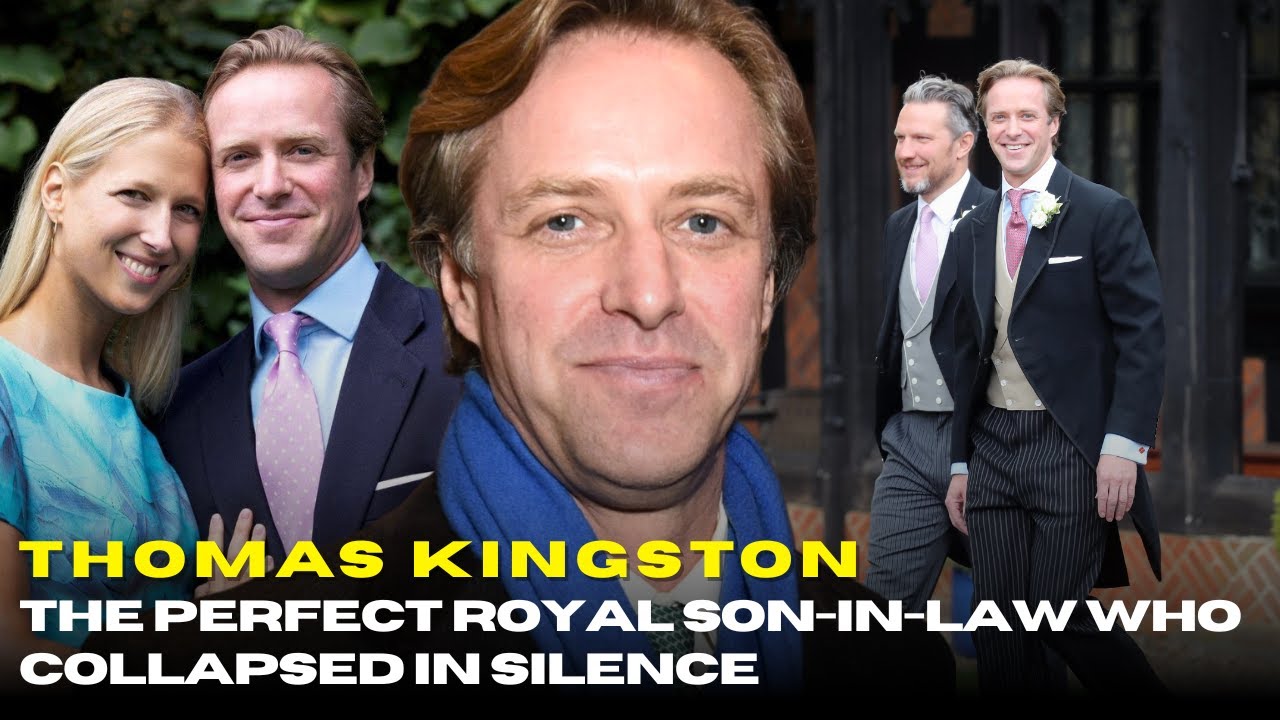
Although the romance with Pippa eventually cooled, the friendship remained. As proof of his character, or perhaps his extreme diplomacy, they stayed incredibly close. He was the rare ex who was not banished but embraced. He became a fixture in the Middleton circle, a trusted ally in a world full of snakes.
By the time he was in his late thirties, Thomas Kingston had successfully navigated the minefields of war and the minefields of famous romances. He had emerged unscathed, or so it seemed. He was a man polished to perfection, a diamond forged under pressure. But diamonds, despite their hardness, are brittle. If you hit them at just the right angle, they do not bend. They shatter.
As he approached his fortieth birthday, Thomas was still single, still searching. He was a man with a great capacity for love and duty, looking for a place to bestow it. He needed a partner who understood the unique pressures of his life, the need for public perfection and a private refuge. He needed someone who knew the rules of the game but could also laugh at them.
And then the universe introduced him to Lady Gabriella Windsor. It was a match that seemed written in the stars, or at least in the registers of Burke’s Peerage. She was of noble birth, but on the sidelines. Close enough to the throne for glamour, far enough away for a life of her own. She was intelligent, artistic, and, like him, a little wary of the spotlight. She was the final piece of the puzzle.
The stage was set for the wedding of the year, the happily ever after that would seal Thomas Kingston’s place at the heart of the British elite. But as he stood on the eve of this new royal life, the shadows from the past, the locked boxes in his head, the silence of the desert, and the pressure to be perfect had not disappeared. They were merely waiting.
If Thomas Kingston was a man of steel and silence, then Lady Gabriella Windsor was a woman woven from silk and critical glances. To understand the attraction between them, one must first understand the peculiar, rarefied ecosystem in which Gabriella lived. She was not a major royal like William or Harry, followed by a retinue of security and courtiers. She existed in the twilight zone of the House of Windsor: the minor royal.
This is a dangerous place to live. You have the name, the castle address, and the historical burden, but you receive no state allowance. You are expected to curtsy to your grandmother’s niece, the Queen, and appear impeccably on the balcony for Trooping the Colour. But on Monday morning, you simply have to go to work. You must provide for your own livelihood. You are a living contradiction, a working-class princess.
Gabriella, known simply as Ella to friends, was the daughter of Prince and Princess Michael of Kent. In the royal menagerie, the Kents were the peacocks: glamorous, slightly controversial, and undeniably grand. Her father, Prince Michael, was the Queen’s cousin, a man who looked so much like Tsar Nicholas II of Russia that it was uncomfortable. He was of the old school, a man of quiet dignity and endless charity work.
Her mother, however, was the lightning rod. Princess Michael of Kent, born Baroness Marie Christine von Reibnitz, was a figure of erratic complexity. Called Princess Pushy by the cruel press, she was tall, commanding, and never afraid of a microphone. She brought a continental Austro-Hungarian grandeur to the pragmatic Windsors. She was a woman who sucked all the oxygen out of any room she entered.
Growing up in the shadow of such a formidable matriarch, Ella had learned the art of making herself small. She became the quiet one. She was the observer. While her brother, Lord Frederick Windsor, lived out his wild years in the tabloids, Ella studied. She went to Brown University in the Ivy League, then to Oxford. She became a writer, a brand consultant, and a singer. She built a deliberately understated life, shielding her gentle nature from the sharp edges of her mother’s reputation.
When Thomas Kingston met Ella in 2015, introduced by mutual friends in the close-knit circles of London society, the recognition was probably immediate. They were two people who had mastered the art of being close to power without being consumed by it. Thomas had stood beside Canon White in Baghdad and beside Pippa Middleton in Chelsea. Ella had stood beside the Queen and her mother. Both knew what it was like to be the calm center of a chaotic storm.
Their courtship was a masterpiece of discretion. In an era where relationships are broadcast in real-time via Instagram stories, Thomas and Ella were ghosts. They dated for years without a single scandal. There were no drunken exits from nightclubs, no leaked arguments, no cryptic tweets. They were seen at Wimbledon, looking groomed. They were seen at art gallery openings, looking intellectual. They were the couple everyone invited because they were so effortless.
For the chaotic House of Kent, Thomas was not just a boyfriend. He was a stabilizer. He was a man who understood finance, who understood diplomacy, and who was not fazed by big personalities. He could charm Princess Michael, no small feat, while discussing strategy with the Prince. He was the perfect son-in-law, a self-made man with the manners of a duke. He brought a sense of solidity to a family that often seemed to teeter on the edge of its own grandeur.
In August 2018, on the rugged, windswept island of Sark in the Channel Islands, Thomas proposed. The setting was telling. Sark is a place where time stands still. No cars, only horse-drawn carriages and bicycles. A feudal remnant that feels like a step back into the 1950s. It was quiet, remote, and steeped in nature. It was the opposite of London. There, far from the cameras and the noise, Thomas asked the Queen’s cousin to marry him.
The engagement announcement came in September from Buckingham Palace. It was traditional, formal, and warmly received. But the timing was significant. The royal family was in the middle of Megxit mania. The Duke and Duchess of Sussex had married only months before, and the whirlwind of their celebrity was already causing structural tremors in the monarchy. Amid the noise of the Sussex revolution, the Kingston-Windsor engagement felt like a comforting return to old customs. It was a safe bet.
The wedding was set for 18 May 2019. The venue: St. George’s Chapel, Windsor Castle. The choice of venue was inevitable. It is the royal family’s parish church. But it immediately invited sharp comparisons. Exactly a year earlier, Harry and Meghan had stood in that same spot. Their wedding had been a global spectacle, a Hollywood production with Oprah Winfrey, George Clooney, and a gospel choir. It was loud, modern, and innovative.
Thomas and Ella’s wedding was the mirror image. It was the establishment talking to itself. There were no Hollywood stars in attendance. Instead, the hard core of the British aristocracy was present. There was the Queen, radiant in pink, looking far more relaxed than at other recent weddings. There was Prince Philip, frail and retired, making a rare public appearance especially for Ella. There was Prince Harry, attending alone, looking somewhat wistful as he witnessed a traditional royal wedding.
Thomas Kingston stood at the altar, waiting for his bride. He wore a morning suit, not a military uniform, and he looked like a true leading man. When Ella arrived, in a beautiful lace dress by Louisa Bearia, she looked ethereal. But if you look closely at the footage from that day, you see something interesting on Thomas’s face. It is not just joy. It is a deep, steely focus.
Marrying into the royal family is a military operation. The eyes of the world are on you. Every twitch, every smile, every glance is captured for history. For a man who valued his privacy, who had spent years in the shadows of Baghdad, this was the ultimate exposure. He stood in a chapel where kings were buried. He was marrying a woman whose bloodline went back to William the Conqueror. The weight of the institution pressed down on his shoulders.
At that moment, he ceased to be Thomas Kingston, private citizen. He became Mr. Thomas Kingston, a supporting character in the great soap opera of the British monarchy. He was not just signing a contract with Ella, but with history.
The kiss on the chapel steps was perfect. The bells rang. The crowd cheered. The couple drove away in a classic car. It was the pinnacle of his life. He had climbed the mountain. He looked like the ultimate success story of the establishment. Professional, polished, and newly connected to the royal world.
But the fairy tale ends as soon as the credits roll. Real life begins the next morning. And for Thomas and Ella, the happily ever after was complicated by the unique pressures of their position. They settled in Notting Hill in a beautiful house that reflected their dual status. Wealthy, but not palace-wealthy; stylish, but not ostentatious.
Thomas went back to work. This is a crucial point that is often overlooked. Unlike Prince William, whose job is to be Prince William, Thomas Kingston had to get up every day and navigate the ruthless world of frontier market finance. He was a director at Devonport Capital. His work involved identifying investment opportunities in economies that were often unstable or recovering from conflict. It was stressful work. It required risk analysis, travel, and the constant pressure to deliver returns.
He could not simply coast on his royal connections. In the City, results are the only currency that matters. In fact, his royal connection made him a target. He had to be better, sharper, and cleaner than everyone else, because any misstep would land on the front page of the Daily Mail.
At the same time, he had to fulfill his royal obligations. Although he was not a working member of the royal family, he was expected to attend major events: Ascot, Trooping the Colour, thanksgiving services. He had to look perfect. He had to make small talk with ambassadors and duchesses. He had to navigate the complex internal politics of the family, the jealousies, the protocols, and the unwritten rules about who stands where and who speaks when.
He led two lives. By day, he was the hard-nosed financier dealing with the raw realities of emerging markets. By night and on weekends, he was the courtier, the polished gentleman in velvet slippers. For a man who had learned to compartmentalize in Iraq, this may have seemed manageable at first. He added new layers of pressure on top of the old trauma: finance, public scrutiny, and royal expectations. Outwardly, he continued to function. Inwardly, the tension was mounting.
But the problem with compartmentalizing is that it takes energy. It requires a tremendous amount of psychic fuel to keep those doors closed. And as the 2020s arrived, the fuel supply began to run low.
The year 2020 was a massive blow to the world. But it hit the middle class of the aristocracy particularly hard. The pandemic shut down the social circuit that was the lifeblood of their influence. It froze the financial markets. For an emerging markets specialist, a global lockdown is a catastrophe. Deals stall, economies collapse. The delicate web of relationships Thomas had built in developing countries must have been strained to the breaking point.
We do not know the details of Thomas’s financial situation at that time, but we know the context. The Kents, despite their grandeur, have always lived with a certain financial insecurity. Princess Michael has famously had to sell jewelry and art in the past. They live in Kensington Palace, yes, but they pay rent. The pressure to maintain the royal standard without the royal income is a crushing weight.
Did Thomas feel this burden? Did he feel that as the capable, wealthy son-in-law, it was his job to shore up the foundations of the House of Kent? Did he feel that he had to be the breadwinner, the protector, the man who never said no and never said, I can’t do this?
There is a tragic archetype in British culture. The good man. The good man pays his bills. The good man opens doors for ladies. The good man never complains. The good man absorbs the stress of those around him like a sponge. Thomas Kingston was the ultimate good man. He absorbed the trauma of the hostages in Baghdad. He absorbed the media attention around Pippa Middleton. He absorbed the eccentricities of the Kents.
But a sponge can only absorb so much water before it becomes heavy and saturated and begins to sink. As the lockdowns were lifted and the world tried to return to normal, the cracks were invisible, but they were there. Smiling depression was probably taking root.
This is a terrifying condition because there are no symptoms an outsider can see. The sufferer does not stay in bed all day. They do not stop shaving. They do not cry in public. In fact, they often become more active, more perfect, more helpful. Maybe he went there to say goodbye in a way that would not be recognized until it was too late.

Sunday, 25 February 2024. The sky was probably the color of slate. The English countryside in late winter is a study in stillness. Bare trees, muddy fields, a silence that feels like the earth is holding its breath. Inside the Kingston family home, the ritual of the Sunday lunch was taking place.
This is a sacred institution in British family life. It is a time of connection, of roast beef and Yorkshire pudding, of safety. Thomas sat at the table with his mother and father. The inquest would later state that he had lunch with them. He was present. He was functioning.
Imagine the conversation. It was probably gentle. Martin and Jill, proud of their son, might have asked about Ella, about his work, about the traffic in London. Thomas, the diplomat, would have answered. He would have deflected any concern. He would have played the role of the wonderful son one last time. He gave them the gift of a final normal memory, unaware that he was also giving them the prelude to a nightmare.
When the meal ended, Thomas stood up. There was no dramatic speech, no tears. He simply said he had to go, but he did not go to his car. He walked out the back door, the cold air hitting his face. He walked across the estate, his shoes crunching on the gravel or sinking into the damp grass. He walked to an outbuilding, a separate structure, perhaps a garage or workshop. A functional place. A place of privacy.
He went inside. He locked the door from the inside.
Back in the main house, the clock ticked. It became 2:00 PM, then 2:30, then 3:00. The rhythm of the afternoon began to falter. Where was Tom?
Martin Kingston is a man of the law, a lawyer accustomed to facts and logic. But the logic of a missing son defies any professional training. He went to look. He probably called Thomas’s name, his voice floating unanswered across the garden. He checked the car. He checked the grounds. Eventually, he came to the outbuilding. The door was locked. He knocked. No answer.
At that moment, Martin Kingston’s world, the world of order, of success, of family, began to dissolve. He forced the door open. What he found inside is the personal trauma of the Kingston family, a scene no father should ever have to see. Thomas was found with traumatic head injuries. A firearm was at the scene.
Police and ambulance crews were called at around 6:00 PM, but it was a formality. The immediate aftermath of a suicide is a chaos of logistics and shock. Police arrived, lights flashing against the dark country lanes. The scene was cordoned off. The coroner was notified. The machinery of the state began to process the death of a citizen.
But this was not just any citizen. This was a man connected to the Crown. The news spread with lightning speed through the chain of command: from the police in Gloucester to palace security, to private secretaries, and eventually to the King.
King Charles III was struggling with his own mortality at the time. He had recently been diagnosed with cancer. The royal family was already fragile, exhausted by illness and the absence of the Princess of Wales. The news of Thomas’s death was a hammer blow to an institution already under fire.
For Lady Gabriella, the phone call must have been total devastation. She was in London, or perhaps somewhere else, waiting for her husband’s return. Instead, she received the news that he would never return. The widowhood that struck her grandmother and aunts in old age came to her at 42.
The public announcement came on Tuesday, 27 February, two days after the incident. The delay speaks to the shock and the need to inform the vast network of royal relatives. Buckingham Palace issued a statement on behalf of Lady Gabriella, Martin and Jill Kingston, and Thomas’s sisters, Joanna and Emma.
It is with the deepest sorrow that we announce the death of Thomas Kingston, our beloved husband, son and brother. Tom was an exceptional man who lit up the lives of all who knew him. His death has come as a major shock to the whole family and we ask you to respect our privacy as we mourn his passing.
The phrase major shock did a lot of heavy lifting. It was a polite British understatement for incomprehensible horror. At the same time, a statement was issued by the King and Queen. The King and Queen have been informed of Thomas’s death and join Prince and Princess Michael of Kent and all those who knew him in grieving a much-loved member of the family. In particular, Their Majesties send their most heartfelt thoughts and prayers to Gabriella and the whole Kingston family.
The press went into overdrive. The headlines screamed the question everyone was whispering. How and why? Tragedy of Lady Gabriella’s husband. Thomas Kingston, 45, found dead in locked building. The initial reports were cautious. They stated that there were no suspicious circumstances and that no third party was involved. In the coded language of British journalism, this points to only one thing: suicide.
But the public could not process it. This was Thomas Kingston. He was handsome. He was rich. He was a hero. He was married to a princess. He had been seen smiling on Valentine’s Day. The cognitive dissonance was deafening. It broke the narrative that money and status are a shield against darkness.
On Friday, 1 March, the inquest was opened at the Gloucestershire coroner’s court. The procedure was brief, clinical, and brutal. Senior coroner Katie Scarret sat on the bench. She read the facts from the file. She confirmed his name, his age, his address, and then she confirmed the cause of death.
Mr. Kingston was visiting his parents’ home in the Cotswolds. On 25 February 2024, he had lunch with his parents. His father went outside to walk the dogs. Upon his return, Mr. Kingston was not in the house, and after about 30 minutes, his mother went to look for him. His father forced entry to a locked outbuilding when there was no answer. Mr. Kingston was found inside with catastrophic head injuries. A firearm was at the scene. Emergency services were called. Police are satisfied that the death is not suspicious.
The word firearm landed heavily. In Britain, guns are rare. They are the tools of farmers and soldiers. Thomas, who had been in the diplomatic service and moved in rural circles, probably had access to firearms for sport, or still held a license. But the use of a firearm indicates a violent, definitive intent. It is not a cry for help. It is a determination to leave.
The inquest was adjourned. The court emptied, but the silence Thomas Kingston left behind was louder than ever. Later reporting around the inquest raised questions about whether side effects of prescribed medication had played a role, leading to a broader debate about how such risks are communicated.
In the days that followed, the autopsy of his life began in the press. Friends were interviewed. They were baffled. He was happy, said one. He was focused on his work, said another. He and Ella were a close couple. No one saw this coming.
And that is the terrifying lesson of Thomas Kingston. We want our tragedies to be predictable. We want to see the warning signs: the drinking, the erratic behavior, the financial ruin. We want a reason that fits into a neat story. But sometimes the reason is invisible. Sometimes the war is entirely internal.
Thomas Kingston had spent his life navigating external wars in Iraq, in the markets, in the media. He had won them all. But the internal war, the silent struggle against his own chemistry or his own existential dread, was one he fought alone. Without a treaty, without a ceasefire, and ultimately without a survivor.
When the shock slowly turned to grief, attention shifted to the funeral. It would be the last public act of Thomas’s life, a gathering of the establishment to say goodbye to the man who had played the game perfectly, until the moment he decided to stop playing.
The Chapel Royal in St. James’s Palace is a vessel full of secrets. It is small, intimate, and laden with history. It was here that Charles I received the Holy Sacrament before walking to his execution in 1649. It was here that Queen Victoria married Prince Albert. And it was here, in the quiet sanctuary of the court, that the coffin of Diana, Princess of Wales, lay in state for five days before her funeral, guarded by her family.
On 12 March 2024, the Chapel Royal opened its doors for Thomas Kingston. It was a Tuesday. The London sky was dark purple-grey. The event was not a state funeral. There were no cameras broadcasting it to millions. No gun carriages, no flags at half-mast on government buildings. It was a private cremation service, strictly for the people who truly knew the man behind the headlines.
140 guests entered. The list was a microcosm of the British establishment, stripped of pomp and circumstance, left only with their grief. The Prince of Wales, William, arrived in silence. He walked alone. His wife, Catherine, was absent; she was recovering from surgery and battling a cancer diagnosis the world did not yet know about. The King was absent, undergoing his own treatment. Queen Camilla held a reception at Buckingham Palace to maintain the semblance of normality.
Prince William’s presence was significant. He was not there as heir to the throne. He was there as a contemporary, a man of the same generation who understood the unique pressures of their shared world. He sat in the pews, head bowed, surrounded by the Kents; Prince Michael looked frail and devastated. Princess Michael hidden behind a veil. And Lady Gabriella.
Lady Gabriella Windsor, the 42-year-old widow, followed the coffin. Only five years earlier, she had walked down the aisle of another chapel towards Thomas. Then, she was a vision in lace, heading towards a future that seemed guaranteed. Now, she walked towards a void. The cruelty of the contrast, the wedding and the funeral, the beginning and the end, was almost unbearable for the onlookers.
The service was led by the sub-dean of the Royal Chapel, Reverend Canon Paul Wright, with a sermon by Reverend Richard Chartres, the former Bishop of London and a close friend of the King. The hymns were traditional, the prayers ancient. For an hour, the machinery of the modern world stopped. There was only the smell of incense, the sound of the choir, and the reality of a wooden coffin containing a man who, two weeks earlier, had been laughing at a lunch table.
When the coffin came out, it was driven away in a black hearse, not with fanfare, but to a crematorium. Thomas Kingston was returned to ash. The golden man was gone. But as the guests dispersed into the London afternoon, returning to their townhouses and offices, the question that hung over the service remained unanswered. The how had been established by the coroner. The why was a ghost that would not be exorcised.
In the weeks and months that followed, the autopsy of Thomas Kingston’s life moved from the courtroom to the dinner tables of London high society. Why does a man who has everything choose to leave it all behind?

The theories that emerged were not scandalous in the tabloid sense. There was no secret second family, no illicit addiction found. But they did reveal the toxic ecology of the modern elite.
First, there was the financial trap. Thomas worked in emerging markets. This is not the stable, boring world of index funds. It is the Wild West of capitalism. You are dealing with economies that can collapse overnight due to a coup, a plague, or sanctions. Devonport Capital, where he was a director, operated in countries like Iraq and other developing nations. Although there is no evidence of financial ruin, the stress of maintaining positions in such a volatile environment is debilitating.
Moreover, marrying into the royal family causes an inflation of lifestyle that is almost impossible to resist. You are surrounded by people with generational wealth. Castles, art collections, land. But as the spouse of a minor royal, you have to pay your own way. You have to dress, travel, and live up to that status. But you have to do it on a salary. The cognitive dissonance of dining with kings on Tuesday and worrying about a mortgage on Wednesday creates a psychological fracture. Did Thomas feel like he was on a treadmill moving just a little too fast?
Second, there was the shadow of Baghdad. Trauma is not a linear event. It does not hit you and then fade away. It can lie dormant for decades like a virus in the blood. Thomas had witnessed horrors in Iraq that most people only see in movies. He had developed a survival mechanism of extreme compartmentalization. He locked the monsters in the basement.
But middle age is often the time when the basement door starts to rattle. When men pass 40, the testosterone-fueled invincibility of youth fades. They begin to look back. They begin to feel the weight of the things they have carried. Did the faces of hostages he could not save come back to him? Did the sound of that suicide bombing in 2004 finally stop ringing in his ears, only to be replaced by a deafening silence?
And finally, there was the trap of the perfect gentleman. This is perhaps the most British and the most deadly factor. Thomas Kingston was a man defined by his competence. He was the one who fixed things. He was the one who listened. He was the one who smiled. In the psychology of the good man, there is no room for weakness. Admitting you are struggling is admitting you are a fraud.
If he was struggling internally, he may have felt unable to talk about it with those closest to him. Who do you tell? Your wife, the princess? Your father, the lawyer? Your friend, the future king? In his mind, he was the pillar holding up the roof. If the pillar cracks, the house collapses. So, perversely, the only way to spare the house from seeing the pillar crumble is to remove the pillar entirely. It is a twisted, tragic logic, but for a depressed mind, it can seem like the only honorable exit.
Thomas Kingston’s death forced the royal family to look in the mirror. For decades, the Windsors have preached the gospel of mental health. William and Harry founded Heads Together. They urged the nation to talk. And yet, in the middle of their own inner circle, a man died of silence.
It exposed the limitations of the royal awareness campaign. You can talk about mental health on a podium, but can you do it at the Sunday lunch table? Can a man like Thomas Kingston, steeped in the codes of duty and stoicism, really say, I am terrified? The answer appears to be no.
As the spring of 2024 turned into summer, Lady Gabriella had to survey the wreckage. She moved out of the Notting Hill home they had shared. It was too full of ghosts. She reportedly moved back in with her parents at Kensington Palace, retreating to the nursery of her childhood. It is a profound tragedy for a woman of 42 to end up back in her parents’ house, not as a visitor, but as a widow. She had done everything by the rules. She had waited for love. She had married a good man. And in one afternoon, everything was wiped away.
Gabriella cancelled all her engagements. She stopped singing. She disappeared from social life. The royal family rallied, to their credit, around her. King Charles, fighting his own battle with mortality, reportedly called her often. There is a bond between them, touched by the random cruelty of fate. And in 2024, the House of Windsor was a refuge for wounded souls.
But Thomas Kingston’s silence continued to echo. It echoed in the boardrooms of the City, where men in tight suits looked at each other with a new, shy recognition. If it could happen to Tom, could it happen to me? It echoed in the mess halls of the army, a reminder that the war does not end when you fly home. And it echoed in the empty pews of the Chapel Royal, a reminder that even the oldest, strongest institutions cannot shield the human heart from breaking.
The story of Thomas Kingston was approaching its final narrative conclusion, but the lesson it taught was only beginning to be understood. He had shown the world that the perfect life is a myth, and that behind the golden gates, the shadows are just as long and cold as anywhere else.
Yet the cruelest law of nature is that the world does not stop for shadows. Nor does it pause for broken hearts. The relentless machinery of the royal calendar kept turning, pulling the grieving survivors from the darkness of the chapel back into the unforgiving light of public scrutiny. The season shifted and demanded that life, however broken, however empty the place beside them, must resume its performance.
As the spring of 2024 turned into summer, the British social season began its annual, unrelenting rotation. The Chelsea Flower Show bloomed, the tennis nets were strung at Wimbledon, and the grass was mowed at Ascot. The machinery of the upper class does not stop for grief. It merely integrates it, dresses it in black silk, and hides it behind the brim of a hat.
But for Lady Gabriella Windsor, the season was no longer a calendar of parties. It was a minefield of memories. Every venue, every lawn, every champagne reception was a place where she had once stood beside Thomas. Yet Gabriella stepped back into the light, in a display of resilience that rivals any monarch in her family’s history.
On 15 June 2024, during Trooping the Colour, the King’s official birthday, observers spotted a figure quietly standing at a window in Buckingham Palace. It was Ella. She watched the RAF fly-past, the roar of the jets rattling the glass. She did not stand on the balcony with the rest of the family. That platform was reserved for the King and the Princess of Wales, who was making her own triumphant return. But she was there. It was a cautious return, a sign to the world that she was still standing.
But the true moment of catharsis came three days later at Royal Ascot. Ascot is the holy week of the British aristocracy. It is a place of strict rules and high stakes. On the first day of the races, Lady Gabriella arrived. She did not hide in a car. She arrived in the royal procession, riding in a carriage. When she stepped onto the grass of the Royal Enclosure, a ripple went through the crowd.
Then something happened that broke the protocol of the day. Prince William, the heir to the throne, saw her. He did not give a stiff handshake. He did not give a polite nod. He reached out and pulled her into a firm, long embrace. The photo of that embrace went viral.
In it, you see the Prince of Wales, a man carrying the burden of his father’s illness and his wife’s cancer, holding the widow of his old friend. It was not a royal greeting. It was two people clinging to each other in the wreckage of a terrible year. It was a visual acknowledgment of the shared pain that had marked 2024 for the House of Windsor. In that hug, the stiff upper lip trembled for just a moment, and the world saw the raw humanity beneath the top hats and tailcoats.
This moment marked the beginning of the post-Thomas era. Gabriella was surviving. She was surrounded by a close network of support from the family. Zara Tindall, Princess Anne, the King himself. They carried her when she could not walk herself.
But while Gabriella’s survival was public, the questions that Thomas Kingston’s death left behind began to turn into a darker, more definitive realization. His suicide was not just a personal tragedy. It was a cultural mirror.
Thomas Kingston was the canary in the coal mine of modern masculinity, particularly the ambitious masculinity of the establishment. He represented a generation of men who were sold the lie that if you are handsome, wealthy, successful, and stoic, you are immune to the abyss. He proved that the abyss does not care about your CV.
His death forced a quiet, uncomfortable conversation in the salons of London. Men who saw themselves in Thomas, the financiers, the ex-military, the good husbands, were forced to confront their own vulnerability. If the man who survived the suicide bombers of Baghdad could not survive his own mind, what chance did they have?
The Kingston syndrome, if we may call it that, is the deadly combination of perfectionism and silence. It is the belief that one’s worth is entirely tied to one’s usefulness. Thomas was valuable because he fixed things. He negotiated hostage releases. He managed capital. He supported his wife. When the internal pressure became too great, when he perhaps felt he could no longer be that useful engine of perfection, he did not know how to simply exist as a fallible human being. He chose the end over imperfection.
This is the tragedy of the golden man. The gold is only a veneer. Beneath it, there is flesh and blood, susceptible to the same chemical imbalances, the same fears, and the same darkness as the rest of us. But that veneer is so bright, so blinding, that no one sees the cracks until the structure collapses.
History will remember Thomas Kingston in contradictory ways. For the public, he will be a footnote in royal history, the handsome husband of a minor royal who died too young. He will be a quiz answer, a tragic figure in the Kent family tree.
But for those who knew him, and for those who study the anthropology of the British elite, he will be something far more significant. He will be remembered as the man who had everything and yet discovered it was not enough to sustain life. He will be a warning.
His legacy lies in the silence he left behind. It is a silence that must not be filled with platitudes about compassion, but with honesty. Honesty about the trauma of war. Honesty about the crushing pressure of social expectations. Honesty about the fact that a smile can be the most effective hiding place in the world.
As the years pass, the shock of that February Sunday in the Cotswolds will fade. The grass will grow over the memory of the police tape. Lady Gabriella will hopefully find a new path, a new happiness, carrying her scars with the dignity she has already shown. The royal family will continue its slow march through history, absorbing this tragedy as it has absorbed a thousand others.
But in the quiet corners of St. James’s Palace, or in the dusty archives of the Foreign Office, the ghost of Thomas Kingston lingers. He is the young man in the dust of Baghdad, believing he can save the world. He is the groom in the morning suit at Windsor, believing he can master the monarchy. And he is the man in the locked room who realizes that the only thing he could not master was himself.
His life was a brilliant, blinding flash that went out too soon. And in the darkness that follows, we are left with the uncomfortable realization that the line between having everything and having nothing is not a wall, but a thread. As thin as a razor, invisible, and terrifyingly easy to cross.
The Cotswolds are quiet again. The spring rains have washed away the traces of the winter tragedy. The stone walls of the Kingston family home stand unmoved, guarding their secrets as they have for centuries.
In the end, Thomas Kingston’s story is not a story about royalty, finance, or war. It is a story about the devastating loneliness of the human experience. We can stand in a crowded room with a glass of champagne in our hand, surrounded by people who love us, and still fall through space completely alone.
We build defenses of money, status, and reputation. From the outside, his life looked unshakeable, but on the inside, something was already breaking. But there is no fortress strong enough to keep the night out when the night comes from within.
The lesson he leaves us is not in how he died, but in the terrifying perfection of how he lived. It is a plea to look behind the mask, to listen to the silence, and to remember that even the strongest among us can break. The golden man is gone, but the echo of his fall will reverberate in the ears of the establishment for a generation.