When the United States Army entered Lakota territory in the summer of 1876, the first casualty was a young boy, killed by soldiers as they advanced. A warrior retaliated swiftly, using a precision axe attack to kill two cavalrymen, and the troops quickly realized they had crossed into a far more dangerous zone than they anticipated. The campaign was part of a broader federal effort to force the Lakota, Cheyenne, and Arapaho peoples onto reservations. It was not merely a military operation but a calculated push to crush Plains tribal resistance.
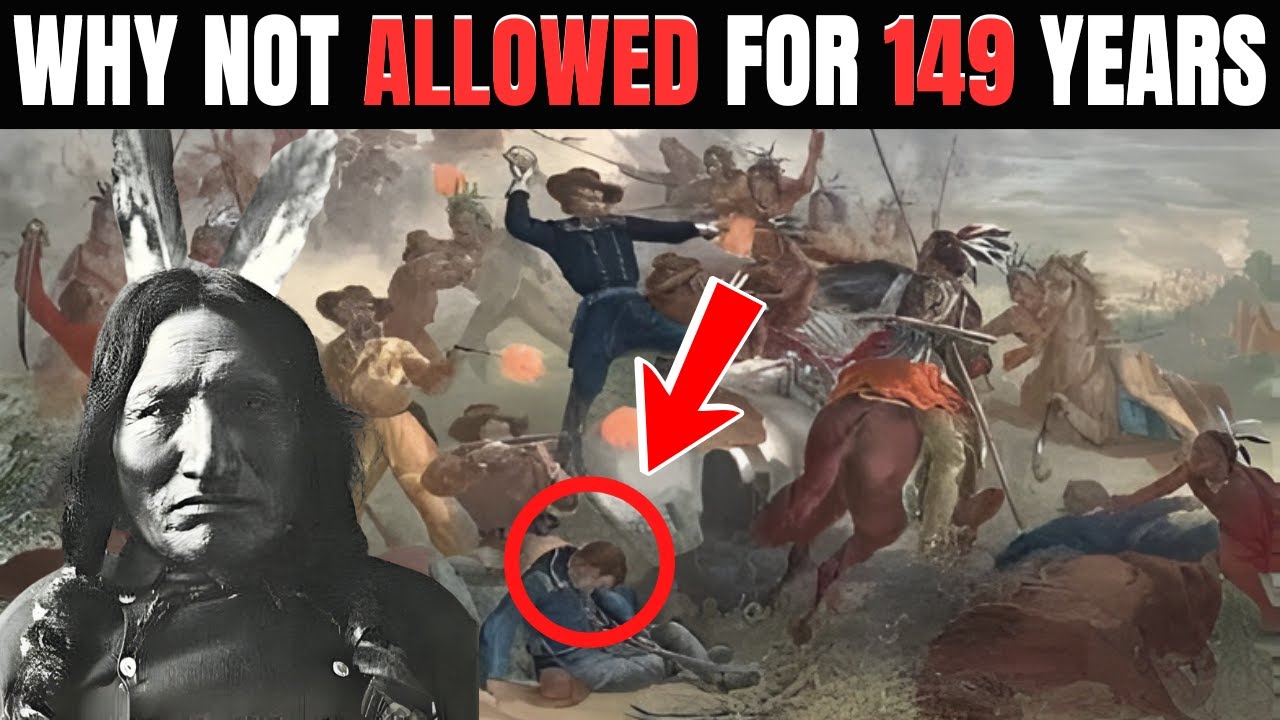
Leading the charge was Lieutenant Colonel George Armstrong Custer, a man widely known for ambition, arrogance, and a hunger for glory. He reportedly dreamed of the presidency and believed a decisive victory over native resistance would secure his place in national history. Custer had little patience for negotiation. He dismissed intelligence reports warning that thousands of warriors were camped along the Little Bighorn River.
Convinced the tribes would flee at the first sight of cavalry, he divided his force of more than 600 men and rode directly into the valley. What he did not know was that Sitting Bull, a revered Lakota holy man, had reportedly foreseen the battle in a vision. He described soldiers falling upside down into the Lakota camp while no Lakota died. That vision helped unite tribes that had often been divided.
People came together as one, seeing the fight not as a skirmish but as a stand for survival. Warriors from the Lakota, Cheyenne, and Arapaho nations numbered in the thousands. Some estimates suggest more than 2,000 fighters were present. Custer was marching into what is believed to be the largest Native American fighting force ever assembled on the continent.
Among those warriors was Red Horse, a Miniconjou Lakota war chief. He carried no camera and wrote no memoir. Instead, he recorded the battle the way his ancestors had for generations: through pictures. His drawings depicted cavalrymen collapsing from their horses, pierced by bullets.
They showed native warriors charging on horseback, weapons raised, defending their families beyond the hills. Some of the fallen wore blue uniforms. Others were stripped bare, symbolizing their vulnerability as they were overwhelmed, surrounded, and outnumbered. These were not romantic paintings.
They were testimony, records of a people forced to fight for their land, their freedom, and their very existence. Red Horse’s drawings exposed what official history attempted to bury. They show that Custer’s so-called last stand was not heroic but reckless. He was not outnumbered because the enemy cheated.
He was outnumbered because he underestimated his opponent and ignored warnings from native scouts who reportedly told him plainly not to go down that valley. For Red Horse and those who fought beside him, this was not revenge and not a savage ambush. It was war. More than that, they saw it as justice.
For decades, their lands had been invaded, treaties broken, and their people killed. What happened at the Little Bighorn was not the beginning. It was the consequence. The U.
S. government called the fight a massacre, but Red Horse’s account tells a different story. His drawings offered no glory and no conventional valor, only chaos, death, and the bitter cost of arrogance. He showed soldiers crawling through dirt, desperate to escape.
Some were shot at close range. Others were struck down where they stood. The cavalry was not defending anyone. They were invaders caught in the storm they had created.
Red Horse did not exaggerate or soften the truth. He drew both native warriors and soldiers killed, wounded, and stripped because that is how it was. His honesty made his art powerful and, to some, dangerous. It threatened the myth the U.
S. government wanted to preserve: Custer as martyr, native warriors as villains. When Custer’s body was found on the hill, stripped and riddled with bullets, his face was still recognizable, but his ambition lay buried with him. The army rushed to rewrite the story.
Newspapers turned him into a fallen hero who fought bravely to the end. They left out the truth that he ignored intelligence, underestimated his enemy, and led hundreds to their deaths. They also omitted the warnings from native scouts, and they certainly did not print what Red Horse had drawn. In the months after the battle, surviving native warriors were hunted relentlessly.
The government could not allow the Little Bighorn to become a symbol of resistance. So they doubled down. More troops, more forced removals, more broken treaties, and more violence followed. Yet Red Horse’s drawings endured.
Today they rest in the Smithsonian Institution: 42 pages of testimony from the hand of someone who was there. They remain one of the only firsthand visual records of the battle created by a native eyewitness. Unlike the polished paintings that followed, crafted by artists who never saw the battlefield, Red Horse gave an unfiltered account. His art is silent, but it speaks clearly.
It shows what textbooks often skip. The native warriors were not savages. They were survivors, defenders, and witnesses to history written in blood and dust. What makes Red Horse’s account so powerful is not just what it shows but who told it.
For generations, native voices were erased, filtered through colonial perspectives, and rewritten to serve the myth of manifest destiny. Red Horse broke that silence. He did not need a printing press or a politician’s voice. He had a pencil and memory.
The gunfire stopped, but the story did not. Long after the smoke cleared from the hills of the Little Bighorn, another battle began: a battle over memory. The soldiers were buried, the warriors were hunted, and the truth was rewritten. One side called it a massacre, the other called it survival.
Custer’s body may have fallen that day, but so did the myth of invincibility. Red Horse showed what no general’s report could: that arrogance can be as deadly as bullets, and that the ground remembers everything. The full reckoning over whose story has been told, and whose story has been left unheard, continues to this day.