Born into America’s most powerful dynasty, Cornelia Vanderbilt was one of the world’s wealthiest women and was expected to live a conventional life of privilege. For a time, she did. But in the 1930s, she moved to Europe, divorced her husband, dyed her hair pink, and reinvented herself under a new name, shocking American high society. Her story remains one of the strangest in the Vanderbilt family’s history.
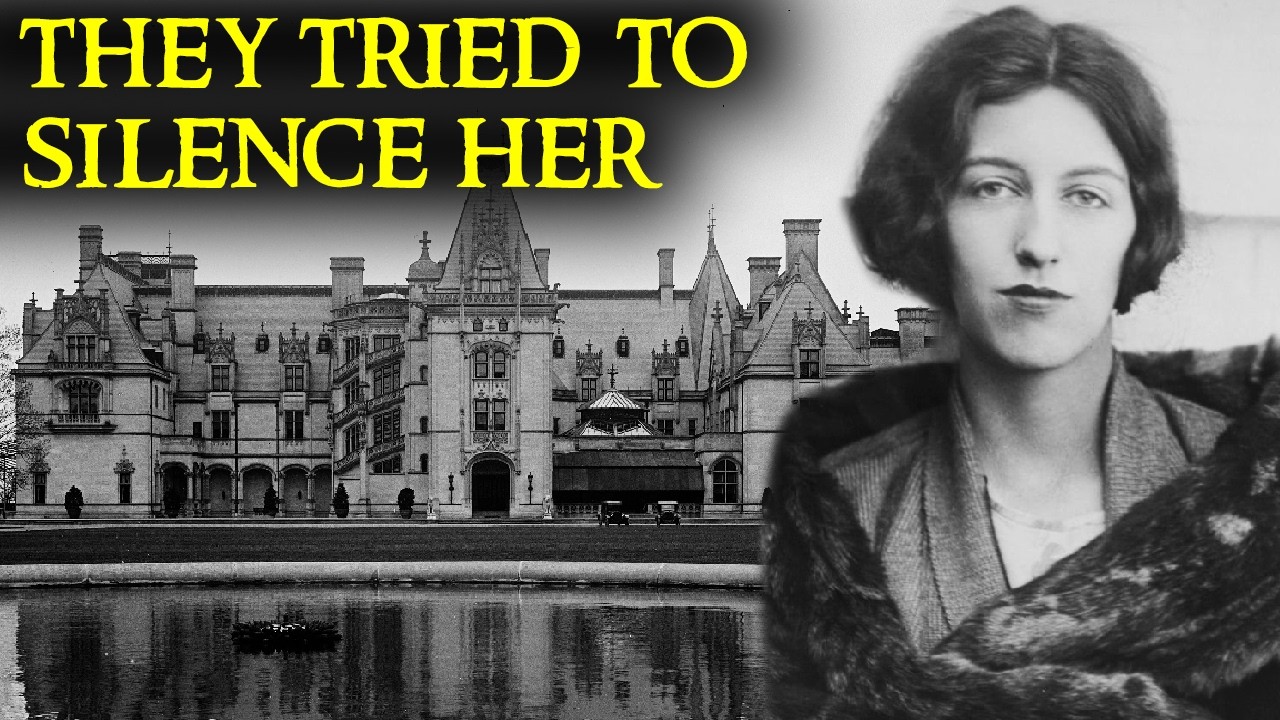
Cornelia Stuyvesant Vanderbilt was born on the Biltmore estate in North Carolina on August 22, 1900. Her father was George Washington Vanderbilt II, whose name echoed the first U. S. president but who was actually the grandson of Cornelius Vanderbilt, the 19th-century shipping and railroad magnate known as the Commodore.
Cornelius Vanderbilt had built a vast fortune before his death in 1877, first monopolizing steamship lines along the East Coast and then diversifying into railways. George Washington Vanderbilt II inherited several million dollars and acquired more wealth over time as family members died and trust funds matured. Cornelia was his only child with his wife, Edith Stuyvesant Dresser, who came from a prominent East Coast political family. As an only child, Cornelia stood to inherit the entirety of their fortune, including the enormous mansion her father had built at Biltmore.
George had constructed the estate before marrying Edith, drawn to rural North Carolina through his mother, who began spending time there after her husband died in 1885. In the late 1880s, George bought 125,000 acres of land and hired architect Richard Morris Hunt to design a house in the style of a French Renaissance chateau. Approximately 1,000 workers were employed during its construction, which drew inspiration from several French chateaux of the Loire Valley. The house was four stories high with a basement and sub-basement, containing roughly 250 rooms, including 35 bedrooms, more than 40 bathrooms, staff quarters, a banqueting hall, a music room, a library with tens of thousands of books, kitchens, laundry rooms, a billiard room, and even a swimming pool.
It was completed in 1895 and named after the town of Bilt, the Vanderbilts’ place of origin in the Netherlands. It remains the largest privately owned home in the United States. Cornelia grew up in this enormous house with no siblings, few equals, and a daily life shaped by attentive adults and household staff. She was privately educated at Biltmore in her early years, later attending the Madeira School, an elite private boarding school for girls in Virginia.
Even by then, she was known for being somewhat eccentric. In 1912, Cornelia and her parents narrowly escaped disaster while holidaying in England. They were scheduled to sail home aboard the Titanic, the supposedly unsinkable ship that sank on its maiden voyage to New York. Her father instead booked them on a separate ship a week earlier, likely because of a feared coal miner strike that could have left transatlantic liners stranded in port.
Had he not changed their plans, Cornelia and her parents could have been among the victims of the most famous naval disaster in history. George Washington Vanderbilt II did not outlive the Titanic victims by long. He died in March 1914, aged 51, from complications after an appendectomy that resulted in a blood clot in his lung. He left behind a $50 million estate, including Biltmore.
Most of it was transferred to Edith, who remarried in the 1920s and moved away from the estate. Cornelia received an allowance as a teenager but was scheduled to begin receiving $2 million a year from 1921 onward, and would also acquire Biltmore. By the early 1920s, Cornelia was poised to become one of the world’s wealthiest women. She attended the University of North Carolina for about a year without earning a degree.
In April 1924, she married John Francis Amherst Cecil, a descendant of one of England’s most esteemed political and aristocratic families, who was serving as first secretary of the British embassy in Washington D. C. Their wedding was held at Biltmore and was a grand affair with thousands of guests and staff in attendance. Cornelia was 23; John was 33.
When Cornelia turned 25, she received her full inheritance from her father: $5 million, equivalent to nearly $100 million in today’s money. For a time, her life followed the expected path. She was engaged in philanthropic activities, became the lady of the manor at Biltmore, and had two sons with her husband, George and William, born in 1925 and 1928. In 1930, amid the Great Depression, Cornelia and her husband opened portions of the house to the public to generate extra income, an unprecedented move that helped secure the future of America’s largest home, which would later be recognized as a national historic landmark.
As her children grew, Cornelia’s eccentric behavior became more apparent. In 1932, when her sons were seven and four, she decided that life at Biltmore was boring and no longer fulfilling. She left suddenly for New York and began attending art school there. A theory suggests she felt stifled by life at the estate, especially since her husband had taken over its management after their marriage, leaving her with little to do.
Cornelia had no interest in being a demure housewife, albeit a wealthy one, and decided to establish her own independent life. She did not remain in New York long. A few months after arriving, she left for Europe and settled in Paris. She would never return to the United States, not even to attend her mother’s funeral after Edith died in 1958.
Cornelia divorced Cecil in 1934, shortly after arriving in Europe, yet he remained at Biltmore and managed the estate even after the divorce. More puzzling was her adoption of the name Nillchure and her decision to dye her hair pink. This reflected her growing belief in the power of numerology and mysticism; both the name and the hair color were said to reflect her alleged color aura. Later, she dyed her hair blue, and her clothing often featured vibrant colors depending on her aura and the time of year.
Her children were educated in Britain and Switzerland, so Cornelia saw them regularly in Europe. During holidays, they returned to Biltmore to be with their father, living a transatlantic life. Both sons served in the British Royal Navy during the Second World War. Cornelia became known for a complex love life in Europe.
In Paris, she began a relationship with Swiss artist Gyia Bear. When the war broke out, she moved across the English Channel and made Britain her adopted home. Her two sons barely survived the conflict. In 1943, they were sent from neutral Switzerland through Vichy France and neutral Spain to Portugal, where they boarded a plane in Lisbon to fly to England.
However, they were unexpectedly bumped from their scheduled flight by actor Leslie Howard, famed for his role in Gone with the Wind. That plane was later shot down by the Nazis over the Bay of Biscay, killing all on board. George and William instead traveled on a separate aircraft and reached England safely, a narrow escape echoing their mother’s near miss with the Titanic. After the war, Cornelia married Captain Vivian Francis Bulkeley-Johnson in 1949.
He was a decorated First World War hero who later built a successful banking career in London. Her second wedding was far more modest than the first, held in a registry office in Kensington. She went by the name Mary during her second marriage, apparently to keep her life as private as possible. The marriage seemed happier than her first, and she remained by Vivian’s side until his death in 1968.
Cornelia and Vivian lived between a large house in London and an estate in the Cotswolds called The Mount, which she had purchased in Oxfordshire. They had eccentric collecting habits funded by her immense wealth; the house was adorned with an ever-growing collection of historic Chinese vases, later donated to the Victoria and Albert Museum. After Vivian died in 1968, Cornelia became interested in art therapy. She became friends with Edward Adamson, a major advocate of the new therapy.
While having dinner with him one night in London, she met William Godsal, their waiter, who was 26 years younger than she was. In 1972, she married him when she was 72 and he was 46. They settled into a quiet life at The Mount, and this third marriage proved to be her last. Cornelia died on February 7, 1976, at the age of 75.
While many of her large extended Vanderbilt family were interred in the family crypt on Staten Island, Cornelia broke with tradition again. After her death in Oxfordshire, she was cremated, and her ashes were laid to rest at the church near her home. Years later, following the death of her much younger husband William Godsal in 1984, her remains were reunited with his, placed upon his coffin and buried together in Orne, Scotland. She had largely disavowed her Vanderbilt ties and chosen to live privately for the second half of her life.
A peculiar story has surfaced in recent years concerning the eccentric heiress. A piece of her wedding cake from her 1924 marriage to Cecil is still on display at Biltmore estate today. It was a fruit cake containing a fair amount of alcohol, such as whiskey, which preserved it over time. The piece ended up in a tin that was forgotten and left in a trunk.
It was found in the mid-2010s and, though it resembled cheese, it had not disintegrated after nearly 90 years. An investigation revealed it was part of the wedding cake, and it is now on display at Biltmore. Cornelia’s first husband, John Cecil, died in 1954 and was buried locally near Biltmore. After his death, her sons George and William took over the management of the estate.
They operated the residence as a historic house museum and worked to build the business into a profitable, self-sustaining enterprise. In 1963, the estate was designated a national historic landmark. Through George and William, Cornelia had eight grandchildren, and today several of her descendants are involved in managing the estate, which remains a major tourist attraction in North Carolina with around 1.
4 million visitors annually.