They are walking across the South Lawn of the White House, the most famous couple in America. They are not touching. Not even slightly. Yet the world looked at that image and saw the perfect American couple.
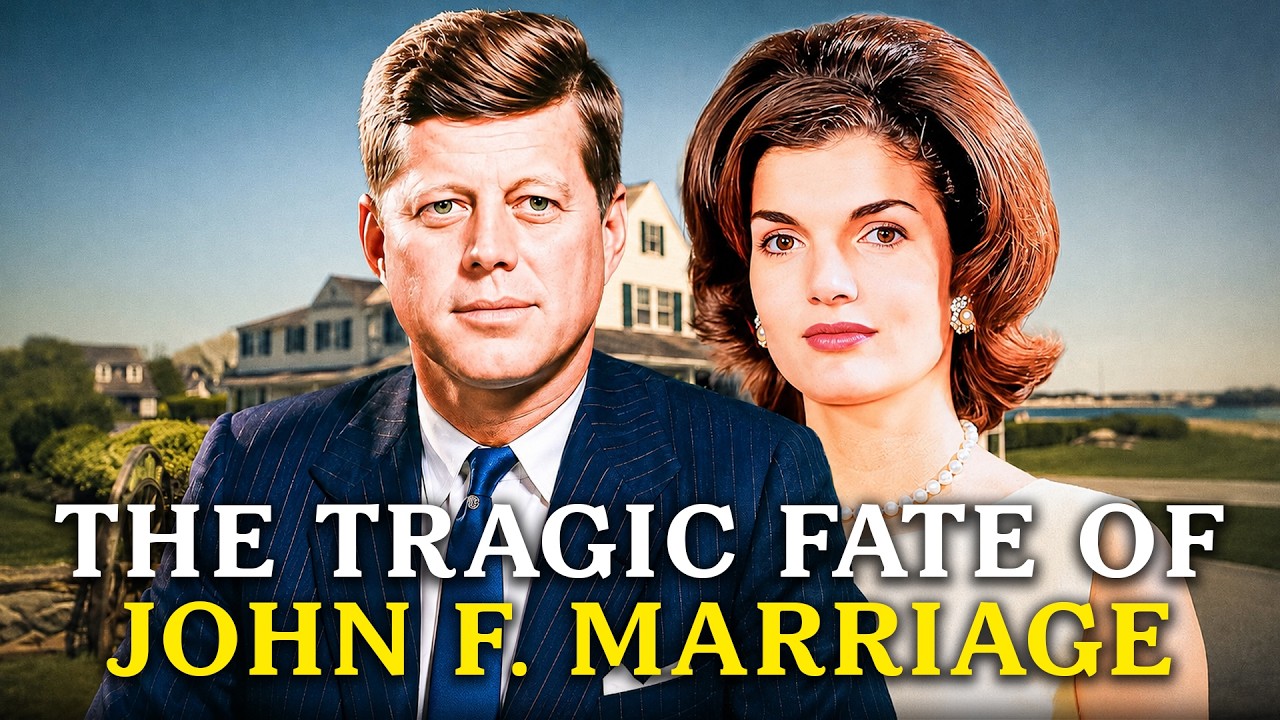
Long before Camelot, before the thousand-day presidency, there were other women, other arrangements, and secrets the Kennedy family worked hard to keep buried. John F. Kennedy grew up in a household shaped by ambition and Catholic tradition, where his father Joseph Kennedy Sr. made little effort to hide a long-standing relationship with Hollywood actress Gloria Swanson while his wife Rose raised nine children in silence.
It was an atmosphere that taught the young Jack Kennedy a great deal about what marriage was for, and what it did not necessarily require. Behind his charm was a physical reality most people never knew. Kennedy genuinely suffered from Addison’s disease, a condition affecting the adrenal glands, as well as chronic back pain from his Navy service in 1943, which required steroids, painkillers, and injections from a physician the press nicknamed Dr. Feelgood.
The man who would become president was managing enormous physical suffering while performing the role of a vigorous young leader. Before the Senate, before Jackie, there was Inga Arvad. In 1941, Kennedy was a 24-year-old ensign in naval intelligence in Washington when he met the Danish journalist through his sister Kathleen. Arvad was extraordinarily beautiful and intelligent, a former Miss Denmark who had interviewed Adolf Hitler during the 1930s while covering Europe as a reporter.
Those encounters with Hitler attracted the attention of FBI director J. Edgar Hoover, whose bureau suspected Arvad might be a German spy and began monitoring her—and, because Kennedy held a sensitive position, monitoring him as well. Joseph Kennedy Sr. made clear the relationship needed to end, and Jack was transferred to Charleston, South Carolina, a move that those close to him believed was engineered to put distance between them.
Arvad later told people she would have married Jack if he had asked. He did not ask. By 1942 the relationship had wound down, and some who studied the connection would later argue it was the most emotionally honest relationship of his life. In 1951, at a dinner hosted by journalist Charles Bartlett, Kennedy met Jacqueline Bouvier.
She was 21, he was 33. She had returned from a year in Paris, spoke French fluently, and worked as a photographer for the Washington Times-Herald. Their courtship was slow and, on Jack’s side, somewhat reluctant. But he was also operating by habits of a bachelor who had never felt compelled to change them.
Between meeting Jackie and proposing, Kennedy briefly considered proposing to a Swedish socialite named Gunilla von Post, writing her letters suggesting that if they had met a year earlier, things might have gone differently. He did not pursue that path. He and Jackie married on September 12th, 1953, in Newport, Rhode Island, with 800 guests at the ceremony and 1,200 at the reception. By the time of the wedding, Jackie had developed a clear picture of what her life inside the Kennedy orbit would look like.
She had heard the stories. She had watched the Kennedy men. Friends from that period described her as someone who entered the marriage with her eyes open, aware of his reputation and the family’s expectations. Kennedy had been elected to the Senate in 1952, defeating Henry Cabot Lodge Jr.
in a race that surprised many. His health remained a serious problem, and in 1954 and 1955 he underwent two spinal surgeries that left him bedridden for months and at one point near death. While recovering, he wrote or heavily co-wrote Profiles in Courage, which won a Pulitzer Prize in 1958. The affairs were not a secret within Kennedy’s tight circle.
His staff knew, his friends knew, and the Washington press corps, operating under unspoken rules about the private lives of public figures, knew and said nothing. Pamela Turnure worked in his Senate office, and Jackie once confronted the situation directly by showing up at Turnure’s apartment. Nothing came of it publicly. Jackie privately struggled in these years.
She had a miscarriage in 1955 and delivered a stillborn daughter named Arabella in August of 1956 while Jack was on a sailing trip with friends in the Mediterranean. He did not immediately return when told. That detail perhaps gives some measure of how wide the gap was between the public partnership and the private reality. She came very close to ending the marriage.
What kept her, by most accounts, was a combination of Catholic faith, Kennedy family pressure, with Joseph Sr. reportedly having a direct conversation with her about the political consequences of divorce, and the fact that she had no obvious place to go. She stayed, and in 1957 their daughter Caroline was born. Running for president in 1960 meant the image management had to scale up dramatically.
Jackie was pregnant with their son John Jr. for part of the campaign, and when she was present she was extraordinarily effective, speaking French to French-Canadian crowds and Spanish to Spanish-speaking audiences in New England. Behind the campaign, the operation was managing things that were not publicly visible. In February of 1960, at a party in Las Vegas, Frank Sinatra introduced Kennedy to a woman named Judith Campbell, later Judith Campbell Exner.
She described a relationship with Kennedy that began during the campaign and continued after he took office, while she was simultaneously connected to figures in organized crime such as Chicago mob boss Sam Giancana. The FBI was watching Giancana, which meant the FBI was also watching the woman who was simultaneously seeing Giancana and the candidate for president. Kennedy won the 1960 election by one of the narrowest popular vote margins in American history, 49. 7% to Richard Nixon’s 49.
5%, and was inaugurated as the 35th president on January 20th, 1961. At 43, he was the youngest man elected to the office. The Kennedy White House ran on two tracks simultaneously. On the public track, Jackie oversaw a complete restoration of the White House, raised private funds, brought in historians, and gave a televised tour in February of 1962 that drew roughly 56 million viewers.
On the other track, informal protocols were established that the Secret Service and household staff understood, allowing certain visitors to arrive through particular entrances at particular times. The names attached to this period include Mary Pinchot Meyer, a painter who had known Kennedy since school days. Her own story ended in tragedy in 1964 when she was shot and killed while walking along the C&O Canal, a crime never definitively solved. She kept a diary, and CIA counterintelligence chief James Angleton reportedly broke into her studio after her death looking for it.
There was also Marilyn Monroe, whose relationship with Kennedy became one of the most debated elements of Kennedy-era mythology. What is documented is that she sang “Happy Birthday, Mr. President” at his May 1962 birthday fundraiser at Madison Square Garden. Kennedy joked afterward that he could retire from politics.
Jackie was not at the event—she was at a horse show in Virginia that weekend. Monroe died on August 4th, 1962 at her home in Los Angeles. She was 36. The official finding was a probable overdose.
In August of 1963, Jackie gave birth five weeks early to a boy named Patrick Bouvier Kennedy. The baby had a lung condition and lived for only 39 hours. Jack Kennedy, who by several accounts was genuinely devastated, held the baby’s hand and wept. Those who were there said they had never seen him cry before.
Something shifted between Jack and Jackie after Patrick died. People who saw them together described a tenderness that had not been visible before, or had not been visible in years. She agreed to join him on a political trip to Texas in November of 1963, a trip she had initially been reluctant to make. She went anyway.
Ellen Rometsch was a young German woman who worked at a private club in Washington called the Quorum Club, a gathering place for politicians and lobbyists that operated on an informal basis. According to Hoover’s files, she had possibly been connected to East German intelligence, and those same files indicated she had also had a relationship with the president. When the FBI began moving toward a congressional investigation in 1963 that might have exposed her name, the Kennedy Justice Department moved to have her quietly deported to West Germany. She left in August of 1963.
J. Edgar Hoover had been collecting information about the Kennedys for years. He had files on Inga Arvad going back to 1941. He knew about Judith Campbell Exner and the White House arrangements, and he used that knowledge as leverage.
It was one of the reasons Robert Kennedy, despite his personal contempt for Hoover, could not simply remove him. Jackie Kennedy understood the landscape she was operating in. She had grown up watching her own father, John Vernou Bouvier III, known as Blackjack, a hard-drinking socialite and serial womanizer, conduct his life in ways that bore uncomfortable resemblance to the one she ended up inside. She coped through travel, spending, and the White House restoration.
Beneath her composure, she was someone who saw things very clearly and had simply made a calculation about how much of what she saw she was willing to show. The word Camelot as a description of the Kennedy White House came from Jackie herself, in a conversation with journalist Theodore H. White one week after the assassination. She told him Jack had loved the musical Camelot and that his favorite line was about a brief shining moment.
She asked White to make sure it made it into print, and the Life magazine piece that resulted became the origin of the Camelot mythology. Jackie built that myth deliberately and with full awareness of what she was doing, in part to cover over what the thousand-day presidency had actually contained. For decades, the Camelot framing dominated how the Kennedy presidency was understood, taught in schools and repeated in documentaries, until the critical histories came later, as documents were declassified and participants grew old enough to speak. Jackie remarried Greek shipping magnate Aristotle Onassis in 1968, a union that shocked the country.
In the years between Dallas and that wedding, she had moved to New York, was one of the most recognizable women on Earth, and was profoundly alone. When Robert Kennedy was assassinated in June of 1968, she reportedly told people close to her that she needed to get her children somewhere safe. Onassis offered that safety. He was one of the wealthiest men in the world, with a private island and a yacht.
He was also 62, twice divorced, and had carried on a years-long relationship with opera singer Maria Callas, who reportedly believed it was heading toward marriage. When Onassis chose Jackie instead, Callas was reportedly devastated. The marriage was an arrangement entered into by two people who understood what each was providing. Jackie got security and financial independence; Onassis got the most famous woman in the world.
But he was difficult to live with and controlling about money, and disputes about their prenuptial agreement became well known after his death in March of 1975. The full paper trail of Kennedy’s personal life came out in pieces over decades through declassified government documents, the deaths of participants who had stayed silent while alive, and work of historians. The Church Committee hearings in 1975 produced revelations about the CIA and FBI that reframed much of what the Kennedy era looked like, including the full story of Judith Campbell Exner and her simultaneous relationships with Kennedy and Sam Giancana. Campbell Exner gave her first full public account of the relationship in 1975 following the Church Committee disclosures.
Some of what she said has been corroborated by available documents, including phone records of calls between her and the White House. Some remains contested. The memoir by Mimi Alford, published in 2012, described a relationship with Kennedy that began when she was a 19-year-old White House intern in the summer of 1962. Her account matters because of what it shows about the texture of power inside that White House.
She was a teenager, new to Washington, completely dazzled by her surroundings, and the people around the president facilitated rather than questioned. Jackie Kennedy’s awareness of all of this remains, even now, not fully mapped. There is a recorded conversation from 1964 conducted by historian Arthur Schlesinger Jr. , in which Jackie was candid about her feelings on various subjects, but those recordings were sealed and not made public until 2011.
Even then, she was selective about what she chose to examine. What comes through the record, across all its contradictions and silences, is something more human than the myth allows for. Two people caught in an arrangement that served political purposes and came at considerable personal cost to both. A marriage built, sustained, and memorialized as something it never entirely was.
Kennedy was in Dallas on November 22nd, 1963, partly because Jackie had agreed to come. She was there because something had shifted after the loss of Patrick. The photographs from the Texas trip in the hours before the motorcade show them together in ways that look genuinely warm. She was beside him when the shots were fired, and she was still wearing the dress, unwashed, when Lyndon Johnson was sworn in on Air Force One.
She insisted on keeping it on. She wanted the world to see what had been done. Then, one week later, she sat down with Theodore White and told him about Camelot. The full truth of the Kennedy marriage does not fit neatly into either the myth or the exposé.
It sits somewhere in between, which is where most human truths actually live.