Ralphie May was found dead at a private residence in Las Vegas on the morning of October 6, 2017, just hours after performing a show while battling a severe case of pneumonia. He was 45 years old. The official cause of death was cardiac arrest. His career was built on a near-fatal car accident at age 16, an event that broke 42 bones, put him in a 10-day coma, and left him in chronic pain for the rest of his life.
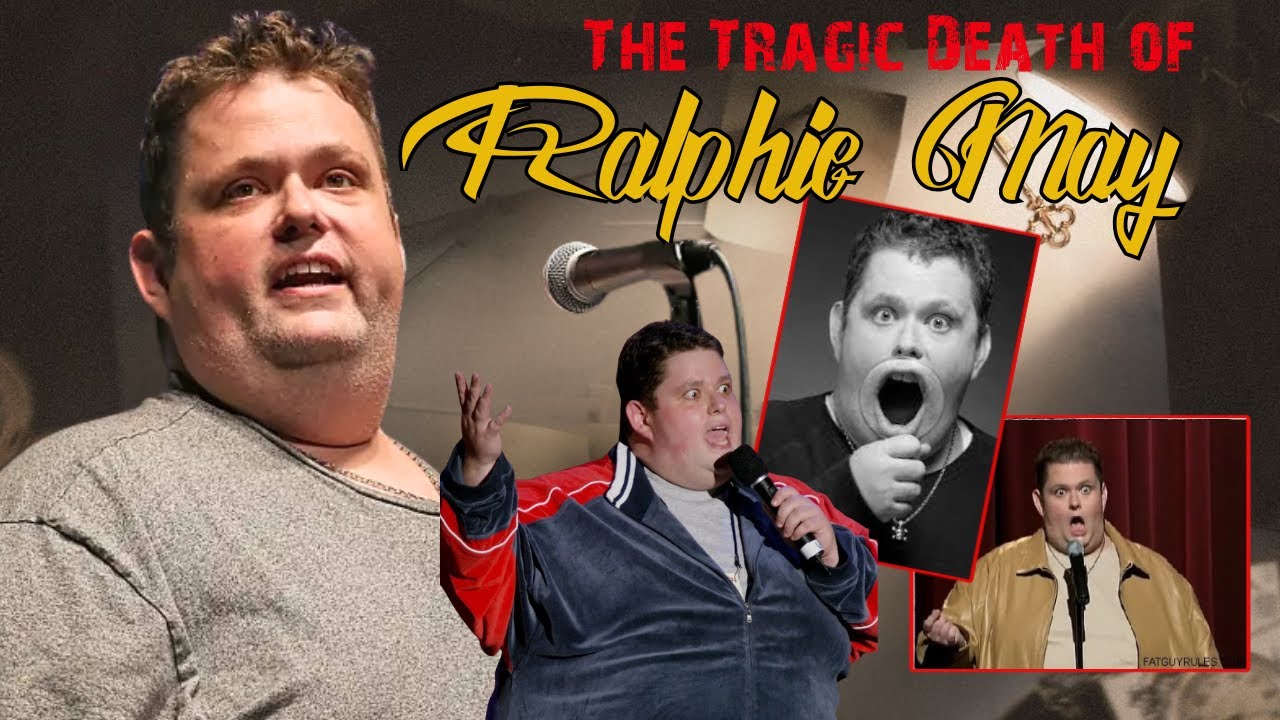
He would later turn that trauma into a comedy brand that made him one of the most recognizable stand-up comedians of his generation. Born Ralphie Duren May on February 17, 1972, in Chattanooga, Tennessee, he grew up in Clarksville, Arkansas, a small town in the Ozark foothills that he would later describe as a place of rigid social norms and enforced conformity. His family life was marked by poverty, tension, and a toxic marriage between his parents that ended in a difficult divorce. He was the youngest of four children.
His maternal grandmother became the most important influence of his early life. Described by May as the archetype of the southern matriarch, she was tough, pragmatic, and the only source of stability in his chaotic world. She also taught him to crochet and quilt, a skill that would unexpectedly shape his entire comedic approach. May later said his long-form storytelling style was born from those quilting lessons.
He compared his 20-minute comedy narratives to taking scraps of life and stitching them together into a cohesive pattern, pulling a final thread at the end to reveal the whole design. At school, he was a target. As the overweight, poor, sensitive kid in a brutal adolescent social hierarchy, he learned to make himself the first target by owning his flaws before bullies could use them against him. That defensive strategy would become a cornerstone of his stage persona.
He found his heroes on television, idolizing Johnny Carson, Richard Pryor, Eddie Murphy, and especially Sam Kinison, the former preacher whose screaming, confrontational style felt like a spiritual liberation to a kid from the Bible Belt. By 13, May was writing his own material. At 16, two life-defining events happened. He won a local talent contest whose grand prize was opening for Kinison, who pulled him aside and gave him a single piece of advice: move to Houston.
Weeks later, May was the passenger in a catastrophic car accident that shattered his body. He broke 42 bones, fractured his spine, crushed his legs, and fell into a coma for 10 days. The recovery took most of a year and left him immobile for long stretches. His metabolism was wrecked by the trauma, and his weight exploded.
The man who would later become famous for his size was, in the most literal sense, shaped by that hospital bed. The accident also left him with chronic, lifelong pain and led him to begin using prescription painkillers, the start of an addiction that would shadow him for the rest of his life. At 19, barely healed and walking with a pronounced limp, May followed Kinison’s advice and moved to Houston. From roughly 1990 to 1998, he performed nearly every night in the city’s diverse comedy clubs, working blue-collar jobs such as dishwasher and line cook to pay his rent.
He learned to perform for audiences of every background, often being the only white person in the room, and developed a style that addressed race and culture through the lens of his own identity. By 1998, he was a local legend. He moved to Los Angeles expecting his craft to carry him forward, but the industry judged him by his appearance. He was cast in small, insulting television roles and spent years performing in the satellite rooms of famous comedy clubs, fighting for five-minute sets in a city that favored image over storytelling.
By 2002, he was broke, exhausted, and on the verge of quitting. Then came an NBC reality show called Last Comic Standing, which many serious comedians dismissed as a betrayal of the craft. May saw it as a way to bypass the industry gatekeepers who had ignored him. He dominated the competition.
His size, his backstory, and his polished, professionally honed act made him the clear favorite. He reached the finals against Dat Phan, whose act centered on his immigrant background and American dream story. The public vote went to Phan, and May finished second. But that loss became the greatest victory of his career.
As runner-up, he was free of the winner’s restrictive multi-year network contract and instantly the most in-demand comedian in America. His first comedy album, Just Correct, was released in 2005 and certified gold, and he became a staple of Comedy Central with a string of successful specials including Girth of a Nation, Prime Cut, Ostentatious, and Too Big to Ignore. He later moved to Netflix for Imperfectly Yours and Unruly. In 2005, May married fellow comedian Lana Turner.
The couple had two children, a daughter and a son. His career continued to rise while his internal struggles worsened. In 2004, as his career was exploding, he underwent gastric bypass surgery, dropping from over 800 pounds to around 350, but it was not a cure. In 2005, he appeared on VH1’s Celebrity Fit Club, where he was publicly weighed and criticized by trainers who treated his trauma-induced condition as a lack of willpower.
The chronic pain from his 42 broken bones never stopped. His addiction to painkillers grew alongside his success. With more money, he had greater access to pills. In 2011, while on a cruise ship comedy tour, he contracted pneumonia that led to a pulmonary embolism, a near-fatal event that left him hospitalized and later diagnosed with post-traumatic stress disorder from his repeated physical near-death experiences.
In October 2015, Turner filed for divorce, seeking sole custody of their children and citing his drug use and allegations of verbal and emotional abuse. The divorce was never finalized and hung over the final years of his life. May was also involved in a long-running controversy over his use of the n-word on stage. He defended it as quoting, context, and free speech, arguing that censoring the word gave it more power.
His critics said his intent did not matter and that as a white man from Arkansas, the word was never his to use. The backlash grew as public sensitivities changed, and it complicated his legacy. In his final days, May was working a coveted residency at Harrah’s Casino in Las Vegas. He had been battling a severe case of pneumonia for more than a month.
Friends and colleagues begged him to cancel shows and go to the hospital, but he refused, pushing his failing body through his scheduled performances. He was named casino comedian of the year in the week before his death. On the morning of October 6, 2017, he was found dead at a private residence in Las Vegas. The official cause of death was cardiac arrest.
The comedy world responded with an outpouring of tributes. Comedians from Kevin Hart and Amy Schumer to his old Houston peers remembered him not just for his comedy but for his generosity, describing a man who gave advice, bought drinks, and slipped hundred-dollar bills to young comics who were struggling in new cities. His memoir, published after his death, was titled This Might Get a Little Heavy.