On a hot January afternoon in 1941, a small ivory-colored invitation arrived at a colonial farmhouse in the Wanjohi Valley. The handwriting was familiar. So was the host. The next morning, the man who had sent it was found dead at the wheel of his Buick on a road outside Nairobi, a single bullet to the head.
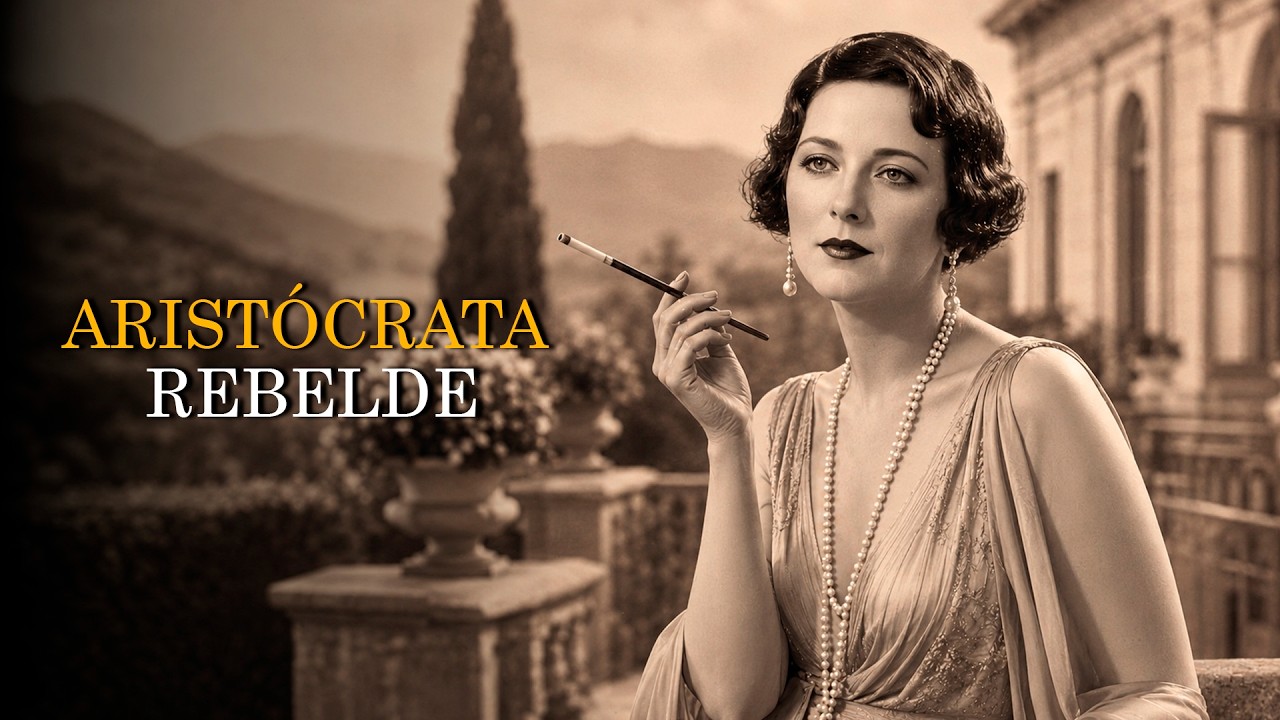
Twelve years earlier, the woman who read that invitation had been his wife—the Countess of Erroll, the most photographed runaway aristocrat of her generation, and the unofficial queen of a private aristocratic colony in the Kenyan highlands. Her name was Idina Sackville, and the body in that car was only the beginning of what she was about to lose. Idina was eight years old in the autumn of 1901 when her father stood up from the dining table and did not return for 40 years. The house was the De La Warr family’s town address.
She and her younger sister Avice had come downstairs for dessert when their father, Gilbert George Reginald Sackville, the 8th Earl De La Warr, placed his napkin on the table, said something in a low voice to his wife, and walked out the front door. He was leaving with his young actress mistress, Myra Meaden. Her mother, Muriel, then 29, wrote to him for three months. The letters pleaded, reasoned, and appealed to his honor.
They received no answer. A small pamphlet containing those letters was published anonymously and circulated through London homes for a season. Anyone who read it knew exactly which family it referred to. The divorce was completed in 1902 on grounds of adultery.
Idina learned two things that year. The first was that a man of his class could simply walk away. There was no force that could hold him to his word once he decided to break it. The second was that the woman who begged, who wrote the letters, who waited, was the one who would be humiliated.
She decided she would never again be left in a dining room. She would be the one to leave first, often, and she would never write a single letter of supplication. To understand what she left behind, one must start at Knole, the Sackville family seat in Kent. The house had seven courtyards, 52 staircases, 12 entrances, and a recorded 365 rooms—a room for every day of the year.
The grounds held a 1,000-acre deer park where fallow and sika deer had grazed since 1456. The state rooms contained the only complete set of surviving royal furniture in the world. During Idina’s childhood, between 30 and 40 indoor servants managed the house. It was the visible measure of the family to which she belonged.
Her cousin Vita Sackville-West, later a poet, novelist, and lover of Virginia Woolf, was almost exactly her age. The two girls knew the footmen’s names and the forbidden path to the kitchens. Knole gave Idina her pattern of the normal. Decades later, when she crossed the threshold of a thatched cottage in colonial Kenya, she did not feel she had entered a smaller house.
She felt she had entered a freer one. On a cold November afternoon in 1913, at St. Margaret’s Westminster, she married Captain David Euan Wallace, a 21-year-old officer in the Coldstream Guards and heir to a Scottish industrial fortune. The bride was 20.
Her father did not attend. There were 240 guests. In the first 18 months, two sons were born: David John in October 1914 and Gerard in the summer of 1915. Then the war took Euan away to France.
He returned home on leave perhaps four times in three years. Idina was alone in a house full of nannies, surrounded by officers on leave who were terrified to their bones. They drank, danced, and slept with one another. Letters surviving in private collections hint at affairs throughout 1916, 1917, and 1918.
By the time Euan returned in 1919, Idina had already left in every way that mattered. She told him at breakfast one morning in March that she did not love him, that she did not believe she had ever loved him, and that she wanted a divorce. She moved that same afternoon to her mother’s house on Park Lane. The divorce was granted in 1919 on the grounds of her own admitted adultery, and made absolute in early 1920.
Custody of the two children was awarded to Euan Wallace. Under Victorian convention, a misbehaving mother lost her children. Idina was granted a single supervised afternoon a month. She had done what her father did.
The difference was that her children were behind her watching the door close. The custody hearing took no more than seven minutes. The judge observed that the petitioner had served his country with distinction throughout the war, while the respondent had served no one at all, and ruled accordingly. Sole custody for Captain Wallace.
One afternoon a month for the mother in the presence of his sister. No overnight visits. No travel abroad with the children. No letters that were not first opened by the petitioner.
The two children were then four and five years old. After the verdict, Idina would see them 11 afternoons a year for two hours each in a Belgravia drawing room with Euan’s sister sitting in a corner pretending to read. She did not break down in the courtroom. She broke down later, alone in her Park Lane bedroom, with a maid crying outside the locked door.
The next morning she began planning the rest of her life. She would not stay in England. She had read about Kenya. She had cousins with land grants in the highlands.
She had met a tall, recently widowed colonial settler named Charles Gordon, who owned a coffee farm in the Aberdares. She married him in 1920. The ceremony was small, and there were no photographs. They set sail from Tilbury in the autumn of 1920.
The Kenya she entered was a colony less than 15 years old. The Wanjohi Valley, the green highland river basin where Idina and Gordon would build Slains, had been Kikuyu grazing land within living memory. Charles Gordon’s farm sat at about 7,000 feet on a south-facing slope of the Aberdare range. The original dwelling was a corrugated iron-roofed shack.
Idina said she could not live in a shack. Gordon agreed to build her a real house. The new bungalow took six months to build. From the outside, it looked like a modest pioneering house.
Inside, it was something else. The drawing room was paneled in cedar. The dining room had a heavy mahogany table brought from London. In the master bedroom, above her bed, she installed a long, horizontally placed oval mirror, screwed to the paneling, so anyone lying in bed could see themselves reflected from above.
The master bathroom was finished in green travertine marble shipped from Italy, with a bathtub built into the floor, large enough for two people, with brass faucets cast in Birmingham. They named the place Slains, after the castle on the cliffs of Aberdeenshire that a future husband’s grandfather had sold in 1916. There were three African servants in the main house: a head servant named Kamau, a cook named Joseph, and a kitchen boy named Mwangi, about 12 years old when she met him, who would be the last person to leave the house after her funeral 35 years later. The distance between her ability to spend two pounds on a bottle of champagne at the Muthaiga Club and Mwangi, who carried her bathwater for five shillings a month, was an abyss.
By colonial standards, she was considered a good employer. She paid medical bills and kept the same staff for years. But the entire architecture of the Happy Valley parties depended on servants being present, invisible, and remembering nothing. By the time Slains was finished, Idina had already met Josslyn Hay.
He arrived at the Muthaiga Country Club in Nairobi in the summer of 1922, a tall, blond, 20-year-old former diplomatic clerk, sent by his father to get him out of London after a scandal. Idina was 29 and had been married to Gordon for two years. She fell in love with Josslyn at a dinner. Within six months she told Gordon she was leaving.
The divorce was finalized in 1923, and marriage to Hay followed in 1924. In 1928 his father died and he became the 22nd Earl of Erroll. Idina was briefly the Countess of Erroll. The template of a Friday at Slains became a legend.
Guests arrived on the Friday afternoon train from Nairobi and were driven up in a dark green Buick. They were usually three or four couples, almost always young, almost always married, and almost always not to each other. Idina would greet them on the veranda in a long silk robe over nothing at all. She showed them the green marble bathroom and said the tub would be full in twenty minutes, that she would use it first, and that anyone who wanted to join her was welcome.
There are at least four documented occasions where the invitation to share the bath was accepted. The goal of the proposal was not necessarily that it be accepted. The goal was that it be made. The entire social architecture of Slains rested on the premise that ordinary rules did not apply at that door.
After dinner, the gramophone was turned on, the rugs were rolled up, and cocaine in a silver box on a side table was available to anyone who wanted it. A small Wedgwood saucer of morphine rested next to it. Idina herself was a regular but careful user, taking small amounts of both substances for what she described as her nerves. The dancing continued until midnight.
Then the guests would sit down and Idina would propose what she called a little game. In its simplest version, the men drew straws, and the winner chose his partner for the night. By 2 a. m.
, all the guests at Slains had ended up in a bedroom that was not the one where they had started. The point of the weekend was not necessarily that it was hedonistic, although it was. The point was that it was structured. It was a parody and inversion of the Edwardian country house values she had been raised in.
The satellite of all this was the Muthaiga Country Club, the unofficial parliament of white Kenya. Idina was there almost every week, usually the center of the room. The culmination of her life came in 1928, when her photograph appeared in The Tatler and she was, for one summer, exactly what she had been building since she was eight years old. Then, in early spring 1929, Josslyn Hay began an affair with Mary Ramsay Hill, the wife of an English settler in the next valley.
By autumn he had left Slains and was living openly with her. The divorce was finalized in 1930. She had been abandoned once again by a husband she had taught herself never to need. The mirror above the bed reflected an empty room.
A cablegram from London arrived on October 25, 1929. The New York stock exchange had collapsed the previous afternoon. Her trust income was cut in half, and further reductions were expected. The price of Kenyan coffee on the London market halved, then halved again.
Between 1930 and 1934, one in five European farms in the Highlands changed hands through forced sale. Idina did not lose her farm, but she lost the certainty that the money would not run out. She married Donald Carmichael Haldeman, heir to an American railroad fortune, in Kent in November 1930. They built a second, larger house called Clouds, two kilometers up the valley, in 1931.
The marriage lasted less than five years. He left in 1935, and the divorce was finalized in 1938. The pattern was now visible to anyone who looked. Idina did not destroy the men she married.
She selected them precisely because she knew they were not to be trusted. She married men who would leave, so she could discover time and again that she had been right not to trust them. The wound of 1901 was being revisited again and again. Her fifth and final husband was Vincent Soltau, a Royal Air Force officer 12 years younger than her.
They married in September 1939. The great parties had ceased. He left her in 1946. In the end, she had been left four times by men and once by a court.
The dining room of 1901 was the only one she had left first. At 1:20 in the morning on January 24, 1941, a worker walking along a road on the outskirts of Karen saw a dark green Buick at a strange angle in a ditch. The driver was Josslyn Hay, Earl of Erroll, Idina’s third husband. He had been shot in the head behind the left ear at very close range while sitting behind the wheel.
There were no signs of a struggle. The night before, he had dined at Muthaiga with Diana Broughton, the young wife of Sir Henry Delves Broughton, and her husband. The affair between Hay and Diana had been open since the previous October. Hay left the Broughton house at about 2:15 in the morning alone.
He was found dead approximately an hour later, 800 meters from their gates. Police arrested Jock Broughton and charged him with murder. The trial took place in Nairobi between May and July 1941. The defense argued that Broughton was physically incapable of having committed the crime in the available time and had no gunpowder residue on his hands.
The jury returned a verdict of not guilty. Broughton returned to England and committed suicide in a Liverpool hotel the following year. For Idina, the murder opened a wound that had only partially healed. According to her private testimony, Josslyn had been the only man she had ever loved.
She wore black for 15 days and did not cry in public. She testified at the trial as a character witness briefly on June 7. Her testimony was 22 lines long. She was asked about his character and answered in short, calm sentences: that he was charming, complicated, and had made enemies because he could not leave other men’s wives alone.
In the months following the trial, the remaining Happy Valley network collapsed. Alice de Janzé, one of Idina’s closest friends, committed suicide with an overdose at her farm in October 1941. Of the main Slains regulars from the summer of 1928, less than half were still alive by the end of 1942. Idina did not collapse; she shrank.
She gave up formal parties and long weekends. She rode in the early morning, walked through the coffee plantation in the afternoons, and sat in her living room at night with a book and a glass of claret. The first telegram reached her in September 1943. The War Office regretted to inform her that her son, Captain Gerard Euan Wallace of the Welsh Guards, had been killed in action in North Africa in early August.
The body had not been recovered. She was not the next of kin; she hadn’t been since the 1919 custody ruling. The second telegram arrived almost exactly a year later. Her son, Major David John Wallace, killed in action on August 8, 1944, while attached as a liaison officer to Greek resistance forces.
The body had been recovered and buried with full military honors near Athens. He had been awarded a posthumous Military Cross. He was 29 years old. The reconciliation with David had barely begun.
He had written to her in 1937, asking if he could come to Kenya to meet her. He had stayed at Clouds for a month in the spring of 1938. They had reached a careful, tentative friendship. The telegram about him was the only direct news she had had of him since he was four years old.
She never spoke again for the rest of her life about either of her children to anyone who was not African. She arrived at the European Hospital in Mombasa on a hot afternoon in October 1955 and never returned home. It was stomach cancer, diagnosed in 1953 and too advanced to operate. She had refused the available treatments.
The journey was almost 500 kilometers, done in two days with Mwangi at the wheel. She was very thin and wore a dark grey wool suit with a Sackville brooch on her lapel. She died at 9:20 p. m.
on November 5, 1955, at the age of 62. Her last words were spoken in Swahili, directed at no one in particular and too soft to be recorded. The funeral service took place the following afternoon. The mourners numbered 11: Mwangi, Kamau, Joseph, a group of African friends, and three Europeans.
No member of her family attended. The grave was simple, a plain concrete rectangle with a small headstone giving her name as Idina Sackville, 1893 to 1955. Below her name, a smaller inscription was carved at the request of Mwangi, who paid for it from his own savings. It commemorated her son Gerard, killed in action in 1943, whose body was never recovered.
The grave was tended for the next 27 years by Mwangi. After his death in 1982, it remained in the care of his daughter, who had grown up at Clouds and remembered the voice of the woman she called Vivi Dina. Today, three houses remain. Knole is a National Trust property visited by over 200,000 people a year.
Idina’s portrait hangs in a small side room with a brief label that does not mention the parties, the lost children, or the grave in Imbaraki. Clouds is owned by a Kenyan family who farm the surrounding land. The green travertine bathroom is still there, cracked and oxidized. Slains is a ruin on a hillside, its roof rusted, its master bedroom open to the sky.
The view from the veranda toward Mount Kipipiri is the same view she saw the morning she first arrived. What her story illuminates is that the great houses did not always fall because of demolitions, fire, or auctions. Sometimes they fell silently through their own children, who walked out of the drawing room one afternoon and never returned.
The wound that the eight-year-old girl suffered in the dining room in 1901 traveled with her around the world, until in the end there were no more rooms left to enter.