On February 3rd, 1997, a chauffeur drove the United States Ambassador to France from her official residence to the Hotel Ritz in Paris. At 76 years old, she changed into her swimsuit and descended to the hotel’s celebrated indoor pool. After swimming roughly 20 lengths, she groaned and went limp in the water. The hotel’s security duty manager, Henri Paul, a name that would become globally notorious months later as the driver of Princess Diana’s car, was among those who pulled her from the pool and attempted to revive her. She died two days later at the American Hospital of Paris without regaining consciousness.
The woman who died was Pamela Harriman, born Pamela Beryl Digby in rural Hampshire. She had married Winston Churchill's son, seduced the heirs to the Fiat and Rothschild fortunes, rebuilt the American Democratic Party from the wreckage of the Reagan landslides, mentored Bill Clinton into the presidency, and been appointed the first female ambassador to France in U.S. history. Her life was a relentless, controversial, and consequential act of self-creation.
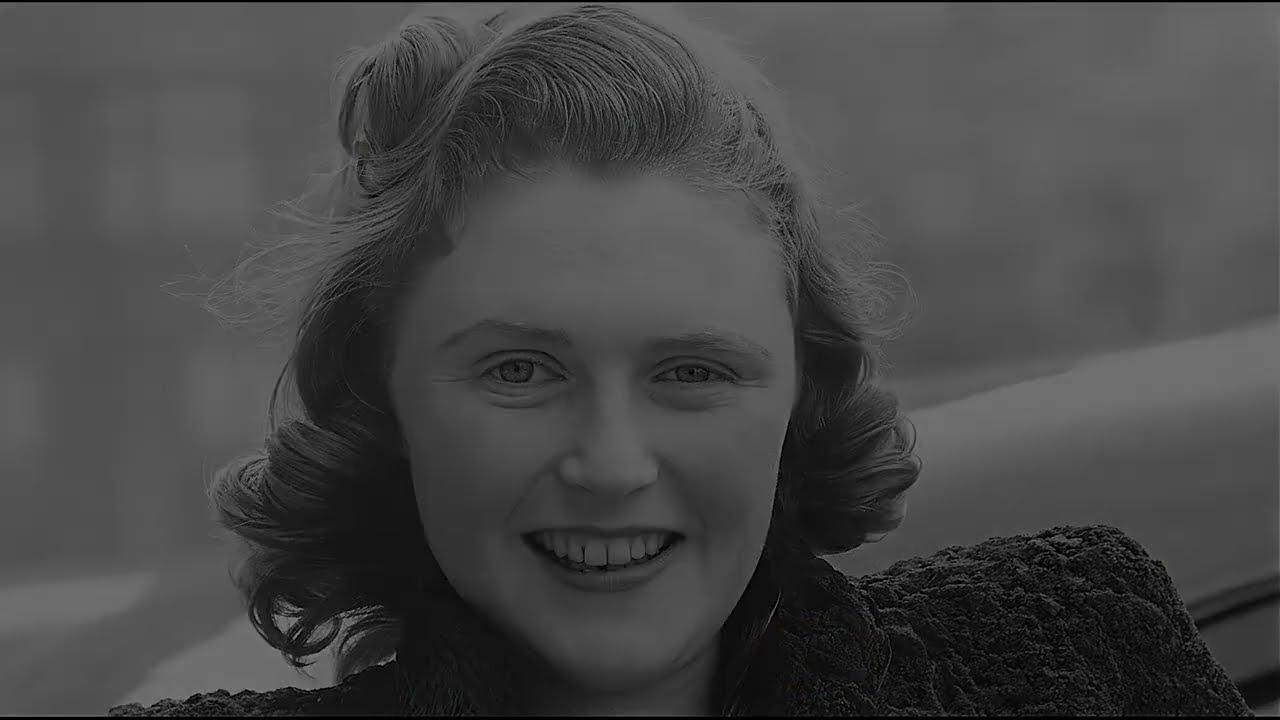
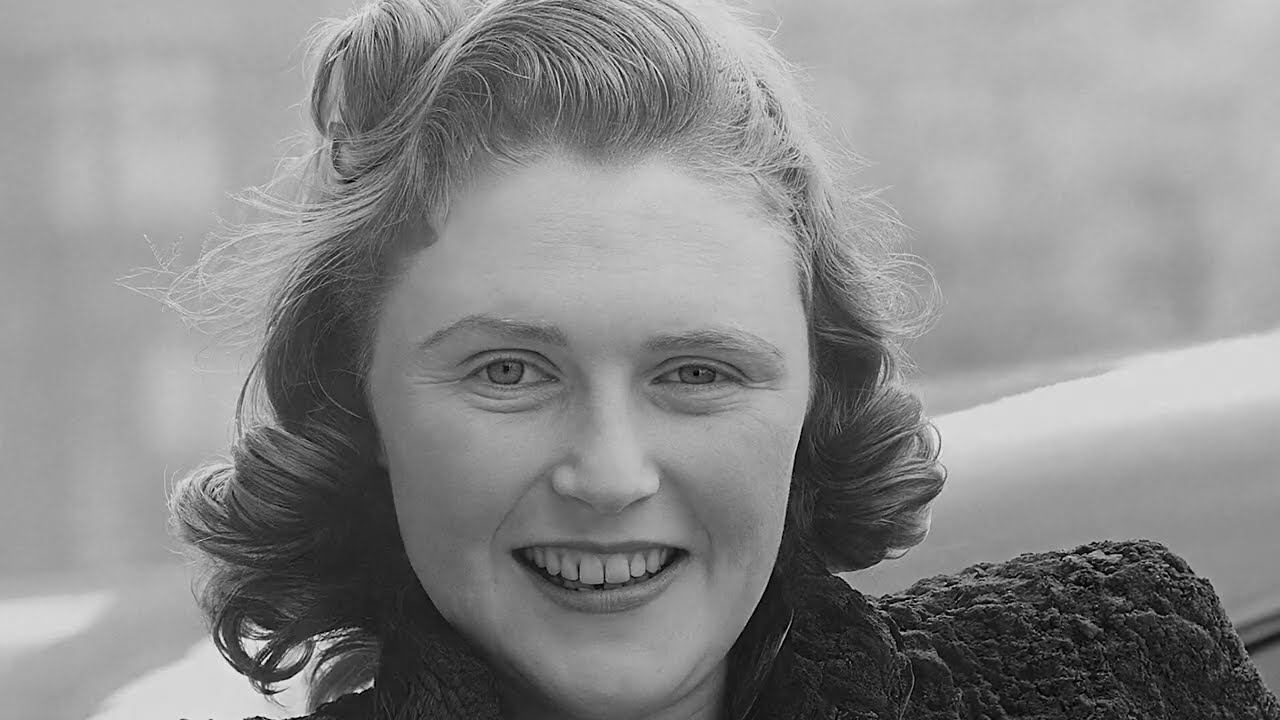
Pamela was born on March 20th, 1920, the eldest of four children of Edward Kenelm Digby, the 11th Baron Digby, and his wife, Lady Pamela Bruce. The family had lineage of the highest English pedigree but lacked the liquidity to match it. Her father once had to bet on the Grand National simply to finance her London debutante season. Early on, she realized that what gave a woman supreme independence was great wealth, usually acquired through a man. She was educated by governesses and sent to a Munich boarding school, where she was briefly introduced to Adolf Hitler through Unity Mitford.
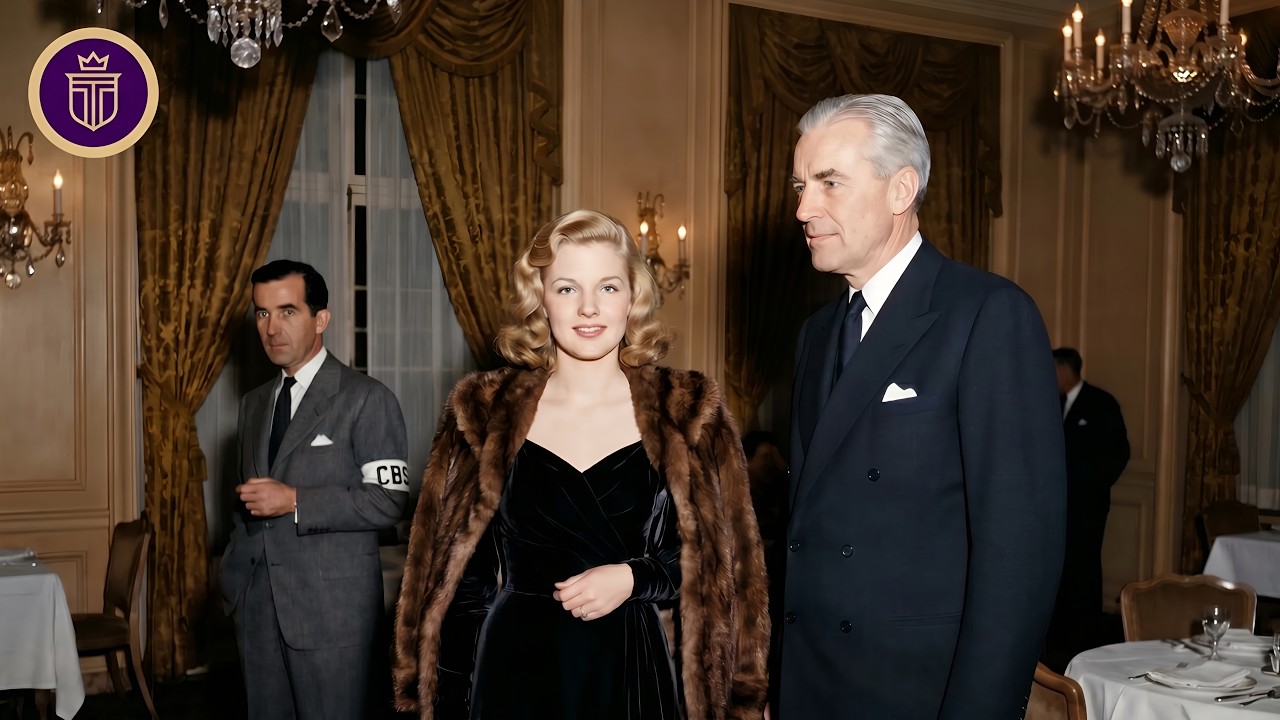
Her great-great-aunt, Jane Digby, was a notorious ancestor who served as Pamela's template for audacity. Jane had married Lord Ellenborough, destroyed the marriage with an affair, subsequently married and divorced a German baron, took up with a Greek count, and ultimately married a Bedouin sheikh 20 years her junior. Pamela absorbed the lesson that a Digby with enough nerve could rewrite her own story entirely.
In the autumn of 1939, the 19-year-old Pamela was introduced to Randolph Churchill at a country house party. He proposed on the night they met, and they married on October 4th, 1939. The marriage was a commercial transaction dressed as romance. Randolph wanted an heir before he likely died in the war, and Pamela wanted an escape from Dorset and an entry ticket to the center of British authority. The marriage was catastrophically unhappy within months, but it gave her a valuable address in the inner circle of the wartime prime minister. In October of 1940, she gave birth to a son, inevitably named Winston.
Lord Beaverbrook, the wealthy press baron, spotted her raw potential and set about cultivating it. He subsidized her lifestyle, freed her from maternal duties, and engineered a dinner at the Dorchester Hotel where she would first meet Averell Harriman. Churchill recognized in his daughter-in-law a rare combination of personal charisma, social intelligence, and discretion, and encouraged her to cultivate relationships with powerful Americans flowing through wartime London. She was described as "Churchill's secret weapon," providing pillow talk converted into geopolitical intelligence.
Her most significant wartime affair was with Averell Harriman, then 50 years old, Roosevelt's special envoy supervising Lend-Lease. He was 30 years her senior and one of the wealthiest men in America. When Harriman was posted to Moscow, the network expanded to include Edward R. Murrow, the legendary CBS broadcaster, and later Jock Whitney, Sir Charles Portal, and General Kenneth Anderson. After divorcing Randolph in 1946, Pamela moved to Paris, where her first great relationship was with Prince Aly Khan. She then had an affair with Gianni Agnelli, the heir to the Fiat empire, who installed her in a Paris apartment with a butler, a blue Bentley, and accounts at all the couture houses.
By 1960, Pamela was 40 and ready for a fundamental change. She moved to New York and set her sights on Leland Hayward, one of Broadway and Hollywood's most influential producers. Through Hayward, she gained entry into the Kennedy White House and the pinnacle of American cultural life, becoming one of Truman Capote's swans. The Hayward marriage was the most genuinely happy of her three unions. When Leland died in 1971, he left half of his estate to his children, and Pamela's six-figure settlement drew from her the bitter exclamation, "How could I have been married for so many years to a man who leaves me so little?"
Six months after Hayward's death, Pamela married for the third and final time. W. Averell Harriman had spent the intervening decades accumulating one of the most extraordinary public records in American history. They married on September 27th, 1971. For Pamela, the marriage represented the culmination of everything. The Georgetown townhouse was transformed into one of Washington's most celebrated private spaces, and the house became the salon where the Democratic Party was rebuilt. She formed a political action committee called Democrats for the '80s, which raised an estimated 10 to 12 million dollars for Democratic candidates over the decade.
Her identification of Bill Clinton as the Democrat best positioned to end 12 years of Republican dominance is the most discussed episode in her political legacy. A single fundraiser at her Middleburg estate in the spring of 1992 raised $3.2 million for the Clinton-Gore ticket, at that point the largest single private fundraiser in American political history. "I will never forget how she was there for Hillary and for me in 1992," Clinton said at her funeral five years later.
Averell Harriman died on July 26th, 1986, leaving an estate valued at approximately $65 million. Pamela inherited the bulk of it, including the Georgetown house, properties in New York and Idaho, and an art collection with a Matisse, a Picasso, and a Van Gogh. However, as trustee, she and her co-advisers made a series of investment decisions that ranged from unwise to catastrophic, including a $21 million investment in a failed conference resort in New Jersey. The lawsuit alleged that Pamela had been directly borrowing from the trusts she was administering. Trust funds that had grown to approximately 25 million by 1989 had dwindled to roughly 3 million by the time heirs filed suit in 1994. To fund the settlement, she consigned three masterworks from the Harriman art collection to Christie's. When Pamela died 14 months later, her estate was valued at just over $10 million.
Bill Clinton appointed Pamela Harriman as United States Ambassador to France in 1993, making her the first woman in history to hold the posting. She was 73 years old. She prepared with the rigor of a person who had spent 73 years preparing for everything important. Richard Holbrooke, the diplomat who brokered the Dayton Accords, said, "She spoke the language. She knew the country. She knew its leadership. She was one of the best ambassadors that ever served the United States."
The ambassadorship was the vindication of everything she had spent her life preparing for. She had asked Clinton to be relieved of her duties, and her deputy, concerned about her state of mind, urged her to take her usual swim at the Ritz. At 4:00 in the afternoon of February 3rd, 1997, she changed into her swimsuit, descended to the pool, and after approximately 20 lengths, groaned and went limp in the water. A tear rolled down her face as she slipped into unconsciousness. She died at 3:48 on the afternoon of February 5th without regaining consciousness.
President Clinton gave an emotional statement on the South Lawn of the White House, and Madeleine Albright called her a central figure in the history of this century. The funeral was held at the Washington National Cathedral, attended by the president and vice president. Clinton's eulogy opened with "we gather in tribute to Pamela Harriman, patriot and public servant, American ambassador and citizen of the world." His central line was the one everyone remembered: "Today I am here in no small measure because she was there."
The woman who had spent 40 years being dismissed as a courtesan and a socialite had, when given institutional authority, performed at a level that the most seasoned career diplomats acknowledged as first rate. She used what she had with a thoroughness and strategic intelligence that her male contemporaries would have been celebrated for. She got there through a combination of beauty, intelligence, sexual technique, political instinct, genuine patriotism, calculated ambition, and the specific Digby inheritance of audacity. She got there by making powerful men feel important, by listening when others talked, and by understanding that the gap between the girl from Dorset and the woman she intended to become could only be bridged by attaching herself to men whose institutional authority she could borrow, absorb, and eventually exercise on her own terms.