John Henry Holliday was born in Griffin, Georgia, in 1851. He was raised in a respectable family and educated as a gentleman. He graduated near the top of his class from the Pennsylvania College of Dental Surgery at just 20 years old.
By every measure, he was supposed to live a quiet, professional life. He was supposed to fix teeth, marry well, and grow old in Georgia. Tuberculosis had other plans.
The disease ran through the Holliday bloodline. His sister died of it before he was born. When he was 15, he watched his mother succumb to it.
He likely contracted the bacterium while caring for her in her final weeks. The disease was already inside him, waiting.
The moment came one year into his dental practice. In 1873, at 21 years old, Holliday was diagnosed with advanced tuberculosis. The prognosis was blunt. He had months to live.
Doctors advised him to seek drier, warmer climates. That was the only treatment available. The diagnosis became the hinge of everything that followed.
By 1874, Holliday had abandoned his dental practice. The cough drove patients away. Nobody wanted a consumptive dentist leaning over their open mouth.
He turned to gambling, then to drinking. The alcohol dulled the pain, the cough, and the terror of what was coming. The frontier beckoned.
He moved to Dallas, then further west, chasing the dry air that might buy him time. The dentist from Georgia was becoming someone else.
Tuberculosis in the 19th century was called consumption because it seemed to consume the body from within. The bacterium attacks the lungs, creating cavities in the tissue. The inflammation leads to a persistent, worsening cough.
As the cavities grow, blood vessels rupture. That is the bloody sputum that marked the disease’s victims. Fever came and went without pattern. Night sweats soaked the sheets.
Then came the extreme weight loss. The body, unable to absorb enough nutrition, begins cannibalizing itself. Muscle disappears. The face becomes angular. The eyes become sunken.
In the 1800s, tuberculosis killed approximately 80 percent of those infected. There was no cure. The first effective antibiotic would not arrive until the 1940s.
Every day Holliday spent on the frontier, every card game, every shootout, he was doing it while his lungs were being eaten alive. He was a gunslinger drowning in his own blood.
The move west brought him to Dallas, then Denver, then the mining towns of the frontier. He earned the nickname the deadly dentist. His verified kills numbered two.
Reputation on the frontier was not built on verified statistics. It was built on whispers and on the willingness to draw without hesitation. Holliday had something no other gunfighter possessed.
He genuinely did not care if he lived or died. A man already sentenced to death by his own body is the most dangerous person at any card table.
The story intersects with another legend entirely. Holliday and Wyatt Earp formed a friendship forged in frontier violence. Earp was the lawman. Holliday was the wild card.
Holliday reportedly saved Earp’s life in Dodge City. The debt bound them together through everything that followed.
In 1881, Holliday arrived in Tombstone, Arizona Territory, with the Earp brothers. The Earps had been feuding with the Clanton-McClory faction for months.
On October 26, 1881, the tension reached a breaking point. The gunfight at the O.K. Corral lasted 30 seconds and involved 30 shots.
Holliday carried a shotgun under his long coat. A man whose hands trembled from disease chose a weapon that did not require precision.
Frank McLaury’s bullet grazed Holliday, creasing his hip. Holliday’s return fire struck McLaury in the stomach and near the ear. McLaury died in the dirt.
Three men on the Clanton-McLaury side were killed. The Earps and Holliday survived.
A man with advanced tuberculosis, who coughed blood every morning and weighed barely 130 pounds, had walked into a gunfight and walked out alive.
Holliday and the Earps were charged with murder. They were acquitted after a hearing.
In March 1882, Morgan Earp was assassinated, shot through a window while playing billiards. Wyatt Earp formed a posse, and Holliday rode with him without hesitation.
The Earp Vendetta Ride was a bloody sweep through Arizona Territory. Holliday was the enforcer. His body was failing in ways that could no longer be concealed.
The cough was constant. The weight loss was alarming. He rode anyway.
The vendetta ended in 1882. Holliday and Earp parted ways, not from a falling out, but because Holliday’s body was breaking down too fast to keep riding.
Holliday landed in Leadville, Colorado, a mining town at 10,000 feet above sea level. For a man with damaged lungs, the choice was catastrophic.
The high altitude starved his ravaged lungs of oxygen. He relied increasingly on alcohol and laudanum, opium dissolved in alcohol, to manage the pain.
In 1884, a confrontation erupted with a former policeman named Billy Allen. Holliday shot Allen in the arm, severing an artery. Allen survived, but his arm was permanently weakened.
Holliday was tried for assault and claimed self-defense. He was acquitted in March 1885. It was the last time Doc Holliday ever shot a man.
By late 1886, the disease had seized full control. The gunslinger was becoming a ghost.
The last time Wyatt Earp saw Doc Holliday alive was in 1886. The encounter haunted him for the rest of his days.
Holliday was skeletal, gaunt, and prematurely gray. His legs were unsteady. The cough was constant now, a deep, wet, tearing sound that shook his entire frame.
When he pressed a handkerchief to his mouth, it came away spotted with rust-colored blood. This was the man who had stood beside Earp at the O.K. Corral.
Both men knew what this was. It was a goodbye.
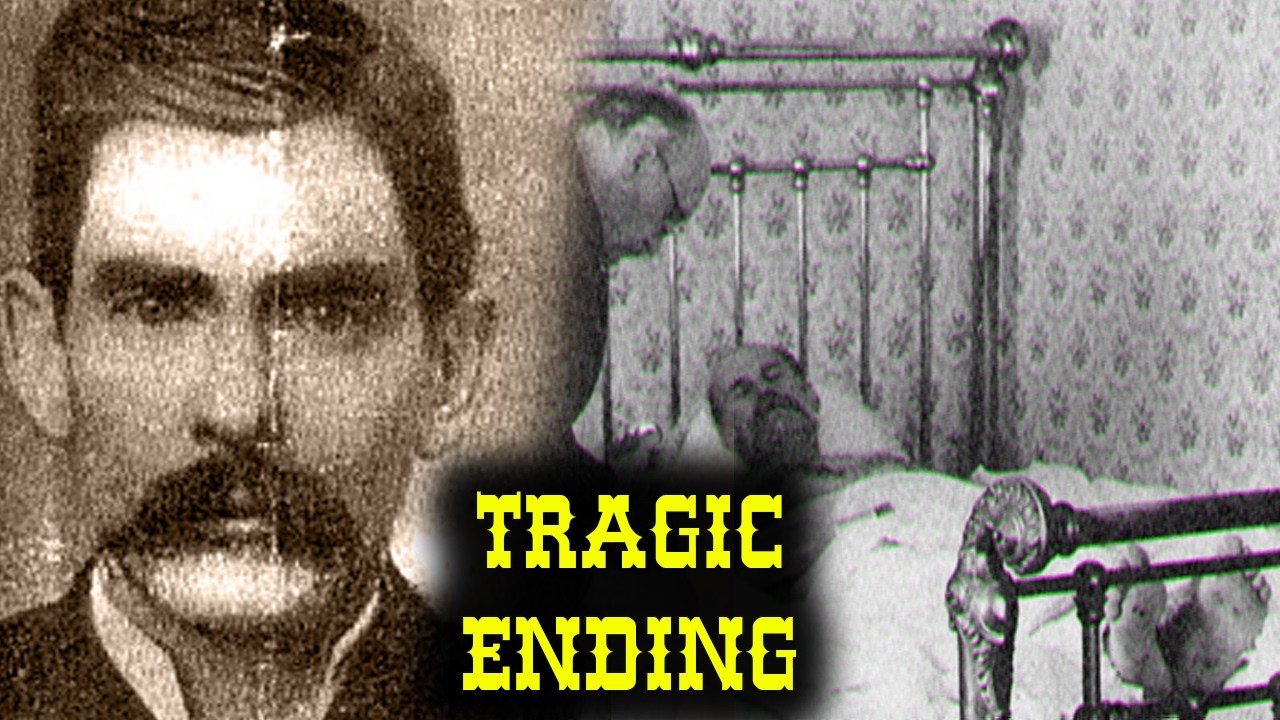
Instead of seeking comfort in his final months, Holliday went alone. His pride dictated the terms of his dying. He would not let anyone watch him disappear by inches.
The move to Glenwood Springs, Colorado, was Holliday’s last gamble. The town’s hot sulfur springs had a reputation as a curative destination.
The Hotel Glenwood became his final address. He arrived alone. He had separated from Kate Horony, known as Big Nose Kate, his longtime companion.
The routine was simple and bleak. Mineral baths, sulfur water treatments, rest.
The sulfurous fumes from the springs likely caused additional irritation and damage to tissue that was already more wound than organ. The cure was the poison.
Holliday was now too weak to gamble effectively. His hands trembled constantly. The laudanum and whiskey barely touched the pain.
His clothes hung off him. His hair had gone gray. The cough dominated everything.
Other guests at the Hotel Glenwood could hear it through the walls. They knew who he was, or who he had been. The revolver on his nightstand sat untouched.
The end-stage siege was underway. His lungs could barely exchange oxygen. The fever became constant. Night sweats drenched the sheets.
The cachexia accelerated. The body consumed its own muscle. Secondary infections took hold in the damaged lung tissue.
In his final weeks, Holliday was bedridden. He was 36 years old. His hair was gray. His body was skeletal.
One detail stands out. Holliday, who had always worn his boots, a frontier habit born of readiness for trouble, was now barefoot in bed.
His boots sat on the floor beside the nightstand, unworn and unnecessary. For a man of the frontier, removing your boots meant something specific. It meant you weren’t going anywhere.
After 14 years of running from a death sentence that never quite caught him, Doc Holliday had finally taken off his boots.
On the morning of November 8, 1887, Holliday was conscious. The coughing eased, not because he was better, but because his body was giving up the fight.
He looked down at his feet, bare against the white sheets. No boots. He spoke his last words.
“This is funny.”
Every source, every historian, every biographer has debated those three words. The most widely accepted interpretation is the simplest.
Holliday had always expected to die with his boots on, in a gunfight, in a saloon, on a dusty street with a revolver in his hand. Instead, he was barefoot in bed in a hotel.
The disease his mother had carried had finally caught him. The last thing he did was laugh at the cosmic joke of it all.
At 10:00 a.m. on November 8, 1887, Doc Holliday was dead.
The cause of death was respiratory failure secondary to advanced pulmonary tuberculosis, complicated by secondary infections. No gunfight. No dramatic last stand.
Wyatt Earp did not learn of Holliday’s death until two months after it happened. News traveled slowly across the vast American West.
Holliday was buried in Glenwood Springs. The exact location of his grave remains uncertain.
Kate Horony survived Holliday by 53 years. She died on November 2, 1940, at the age of 89, just six days before the 53rd anniversary of Holliday’s death.
She lived long enough to see the dawn of the antibiotic age, the development of the very medicines that might have saved the man she had loved.
Holliday’s 14-year survival with advanced tuberculosis was extraordinary. Most patients diagnosed with advanced consumption in the 1870s measured their remaining time in months.
The dry western climate slowed the disease. But the alcohol, the laudanum, the stress, and ultimately the altitude and sulfurous fumes all worked against him.
His legend outpaced his actual body count by an order of magnitude. Two verified kills against a mythology of dozens.
Tuberculosis in the 19th century killed approximately one in four Europeans and Americans. It was the leading cause of death in the United States for most of the 1800s.
Holliday was one of millions claimed by the disease. But he is the one we remember.
Wyatt Earp carried the memory of Doc Holliday for the rest of his life. In later interviews, he spoke of his friend with loyalty that bordered on reverence.
The image of the man he had found in 1886, barely able to stand, haunted Earp until his own death decades later.
Hollywood discovered Doc Holliday in the 20th century and never let go. From “My Darling Clementine” in 1946 to “Tombstone” in 1993, the deadly dentist became a cinematic icon.
The myth gives us a Holliday who dies gun in hand, defiant, dramatic. The reality, those final bewildered words spoken barefoot in bed, is stranger, sadder, and more human.
The true story of Doc Holliday isn’t a gunfighter story. It’s a story about borrowed time.
The death sentence handed down 14 years earlier didn’t just end his dental career. It created the gunfighter. The fearlessness that made him legendary was the recklessness of a man who had already been told he was dead.
His 14 years on the frontier, every card game, every friendship, every bullet fired and dodged, were played out on time he had stolen from tuberculosis.
When the disease finally collected, it did so quietly. Not with a bang, but with a cough.
Doc Holliday was born a dentist, became a killer, and died a patient. The last thing he ever did was look down at his bare feet, realize he wasn’t wearing his boots, and laugh.