When German panzer columns burst through the Ardennes Forest in May 1940, they shattered the prevailing military wisdom of the age. The terrain had been deemed impassable for armor, the risks considered reckless to the point of lunacy. Yet within six weeks, France had fallen, the British Expeditionary Force had been driven from the continent, and the world had witnessed a military victory of such speed and totality that it seemed to rewrite the rules of warfare. The campaign was the consummate expression of a military system crafted over decades, a system that had transformed a nation humiliated at Versailles into the master of Europe in less than a decade.
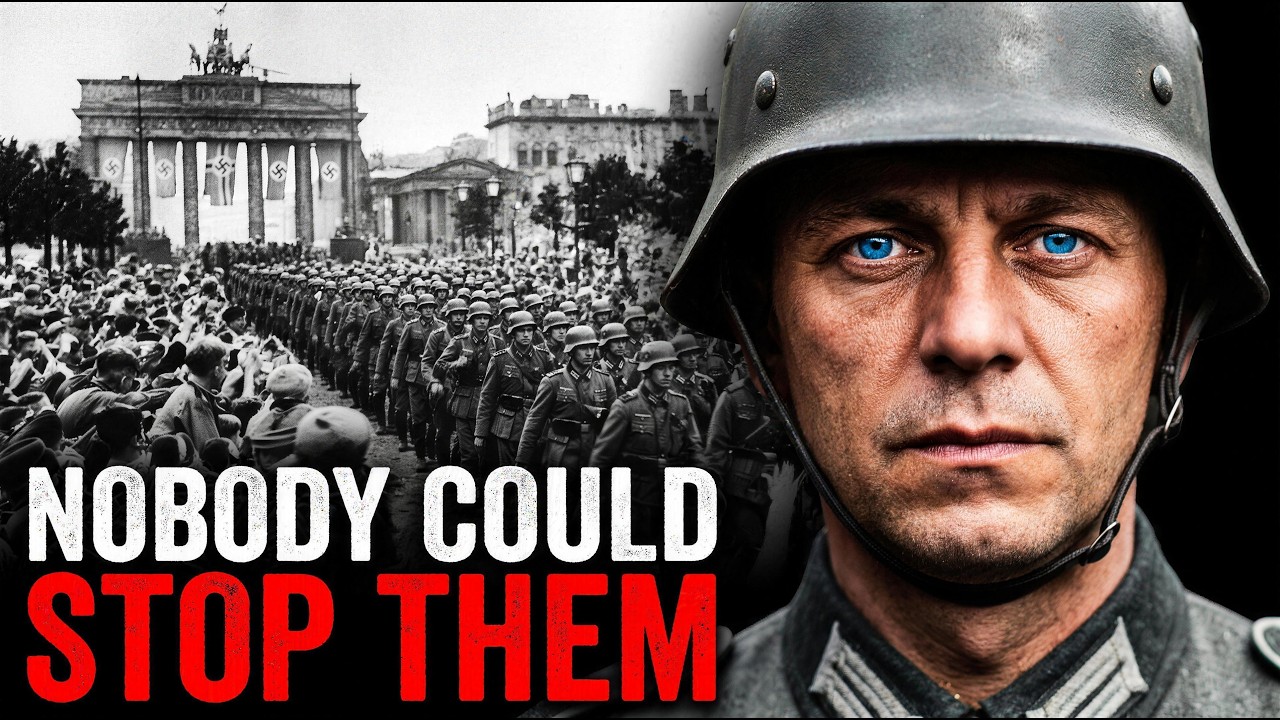
The foundation of that system lay in a distinctly Prussian military tradition, embodied most powerfully in the doctrine of Auftragstaktik, or mission-type tactics. Under this philosophy, commanders at every level were not expected to wait for explicit orders. They were trained to understand the intent of their superior and to act decisively on their own judgment, even when circumstances had changed dramatically from what had been anticipated. The roots of this approach reached back to Helmuth von Moltke the Elder and the wars of German unification, when the chaos of modern combat made centralized control impossible.
Rather than attempting to manage every detail from the top, Moltke cultivated an officer corps so thoroughly grounded in doctrine that it could operate effectively even when cut off from higher headquarters. The defeat of the First World War did not destroy this tradition. In the hands of Hans von Seeckt, commander-in-chief of the Reichswehr from 1920 to 1926, it was refined into something extraordinary. Constrained by the Treaty of Versailles to a mere 100,000 men, Seeckt built an army of exceptional quality around the principle that every soldier would be trained for the rank above him.
Sergeants learned to command platoons, lieutenants to command companies, captains to command battalions. The theory was that when expansion came, this professional core would absorb and lead the flood of conscripts that would follow. When Hitler began rebuilding the military in the 1930s, that is precisely what happened. The second pillar of German effectiveness was the revolution in armored warfare championed by Heinz Guderian.
A signals officer in the First World War, Guderian became convinced that the tank was not a support weapon for infantry but the decisive arm of future conflict. His central insight was that the value of armor lay not in individual fighting power but in concentration, penetration, and above all speed. Tanks should not be parceled out in small packets. They should be massed in large formations, equipped with their own motorized infantry, artillery, and engineers, and driven deep into the enemy rear to create chaos faster than the enemy could respond.
Hitler, with his instinct for the bold and unconventional, was enthusiastic. The panzer divisions created under Guderian’s influence were genuinely revolutionary, integrating all arms into self-contained formations capable of independent sustained operations at unprecedented pace. Central to this system was communications. German tanks were fitted with radios for sending as well as receiving orders, allowing commanders at every level to coordinate with each other, with supporting aircraft, and with artillery in real time.
French tanks in 1940 were often equipped only with receivers, forcing commanders to rely on flag signals. This disparity compounded every other German advantage, because it meant German forces could act inside the decision cycle of their opponents. The Luftwaffe, built largely as a tactical air force, added another dimension. The Ju 87 Stuka dive bomber, with its terrifying shriek and precision bombing, was directed against specific targets in support of the ground battle.
The psychological effect on troops without effective air cover was immense, dissolving entire formations through terror and confusion rather than catastrophic casualties. The officer corps that directed these forces was arguably the finest in the world. The Kriegsakademie produced graduates of exceptional professional competence, men trained not just to fight battles but to plan and sustain campaigns. The most brilliant of these was Erich von Manstein.
It was Manstein who conceived the operational plan for the attack on France, rejecting the conventional replay of the Schlieffen Plan in favor of a breathtakingly audacious thrust through the Ardennes. The very boldness of the concept was part of its genius. The Allies, fixated on Belgium, would not expect an armored drive through terrain universally considered impassable. Manstein’s plan faced enormous resistance within the German high command, but Hitler sided with him.
The campaign that followed was executed at every level with an improvisation and aggression that left French commanders perpetually off balance. Irvin Rommel’s 7th Panzer Division moved so fast and so unpredictably that it became known as the Ghost Division, sometimes even German headquarters losing track of it. The human dimension was equally important. The German soldier of the early war years was exceptionally trained, physically fit, and disciplined.
Training exercises were conducted with live ammunition, sleep deprivation, and deliberate psychological pressure, the philosophy being that soldiers should experience the stress of battle in training where mistakes were recoverable rather than in combat where they were fatal. The non-commissioned officer corps was trained to a standard that would have qualified for officer rank in many other armies, meaning that even when German units lost their officers, they retained an extraordinary residual capacity for effective action. This rigorous system produced soldiers who were imbued with a strong sense of unit cohesion and esprit de corps, qualities that translated directly into combat effectiveness. The campaign in Poland in September 1939 provided the first dramatic demonstration of this system in action.
The Luftwaffe destroyed much of the Polish air force on the ground in the opening hours, and the panzer groups of both army groups drove deep into Polish territory at a speed that made coherent defense impossible. German commanders bypassed fortified positions rather than attacking them frontally, leaving them to wither while the advance continued, a practice reflecting the Auftragstaktik philosophy that the mission was encirclement, not the occupation of every piece of ground. Poland was overrun in just over four weeks. The victory in France in May and June 1940 was the definitive demonstration.
The French army was not the broken force of later mythology. It had two million men, substantial armor, and a long tradition of military excellence. But its command culture was fatally slow. Orders moved through a hierarchy that required approval at multiple levels, a process taking 12, 24, or even 36 hours.
In a war where armored forces could advance 80 kilometers in a day, this tempo was fatal. General Gamelin, the French supreme commander, had no telephone in his headquarters and communicated by dispatch rider, adding hours to every decision cycle. By the time French commanders understood where the Germans were and formulated a response, the situation had changed so dramatically that their orders were obsolete. The crossing of the Meuse at Sedan on May 13, 1940 was the pivotal moment.
Guderian drove his panzers westward toward the Channel with a relentlessness that alarmed even his own superiors, pushing beyond the limits of what seemed prudent because his doctrine taught that tempo itself was a weapon. Every hour of advance denied the enemy time to react. But the very scale of Germany’s success contained the seeds of its eventual destruction. The invasion of the Soviet Union in June 1941 produced even more spectacular encirclements, with hundreds of thousands of Soviet prisoners taken at Bialystok-Minsk and Kiev.
Yet the Soviet Union was simply too large, its population too great, its industrial capacity too substantial to be defeated by the same rapid operational strokes that had worked in the West. German planners had estimated a campaign of eight to ten weeks. By autumn, supply lines were stretched hundreds of kilometers from railheads that had to be converted to a different gauge. The army’s transport fleet, never fully motorized, relied heavily on horses, and the Russian road network disintegrated under autumn rain into a quagmire.
The failure to capture Moscow before winter, compounded by Hitler’s diversion of panzer forces to Kiev, brought the German advance to a halt within sight of the Kremlin. The resilience of the Red Army and the grinding attrition of the Eastern Front steadily eroded the quality that had made the Wehrmacht so formidable. By the end of 1941, German casualties exceeded 800,000. By the end of 1942, they exceeded three million.
The experienced, highly trained soldiers of 1939 to 1941 were dying faster than they could be replaced, and their replacements, however brave, were inevitably less thoroughly trained. Stalingrad, where the Sixth Army was encircled and destroyed by the Soviet Operation Uranus, demonstrated the continued tactical ferocity of the German soldier but also the strategic overextension that was dooming the war effort. Manstein’s brilliant counteroffensive at Kharkov in February and March 1943 showed that German operational excellence remained formidable, but the failure at Kursk in July 1943 marked the definitive end of German strategic initiative in the East. Even in strategic defeat, on the offensive and defensive, in the scorching heat of North Africa and the bitter cold of Russia, the German army continued to display a level of tactical and operational skill that forced the Allies to pay an enormous price.
The statistical record consistently showed German forces inflicting higher casualties than they suffered, often by a margin of one and a half to one. This advantage was systemic, rooted in deep institutional traditions of quality training, decentralized command, and combined arms integration. The German army also fought for the men beside it. Sociological studies found that the primary motivation of German soldiers was not ideology but loyalty to the primary group, the immediate squad or platoon, a cohesion cultivated with deliberate care and maintained by keeping units together rather than feeding individual replacements into them.
This effectiveness cannot be separated from the criminal regime it served. The Wehrmacht was deeply complicit in the crimes of the Nazi state, conducting brutal antipartisan warfare, facilitating the Holocaust, and executing captured Soviet political officers. The same qualities of discipline and cohesion that made German soldiers so formidable were produced in part by a brutal military justice system and an ideology that dehumanized opponents. Its effectiveness was real, and its strategic failure was inevitable.
Germany could not win a prolonged war against the combined industrial might of the United States, the Soviet Union, and the British Empire. Whatever the tactical brilliance of its soldiers, the rock of German military excellence was worn down by an ocean of Allied material, until it finally broke in the ruins of Berlin in 1945.