On the afternoon of July 6, 1973, eleven-year-old Linda Ann O’Keefe left Lincoln Intermediate School in Corona del Mar, California, and began the familiar walk home. She never arrived. A witness reported seeing her standing beside a turquoise van, speaking with the driver, a white man estimated to be in his mid-twenties to early thirties. The witness did not see her get in, did not see which direction the van went, recorded no license plate, and could provide only the vaguest physical description.
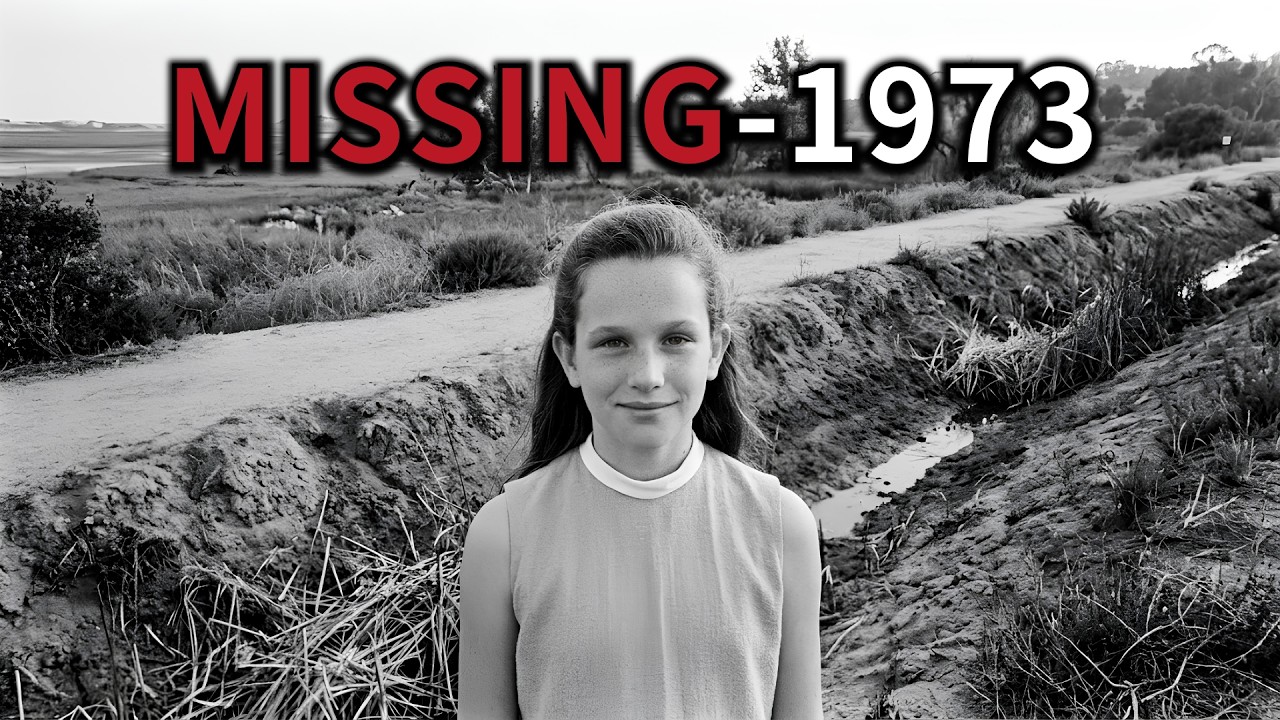
It was the last time anyone saw Linda alive. Her family reported her missing, and the Newport Beach Police Department began searching for the girl who had vanished on a route she had walked many times before. The disappearance unsettled the affluent coastal community, where violent crime had always seemed like something that happened elsewhere. That sense of security collapsed on the morning of July 7, when Linda’s body was found in the Back Bay, a wild natural area on the edge of Newport Beach, lying in a ditch near a nature trail not far from the road she had been traveling.
An autopsy determined that she had been abducted, sexually assaulted, and strangled. Investigators kept the sexual assault and the preservation of biological evidence secret for years, protecting the integrity of a case that would remain open for nearly half a century. In 1973, forensic science offered little help. DNA technology did not exist for criminal investigation, and there was no national database of offender DNA.
Forensic scientist Jim White collected and preserved biological evidence from Linda’s body out of professional habit, keeping it in the case file without knowing that it would one day hold the answer. In the weeks and months that followed, investigators worked every conventional lead. They checked records, questioned men matching the witness description, and searched California vehicle registration records for a turquoise van. Nothing produced a viable suspect.
Linda’s killer had no criminal record in California and vanished from the area shortly after the crime. He changed his name and built a new life in another state while the Newport Beach case began to grow cold. The Newport Beach Police Department never closed the case. Linda’s photograph hung on the wall of the police station for forty-six years, staring down at generations of officers who came and went.
There was no regulation requiring it. The photo was a standing commitment, a quiet acknowledgment that the answer had not yet come and that everyone working there had inherited the responsibility for the question left unanswered on that summer afternoon. Periodically, investigators reopened the case file when new technology or new resources became available. In the late 1990s, they sent the biological evidence Jim White had preserved back in 1973 to a laboratory and successfully created a suspect DNA profile from material that had been stored for more than two decades.
In 2001, that profile was uploaded to CODIS, the FBI’s national criminal DNA database. There was no match. Linda’s killer had never been arrested for an offense that required his DNA to be collected, so his profile was not in the system. While the photo remained on the wall and the case stayed open, the man responsible was living freely.
In 1973, he was using the name James Albert George Layton and living in Orange County, California, about half an hour from where Linda was abducted. He had moved from Chicago to Southern California before the murder and had no deep roots in the community, so no one knew him well enough to suspect him. After the killing, he left California for Florida, and then settled in Colorado. More important than the distance was his decision to change his name to James Allen Neil.
The man investigators were seeking under the name James Layton had simply become someone else. Later, from 1995 to 2004, while Linda’s case remained unresolved and her photo still hung in the Newport Beach station, Neil was accused of sexually assaulting two other young girls in Riverside County, California. Three decades after Linda’s murder, the same perpetrator was still harming children while the system had not yet found him. In 2018, on the forty-fifth anniversary of the discovery of Linda’s body, Newport Beach police did something no American police department had done before.
They paused all regular Twitter activity and spent the entire day retelling the case in Linda’s own voice, one tweet at a time, in chronological order from the morning she went to summer school until the morning her body was found. Spokesperson Jennifer Manzella later explained that the department wanted the public to experience the case the way Linda experienced it, walking home from school, standing beside the turquoise van, and then never making it home, so that people would feel the case in a way a press release could never achieve. The campaign opened with Linda introducing herself and stating plainly that forty-five years earlier she had disappeared from Newport Beach, been murdered, and had her body found in the Back Bay. It ended by announcing a new development: a face generated from DNA technology that did not exist in 1973.
Working with forensic analysts, investigators used phenotype prediction to reconstruct the face of the man who had left his DNA on Linda’s body. The portrait was released alongside the Twitter campaign, a visual answer to decades of anonymity. The combination of the online storytelling and the DNA-reconstructed face reached millions of people and generated widespread national media attention, creating pressure that allowed detectives to take the next step. In late 2018, the department partnered with genetic genealogist CeCe Moore and Parabon NanoLabs.
The suspect DNA profile was uploaded to a public genealogy database, where millions of Americans voluntarily share their DNA to trace their ancestry. The system compared the profile against the database and looked not for exact matches but for partial matches strong enough to suggest blood relationships. From those matches, investigators reconstructed a family tree that pointed directly to a suspect. In January 2019, the analysis identified James Allen Neil, a seventy-two-year-old man living in Monument, Colorado, who had lived in Orange County, California in the 1970s under the name James Layton.
Investigators did not approach him immediately. Instead, they placed him under surveillance and used traditional methods to obtain a DNA sample from his daily activities. When that sample was compared with the evidence from Linda’s body, it was a complete match. In February 2019, Neil was arrested in Monument, Colorado and extradited to California to face charges of murder with special circumstances, kidnapping, and committing a lewd act on a child under fourteen.
He also faced charges related to the two young girls he was accused of assaulting in Riverside County between 1995 and 2004. At a press conference on February 20, 2019, Orange County District Attorney Todd Spitzer stood before the cameras to announce the arrest. Spitzer had been twelve years old when Linda was killed, nearly the same age she had been, and he had grown up in Southern California while Linda’s case remained part of the community’s memory. He described the arrest as confirmation that the authorities never give up on solving cold cases, crediting community unity, cooperation among law enforcement agencies, and the use of strategic investigative tools such as DNA for finally finding the answer.
Newport Beach Police Chief John Lewis noted that Linda had never made it home that afternoon and that for forty-five years, generations of investigators had never given up and never forgotten her. Neil did not live to face trial. On May 25, 2020, he was taken to a hospital because of an undisclosed illness, which police confirmed was not COVID-19. Two days later, he died at the age of seventy-three while awaiting trial for the murder of Linda Ann O’Keefe and the assault of two other children.
The case never went to court, and there was no conviction and no sentence. District Attorney Todd Spitzer said that Neil’s death before trial robbed the O’Keefe family of the justice they deserved and deprived officers of the satisfaction of seeing their work through to a verdict. Chief Lewis stated that the department had intended to bring Neil to trial to answer for the murder and hoped that the decades of investigation would bring a measure of closure to Linda’s family and loved ones. The case turned on a single act of professional discipline.
In 1973, Jim White gathered and stored biological evidence at a time when DNA analysis did not exist, keeping it simply because he knew evidence must be kept. Forty-six years later, that decision provided the foundation for everything that followed: the DNA profile, the genetic family tree, the reconstructed face, and the identification of the man who had changed his name and fled across the country. But the resolution also carried a painful reminder. For decades, while Linda’s photo hung unanswered on the police station wall, the man who killed her continued to harm other children.
A cold case is more than delayed justice. It is time in which a perpetrator remains free.