Born Emily Charlotte Le Breton in 1853 on the island of Jersey, Lily Langtry seemed destined for a quiet, provincial life. She was the only daughter of the island’s Dean, a charismatic but deeply flawed man whose indiscretions would shatter her childhood. At sixteen, she fell in love with a local boy, only to have her father reveal that the young man was his own illegitimate son. The deception destroyed her first romance and her trust in the man she had idolized.
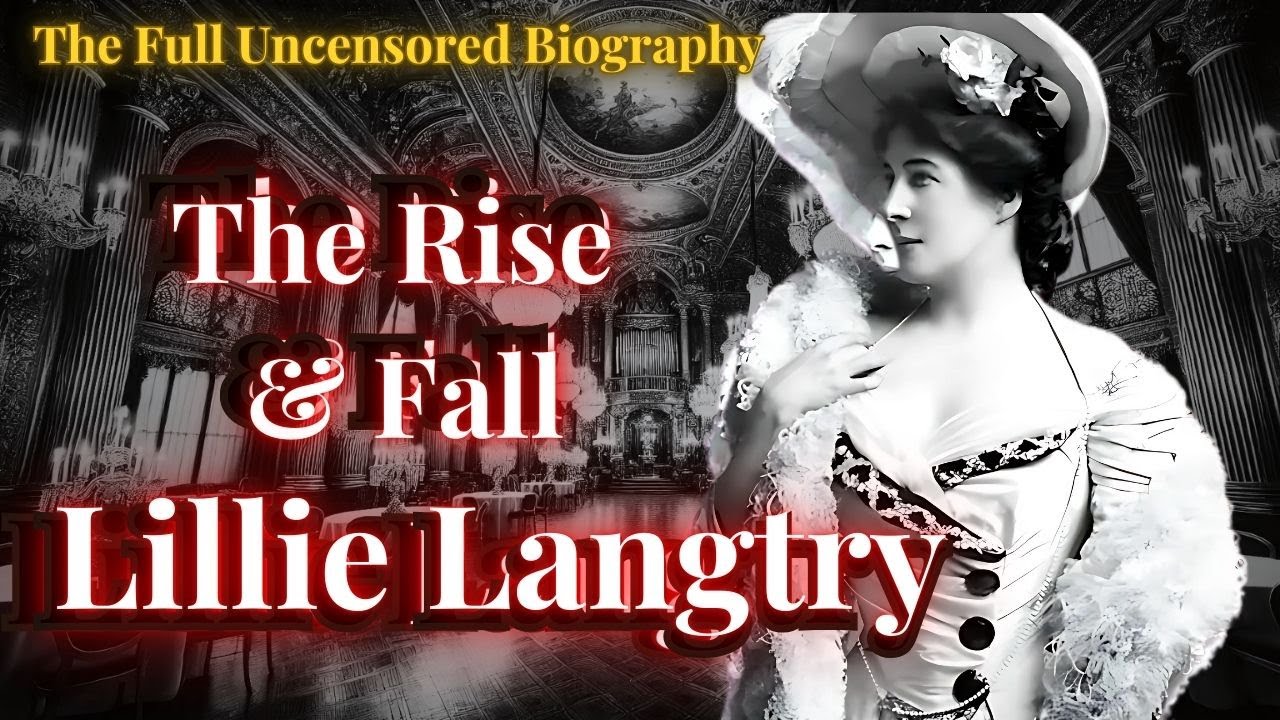
Determined to escape Jersey, Lily understood that marriage was her only passage to the wider world. In 1874, at twenty, she wed Edward Langtry, a wealthy widower whose chief passions were sailing and fishing. The match was practical rather than romantic, and the reality of married life proved dull and disappointing. Edward was not as rich as he had seemed, and the couple drifted into a distant, loveless arrangement.
A severe bout of typhoid in 1875 prompted a move to London, ostensibly for her health. There, Lily’s fortunes changed. Through a chance invitation to a modest society gathering, she entered a world that had previously been closed to her. London society of the late 1870s was beginning to open its doors to beauty and wit over birth, and Lily possessed both in abundance.
She became known as the Jersey Lily, her face reproduced in sketches and photographs sold across the capital. Artists clamored to paint her, and hostesses fought to secure her presence at their events. Among those captivated was the Prince of Wales, the future King Edward VII. Their affair began in 1877 and quickly became an open secret.
Lily became his first official mistress, a position that carried both power and peril. She moved through the grandest houses in England, admired by aristocrats, poets, and even the Prime Minister, Benjamin Disraeli, who jested with her about needing new gowns for Ascot. The Prince’s wife, Princess Alexandra, treated her with surprising courtesy, while her own husband, Edward, simmered with jealousy but dared not object to a royal liaison. Her ascent was not without its darker currents.
There were other admirers, including Crown Prince Rudolf of Austria, whose obsessive attentions she wisely kept at a distance. But it was a secret romance with Prince Louis of Battenberg that proved most consequential. When Lily discovered she was pregnant in 1880, the Battenbergs moved quickly to suppress the scandal. Louis was assigned a distant naval post, and Lily was spirited away to Paris.
In March 1881, she gave birth to a daughter, Jeanne Marie. Fearing the ruin an illegitimate child would bring, Lily sent the baby to Jersey to be raised as a distant relation, a foundling who grew up believing Lily was her aunt. The deception would create a wound that never fully healed. When Lily returned to London, she found her world in ruins.
The Prince of Wales had moved on, society had turned its back, and the creditors were closing in. Edward Langtry, her estranged husband, refused to grant a divorce. With few options left, Lily made a decision that scandalized polite society: she would become an actress. Her debut at the Haymarket Theatre in December 1881 was met with skepticism, but her charm carried the performance.
Within months, she had assembled her own touring company and proven that she could command an audience. In 1882, she became the first celebrity to lend her image to a commercial product, endorsing Pears soap and pioneering the celebrity endorsement. Later that year, she sailed for America, where Oscar Wilde had already stirred up publicity on her behalf. America embraced her enthusiastically.
She toured relentlessly, performing in major cities and frontier towns alike. She acquired a devoted admirer in Freddie Gebhard, a young railroad heir who financed her growing empire. In California, she purchased a ranch with vineyards and a winery, becoming one of the first women vintners in the state. Her whiskey was marketed under her own image, another profitable venture in a business career that made her one of the wealthiest independent women of her era.
Her American fame even reached the frontier. In West Texas, a self-styled judge named Roy Bean became obsessed with her from photographs and press clippings. He named his saloon the Jersey Lily, christened the surrounding hamlet Langtry, and dispensed frontier justice beneath her portrait. He died in 1903 without ever meeting her, but in January 1904, Lily herself stopped in Langtry, Texas, during a train journey across the country.
She toured the humble saloon and accepted the judge’s six-shooter from the town’s mayor, closing a strange and enduring legend. Returning to Britain in the 1890s, Lily found herself welcomed as a triumphant figure. She devoted herself to horse racing, establishing a stable at Newmarket and owning Merman, a champion who won some of England’s most prestigious races, including the Ascot Gold Cup. She leased the St.
James’s Theatre and later purchased the Imperial Theatre, spending nearly fifty thousand pounds on its renovation. Though that venture ultimately failed, it was a bold assertion of female financial and artistic power. Her personal life remained complicated. She had an affair with Hugo de Bathe, a strikingly handsome man nearly twenty years her junior.
Society whispered that he had first courted her daughter, Jeanne Marie, before turning his attention to the mother. In 1897, after years of petitions, Edward Langtry finally granted her a divorce through an American court. The decree was legally dubious in England, but it freed her to remarry. Two years later, in 1899, she married Hugo at the same church in Jersey where she had wed Edward Langtry twenty-five years earlier.
Her daughter, now eighteen, stood as a witness. The shadow of her daughter lingered. Jeanne Marie had learned the truth of her parentage only a few years before, discovering that her aunt was in fact her mother and that her father was Prince Louis of Battenberg. The revelation brought no warmth.
After Jeanne’s marriage in 1902, mother and daughter became increasingly estranged, a separation that grieved Lily deeply and was never truly reconciled. In 1919, Lily sold her English properties and settled permanently in Monaco, purchasing a villa she named Lys, French for lily. She spent her final decade in relative peace, tending her roses and entertaining visitors with stories of her extraordinary past. In 1925, she published her memoirs, choosing nostalgia over scandal.
She wrote, “I do not regret one moment of my life. ”
In January 1929, a cold worsened into bronchial pneumonia. She knew the end was near. She died peacefully on February 12, 1929, at the age of seventy-five.
Her final request was to be buried in Jersey, in her parents’ tomb. A winter storm delayed her body’s passage across the Channel, but she was finally laid to rest in Saint Saviour’s Churchyard beneath a blanket of snow and flowers. The Jersey Lily had come home.