John Gilbert was one of the biggest stars of the silent film era, yet his career collapsed so quickly that his name became a symbol of Hollywood’s ruthlessness. For decades, the blame has been placed on studio boss Louis B. Mayer, on the arrival of talkies, and on Gilbert’s own voice. But the full story is more complicated than the myths suggest.
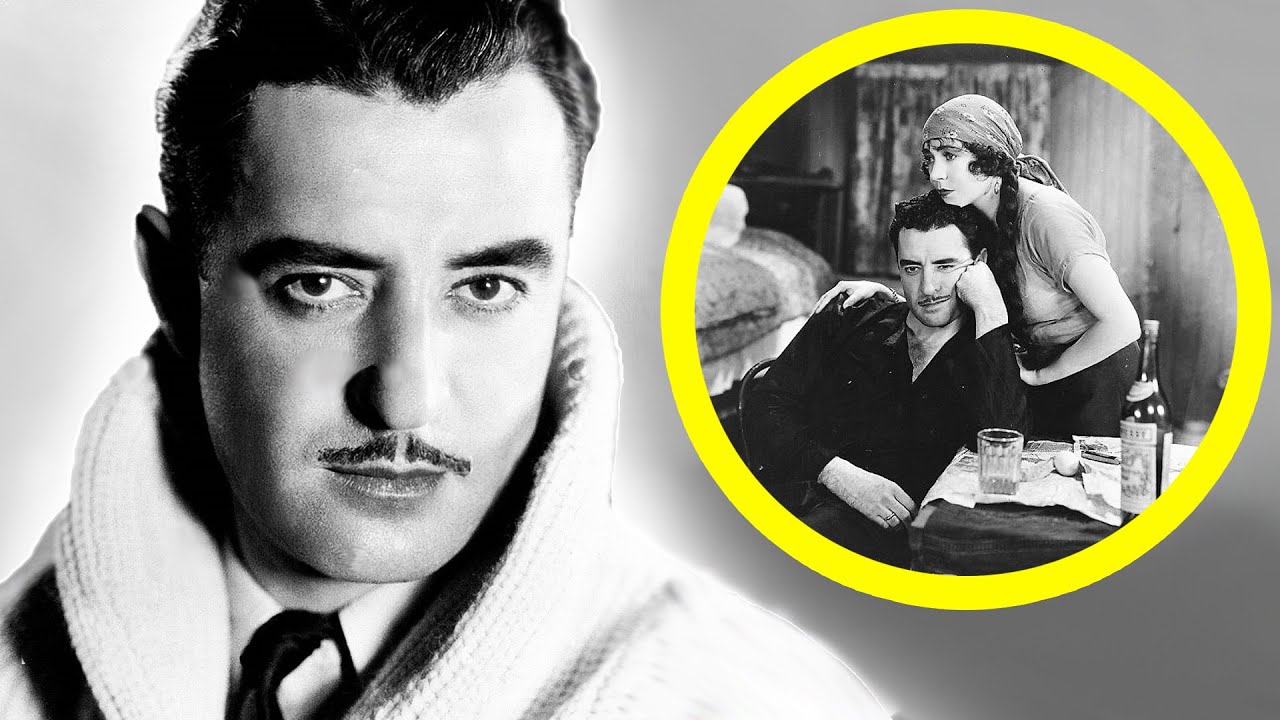
The real John Gilbert was born John Cecil Pringle on July 10, 1897. His mother was a stage actress who reportedly never wanted him, and his father was often absent. After his parents divorced, his mother paid him little attention and sometimes locked him in closets for hours. When she remarried, his stepfather Walter Gilbert tried to give him a more stable life, sending him to military school where he discovered tennis and golf.
At age 14, Gilbert’s mother died. The troubled childhood left him with deep anger toward her, and that resentment would later feed into one of the most famous clashes in Hollywood history. He changed his name to Jack Gilbert and headed to Hollywood, taking bit parts before Fox signed him and promoted him as a leading man. But Gilbert disliked Fox and developed a close friendship with Irving Thalberg, the young executive at MGM.
Thalberg convinced Mayer to sign Gilbert, and MGM landed one of the most bankable stars of the decade. From early on, however, there was friction between Gilbert and Mayer. Mayer adored his own mother and believed mothers should be revered. Gilbert, still bitter about his childhood, reportedly made a nasty remark about his mother in front of Mayer.
The comment enraged Mayer so much that he punched Gilbert. It was not the first or last time Mayer threw a punch at an actor, but the grudge stuck. Around that same period, Gilbert became linked with Greta Garbo while filming “Flesh and the Devil. ” The pairing was a marketing gift for MGM, and audiences flocked to see the real-life romance between two of Hollywood’s most glamorous stars.
Gilbert helped Garbo adjust to American filmmaking, coaching her between takes and helping her handle public appearances. She trusted him enough to ask him to direct intimate love scenes in “The Masks of the Devil,” even though the film already had a director. Their relationship was intense but unstable. Gilbert reportedly proposed many times, and Garbo repeatedly hesitated.
When he finally persuaded her to set a wedding date, the day ended in disaster. Gilbert waited at the altar, but Garbo never showed. Witnesses described him breaking down in tears. Mayer, who was present, allegedly walked into the bathroom where Gilbert was curled up and said: “Sleep with her, don’t marry her.
” Gilbert flew into a rage and pushed Mayer to the ground, with Mayer’s head hitting the floor. Mayer reportedly screamed: “You’re finished, Gilbert. I will destroy you. ”
But contrary to popular belief, Gilbert walked away from that incident unscathed.
He finished “Flesh and the Devil” and remained one of MGM’s top stars. In 1926, talkies were still years away, and there was no covert scheme to sabotage his career with sound because of a personal feud. Gilbert was too valuable. At the studio, money was the only thing that mattered.
The real turning point came in the late 1920s, when Hollywood began shifting from silent films to talkies. Gilbert’s directors advised him to adopt a precise, exaggerated stage diction rather than a natural speaking style. The results were disastrous. In the 1929 film “His Glorious Night,” audiences reportedly laughed when Gilbert delivered an emotional “I love you” in his carefully articulated voice.
That moment has often been cited as the beginning of his decline. The myth that talkies ruined him because of a high-pitched or squeaky voice is not accurate. Gilbert had a charming, well-spoken voice. The problem was that he was unsure how to use it.
He returned to his stage training and sounded unnatural. His new wife, Ina Claire, a seasoned stage actress, pushed him to speak in a more refined manner. The advice was a mistake, and there was no Spencer Tracy around to tell him to simply use his natural voice. The deeper cause of Gilbert’s collapse came from his own contract.
In the late 1920s, Fox and MGM were planning a merger, and neither wanted to lose their top star. MGM offered Gilbert a massive deal: $250,000 per picture for six films, plus a promise that Mayer was on his way out. Gilbert signed. But the merger fell through, Mayer stayed, and then the stock market crashed.
Those three developments changed everything. MGM lost money and was stuck with an enormously expensive contract. The studio needed Gilbert to star in a talkie, so it chose “Redemption,” directed by Lionel Barrymore, who had very little directing experience. The combination of Gilbert’s unnatural voice, poor sound recording, and an inexperienced director produced a terrible film that was released while Gilbert was on his honeymoon.
When he returned, the movie was a failure. MGM wanted out of the contract. The studio made Gilbert look ridiculous in hope that he would walk away or void the deal. Far from being the victim of a personal vendetta, Gilbert was the victim of a business decision.
The money machine that had celebrated him now treated him as an expensive liability. As his career spiraled, Gilbert turned more to alcohol. His marriage to Ina Claire lasted only six months, and they divorced in 1931. There were even allegations that MGM tried to get Claire to extract a large sum from Gilbert, hoping the financial pressure would force him to give up his contract.
The bad films changed public perception of him, and eventually MGM forced him into retirement. Harry Cohn, head of Columbia Pictures, saw an opportunity to revive Gilbert’s career. Cohn also despised Mayer. But he had one condition: Gilbert had to stay out of trouble and away from alcohol.
Cohn then cast him in a role that required playing an alcoholic, alongside co-stars who drank heavily. Unsurprisingly, Gilbert was reportedly drunk for most of the shoot and extremely ill when he was not. The film failed at the box office, ending his career for good. Alcoholism consumed the rest of his life.
At age 38, he was still handsome and retained his charm, but his unhealthy lifestyle caught up with him when he suffered a heart attack while swimming in 1936. John Gilbert’s downfall was not caused by Louis B. Mayer alone, nor by his voice, nor by the arrival of sound. It was caused by a combination of his own choices, his struggles with alcohol, and a series of unfortunate events.
His story remains a reminder that success and failure in Hollywood are never simple, and that behind the glamour lies a far more human tragedy.