On the evening of January 19, 2001, two women walked into the White House. The Secret Service logs later obtained by congressional investigators recorded Beth Dozoretz entering at 5:29 p. m. and Denise Rich at 5:30 p.
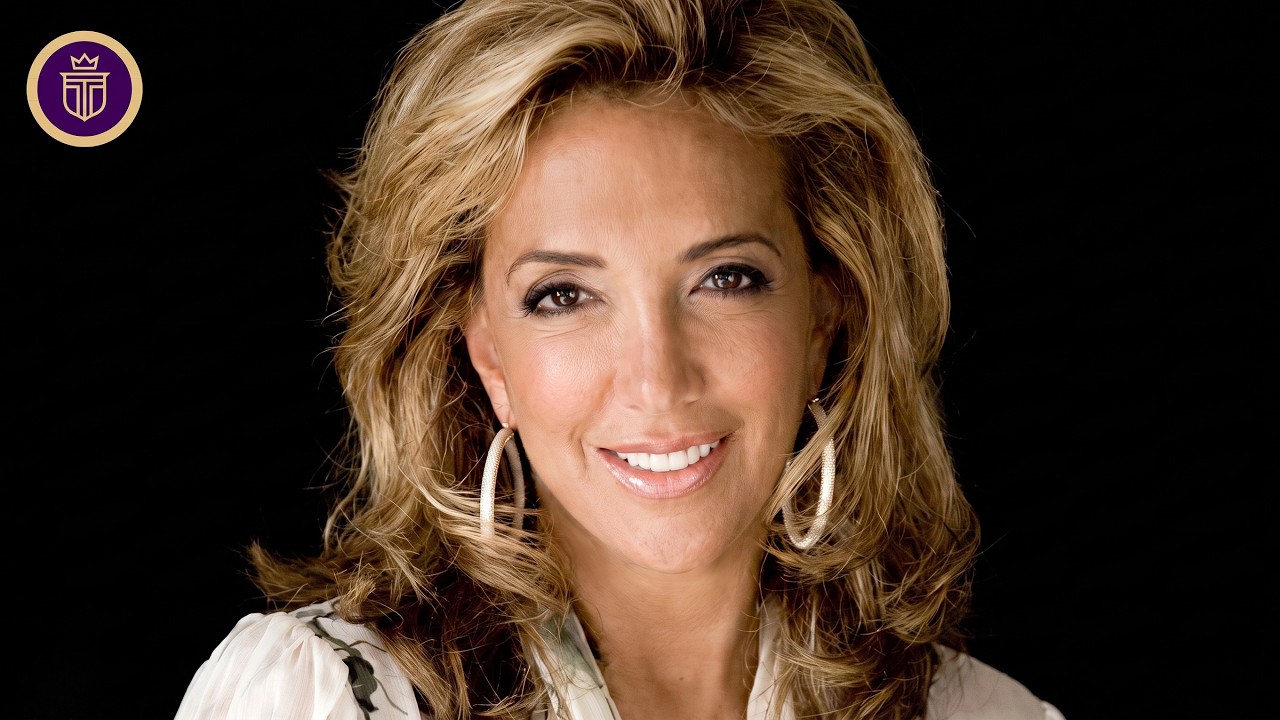
m. Both women’s representatives would later flatly deny they were there at all. Within hours, in the final minutes of his presidency, Bill Clinton signed a pardon for the ex-husband of one of them: Marc Rich, a commodities trader who had been among the most wanted fugitives on the planet for eighteen years. Rich had been charged in 65 criminal counts, including the largest tax evasion case in American history, racketeering, and trading with Iran during the hostage crisis.
He had never stood trial. He had not set foot on American soil since 1983. The woman who entered the White House at 5:30 that evening had spent the previous five years donating more than a million dollars to Democratic causes, over $100,000 to Hillary Clinton’s Senate campaign, and $450,000 to the Clinton Presidential Library. Her former husband’s lawyer had run a pressure campaign that stretched from a former Mossad chief to the Israeli prime minister and on into the Oval Office itself.
A former president later said the pardon was not worth the damage it did to his reputation, and a congressional investigation concluded that serious questions about the president’s motives remained unanswered. Denise Eisenberg was born on January 26, 1944, in Worcester, Massachusetts, the second daughter of Emil and Geri Eisenberg. Her father, born in 1912 in Tarnow in Galicia, fled to Paris in 1933 as the Nazis consolidated power, where he and his three brothers built a fur trading business. In 1940, as France collapsed under German occupation, Emil, his wife, and their first daughter escaped to New York.
By 1942, Emil had shifted from furs to shoes, founding the Disco Shoe Company in Webster, Massachusetts, manufacturing women’s footwear sold in department stores across the East Coast. The family rose to prominence among Worcester’s Jewish business families, and Denise grew up in a home shaped by the understanding that everything her parents had built was compensation for everything they had lost. Marc Rich was born Marcel David Reich on December 18, 1934, in Antwerp, Belgium, to a Jewish family. In 1941, under tightening Nazi occupation, the Reich family fled through Vichy France, Spain, and Portugal before boarding the Serpa Pinto for the United States.
His father opened a jewelry store in Kansas City before moving the family to Queens around 1950, where he started a business importing Bengali jute for burlap bags. Rich attended Rhodes Preparatory School in Manhattan and briefly enrolled at NYU before dropping out after one semester to work as a clerk at Philipp Brothers, the storied commodities trading house, in 1954. There he met Pincus Green, who would become his lifelong business partner. Rich rose through the firm over two decades, running operations in Cuba, Bolivia, and Spain.
In 1974, the two men founded their own company in Zug, Switzerland, Marc Rich & Company, which grew within a decade into a $10 billion-a-year enterprise. Rich’s key innovation was creating a spot market for crude oil, wresting pricing power from the integrated majors known as the Seven Sisters. His philosophy was aggressively amoral in the classic sense. He was willing to trade with anyone: apartheid South Africa, Castro’s Cuba, Marxist Angola, Qaddafi’s Libya, Ceausescu’s Romania, Pinochet’s Chile.
He told his biographer that his most important and profitable deals came from violating international trade embargoes. The event that sealed his legal fate came after the 1979 Iranian revolution, when he used his connections to continue buying Iranian crude oil despite the American trade embargo imposed during the hostage crisis, when 52 Americans were held in Tehran. Iran became Rich’s most important oil supplier for over fifteen years. Denise Eisenberg met Marc Rich on a blind date in the mid-1960s.
They married in 1966. The couple had three daughters: Ilona, Gabrielle, and Danielle. As Rich’s fortune grew, the family acquired private planes, beach villas, and the beginnings of an art collection filled with works by Renoir, Monet, and Picasso. The Swiss canton of Zug became their central base.
Outside Switzerland, they kept a home on Spain’s Costa del Sol and eventually a lakefront property in Meggen called La Villa Rose. Rich could not risk traveling to countries with extradition treaties with the United States. He was, by his own later admission to Fortune, depressed and homesick. When his father died in New York in September 1986, Rich could not attend the funeral for fear of arrest.
The marriage, which began with a blind date, was collapsing under the weight of exile, infidelity, and separation. On September 19, 1983, a federal grand jury in New York issued what the Washington Post described as the most significant tax evasion indictment ever recorded in the United States. The indictment eventually expanded to 65 criminal counts. Rich and Green were accused of running a fraudulent scheme during 1980 and 1981 that evaded more than $48 million in taxes by disguising newly discovered, price-controlled oil as old, unregulated oil that sold at a premium of up to 400 percent.
The charges also included wire fraud, racketeering under RICO, and most explosively, trading with the enemy. Investigators alleged Rich conspired with Iran to buy more than six million barrels of oil in violation of the embargo while 52 Americans were held hostage. If convicted on all counts, Rich and Green faced combined sentences of more than 300 years. Rich’s original lawyer, the legendary Washington attorney Edward Bennett Williams, had personally assured the federal judge that his client was not a flight risk.
But Rich and Green boarded a plane for Europe within 48 hours of that assurance, and Williams, reportedly humiliated, withdrew from the case. The business entities pleaded guilty and paid fines and penalties totaling nearly $200 million over the following years, but Marc Rich personally never returned to face the criminal charges. The IRS offered a $500,000 reward, and the FBI placed him on its Ten Most Wanted list, alongside Osama bin Laden. Exile did not slow Rich’s empire.
From 1983 to 1996, his personal fortune reportedly grew from about a billion dollars to over $7 billion, because the Swiss legal shield that protected him from extradition also protected the corporate structures he traded through. But the exile cost him his marriage. Denise told New York magazine that her husband was having an affair with another woman while the family lived in Swiss exile. Marc married Gisela Rossi, an Italian-born widow of German origin, just six months after his divorce from Denise was finalized in 1996.
That marriage also ended, in 2005. While her marriage disintegrated, Denise found an outlet in songwriting. Her breakthrough came in 1984 when Sister Sledge recorded her song “Frankie. ” She built a prolific career, collaborating with composers, most often Michael O’Hara, on more than 1,400 songs over two decades that appeared on albums selling roughly 40 million copies combined.
Her catalog includes Celine Dion’s “Love Is on the Way,” work for Natalie Cole, Patti LaBelle, Mary J. Blige, Diana Ross, Chaka Khan, Marc Anthony, and Jessica Simpson. She wrote “Love Is a Crime” for the Oscar-winning film Chicago, received three Grammy nominations, and founded her own publishing company, Denise Rich Songs. As a hostess, she became a genuine New York icon.
She bought and lavishly renovated a massive 12,000-square-foot duplex at 785 Fifth Avenue overlooking Central Park, with seven bedrooms, eleven bathrooms, three kitchens, a professional recording studio, a gym, and a mahogany library. A 1998 event in her apartment, held after the Starr Report on Clinton’s relationship with Monica Lewinsky, was one of the president’s first public appearances after the scandal and reportedly raised between $3 and $4 million for Democratic causes. The press began calling her “Lady Gatsby. ”
In 1996, the same year as her divorce, tragedy struck.
Her eldest daughter, Gabrielle Rich Aouad, died of acute myeloid leukemia at age 27. Her father, still a fugitive facing arrest on American soil, could not visit her during her four-year illness and treatment. According to one account, the prosecutors who succeeded Giuliani as U. S.
Attorney specifically refused Rich’s attempts to see his dying daughter. Before her death, Gabrielle extracted a promise from her mother: to create a charity to help find a way to overcome this disease. With Gabrielle’s widower, Philippe Aouad, and her two surviving daughters, Denise founded what became the Gabrielle’s Angel Foundation for Cancer Research in 1996. By 2023, grants had reached around $35 million.
By late 2025, the figure exceeded $45 million to over 330 scientists studying leukemia, lymphoma, and related blood cancers. Eighty-eight cents of every dollar raised goes directly to research, an unusually high ratio for a private foundation of this size. The foundation’s annual Angel Ball became one of New York’s premier charity events. By the late 1990s, Marc Rich, reportedly worth billions and running a business valued at $30 billion, was desperate to settle his legal situation.
He had missed his father’s funeral in 1986 and his daughter’s death in 1996. He wanted, more than almost anything, to be able to return to the United States before he died. His lawyers sounded out the possibility of a negotiated settlement with Mary Jo White, who had succeeded Giuliani as U. S.
Attorney for the Southern District of New York. Her response was unequivocal: impossible. It was the firm policy of her office not to negotiate criminal settlements with fugitives. With prosecution ruled out, only one option remained: a presidential pardon.
In the spring of 2000, Rich hired Jack Quinn, a Washington lawyer who had previously served as counsel to Al Gore and as White House counsel to Bill Clinton from 1995 to 1997. For a fee reportedly of $400,000, Quinn assembled an extensive and secret lobbying effort. At its center was Denise Rich herself. According to the 2002 House Government Reform Committee report titled “Justice Undone,” Denise had developed a close relationship with President Clinton because of her role as a major donor to Democratic causes.
The committee concluded she played a key role in obtaining the pardons for Rich and Green. Her financial connections were extensive and well documented: more than $1 million to Democratic candidates and causes during the 1990s, more than $100,000 to Hillary Clinton’s 2000 Senate campaign, $450,000 to the Clinton Presidential Library, $10,000 to Clinton’s legal defense fund, and a pair of coffee tables and chairs valued at $7,375 given as gifts. The campaign also had a channel through Israel. Over nearly two decades, Marc Rich had donated an estimated $30 to $150 million to Israeli causes and institutions.
Avner Azoulay, a former Mossad official who became executive director of Rich’s foundations in Israel, played a central role. He persuaded Denise to personally ask President Clinton to review the pardon request. He separately contacted former Prime Minister Ehud Barak to appeal to Clinton directly. Barak discussed the matter with Clinton on at least three occasions, including a call on January 8, 2001, during which Clinton told Barak he had received a detailed memo and was reviewing it, adding that it would be wise to keep the matter quiet.
The letters of support collected for the petition read like a who’s who of Israeli political and cultural life: former Prime Minister Shimon Peres, Jerusalem Mayor Ehud Olmert, Foreign Minister Shlomo Ben-Ami, Justice Minister Yossi Beilin, Israel Philharmonic conductor Zubin Mehta, Nobel laureate Elie Wiesel, and Anti-Defamation League head Abraham Foxman, whose organization itself received more than $250,000 from Rich. The Israeli channel gave the pardon a foreign-policy justification that domestic arguments alone could never have provided. Clinton himself, in a later New York Times op-ed, emphasized the pressure from Israeli officials above all other arguments, citing the support of officials who argued that Rich had contributed to Israeli humanitarian efforts, supported Mossad missions to rescue Jews from hostile environments, and promoted peace through educational and health initiatives in Gaza and the West Bank. What made the pardon explosive was the near-total exclusion of the Justice Department and the prosecutors who had spent nearly two decades pursuing Rich.
Deputy Attorney General Eric Holder, who had a close personal relationship with Jack Quinn, advised Quinn in an email to bypass the normal procedures and go directly to the White House, adding that the timing was favorable. Holder knew about the pardon efforts for nearly two months before they were granted and never informed the prosecutors in the Southern District of New York who had been pursuing Rich for a generation. In the final 72 hours of Clinton’s presidency, the pardon machinery that was supposed to include the Justice Department, the pardon attorney, and the prosecutors was about to be completely bypassed. On January 16, 2001, a meeting was held at the White House specifically to discuss the Rich pardon.
In the middle of the night on January 19, the White House ran a background check on Rich and Green through the Justice Department that revealed they were wanted on arms trafficking charges. Instead of investigating this finding independently, White House staff called Jack Quinn, who denied his clients’ involvement in arms trafficking. Clinton then instructed his staff to accept Jack’s word and proceed with the pardon. Every White House staff member who worked on the Rich pardon, including Chief of Staff John Podesta, White House counsel Beth Nolan, and senior aide Bruce Lindsey, later testified that they urged Clinton not to grant the pardon because the Justice Department had not been consulted.
In the final minutes of his presidency on January 20, 2001, Clinton signed 140 pardon orders and 36 commutations, a wave later mockingly called “Pardongate,” including the pardons for Marc Rich and Pincus Green. Prosecutors in the Southern District of New York learned of the pardon from the morning news. Mary Jo White, the same U. S.
Attorney who had told Rich’s lawyers that negotiation was impossible, was reportedly furious. Reaction was immediate, bipartisan, and unusually savage. The New York Times editorial called it a shocking abuse of presidential power. Former President Jimmy Carter said he had no doubt some of the factors behind the pardon related to Rich’s large contributions, and called it disgraceful.
Congressman Barney Frank called it a genuine betrayal by Bill Clinton of everyone who had supported him strongly. Senator Patrick Leahy called it a terrible, indefensible, and outrageous pardon. Martin Auerbach, one of the original prosecutors in the Rich case, said, “Think of all the kids who steal cars and go to prison. They don’t have the choice of either spending time behind bars or having a fairly comfortable exile.
”
Clinton published a New York Times op-ed on February 18, 2001, titled “My Reasons for the Pardon,” defending the decision on legal and foreign-policy grounds and flatly denying any connection between the pardon and Denise Rich’s donations. The House Government Reform Committee launched an extensive investigation, eventually producing the massive three-volume report “Justice Undone” in May 2002. Denise Rich refused to cooperate, invoking her Fifth Amendment right against self-incrimination rather than answering fourteen written questions about the source of her donations and details of her conversations with Clinton. Beth Dozoretz took the same position.
A federal criminal investigation was opened under Attorney General John Ashcroft, initially led by Mary Jo White. In the end, investigators found no sufficient criminal wrongdoing to bring charges, because the pardon remained within the president’s unreviewable constitutional authority. Reportedly, Clinton told those close to him that the pardon decision was not worth the damage it did to his reputation. The pardon controversy proved more than a passing embarrassment.
It became a permanent political burden that followed both Clintons for years. Hillary Clinton, then a newly elected senator from New York, faced immediate scrutiny over the donations linked to her campaign. During her 2008 presidential campaign, questions resurfaced when Eric Holder faced Senate scrutiny over his role in advising Quinn to bypass the Justice Department. During the 2016 race, opposition researchers revived the case again.
The pardon permanently changed how every subsequent president used the clemency power. Judge Abner Mikva, a former Clinton White House counsel and mentor to Barack Obama, told ProPublica he believed the Marc Rich case was more important to Obama than to other presidents because Obama was so upset by that pardon. George W. Bush relied far more heavily on the recommendations of career Justice Department officials, granting only 189 pardons in eight years, fewer than any two-term president in the modern era.
Obama, in his first three years, granted only 22 pardons out of nearly 900 requests. Marc Rich died on June 26, 2013, in a hospital in Lucerne, Switzerland, following a stroke, at age 78. He was buried beside Gabrielle’s grave at Kibbutz Einat outside Tel Aviv. Avner Azoulay said in his eulogy, “He did more good for this world than people know.
” Business Insider estimated his net worth at death at around $2. 5 billion. His business legacy proved more durable than his personal reputation. In late 1993, after a catastrophic billion-dollar attempt to corner the world zinc market, Rich’s partners, known as the “Rich Boys,” forced Marc to give up his majority stake in the company.
It was renamed Glencore on September 1, 1994, and went public in 2011 in the largest IPO in London Stock Exchange history. A second company, Trafigura, was founded independently in 1993 by senior former Marc Rich executives and operates today as one of the world’s largest independent commodities trading companies. The fugitive’s original company, born in a small Swiss town in 1974, became two of the largest commodity companies on earth. In November 2011, more than a decade after the scandal, Denise Rich formally renounced her American citizenship and became an Austrian citizen, a nationality available through her father’s birthplace in what was formerly Austria-Hungary.
Reports suggested the move could save her tens of millions of dollars in taxes. In the same year, her Fifth Avenue apartment was listed for sale at $65 million; in November 2012, entertainment mogul David Geffen bought the 20-room duplex for $54 million, a record price at the time. Today, Denise Rich, now in her early eighties, divides her time between Austria and the South of France with her partner. She still hosts parties on her 157-foot yacht Lady Joy, which is available for charter starting at around $225,000 per week.
The pardon that made her famous cost her former husband a $1 million fine. It cost Bill Clinton, by his own assessment, more than it was worth. It also cost the American clemency system a generation of presidential caution that may have deprived deserving petitioners of the mercy the system was designed to provide.