In the American West, countless outlaws robbed banks, held up trains, and vanished into the frontier. Few became objects of relentless manhunts. One fugitive stirred fear and frustration that drove lawmen, search parties, and bounty hunters to pursue him dead or alive. His name appeared on wanted posters and in newspaper headlines, carried in hushed stories from territory to territory.
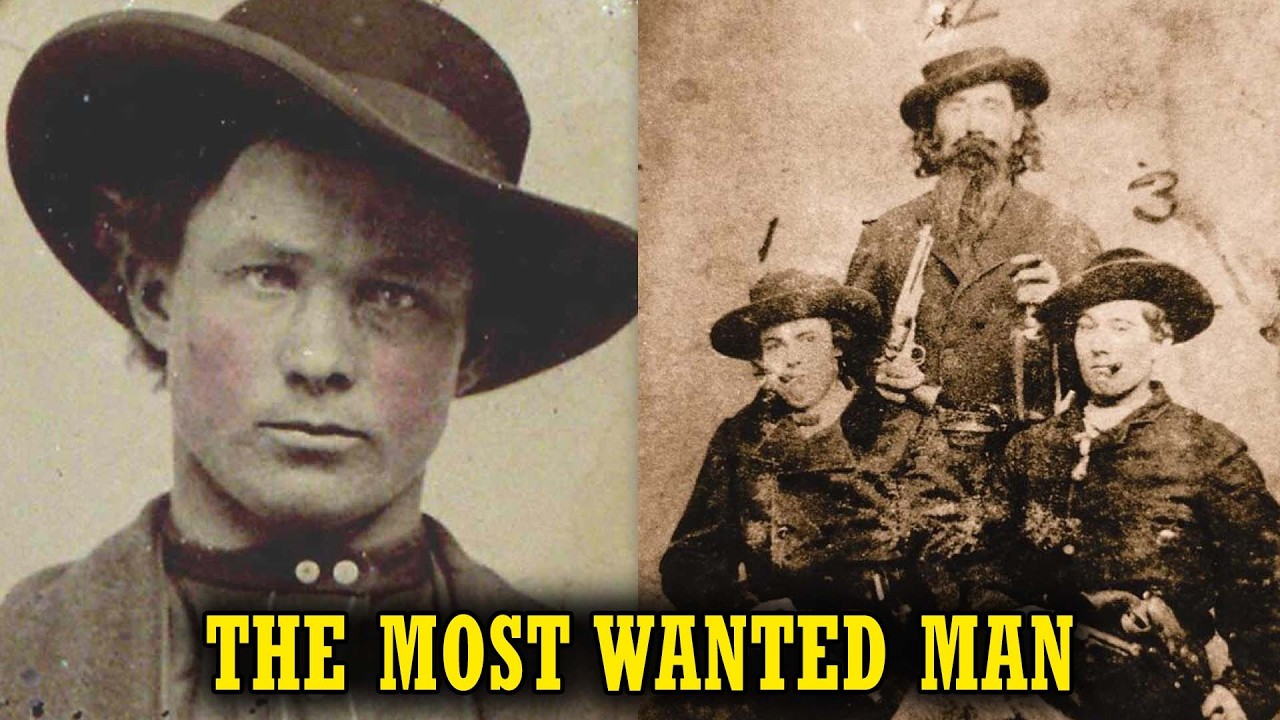
Jesse James was born into a Missouri already torn by political hatred, in a region where the Civil War was not confined to distant battlefields or organized armies. It had become a bitter local struggle in which neighbors, families, militia units, and guerrilla bands found themselves on opposing sides. The James family openly supported the Southern cause. Frank, Jesse’s older brother, served with Confederate forces and later associated with pro-Confederate guerrilla groups in Missouri.
Because of Frank’s activities and the family’s political loyalties, the James-Samuel farm attracted the attention of Union militia units searching for information about rebel movements. In May 1863, militiamen arrived at the family farm and interrogated Jesse’s stepfather, Dr. Reuben Samuel, about Frank’s whereabouts. Historical accounts agree that Samuel was subjected to a mock execution or temporary hanging during the questioning.
Later stories also claimed that Jesse, then fifteen, was beaten or whipped for refusing to cooperate, though some details were repeated and embellished as the James legend grew. The raid appears to have hardened Jesse’s hostility toward Union authorities, though it would be an oversimplification to call it the single moment that turned an innocent farm boy into an outlaw. By 1864, at about sixteen, Jesse joined a guerrilla company linked first to commander Fletcher Taylor and later to William “Bloody Bill” Anderson. These irregulars moved quickly through familiar territory, relied on surprise, and vanished among sympathetic communities.
Jesse learned to ride efficiently, handle multiple revolvers, choose favorable ground, and flee before a larger force could respond. He was present with Anderson’s command during the events at Centralia, Missouri, on September 27, 1864. Anderson’s men stopped a train and killed nearly twenty-two unarmed Union soldiers heading home. Later that day, Major A.
V. E. Johnston pursued the guerrillas with about 150 cavalrymen from the Thirty-ninth Missouri Infantry. Anderson’s force drew Johnston’s men into an unfavorable position and crushed them in the ensuing fight.
More than one hundred Union soldiers reportedly died, making Centralia one of the most destructive guerrilla engagements of the war in Missouri. Later accounts credited Jesse with shooting Major Johnston, but the surviving evidence does not conclusively prove who was responsible. When the Civil War ended in 1865, Missouri did not return to peace immediately. Former guerrillas faced arrest, retaliation, political exclusion, and deep public resentment.
The postwar state constitution imposed strict loyalty requirements that temporarily barred many former Confederates and their supporters from voting or holding certain professional and civil offices. Other former Confederates returned to ordinary life, but Jesse and several wartime associates continued operating through secret networks and eventually became linked to a series of bank, stagecoach, and train robberies. His wartime experience suited this path well. He understood mobility, surprise, concealment, reliance on trusted local connections, and the psychological value of reputation.
On February 13, 1866, approximately ten to twelve mounted men rode into the public square of Liberty, Missouri. Two entered the Clay County Savings Association while the others remained outside controlling the square. The robbers gathered gold, silver coins, paper currency, government bonds, and revenue stamps. Estimates varied, but the total loss was generally placed between $58,000 and $60,000.
During the confusion, a student from nearby William Jewell College, George Wymore, was shot and died on the spot. The riders left together before dispersing into the countryside. A posse formed, but no one was captured and the stolen property was never recovered. The bank struggled to meet its obligations and eventually closed.
Suspicion fell quickly on former Confederate guerrillas, and later generations typically attributed the robbery to the James-Younger Gang. However, Jesse’s personal involvement remains doubtful. He was still recovering from a serious wound and no surviving witness placed him in Liberty that day. His name became attached to the robbery only after he gained national fame through later crimes.
By the early 1870s, expanding railroads were changing travel, trade, and settlement across the country. For Jesse and Frank James and their partners, trains carried company money, express shipments, and other valuables through isolated rural stretches where local authorities had few means of response. On the evening of July 21, 1873, a group generally identified as members of the James-Younger Gang chose a section of the Chicago, Rock Island and Pacific Railroad about a mile and a half west of Adair, Iowa. The location included a curve that limited the engineers’ view of the track ahead.
Using tools taken from a nearby railroad building, the men loosened the fastenings holding a section of rail, tied a rope to it, and waited from a hidden position. As the locomotive approached the curve, the gang pulled the rail out of place. The engine derailed and fell into a ditch. Engineer John Rafferty died, fireman Dennis Foley was seriously wounded and later died, and several passengers were injured.
Masked men approached the cars, entered the express car, and confronted the guard. The gang expected to find a large shipment of gold, reportedly around $75,000, but the shipment had been delayed and the safe contained only about $2,000. The robbers then took money and valuables from passengers, with final estimates around $3,000. The meager haul did not matter to their reputation.
The coordinated derailment of a major railroad line and the escape from an isolated location gave the event national significance. It is sometimes called the first train robbery in American history, but that claim is misleading. The Reno Gang had robbed a train near Seymour, Indiana, in 1866. The Adair robbery can more accurately be described as one of the first major train robberies in the American West, likely the first widely covered derailment of a moving train in that region.
News spread quickly by telegraph and newspaper reports. Railroad employees and armed search parties tried to track the gang, but the riders fled south toward Missouri. The event strengthened Jesse James’s growing fame, even though the exact roles of individual gang members remain difficult to establish. After the Adair train robbery and other raids attributed to the James-Younger Gang, private companies grew frustrated with the limits of local law enforcement.
County sheriffs often had small budgets, limited manpower, and no authority beyond their own borders, while suspects could move quickly across county and state lines. The direct confrontation began after the January 1874 robbery at Gads Hill, Missouri, where the gang stopped a train and took money from the express safe. The Adams Express Company hired the Pinkerton National Detective Agency to investigate the James and Younger brothers. By then, the Chicago-based agency had become one of the most famous private investigation organizations in the country.
Allan Pinkerton did not accept the popular image of Jesse James as a frontier Robin Hood. He considered Jesse, Frank, and their partners hardened criminals who benefited from sympathetic communities, political divisions, and weak rural investigations. The mission quickly became far more difficult than the agency expected. Pinkerton detectives were entering a region where the James and Younger families had strong ties and many former Confederates distrusted outside authorities.
In March 1874, detective Joseph Whicher traveled toward the James family farm disguised as a laborer. A former local sheriff warned him that his disguise would not fool residents who knew everyone in the area. Whicher disappeared shortly afterward and was found dead beside a rural road. Days later, detectives Louis J.
Lull and John Boyle joined Deputy Sheriff Edwin Daniels in an attempt to locate the Younger brothers near Monegaw Springs, Missouri. They presented themselves as cattle buyers, but John and Jim Younger apparently grew suspicious. A confrontation followed on March 17, 1874. Daniels and John Younger did not survive, while Lull died several days later from his wounds.
These failures damaged the agency’s reputation and made the investigation personal for Allan Pinkerton, whose private correspondence expressed anger at the James brothers and determination to catch them. The confrontation reached its most controversial point on the night of January 26, 1875. A group working with the Pinkerton agency approached the James-Samuel farm near Kearney, Missouri, believing Jesse and Frank might be visiting. The brothers were not inside.
The house was occupied by their mother, Zerelda Samuel, their stepfather, Dr. Reuben Samuel, and several younger family members. During the raid, an incendiary device was thrown through a window. Reports indicate that someone inside tried to move the device toward the fireplace.
It then exploded, fatally wounding Jesse’s half-brother, Archie Samuel, and causing Zerelda to lose part of her right arm. The raid became a public relations disaster for the Pinkerton agency. Missouri newspapers and political leaders condemned the operation, while James supporters used the tragedy as evidence that private detectives were willing to ignore ordinary legal protections. In Missouri, particularly among communities sympathetic to the Southern cause, the raid greatly strengthened Jesse’s claim that he was being persecuted by powerful Northern interests.
Through letters to newspapers and statements to sympathetic editors, Jesse presented himself as a former Confederate soldier resisting an unjust political and economic system. That image concealed an important fact. Jesse and his partners robbed locally funded banks as well as corporate express companies, and there is no reliable evidence that they regularly distributed their proceeds to poor farmers. His Robin Hood reputation was largely a political and journalistic creation.
Nevertheless, the Pinkerton raid gave that myth emotional power. Before January 1875, Jesse could be portrayed simply as a fugitive wanted for a series of robberies. After the raid, his defenders could point to the harm suffered by his family and argue that his pursuers had abandoned the standards of justice they claimed to represent. The incident also weakened the Pinkerton agency’s ability to operate openly in Missouri.
By late summer 1876, the James-Younger Gang had survived years of robberies, investigations, and organized manhunts. Their success probably gave them a dangerous sense of confidence, and that confidence led them far beyond the familiar Missouri countryside. On September 7, 1876, eight gang members rode into Northfield, Minnesota, intending to rob the First National Bank. Northfield was a prosperous milling and college town hundreds of miles from the gang’s usual support base.
The outlaws may have believed that operating farther north would reduce the chance of being recognized. Around two in the afternoon, the eight riders split into smaller groups around the town square. Three men entered the bank while the others remained outside to watch the streets and secure the escape. The most accepted account identifies the three who entered as Frank James, Charlie Pitts, and Bob Younger, with Jesse James remaining outside with Cole Younger, Jim Younger, Clell Miller, and Bill Chadwell.
Inside were acting cashier Joseph Lee Heywood, teller Alonzo Bunker, and bookkeeper Frank Wilcox. The robbers drew their weapons and demanded the safe be opened. Heywood refused to cooperate, telling the men the safe was protected by a time lock and could not be opened. His resistance delayed the robbery and prevented the men from reaching the larger amount stored inside.
The outlaws obtained only a relatively small sum from the teller’s area. While the confrontation continued inside, the situation in the street began to deteriorate. A resident, J. S.
Allen, approached the bank but was warned away by one of the mounted men. Instead of remaining silent, Allen walked down the street and raised the alarm. The response was remarkably fast. Citizens rushed to nearby hardware stores and shops for rifles, ammunition, and whatever weapons were available.
The gunfire in the street lasted only a few minutes. The mounted gang members expected to control the square but found themselves under fire from windows, doorways, and positions along the street. Medical student Henry Wheeler fired from an upstairs room in the Dampier House and is traditionally credited with bringing down Clell Miller, though accounts differ on the exact sequence and number of shots. Merchant Anselm Manning also joined the defense and is generally credited with stopping Bill Chadwell.
Both Miller and Chadwell died during the exchange. A Swedish immigrant named Nicholas Gustafson, recently arrived in Northfield and reportedly speaking little English, was caught in the chaos and died a few days later. Inside the bank, the gang realized the robbery could not succeed. Alonzo Bunker escaped through a back door despite being wounded.
As the robbers prepared to leave, Joseph Heywood was fatally wounded. The identity of the man responsible remains debated. Later statements pointed to Frank James or Charlie Pitts, while Cole Younger denied that any of the Younger brothers were responsible, and no surviving evidence allows historians to determine the matter with certainty. The three men left the bank and attempted to rejoin their companions.
By then, many of the gang and horses had been hit, and the outlaws were struggling to organize their escape. Bob Younger was seriously wounded in the arm, while Cole and Jim Younger suffered multiple wounds during the raid and the chase that followed. Despite their condition, the six remaining men managed to leave Northfield and head south, leaving Miller and Chadwell behind. The failed robbery lasted only minutes but destroyed the gang’s carefully planned operation.
Governor John S. Pillsbury offered rewards, and search parties formed throughout the region. The fugitives faced unfamiliar terrain, bad weather, limited food, and growing public awareness of their route. Their usual advantage, the support of sympathetic communities in Missouri, was largely absent.
During the flight, Jesse and Frank James separated from Charlie Pitts and the three Younger brothers. The James brothers eventually escaped the search and returned to Missouri. On September 21, a seven-man squad identified Pitts and the Youngers near Hanska Slough, west of Madelia, Minnesota. After a final confrontation, Charlie Pitts was killed, and Cole, Jim, and Bob Younger surrendered despite serious wounds.
The Younger brothers pleaded guilty to charges related to the Northfield raid, avoiding a trial that could have resulted in the death penalty. They were sentenced to life in prison at the Minnesota State Prison in Stillwater. Bob Younger died in prison in 1889, while Cole and Jim were paroled in 1901. Jesse and Frank avoided immediate arrest, but their partnership with the Younger brothers was effectively over.
The James-Younger Gang never recovered from the Northfield disaster. In minutes, two members were lost, one would soon disappear, and the three Younger brothers were headed toward imprisonment. Jesse and Frank returned to Missouri alone. After the failed Northfield raid, the organization that had protected Jesse James for years had essentially vanished.
Jesse withdrew from public view, moving with his wife, Zerelda Mims James, and their children to Tennessee, where the family lived under assumed names in Nashville and the surrounding areas. Jesse’s best-known alias was Thomas Howard. For roughly three years after Northfield, the brothers avoided the robberies that had made them nationally notorious. To their neighbors, Jesse appeared a respectable husband and father, attending church and presenting himself as a farmer or cattle trader.
By the summer of 1879, Jesse returned to Missouri and began assembling another gang. Frank participated in some of the renewed activity, but the original James-Younger organization could not be recreated. The Younger brothers were in prison, and many experienced men associated with the earlier gang were gone. Jesse recruited relatives, local farmhands, and younger partners from western Missouri.
On October 8, 1879, the new gang stopped a Chicago and Alton Railroad train at Glendale, a small settlement in Jackson County, Missouri. The robbery served as Jesse’s declaration of return after nearly three years of relative inactivity. The riders controlled the depot area, disrupted telegraph communications, forced the train to stop, and entered the express car to steal money and valuables. Historical estimates of the haul typically range between $35,000 and $40,000, though some later accounts give lower totals.
The Glendale raid drew widespread attention, but the new gang lacked the stability and trust that had marked the earlier partnership. Jesse relied on less experienced men whose loyalty could not be guaranteed. Rivalries, rumors, and disputes became more common within the group. Ed Miller disappeared in 1881, and it was widely believed that Jesse killed him after a quarrel or after becoming suspicious of his loyalty.
There was no trial, no confession, and no surviving eyewitness testimony confirming every detail, so Jesse’s responsibility is best described as a strong claim rather than a legally proven fact. Dick Liddil also became a source of instability. He became involved in a personal conflict with Wood Hite, Jesse’s cousin, who was later killed during a confrontation involving Liddil and Bob Ford. After Hite’s death, Liddil feared Jesse’s reaction, surrendered to authorities, provided information about the gang, and became a state witness, deepening Jesse’s fear that men in his circle were working with law enforcement.
By 1881, Missouri Governor Thomas T. Crittenden intensified official efforts to destroy the gang. Large rewards were offered for information leading to the arrest and conviction of those responsible for the Glendale and Winston train robberies. Thomas Theodore Crittenden took office as Missouri’s twenty-fourth governor on January 10, 1881.
A former Union army officer, congressman, and lawyer, he was determined to dismantle what remained of the James Gang and restore confidence in the state’s authority. Previous investigations, local manhunts, and reward offers had all failed to capture the brothers. In July 1881, Crittenden met with representatives of railroad and express companies and persuaded them to provide money for much larger rewards. Some accounts describe an offer of $10,000 for each James brother, while other records divide the amount into $5,000 for arrest and delivery and another $5,000 after conviction for specific robberies or related crimes.
The official proclamation focused on arrest and conviction rather than openly authorizing anyone to kill the brothers, but the language and structure of the reward later sparked controversy because Jesse was ultimately killed instead of brought to trial. Crittenden recognized that anyone from outside the circle would have great difficulty locating Jesse, so his strategy depended on information from within Jesse’s inner circle. Robert Ford appeared to offer that opportunity. Bob Ford was a Missouri outlaw fascinated by Jesse James’s reputation.
He and his older brother Charles had become connected to Jesse’s reorganized gang during its final years. In January 1882, Bob met secretly with Governor Crittenden and discussed helping the authorities capture Jesse. Historical accounts indicate that the governor assured him he might receive the reward and protection from prosecution if he helped. The exact number, locations, and content of their meetings cannot be reconstructed with certainty, and there is no evidence of a written contract formally commissioning the Fords to kill Jesse James.
The agreement appears to have been private and largely oral. Crittenden’s stated goal remained the capture of Jesse, but everyone understood that arresting him might be extremely difficult. Jesse was known to carry weapons and had repeatedly stated that he would never surrender voluntarily. By early 1882, Jesse was living with his wife and children in a rented house in St.
Joseph, Missouri, under the name Thomas Howard. The Ford brothers joined him there, discussing another possible robbery, generally known as a planned raid on a bank in Platte City. Their presence gave law enforcement something they had never had before: continuous access to Jesse during his ordinary family life. On the morning of April 3, 1882, Jesse James, thirty-four, was living in the small rented house at 1318 Lafayette Street in St.
Joseph with his wife, Zerelda, and their two children. Charlie and Robert Ford were staying in the house and were expected to take part in the proposed Platte City bank robbery. Unknown to Jesse, Bob Ford had already contacted Governor Crittenden to help capture him and collect the large reward offered for Jesse and Frank James. At some point that morning, Jesse removed his gun belt and placed his weapons nearby.
The reason is uncertain. Some accounts say the day had grown warm, while others suggest Jesse did not want neighbors to see him carrying firearms inside the house. Later accounts insist the Ford brothers rarely, if ever, saw Jesse without his guns, but this cannot be verified. Removing the gun belt clearly gave Bob an opportunity that was unlikely to recur.
Jesse then noticed that a framed picture or piece of embroidery on the wall needed attention. Accounts differ on whether he intended to adjust, clean, or dust it. Jesse moved a chair under the frame and climbed onto it. As he reached upward, his back was turned toward the Ford brothers.
Bob pulled out a revolver and fired once. The bullet struck Jesse behind the ear, and he died almost immediately. He was thirty-four. Zerelda entered the room moments later.
The children were also in the house, making the event not only the end of a notorious outlaw’s career but a sudden family tragedy. Bob and Charlie surrendered to local authorities and communicated with Governor Crittenden. News of Jesse’s death spread rapidly through the telegraph network and appeared in newspapers across the country. Crowds gathered near the Lafayette Street house, many eager to confirm that the famous fugitive was really dead.
Reports that visitors took pieces of the house as souvenirs reflect the era’s broader fascination with relics connected to famous crimes. The coroner’s inquest examined the circumstances of Jesse’s death. There was no doubt that Bob Ford had fired the shot, and both Ford brothers were quickly charged with first-degree murder. On April 17, Charlie and Bob Ford pleaded guilty and were sentenced to death.
Governor Crittenden pardoned them only hours later, providing strong evidence that the brothers had acted with expectations of official protection. The pardon did not prove the existence of a written order authorizing Jesse’s killing, but it strengthened public suspicion that Crittenden had privately accepted, or at least expected, that Jesse would not be taken alive. The Fords also discovered that collecting the promised reward was more complicated than they had expected. Although accounts often mention a $10,000 reward, the arrangements included different amounts tied to arrest, delivery, and conviction, and the brothers did not immediately receive everything they believed they had been promised.
The killing of Jesse James did not end his legend; in many ways it strengthened it. He was not captured during a dramatic manhunt or defeated in an open confrontation with lawmen. Instead, he was killed in an ordinary domestic setting while adjusting a picture on the wall. That contrast became the center of the story.
Admirers portrayed Jesse as a betrayed folk hero, while critics saw the event as the expected end for a fugitive who surrounded himself with increasingly unreliable companions. The coroner’s inquest could establish the physical facts of his death, but it could not settle the debate over his life. Jesse James was a Confederate fighter, accused robber, husband and father, political symbol, and subject of extensive mythmaking. His death did not end outlawry in the American West.
Bank and train robberies continued, and other fugitives became nationally famous in the decades that followed. What ended on April 3, 1882, was the long pursuit of one particular man. Jesse James had escaped regular law enforcement repeatedly, but he could not survive the collapse of trust within his own circle. The event also revealed the moral ambiguity surrounding the reward system.
The state had failed to capture Jesse through ordinary legal methods and then relied on criminal partners who expected money and a pardon in exchange for betraying him. Bob and Charlie Ford expected to be regarded as national heroes. They had ended the career of one of the country’s most famous fugitives and believed they had acted with the approval of Missouri’s governor. Their legal status, however, was far from simple.
After Jesse’s killing, the Fords were charged with murder, pleaded guilty, and were sentenced to death, only to be pardoned by Governor Crittenden on the same day. The speed of the pardon strongly suggested they had received promises of protection beforehand, though no written document proves the governor formally ordered them to kill Jesse. The reward was also more complicated than the Fords expected. Several reward arrangements related to the arrest or conviction of Jesse and Frank James, often simplified in popular accounts to $10,000.
Bob and Charlie received only part of the money and did not immediately collect the full amount they believed they had been promised. It is difficult to prove that railroad officials deliberately cheated them, as later stories sometimes claim. Administrative disputes, fragmented reward terms, and the fact that Jesse was not delivered alive all complicated the payment. The greater disappointment came from public reaction.
Many Americans had no sympathy for Jesse James, but others were disturbed by the manner of his death. Bob Ford had lived in Jesse’s house, eaten with his family, and presented himself as a trusted partner before turning on him. That sense of betrayal quickly became the focus of popular memory. Bob was not celebrated as a brave lawman.
Instead, he was widely portrayed as an opportunist who acted for money and a pardon. The most influential expression of that judgment appeared in the folk song known as “The Ballad of Jesse James,” whose famous description of Ford as “the dirty little coward that shot Mr. Howard” helped transform Jesse from wanted outlaw into a betrayed figure of American folklore. The ballad did not represent every American’s opinion, and it did not appear everywhere immediately after the event, but over time songs, newspapers, theatrical productions, and later films repeated the image of Jesse as a fallen folk hero and Bob Ford as the man who betrayed him.
Both brothers struggled under that reputation. Charlie Ford lived only two more years, dying of tuberculosis in May 1884. Later stories claimed that guilt, substance abuse, and fear of Frank James’s revenge contributed to his decline, but the exact weight of these factors cannot be determined from surviving evidence. Bob Ford attempted to exploit his notoriety for financial gain, appearing in theatrical productions that reenacted Jesse’s final moments, sometimes playing himself before audiences drawn by curiosity rather than admiration.
He never succeeded in changing his public image. Bob eventually moved west and entered the saloon business. By 1892, he was working in Creede, a rapidly growing Colorado town. On June 8 of that year, Edward O’Kelley entered Ford’s place of business and killed him.
Colorado court records confirm the date, the identities of the two men, and O’Kelley’s trial for Ford’s murder. The often-repeated claim that O’Kelley greeted him with the words “Hello, Bob” is part of later legend and cannot be regarded as certain. O’Kelley was convicted and sentenced to prison, though his sentence was later commuted and he eventually received a pardon. The contradictions reveal how nineteenth-century Americans judged crime beyond legal definitions alone.
Reputation, loyalty, courage, and the manner of facing danger often shaped public opinion as powerfully as court verdicts. Jesse had participated in robberies and spent years avoiding arrest. Bob collaborated with a governor and eliminated a famous fugitive. Yet popular memory elevated Jesse while condemning the man who ended his career.
Governor Crittenden achieved his immediate goal. Jesse was gone, and Frank James surrendered later in 1882. The state, however, did not achieve a simple moral victory. The swift pardon of the Fords and the secretive nature of their arrangement allowed Jesse’s supporters to claim that government officials had relied on betrayal rather than open legal procedure.
The phrase “Wanted: Dead or Alive” endures because it captures that ambiguity. It evokes an era in which distance, weak institutions, and limited communication made arrest difficult and allowed rewards to play a central role in criminal investigations. But it should not be romanticized as an ideal expression of frontier justice. Such offers could encourage personal vengeance, mistaken identity, opportunism, and actions that deprived suspects of a trial.
Jesse James was not simply a heroic rebel, and Bob Ford was not a straightforward lawman making an arrest. Jesse was a famous fugitive supported by political mythology, while Ford was a criminal partner who collaborated with state authority in exchange for protection and financial reward. Their story was not a clear ending of the old American West. It revealed how the West was already changing, and how difficult it was to distinguish between justice, politics, profit, and legend during that transformation.
Jesse James, the man who had escaped sheriffs, posses, and Pinkerton detectives for more than a decade, was finally brought down not on an open road but inside his own rented home, by two men he had allowed into his household. The state’s long campaign ended not with a public arrest but with a secret agreement formed within Jesse’s unstable circle, and with the assassination of a legend.